
Monomorium vecte
- Nome cient.
- Monomorium vecte
- Tribo
- Solenopsidini
- Subfamília
- Myrmicinae
- Autor
- Bolton, 1987
- Distribuição
- Encontrado em 0 países
Introdução
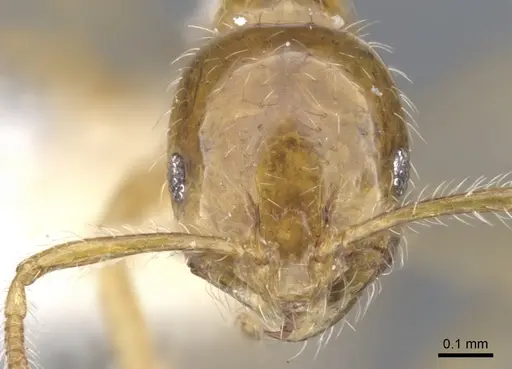
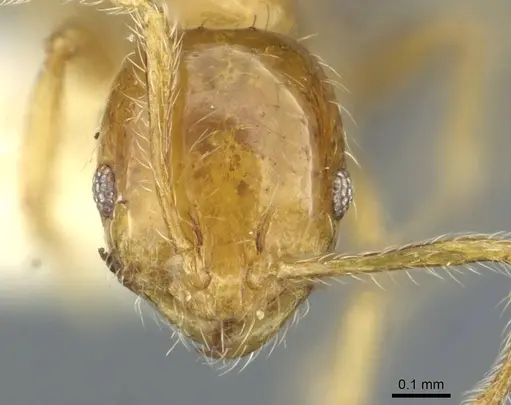
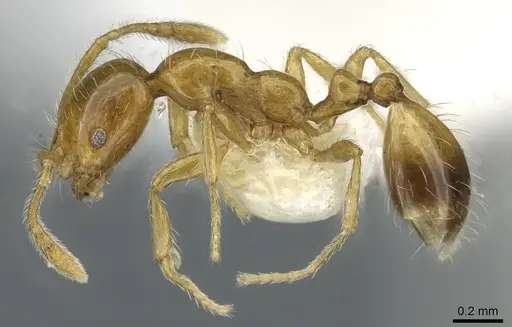
Monomorium vecte is a tiny yellow ant species native to the Afrotropical region, found only in Rwanda and Zimbabwe. Workers measure 2.0-2.4mm in total length, making them among the smaller ant species. They belong to the schultzei-complex within the Monomorium genus and are characterized by their entirely yellow coloration with a darker band on the first gastral segment. These ants were first described in 1987 from specimens collected at 1700m elevation in Zimbabwe and have since been recorded in Rwanda at around 2100m elevation . This species is one of the least studied ants in the hobby. What we know comes from just a handful of museum specimens - the biology is completely undocumented. Being a Monomorium species, they may share care requirements with relatives like Monomorium pharaonis, but this is unconfirmed.
Quick Summary
- Difficulty: Expert
- Origin & Habitat: Afrotropical region, Rwanda and Zimbabwe. Found at high elevations around 1700-2100m in mountainous areas [1][2].
- Colony Type: Unknown. Colony structure has not been documented for this species.
- Size & Growth:
- Antkeeping:
- Temperature: Unknown for this species. Start around 22-26°C and observe colony activity. Related Monomorium species thrive in warm conditions. Adjust based on how your colony responds.
- Humidity: Unknown. Based on their high-elevation African habitat, they likely prefer moderate humidity with good ventilation. Start with standard antkeeping humidity (40-60%) and adjust based on colony condition.
- Diapause: Unknown. High-elevation origins suggest they may tolerate cooler temperatures seasonally, but this is unconfirmed.
- Nesting: No natural nesting data exists. Given their tiny size, they likely prefer small chambers in soil or rotting wood. For captivity, a small test tube setup or Y-tong nest with fine chambers works well.
- Behavior: Not documented. Based on genus patterns, they are likely generalist foragers with moderate activity levels. Their tiny size means excellent escape prevention is essential, they can squeeze through gaps invisible to the human eye. Use fine mesh and tight-fitting lids. Likely non-aggressive and may be skittish.
- Common Issues: no documented biology means all care is experimental, expect a learning curve, tiny size creates extreme escape risk, use fine mesh barriers and check for micro-gaps, colony growth may be slow, patience is required with data-poor species, wild-caught colonies may have unknown parasites or diseases since no health data exists, temperature and humidity preferences are unknown, careful observation and adjustment is essential
Why Keep Such a Data-Poor Species?
Monomorium vecte represents both a challenge and an opportunity for antkeepers. With essentially no documented biology, keeping this species is experimental, you'll be contributing to our understanding through your observations. This makes it a project for experienced antkeepers who are comfortable adapting care protocols based on colony response. The appeal lies in being among the first to document the husbandry of a species known only from a handful of museum specimens. If successful, you may be the first to breed this species in captivity.
Housing and Setup
Given their tiny size (2.0-2.4mm workers), housing requires attention to scale. A standard test tube setup works well for founding colonies, the small diameter mimics the natural micro-chambers these ants likely inhabit. For established colonies, a Y-tong nest or small formicarium with tight chambers (3-5mm passages) is appropriate. The outworld should be small and simple. Escape prevention is critical: even small gaps that other ants couldn't pass through will allow these tiny ants to slip through. Use fluon on container rims and fine mesh on any ventilation. A hydration setup that provides constant access to moisture without flooding is ideal.
Feeding Protocol
No species-specific diet data exists. Based on typical Monomorium biology, they are likely generalist omnivores. Start with sugar water or honey as an energy source, offered in a way that prevents drowning. For protein, offer tiny prey items like fruit flies, pinhead crickets, or other small insects. Given their minute size, standard ant prey items may be too large. Observe carefully to see what they accept. Some Monomorium species also scavenge, so they may accept small pieces of cat food. Feed small amounts initially and increase based on consumption rates.
Temperature and Seasonal Care
Without specific data, temperature management is educated guesswork. Their high-elevation African origin (1700-2100m) suggests they may prefer cooler conditions than typical tropical ants, but they likely still need warmth for brood development. Start around 22-26°C as a baseline and create a gentle thermal gradient so the ants can choose their preferred temperature. Watch for behavioral cues: if workers cluster in warmer areas, increase heat slightly, if they avoid heated zones, reduce temperature. For diapause, observe your colony for natural slowing of activity during winter months. Do not force hibernation without evidence. The safest approach is to maintain stable conditions and let the colony's behavior guide seasonal adjustments.
Growth Expectations and Patience
Realistic expectations are crucial with this species. Even with optimal care, colony growth will likely be slow, you may be the first to document development timelines. Expect founding colonies to remain small for extended periods. The first workers may take longer to develop than species with documented timelines. Don't be tempted to increase feeding or heating dramatically in an attempt to speed growth, this often leads to mold problems or stress. Document your observations carefully: when did the queen lay eggs? When did larvae appear? When did workers emerge? This data, if shared with the antkeeping community, could become the foundation for future care guides.
Frequently Asked Questions
How long does it take for Monomorium vecte to produce first workers?
Unknown, no documented development timeline exists for this species. Your observations may be the first data points.
Can I keep Monomorium vecte in a test tube?
Yes, a test tube setup is likely ideal for this tiny species. The small diameter mimics natural micro-chambers. Ensure excellent escape prevention, their small size means they can escape through gaps other ants cannot.
What do Monomorium vecte ants eat?
No species-specific diet data exists. Based on genus patterns, offer sugar water or honey for energy and small protein sources like fruit flies or tiny crickets. Start with small amounts and observe acceptance.
Are Monomorium vecte good for beginners?
No. This is an expert-level species due to complete lack of documented care information. Every aspect of husbandry is experimental. Only experienced antkeepers comfortable with uncertainty should attempt this species.
How big do Monomorium vecte colonies get?
Unknown, no colony size data exists.
What temperature do Monomorium vecte need?
Unconfirmed. Start around 22-26°C and observe colony behavior. Create a thermal gradient so ants can choose their preferred temperature. Adjust based on how they respond.
Do Monomorium vecte need hibernation?
Unknown. Their high-elevation African origin suggests they may tolerate cooler seasonal conditions, but this is unconfirmed. Monitor for natural activity changes. Do not force diapause without evidence.
Can I keep multiple Monomorium vecte queens together?
Unknown, colony structure has not been documented for this species. Without data, keeping multiple unrelated queens together is not recommended.
Why are my Monomorium vecte dying?
Without documented biology, diagnosing problems is extremely difficult. Common issues with data-poor species include: temperature/humidity mismatch, escape-related mortality, stress from handling, mold from overfeeding, or underlying parasites. Document conditions carefully and adjust one variable at a time.
Is Monomorium vecte aggressive?
Unknown, behavior has not been documented. Based on genus patterns for small Monomorium, they are likely non-aggressive and may be skittish. Their tiny size makes them poor defenders.
When should I move Monomorium vecte to a formicarium?
Wait until the colony is well-established with multiple workers and the test tube shows signs of space constraints. With their tiny size, moving too early risks escape or stress. A small Y-tong nest with fine chambers is appropriate.
Report an Issue
The current care sheet is based fully on literature. See inconsistencies, or something that's incorrect? Please , it will be resolved after review from an admin. Contributing to the blogs tab also helps providing information, to make us be able to further improve the caresheets. Thank you for your support!
References

Esta ficha de cuidados é licenciada sob CC BY-SA 4.0 .
Blogs da comunidade
CASENT0902235
Ver no AntWeb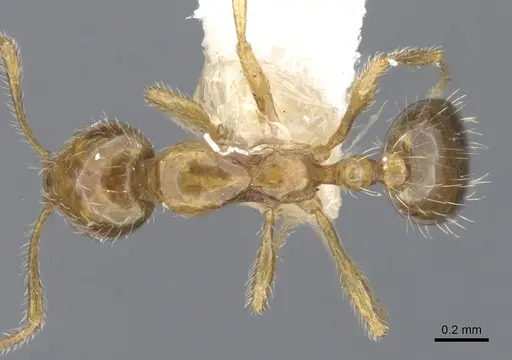
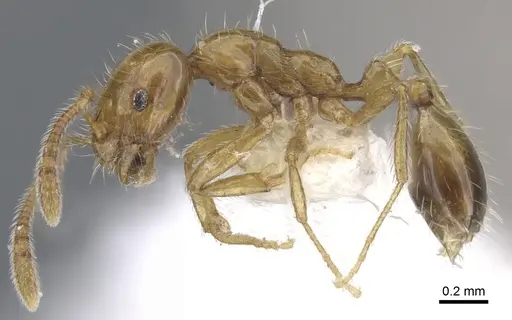
CASENT0911199
Ver no AntWeb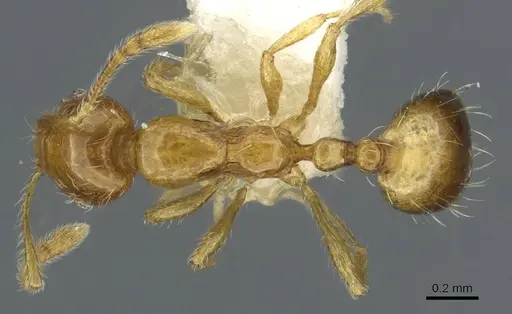
Literatura
A carregar mapa de distribuição...A carregar produtos...