
Monomorium minor
- Nome cient.
- Monomorium minor
- Tribo
- Solenopsidini
- Subfamília
- Myrmicinae
- Autor
- Stitz, 1923
- Distribuição
- Encontrado em 0 países
Introdução
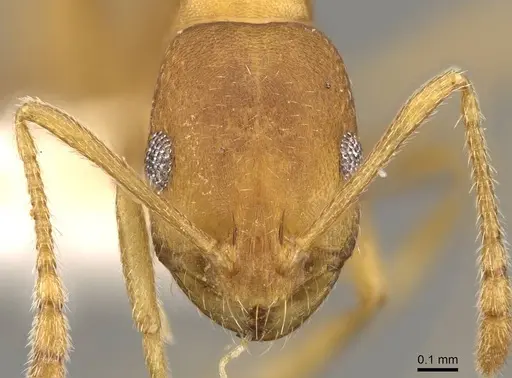
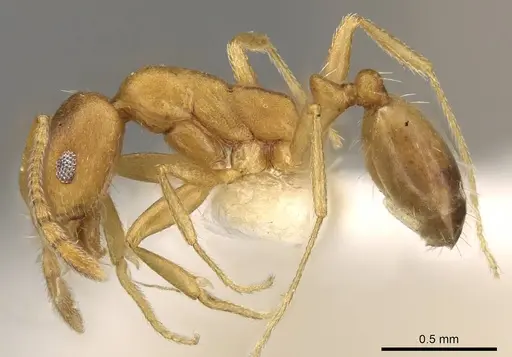
Monomorium minor is a tiny yellow ant species native to the arid regions of Namibia and Angola in southern Africa. Workers measure 2.6-2.9mm total length, making them one of the smaller ant species kept in captivity. They belong to the Monomorium salomonis species group and have a uniform dull yellow coloration, sometimes with slightly darker shading on the gaster. This species is notable for having only ergatoid (wingless) queens, a rare trait in the ant world where most species produce winged queens for dispersal. The type specimens were collected from Acacia savanna veld in Namibia, indicating they thrive in hot, dry African conditions.
Quick Summary
- Difficulty: Medium
- Origin & Habitat: Namibia and Angola in the Afrotropical region. Found in Acacia savanna veld (Acacia mellifera, Rhigozum trichtomum veld) [1].
- Colony Type: Ergatoid queen system, only wingless queens have been documented. The colony structure appears to be monogyne with ergatoid replacement reproductives [2].
- Size & Growth:
- Queen: Ergatoid (wingless) queens, exact measurements unavailable
- Worker: 2.6-2.9mm total length [1]
- Colony: Up to several hundred workers, inferred from related Monomorium species
- Growth: Moderate
- Development: Estimated 6-8 weeks at optimal temperature based on related species in the genus (Development time inferred from genus-level data since species-specific studies are unavailable)
- Antkeeping:
- Temperature: Keep warm, around 24-28°C. This matches their native African habitat which experiences high temperatures.
- Humidity: Low to moderate, they come from arid savanna regions. Keep nest substrate moderately dry with occasional moisture zones. Avoid overly damp conditions.
- Diapause: No true diapause required, being from arid African regions, they remain active year-round with some reduced activity during cooler periods.
- Nesting: Small chambers work well for their tiny size. Y-tong nests or small setups with tight passages prevent escapes. Naturalistic setups with sand or soil mixtures mimic their natural savanna nesting.
- Behavior: Workers are small but active foragers. Like other Monomorium species, they feed on small insects, honeydew, and nectar. They can recognize trail pheromones from related species, suggesting sophisticated chemical communication [3]. Their tiny size means excellent escape prevention is essential, they can squeeze through remarkably small gaps. Ergatoid queens remain in the nest and are replaced by new ergatoids if needed, rather than dispersing via nuptial flights. This species has a sting like other Solenopsidini, but their small size means they cannot effectively sting human skin.
- Common Issues: escape prevention is critical due to their tiny 2.6mm size, use fine mesh and tight-fitting lids, poorly documented species means care guidelines are largely inferred from genus patterns, arid adaptation means overwatering or excessive humidity can be fatal, slow colony growth can frustrate beginners who expect rapid development, ergatoid queen system means no nuptial flights, colony reproduction is internal
Housing and Escape Prevention
Monomorium minor is an exceptionally tiny ant, and this defines their housing requirements. Workers measure just 2.6-2.9mm total length, meaning they can slip through gaps that would hold back much larger species. Use test tubes with cotton plugs that are firmly packed, or Y-tong nests with tight-fitting lids. If using setups with seams and connections, check them carefully, a gap of 0.5mm or less is still enough for these ants to escape. Fine mesh barriers on outworlds are essential. Despite their small size, they are active foragers and need adequate space to search for food. A small outworld connected to the nest chamber works well. Because they are so small, they dry out quickly, ensure the nest has access to moisture while maintaining the dry conditions they prefer in the foraging areas. [1]
Feeding and Diet
Like other Monomorium species, M. minor is omnivorous and will accept a variety of foods. Offer small protein sources such as fruit flies, pinhead crickets, small mealworms, or other tiny arthropods. Sugar sources are also typically accepted, a drop of honey water or sugar water should be taken eagerly. In the wild, they likely tend aphids or collect honeydew from sap-sucking insects, so including some form of sugar in their diet is important. Feed small amounts every 2-3 days, removing any uneaten food to prevent mold. Because of their tiny size, even a single fruit fly is a substantial meal for a young colony. As colonies grow, increase food portions accordingly. Always ensure fresh water is available, though they get most moisture from food. [3]
Temperature and Heating
Monomorium minor originates from Namibia and Angola, where temperatures are consistently warm to hot throughout the year. Aim for a temperature range of 24-28°C in the nest area. This can be achieved using a heating cable or mat placed on one side of the nest to create a gentle temperature gradient, allowing ants to move between warmer and cooler areas. Room temperature may be sufficient if your home stays in the mid-20s°C range, but monitor colony activity, if workers seem sluggish or cluster together excessively, consider adding gentle heat. Avoid temperatures below 20°C for extended periods, as this species is not adapted to cool conditions. Place the heating element on top of the nest rather than underneath to prevent excessive drying of the substrate. [1]
Humidity and Nest Conditions
This is an arid-adapted species from African savanna, so they prefer drier conditions than many other ant species. Keep the nest substrate moderately dry, damp but not wet. A moisture gradient works well, with one area of the nest slightly moist and another dry, allowing the ants to self-regulate. Avoid the constant saturation that works for tropical species. If using a test tube setup, use smaller water reservoirs and allow the setup to dry out somewhat between refills. In naturalistic setups, use a sandy soil mix that drains well rather than materials that retain moisture. Good ventilation is important to prevent mold growth, which can quickly overwhelm small colonies. However, avoid placing them in direct airflow that causes rapid drying. [1]
Colony Structure and Reproduction
Monomorium minor has an unusual colony structure among ants, they appear to have only ergatoid (wingless) queens. Ergatoid queens are born without wings and remain in or near the nest rather than dispersing to start new colonies through nuptial flights. This means colony reproduction happens differently than in typical ants. When a colony reaches sufficient size, it may produce new ergatoid queens that remain in the nest or disperse short distances to establish new colonies nearby. This system is sometimes called 'budding.' For antkeepers, this means you won't observe nuptial flights, instead, watch for the appearance of additional queens within the colony as a sign of reproductive maturity. The colony is likely monogyne, meaning one primary egg-laying queen, though ergatoid replacement reproductives may be present if the primary queen dies. [2]
Behavior and Temperament
These are small, active ants with typical Monomorium behavior. Workers are not particularly aggressive and pose no threat to humans due to their tiny size. They are generalist foragers that will search out small prey and sugar sources. Their small size makes them vulnerable to larger predators, so they tend to be cautious in the open. One interesting trait documented in related Monomorium species is their ability to recognize and follow trail pheromones from other sympatric species, this suggests sophisticated chemical communication [3]. They are not known to sting humans effectively due to their small size. The main behavioral concern for keepers is their escape ability despite their small size, they are persistent and will find any weakness in their enclosure.
Frequently Asked Questions
How long does it take for Monomorium minor to produce first workers?
Based on related Monomorium species, expect first workers approximately 6-8 weeks after the queen lays eggs, assuming optimal temperature around 26°C. This is an estimate since species-specific development data is not available.
Can I keep multiple queens together in a Monomorium minor colony?
This species appears to be monogyne with ergatoid queens. While ergatoid replacement reproductives may exist within an established colony, combining unrelated foundress queens has not been documented and is not recommended.
What is the best nest type for Monomorium minor?
Small-scale setups work best, test tubes for founding colonies, or small Y-tong nests as colonies grow. The key requirement is excellent escape prevention due to their tiny 2.6mm size.
Are Monomorium minor good for beginners?
They are considered medium difficulty. Their small size and escape risk make them more challenging than larger, more robust species, but they are not as difficult as parasitic or highly specialized species.
Do Monomorium minor need hibernation?
No. Being from arid African regions, they do not require a true diapause period. Some reduced activity during cooler months may occur, but full hibernation is not necessary.
Why are my Monomorium minor escaping?
Their tiny 2.6mm size allows them to squeeze through remarkably small gaps. Check all seams, lid fittings, and mesh barriers. Even a 0.5mm gap is enough for them to escape. Use fine mesh and ensure all connections are tight.
How big do Monomorium minor colonies get?
Exact colony size is unknown for this species, but related Monomorium species typically reach several hundred workers. Growth is moderate, expect several months to reach 50+ workers.
What do Monomorium minor eat?
They are omnivorous. Offer small insects (fruit flies, pinhead crickets, small mealworms) for protein and sugar sources (honey water, sugar water) for carbohydrates. They likely also collect honeydew in the wild.
When will my Monomorium minor colony produce new queens?
This species has ergatoid (wingless) queens rather than winged queens that conduct nuptial flights. New queens may appear within the nest as the colony matures, but the timeline is not well documented.
Report an Issue
The current care sheet is based fully on literature. See inconsistencies, or something that's incorrect? Please , it will be resolved after review from an admin. Contributing to the blogs tab also helps providing information, to make us be able to further improve the caresheets. Thank you for your support!
References

Esta ficha de cuidados é licenciada sob CC BY-SA 4.0 .
Blogs da comunidade
CASENT0257347
Ver no AntWeb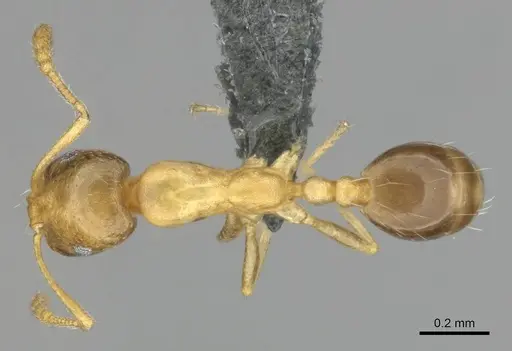
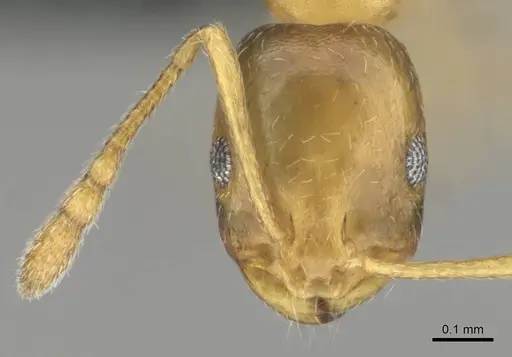
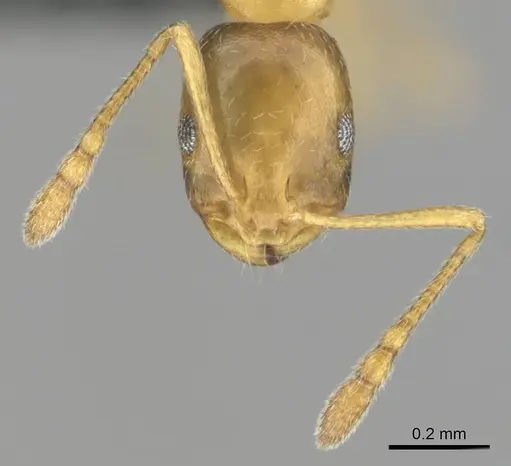
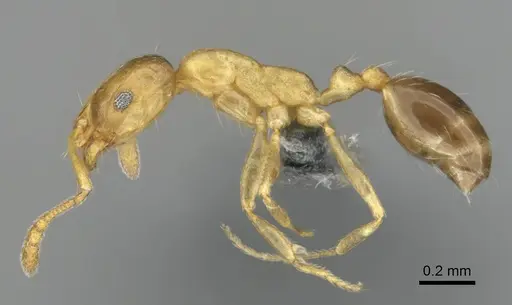
CASENT0914312
Ver no AntWeb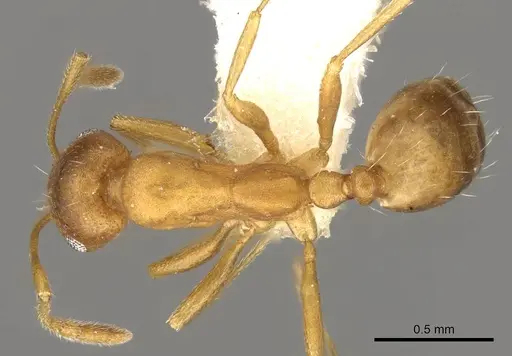
Literatura
A carregar mapa de distribuição...A carregar produtos...