
Messor semoni
- Nome cient.
- Messor semoni
- Tribo
- Stenammini
- Subfamília
- Myrmicinae
- Autor
- Forel, 1906
- Distribuição
- Encontrado em 2 países
Introdução
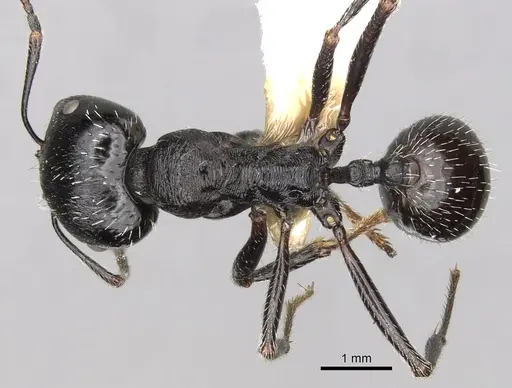
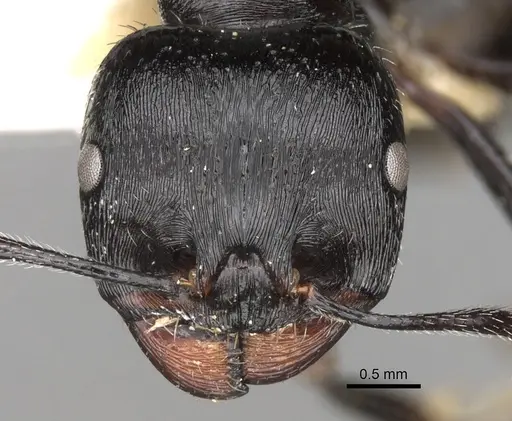
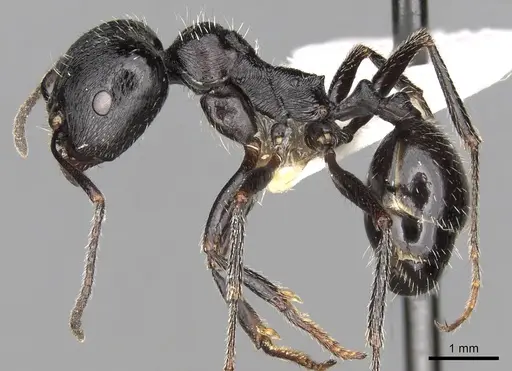
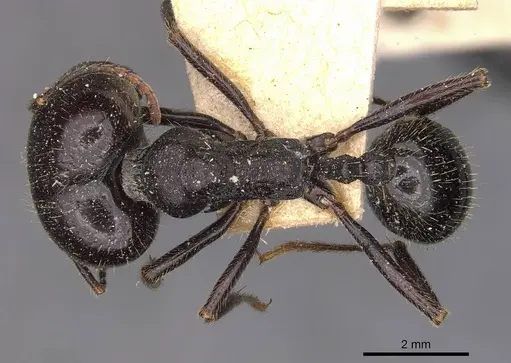
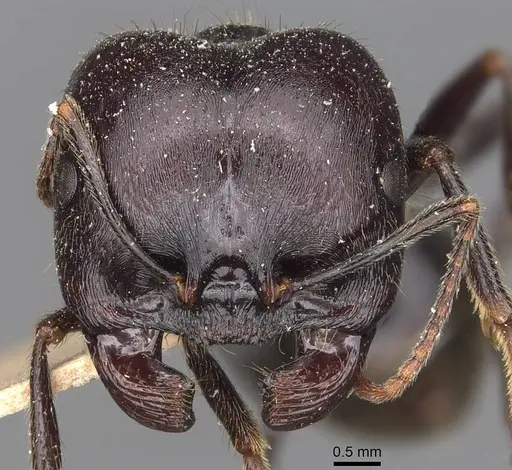
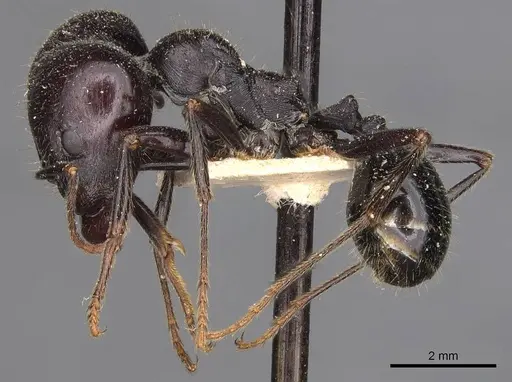
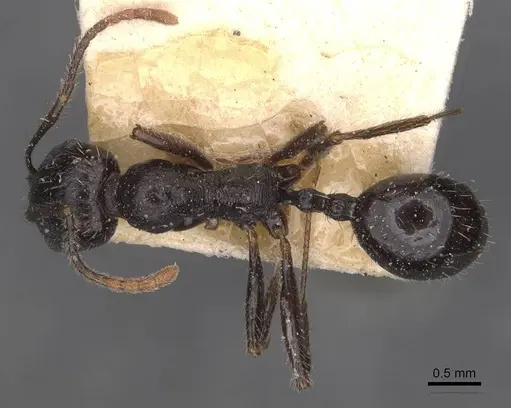
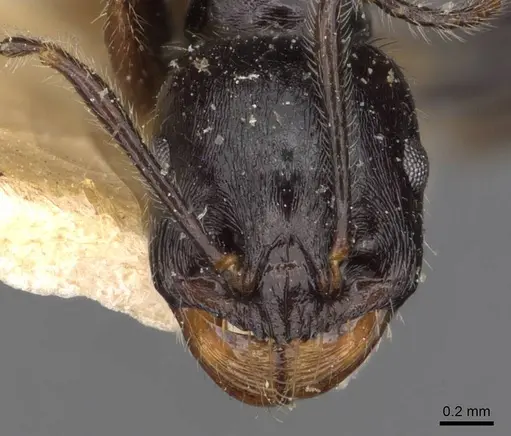
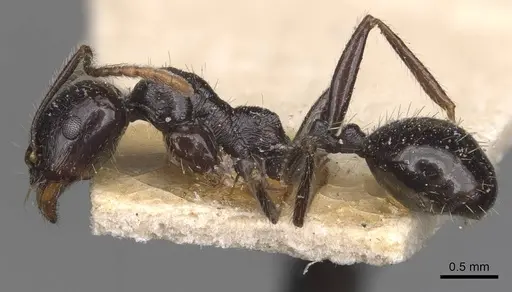
Messor semoni is a medium-sized harvester ant native to North Africa, specifically Algeria and Morocco. Workers measure 3.5-9mm total length with a distinctive black body and red mandibular insertions. The head has fine longitudinal wrinkles, and the petiole is low and massive with spine rudiments visible. These ants are seed-harvesting specialists, collecting and storing seeds as their primary food source - a behavior that gives them their 'harvester' common name. They nest in soil in Mediterranean climate zones. This species was originally described as a variety of Messor barbarum but was later recognized as a distinct species .
Quick Summary
- Difficulty: Easy
- Origin & Habitat: Algeria and Morocco in the Palaearctic region. They inhabit Mediterranean climate zones with warm, dry summers and mild winters. In their natural range, they nest in soil, often in open sunny areas where they can forage for seeds [3][4].
- Colony Type: Single-queen colonies (monogyne). Based on typical Messor genus patterns, queens likely seal themselves inside a chamber during founding, this is claustral founding, where the queen lives off stored body fat until her first workers emerge.
- Size & Growth:
- Queen: Queens reach approximately 8-9mm total length [1][2].
- Worker: Workers range from 3.5-9mm total length, with major workers (soldiers) being larger [1][2].
- Colony: Colony size data is unavailable for this species.
- Growth: Moderate, based on typical Messor genus patterns, development takes 6-10 weeks from egg to first worker at optimal temperature.
- Development: 6-10 weeks at 24-28°C, this is estimated based on typical Messor genus development patterns since species-specific data is unavailable. (Development is temperature-dependent, warmer conditions within safe ranges speed up development while cooler temperatures slow it down.)
- Antkeeping:
- Temperature: Keep nest area at 24-28°C. A heating cable on one side creates a gentle gradient. They tolerate room temperature (20-24°C) but develop faster when warmed. Avoid temperatures above 32°C as this can stress colonies.
- Humidity: Moderate and dry. Messor species prefer conditions closer to their arid North African homeland. Keep substrate lightly moist during founding but allow it to dry between waterings. Provide a dry foraging area and a slightly damp nest chamber. Avoid constant saturation.
- Diapause: Yes, these North African species benefit from a mild winter rest period. Reduce temperature to 15-18°C for 8-12 weeks during winter. Reduce feeding but maintain light moisture. This mimics their natural seasonal cycle.
- Nesting: Test tubes work well for founding colonies. Once established with 50+ workers, transfer to a formicarium with a dry nest chamber connected to a foraging area. Messor ants prefer compact chambers and narrow passages. A Y-tong or plaster nest with a water reservoir works well.
- Behavior: These ants are peaceful but defensive when threatened. Workers are active foragers that search for seeds and other plant matter. Major workers have larger heads for seed processing. They are not aggressive toward humans and rarely sting. Escape risk is moderate, they are not tiny but can climb smooth surfaces. Use Fluon on container edges and ensure any connections are secure. Workers are medium-sized so standard barrier methods are effective.
- Common Issues: mold growth from overwatering, keep nesting area relatively dry, colonies stalling due to cold temperatures, provide warmth for development, seed storage going moldy, remove uneaten seeds before they spoil, founding queens dying from disturbance, minimize vibrations and light exposure during claustral founding, major workers taking months to appear, this is normal, minors come first
Housing and Nest Setup
Messor semoni adapts well to various captive setups. For founding colonies, use a standard test tube setup with a water reservoir. The queen will seal herself into a chamber and remain there until her first workers emerge. Once the colony reaches 30-50 workers, you can move them to a formicarium. These ants prefer compact nesting areas with chambers sized appropriately for their colony. A Y-tong or plaster nest with a water chamber works well. The nest should have a separate foraging area where you can offer seeds and protein. Ensure the connection between nest and foraging area is secure, while not extreme escape artists, workers will explore gaps. Keep the nest area darker to encourage the colony to stay inside. [1][2]
Feeding and Diet
As harvester ants, Messor semoni specializes in collecting seeds. In captivity, offer a variety of seeds including grass seeds, millet, sunflower seeds (cracked), and commercial ant seed mixes. Major workers have enlarged mandibles for cracking larger seeds. They also accept protein sources like small insects (mealworms, fruit flies, small crickets) and will collect them alongside seeds. Sugar water or honey can be offered occasionally but is not a primary food source. Remove uneaten seeds before they mold, this is a common cause of colony problems. Fresh water should always be available.
Temperature and Seasonal Care
These ants come from Algeria and Morocco where Mediterranean conditions prevail. Keep the nest at 24-28°C for optimal development. Room temperature (20-24°C) is acceptable but will slow growth. A small heating cable on part of the nest creates a gradient that ants can choose between. During winter (roughly November-February in the Northern Hemisphere), reduce temperatures to 15-18°C to provide a rest period. Reduce feeding during this time but maintain light moisture in the nest. This diapause mimics their natural seasonal cycle and helps maintain colony health long-term. [3]
Colony Development
A founding queen will lay her first eggs after sealing herself in a chamber. She feeds on her stored fat reserves and does not forage during this time, this is claustral founding. Eggs develop through larval and pupal stages to become workers. The first workers (nanitics) are smaller than mature workers but will begin foraging for seeds to feed the growing colony. Major workers (soldiers) with enlarged heads appear later as the colony grows. A healthy colony will grow over 2-3 years. Growth rate depends on temperature and food availability, warmer conditions and consistent protein accelerate development.
Behavior and Temperament
Messor semoni workers are active foragers that spend significant time searching for seeds and other collectibles. They are not aggressive and will flee rather than attack when disturbed. However, they will defend their nest if directly threatened. Workers communicate through chemical trails and will recruit nestmates to good food sources. The colony maintains clear pathways between nest and foraging areas. Major workers specialize in seed processing, their larger mandibles can crack hard seed coats that minors cannot open. This division of labor makes them fascinating to observe.
Report an Issue
The current care sheet is based fully on literature. See inconsistencies, or something that's incorrect? Please , it will be resolved after review from an admin. Contributing to the blogs tab also helps providing information, to make us be able to further improve the caresheets. Thank you for your support!
References

Esta ficha de cuidados é licenciada sob CC BY-SA 4.0 .
Blogs da comunidade
Literatura
A carregar mapa de distribuição...A carregar produtos...