
Messor danaes
- Nome cient.
- Messor danaes
- Tribo
- Stenammini
- Subfamília
- Myrmicinae
- Autor
- Salata <i>et al.</i>, 2023
- Distribuição
- Encontrado em 0 países
Introdução
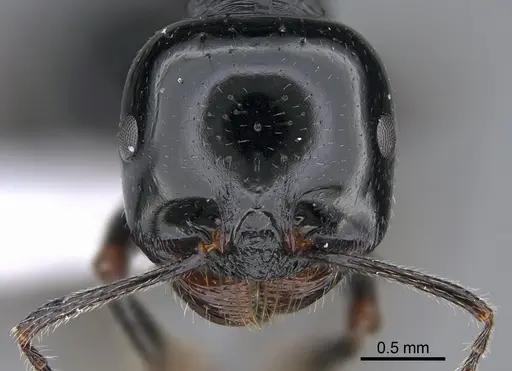
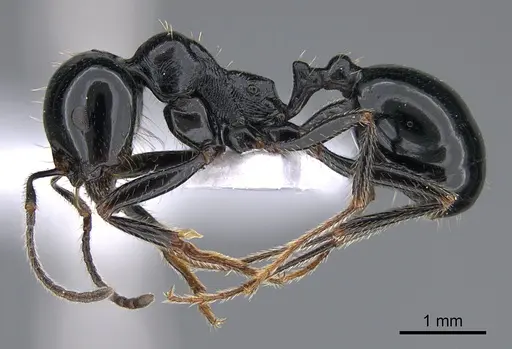
Messor danaes is a recently described seed-harvesting ant from the Greek Cyclades islands, specifically Serifos Island. It belongs to the Messor semirufus complex and is one of the smallest Balkan members of this group . The species was officially described in 2023 and named after Danae, the Greek mythological princess . These ants are entirely black with a smooth, shiny appearance, and they nest under stones in phrygana habitats in mountainous areas of the island . As a seed-harvesting species, they collect and store seeds as food, playing an important role in their ecosystem .
Quick Summary
- Difficulty: Easy
- Origin & Habitat: Serifos Island, Cyclades, Greece, Mediterranean phrygana habitat in central mountainous areas, nesting under stones near dirt roads [1]
- Colony Type: Based on Messor patterns, likely monogyne (single queen) colonies.
- Size & Growth:
- Queen: Size data unavailable, no total length measurements provided in research.
- Worker: Size data unavailable, no total length measurements provided in research.
- Colony: Estimated up to several thousand workers based on typical Messor genus patterns.
- Growth: Moderate, inferred from typical Messor genus patterns.
- Development: Estimated 6-10 weeks based on typical Messor genus development at optimal temperature [2]. (Development time inferred from genus patterns, direct measurements not available for this newly described species.)
- Antkeeping:
- Temperature: Keep at warm temperatures, roughly 22-28°C, based on Mediterranean habitat inference [1].
- Humidity: Provide a humidity gradient, mostly dry nest chamber with one small moist area, as they nest under stones in dry habitats [1].
- Diapause: Yes, based on Mediterranean species patterns, requires winter hibernation of 2-3 months at cool temperatures [1].
- Nesting: Prefer dry nests such as Y-tong, plaster, or soil-based formicaria. Naturalistic setups with dry substrate and stones mimic their natural environment [1].
- Behavior: Generally peaceful and non-aggressive. Seed-harvesting ants that store seeds in granaries. Workers are active foragers. Escape risk is low to moderate, standard escape prevention is sufficient [1].
- Common Issues: colonies may decline if kept too humid, ensure nest stays dry based on their natural dry habitat [1]., seed storage can attract mold if humidity is too high, monitor moisture levels [2]., hibernation failure can weaken colonies if not provided proper cold period, infer from Mediterranean species patterns [1]., newly described species means limited captive care information, monitor colony closely and adjust based on behavior [1].
Nest Preferences and Housing
Messor danaes naturally nests under stones in dry, Mediterranean phrygana habitats [1]. In captivity, they adapt well to various nest types. For founding colonies, a simple test tube setup works perfectly, fill one end with water and plug with cotton, providing a dark, humid chamber for the queen. Once workers emerge, you can transition to a formicarium. Y-tong (AAC) nests or plaster nests with dry chambers suit them well. These ants prefer dry conditions, so avoid nests that retain excessive moisture. A naturalistic setup with a dry soil substrate and flat stones on top mimics their natural environment and encourages natural behaviors.
Feeding and Diet
As seed-harvesting ants, Messor danaes collects and stores seeds as their primary food source. In captivity, offer a variety of seeds, millet, chia, flax, and small bird seed mixes work well. Major workers have specialized mandibles adapted for seed processing [1]. While seeds form the bulk of their diet, they also benefit from occasional protein. Offer small amounts of protein like crushed insects, mealworms, or freeze-dried crickets once or twice weekly. Sugar water or honey can be offered occasionally but is not required, seeds provide sufficient carbohydrates. Remove uneaten seeds periodically to prevent mold, and always provide a fresh water source.
Temperature and Seasonal Care
Messor danaes originates from the Greek Cyclades, a warm Mediterranean region. Keep nesting areas at warm temperatures, roughly 22-28°C, for optimal colony health and development [1]. Room temperature in most homes falls within this range. During summer months, they can tolerate temperatures up to 30°C, but avoid prolonged heat exposure. In winter, Mediterranean ants require a hibernation period. Reduce temperatures to 10-15°C for 2-3 months (typically November through February in the Northern Hemisphere) based on species patterns [1]. During hibernation, reduce food offerings but maintain a water source. Do not feed during deep hibernation. Gradual temperature changes are important, avoid sudden drops that could shock the colony.
Colony Development and Growth
As a recently described species (2023), specific development timelines for Messor danaes are not documented. Based on typical Messor genus patterns, expect the following: claustral founding may last 4-8 weeks, with the queen sealed in her chamber laying eggs and raising first workers on her fat reserves [2]. The first workers (nanitics) will be smaller than mature workers. After workers emerge, the colony enters a growth phase. Seed-harvesting colonies typically grow at moderate speed, full maturity takes 1-2 years. Major workers develop as the colony grows, with larger majors appearing once the colony reaches several hundred workers. Colonies can eventually reach several thousand workers. Be patient with growth, Messor species are not fast growers compared to some tropical ants.
Behavior and Temperament
Messor danaes is a peaceful species that rarely shows aggression toward keepers. Workers are active foragers that search for seeds and other food items. They store seeds in specialized granaries within the nest, this is why they have large majors with powerful mandibles [1]. The species has a psammophore (a basket of hairs on the underside of the head used for carrying sand/soil particles), which is common in desert and dry-habitat ants [1]. They are not aggressive defenders and do not possess a painful sting. Escape risk is moderate, they are small ants but not particularly agile climbers. Standard escape prevention with Fluon on container edges or tight-fitting lids works well. They are primarily diurnal, foraging during daylight hours.
Frequently Asked Questions
How long does it take for Messor danaes to produce first workers?
Expect first workers (nanitics) to emerge 4-8 weeks after the queen lays eggs, assuming temperatures around 24-26°C. This is typical claustral founding behavior where the queen seals herself in and raises the first brood alone on her fat reserves [2].
What do Messor danaes eat?
They are seed-harvesting ants. Offer various small seeds like millet, chia, flax, and bird seed mixes. They also benefit from occasional protein like crushed insects or mealworms. Provide a constant water source. Seeds should make up the majority of their diet [1].
Do Messor danaes need hibernation?
Yes, as a Mediterranean species they require winter hibernation. Reduce temperatures to 10-15°C for 2-3 months during winter (typically November-February) based on species patterns [1]. Do not feed during deep hibernation but maintain water availability.
Are Messor danaes good for beginners?
Yes, they are considered easy to keep. They are peaceful, don't require high humidity, and their seed-based diet is simple to provide. The main requirements are providing warm temperatures and a proper winter hibernation period [1].
How big do Messor danaes colonies get?
Based on typical Messor genus patterns, colonies can reach several thousand workers over 1-2 years. Size data for workers is unavailable from research, but they are one of the smaller Messor species in the Balkans [1].
Can I keep multiple Messor danaes queens together?
Messor danaes is likely monogyne based on genus patterns, so multiple queens may fight. Always keep only one queen per colony to avoid conflicts [2].
What temperature do Messor danaes need?
Keep nesting areas at warm temperatures, roughly 22-28°C, based on their Mediterranean habitat inference [1]. Room temperature is usually sufficient.
Do Messor danaes ants sting?
They are not known for stinging and pose no danger to keepers. They are peaceful ants that focus on seed collection rather than defense [1].
When should I move Messor danaes to a formicarium?
Keep them in a test tube setup through the founding stage until the colony is established and the test tube becomes crowded. Transition to a dry formicarium such as Y-tong or plaster [1].
Why are my Messor danaes dying?
Common causes include excessive humidity (keep nests dry based on their natural habitat), improper hibernation, or stress during founding. Ensure access to fresh water and appropriate food. As a newly described species, monitor your colony closely and adjust care based on their behavior [1].
Report an Issue
The current care sheet is based fully on literature. See inconsistencies, or something that's incorrect? Please , it will be resolved after review from an admin. Contributing to the blogs tab also helps providing information, to make us be able to further improve the caresheets. Thank you for your support!
References

Esta ficha de cuidados é licenciada sob CC BY-SA 4.0 .
Blogs da comunidade
CASENT0923720
Ver no AntWeb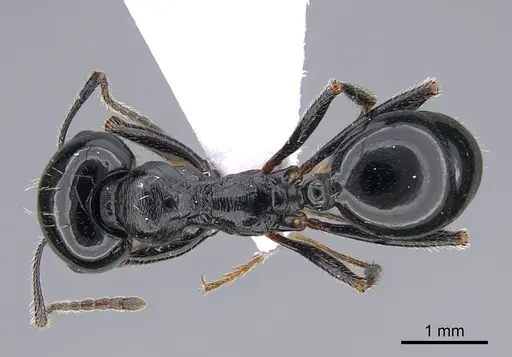
Literatura
A carregar mapa de distribuição...A carregar produtos...