
Meranoplus pubescens
- Nome cient.
- Meranoplus pubescens
- Tribo
- Crematogastrini
- Subfamília
- Myrmicinae
- Autor
- Smith, 1853
- Distribuição
- Encontrado em 1 países
Introdução
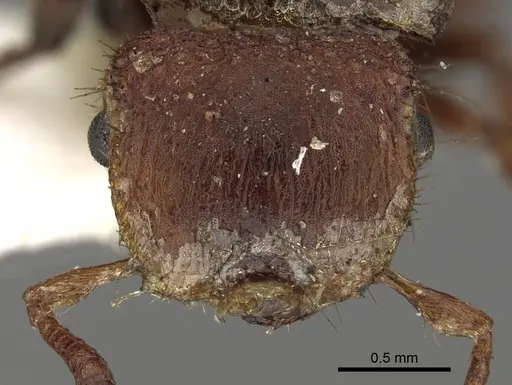
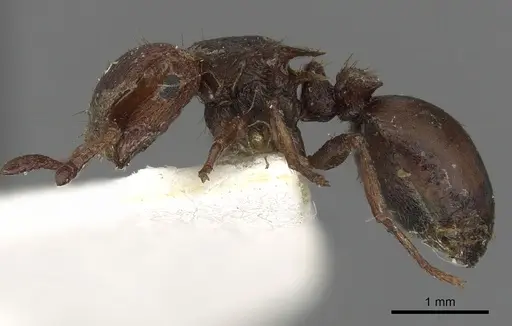
Meranoplus pubescens is a small myrmicine ant native to Australia, specifically South Australia around Adelaide. Workers have the distinctive shield-like pronotum characteristic of Meranoplus, with a strongly reflexed post-petiole and short dorsal petiolar face. The species gets its name from the pubescent or hairy appearance of the workers. This ant is part of the Crematogastrini tribe and represents one of the more obscure Australian ants in the hobby.
Quick Summary
- Difficulty: Medium
- Origin & Habitat: Native to Australia, specifically South Australia (Adelaide region). They inhabit dry to moderately moist grassland and woodland areas, typically nesting in soil or under stones. [1][3]
- Colony Type: Likely single-queen colonies based on typical genus patterns, though colony type is not directly confirmed for this specific species.
- Size & Growth:
- Queen: size data unavailable
- Worker: size data unavailable
- Colony: up to several hundred workers (estimated)
- Growth: Moderate
- Development: development time unconfirmed for this species (Development time is estimated based on similar Myrmicinae species. Temperature of 22-26°C would support normal development.)
- Antkeeping:
- Temperature: Keep at 22-26°C. Australian species from temperate South Australia suggests they can tolerate cooler conditions than tropical species. A gentle temperature gradient allows workers to self-regulate.
- Humidity: Moderate humidity needs. Provide a moist nest chamber alongside drier areas for workers to choose from. Keep substrate damp but not waterlogged.
- Diapause: Likely yes, South Australian temperate climate means they experience winter. Provide a cool period around 10-15°C for 2-3 months during winter months.
- Nesting: Natural nesting occurs in soil and under stones. In captivity, a Y-tong (AAC) nest or plaster nest with compact chambers works well. They prefer tight, enclosed spaces rather than open foraging areas. Provide a small outworld for feeding.
- Behavior: Workers are active foragers that likely scavenge and collect honeydew and small insects. They are not particularly aggressive but will defend the nest. Their small size means escape prevention is important, use fine mesh and tight-fitting lids. Workers are fast-moving and may be skittish.
- Common Issues: escape prevention is critical due to small worker size, limited availability in the antkeeping hobby means established care protocols are rare, slow colony establishment may lead to beginner impatience and overfeeding, hibernation stress can cause colony loss if not done properly, wild-caught colonies may carry parasites that affect captive survival
Housing and Nest Setup
Meranoplus pubescens does well in compact nest setups that mimic their natural soil-nesting behavior. A Y-tong (AAC) nest with narrow chambers or a plaster nest works well. The chambers should be appropriately sized for their worker size, not too large or open. Provide a small outworld connected to the nest for foraging. Because of their small size, excellent escape prevention is essential. Use tight-fitting lids and consider fine mesh on any ventilation holes. Test tube setups can work for founding colonies but monitor for flooding if using water reservoirs. [3]
Feeding and Diet
In the wild, Meranoplus species typically forage for honeydew from aphids and scale insects, plus small insects and scavenged protein sources. In captivity, offer sugar water or honey water as a constant energy source. For protein, provide small insects like fruit flies, small mealworms, or cricket pieces. Feed protein 2-3 times per week, removing any uneaten prey within 24 hours. Fresh water should always be available. Observe your colony's preferences, some Meranoplus colonies are more protein-focused while others readily accept sugar. [3]
Temperature and Seasonal Care
Maintain temperatures between 22-26°C during the active season. This species comes from temperate South Australia, so they can tolerate a range of conditions. During winter (roughly June-August in the southern hemisphere), gradually reduce temperature to around 10-15°C for a hibernation period of 2-3 months. This mimics their natural seasonal cycle and supports colony health. Do not feed during hibernation but keep a small water source available. Resume normal feeding and warming gradually in spring. Avoid sudden temperature changes as these can stress the colony. [3]
Colony Development
A newly mated queen will seal herself in a claustral chamber and raise her first workers (nanitics) entirely from her stored fat reserves. This founding phase typically takes 6-8 weeks but can vary with temperature. Once the first workers emerge, they will begin foraging to support the growing colony. Colony growth is moderate, expect several months before you have a established colony with 50+ workers. Full maturity with several hundred workers may take 1-2 years under good conditions. Be patient during the founding phase as this is when most colonies are lost. Minimize disturbances to the founding chamber. [3]
Behavior and Observation
Meranoplus workers are active foragers that move quickly through the nest and outworld. They are not particularly aggressive toward keepers but will defend vigorously if their nest is threatened. Workers likely use chemical trails to guide nestmates to food sources. The distinctive shield-like pronotum gives them a unique appearance among Myrmicinae ants. Observing their foraging behavior and nest maintenance can be rewarding. Their small size makes them agile and sometimes skittish, avoid sudden movements near the colony. Regular observation helps you learn their individual colony's patterns and preferences. [3]
Frequently Asked Questions
How long does it take for Meranoplus pubescens to produce first workers?
First workers (nanitics) typically emerge 6-8 weeks after the queen seals herself in, assuming temperatures around 24°C. This can take longer if temperatures are cooler. The queen will not forage during this founding period, she lives entirely on her stored fat reserves.
What do Meranoplus pubescens eat?
They are omnivorous like most Myrmicinae. Offer sugar water or honey water constantly for energy, plus protein sources like small insects (fruit flies, small mealworms, cricket pieces) 2-3 times per week. Remove uneaten prey within 24 hours to prevent mold.
Do Meranoplus pubescens ants sting?
Most Meranoplus species have the ability to sting but are too small to cause significant pain to humans. They may bite if handled roughly, but they are not considered dangerous or aggressive toward keepers.
What temperature do Meranoplus pubescens need?
Keep them at 22-26°C during the active season. They can tolerate cooler conditions than tropical species due to their South Australian origin. A temperature gradient allows workers to choose their preferred zone.
Do Meranoplus pubescens need hibernation?
Yes, they likely require a winter rest period due to their temperate Australian origin. Provide 2-3 months at 10-15°C during winter (roughly June-August). Reduce feeding but keep water available. Gradual temperature changes in spring and fall support this cycle.
Are Meranoplus pubescens good for beginners?
They are considered intermediate difficulty. While not as challenging as some species, their limited availability in the hobby means established care knowledge is scarce. They require standard antkeeping practices but can be rewarding for keepers willing to learn their specific needs.
How big do Meranoplus pubescens colonies get?
Colony size is estimated at up to several hundred workers at maturity. Growth is moderate, taking 1-2 years to reach significant numbers. This is smaller than some tropical species but still substantial for observation.
Can I keep multiple Meranoplus pubescens queens together?
This species is likely monogyne (single queen) based on typical genus patterns. Combining unrelated queens is not recommended as they may fight. If you obtain a multi-queen colony, monitor for aggression and separate if necessary.
When should I move Meranoplus pubescens to a formicarium?
Keep founding colonies in test tubes or small setups until they have 30-50 workers. Moving too early can stress the colony. Once established, a Y-tong or plaster nest with appropriate chamber sizes works well. They prefer compact spaces.
Why is my Meranoplus pubescens colony dying?
Common causes include: temperature stress (too hot or too cold), improper humidity (too dry or waterlogged), overfeeding leading to mold, disturbance during founding phase, or parasites from wild-caught colonies. Review each parameter and make gradual adjustments. Wild-caught colonies often have higher mortality due to parasites and stress from collection.
Report an Issue
The current care sheet is based fully on literature. See inconsistencies, or something that's incorrect? Please , it will be resolved after review from an admin. Contributing to the blogs tab also helps providing information, to make us be able to further improve the caresheets. Thank you for your support!
References

Esta ficha de cuidados é licenciada sob CC BY-SA 4.0 .
Blogs da comunidade
CASENT0902046
Ver no AntWeb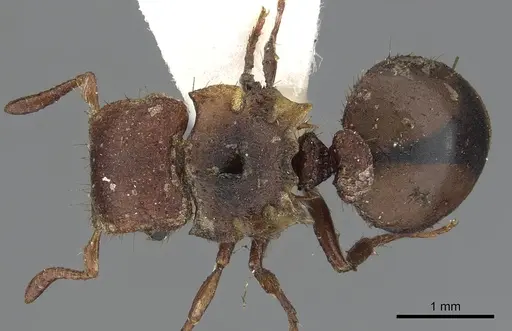
Literatura
A carregar mapa de distribuição...A carregar produtos...