
Leptogenys parvula
- Nome cient.
- Leptogenys parvula
- Tribo
- Ponerini
- Subfamília
- Ponerinae
- Autor
- Emery, 1900
- Distribuição
- Encontrado em 0 países
Introdução
Leptogenys parvula is a small Ponerine ant species native to Southeast Asia, found across Borneo, Indonesia (Sumatra), Malaysia, and Vietnam . Workers are brownish in color with the apical and base of the gaster being brownish . The species name 'parvula' means small or tiny, reflecting their diminutive size. As a Ponerine ant, they have a characteristic slender build and a well-developed sting. Colonies are very small, reaching a maximum of only around 22 workers , making them one of the smallest ant colonies you will encounter. They are predatory like other Leptogenys species, hunting small invertebrates on the forest floor.
Quick Summary
- Difficulty: Medium
- Origin & Habitat: Tropical Southeast Asia, found in Borneo, Indonesia (Sumatra), Malaysia, and Vietnam [1]. In Malaysia and Borneo, they have been recorded in locations like Danum Valley, Tawau Hills Park, and Poring Hot Spring [2]. They are a forest-floor species typical of humid tropical environments.
- Colony Type: Single-queen colonies with ergatoid (wingless) replacement queens documented. The reproductive strategy relies on the queen, workers cannot reproduce as they lack the specialized reproductive anatomy (spermatheca) [4][5]. Maximum colony size is tiny at just 22 workers [3].
- Size & Growth:
- Queen: size data unavailable, no direct measurements exist, inferred from genus Leptogenys patterns (~5-6mm)
- Worker: size data unavailable, no direct measurements exist, inferred from genus Leptogenys patterns (~3-4mm)
- Colony: Up to 22 workers [3], very small colonies
- Growth: Slow, small colony size indicates gradual growth
- Development: Unconfirmed, no direct development data exists for this species (Development timeline is unconfirmed. Small colony size suggests slower overall growth compared to faster-growing Myrmicinae species.)
- Antkeeping:
- Temperature: Tropical species, keep at 24-28°C. Being from Southeast Asia, they need consistent warmth year-round.
- Humidity: High humidity required, think damp tropical forest floor. Keep substrate consistently moist but not waterlogged.
- Diapause: No, being a tropical species, they do not require hibernation. Maintain warm conditions year-round.
- Nesting: Forest-floor species. In captivity, they do well in test tubes or small nests with moist substrate. Their tiny colony size means they do not need large spaces, tight chambers work better.
- Behavior: Ponerine ants are predatory by nature. Leptogenys parvula will hunt small invertebrates. They have a functional sting for subduing prey. Being very small (parvula means tiny), escape prevention is important, they can squeeze through small gaps. Workers are active foragers on the forest floor in nature. Colonies remain small and docile.
- Common Issues: very small colony size means any losses have big impact, avoid disturbing the colony, tropical species needs constant warmth, cold temperatures will slow or stop brood development, escape prevention is critical due to tiny worker size, small colonies are sensitive to disturbance, minimize nest inspections, predatory diet means you need consistent access to small live prey
Housing and Nest Setup
Leptogenys parvula is a tiny ant species with colonies maxing out around 22 workers. This means you should start them in a small test tube setup and they will never need a large formicarium. A test tube with a cotton-stoppered water reservoir works perfectly for the founding colony. For established colonies, a small naturalistic setup with a small container works well. The key is tight chambers, these tiny ants feel secure in snug spaces. Use a moist substrate (like sand/soil mix) to maintain humidity. Because they are from tropical Southeast Asia, they need consistent warmth and humidity year-round. Avoid large, open spaces as this can stress such a small colony. [3][2]
Feeding and Diet
Like other Ponerine ants, Leptogenys parvula is predatory. They hunt small invertebrates on the forest floor in nature. In captivity, you should feed them small live prey such as fruit flies, pinhead crickets, small mealworms, and other tiny arthropods. Offer prey items that are appropriately sized, no larger than the ant itself. Feed them a few times per week, removing any uneaten prey after 24 hours. The predatory nature means they need protein-rich food regularly. Sugar sources are not typically a primary food for Ponerine ants, though they may occasionally accept honey or sugar water, do not rely on these as staple foods.
Temperature and Humidity
Being a tropical species from Southeast Asia (Borneo, Sumatra, Malaysia, Vietnam), Leptogenys parvula needs warm, humid conditions. Keep the nest at 24-28°C consistently. A heating cable on one side of the nest can create a temperature gradient, but be careful not to overheat. Room temperature may be sufficient if your home stays in this range. Humidity should be high, think damp forest floor. The substrate should feel moist to the touch but not have standing water. Mist the area occasionally and ensure the water reservoir in test tube setups stays filled. Unlike temperate species, they do not need a diapause or winter rest period, maintain tropical conditions year-round. [2][6]
Colony Structure and Reproduction
This species has an unusual colony structure. Colonies are small (maximum 22 workers) and are led by a single queen [3]. Interestingly, they have ergatoid queens, wingless reproductive females that can serve as replacement reproductives if the primary queen dies [3]. However, workers cannot reproduce, they lack the specialized reproductive anatomy (spermatheca) needed for sexual reproduction [4][5]. This means the colony depends entirely on the queen for reproduction. The queen has 6 ovarioles (egg-producing tubes) while workers have only 2-4 [6]. The small colony size and lack of worker reproduction means you should be extra careful not to lose the queen.
Behavior and Temperament
Leptogenys parvula workers are active foragers on the forest floor, hunting small prey. They are not particularly aggressive toward humans but have a functional sting for subduing prey items. As Ponerine ants, they are more primitive in their social structure compared to more advanced ants like Myrmicinae. The colony will remain small and docile. Because they are so tiny (the species name means small or tiny), escape prevention is critical, they can slip through remarkably small gaps. Use fine mesh on any ventilation holes and ensure all connections are sealed. The small colony size also means they are sensitive to disturbance, avoid frequent nest inspections. [3]
Frequently Asked Questions
How long does it take for Leptogenys parvula to produce first workers?
The exact egg-to-worker timeline is unconfirmed for this species. Based on related Ponerine ants, expect several months at optimal tropical temperatures (24-28°C). The small colony size suggests gradual growth.
Can I keep multiple Leptogenys parvula queens together?
No. This species is monogyne, single queen colonies. While ergatoid (wingless) replacement queens exist in the colony, they only appear to replace a deceased primary queen, not to co-found colonies. Combining unrelated queens is not recommended.
What do Leptogenys parvula ants eat?
They are predatory Ponerine ants. Feed them small live prey such as fruit flies, pinhead crickets, small mealworms, and other tiny arthropods. Remove uneaten prey after 24 hours. They are not typical sugar-feeding ants.
Are Leptogenys parvula good for beginners?
They are rated Medium difficulty. While their small colony size makes them less impressive than larger species, they require consistent warm, humid tropical conditions year-round and need regular live prey. The small colony size also means any losses have a big impact.
What temperature do Leptogenys parvula need?
Keep them at 24-28°C consistently. Being tropical Southeast Asian ants, they need warmth year-round. Room temperature within this range is usually sufficient.
How big do Leptogenys parvula colonies get?
Very small, maximum around 22 workers [3]. This is one of the smallest colony sizes you will encounter in antkeeping. They will never become large colonies.
Do Leptogenys parvula need hibernation?
No. Being a tropical species from Southeast Asia, they do not require hibernation or diapause. Maintain warm, humid conditions year-round.
When should I move Leptogenys parvula to a formicarium?
Given their maximum colony size of only 22 workers, they can remain in a test tube setup for most of their captive life. Move only if the test tube becomes too crowded or the cotton becomes moldy.
Why are my Leptogenys parvula dying?
Common causes include: cold temperatures (they need 24-28°C), low humidity, lack of appropriate live prey, disturbance from frequent inspections, or losing the queen. Being a tiny tropical species with a small colony, they are sensitive to environmental stress.
Report an Issue
The current care sheet is based fully on literature. See inconsistencies, or something that's incorrect? Please , it will be resolved after review from an admin. Contributing to the blogs tab also helps providing information, to make us be able to further improve the caresheets. Thank you for your support!
References

Esta ficha de cuidados é licenciada sob CC BY-SA 4.0 .
Blogs da comunidade
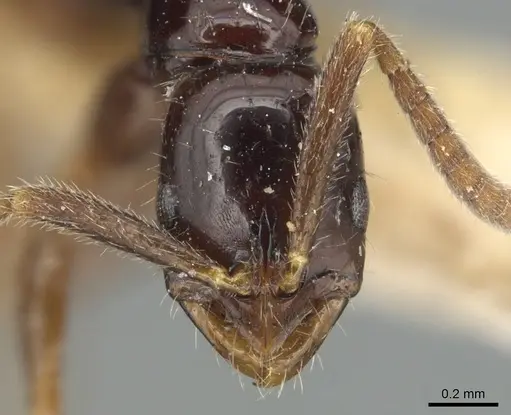
CASENT0882105
Ver no AntWeb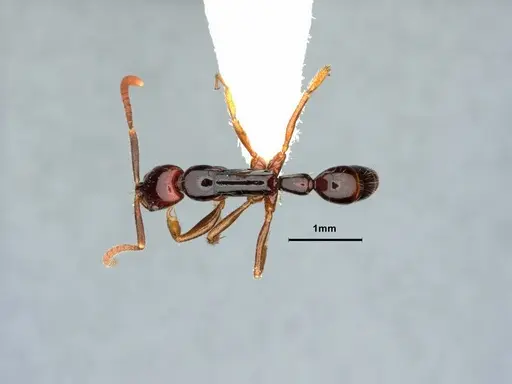
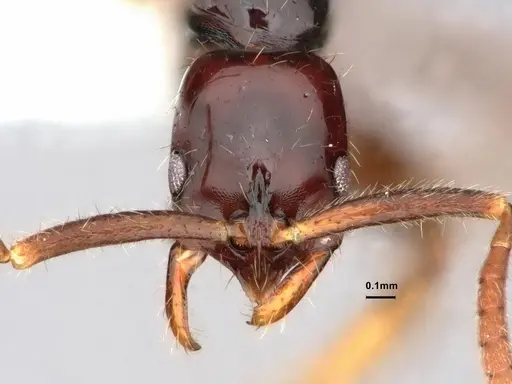
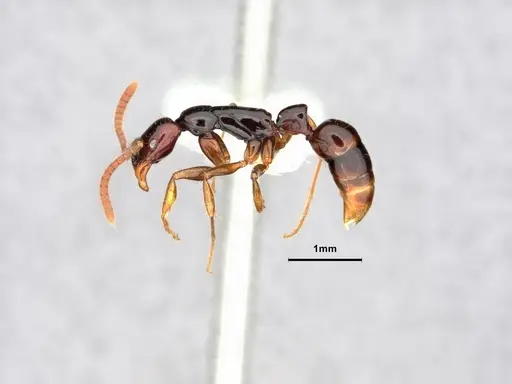
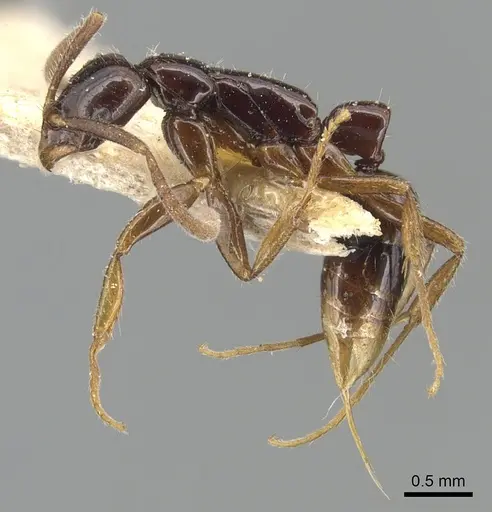
CASENT0903949
Ver no AntWeb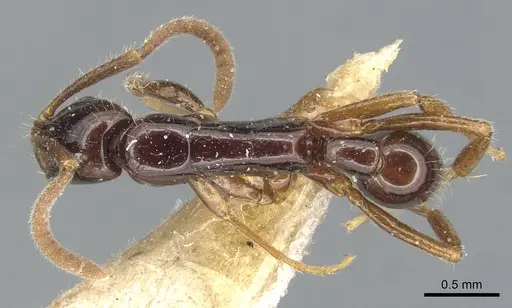
Literatura
A carregar mapa de distribuição...A carregar produtos...