
Leptogenys cuneata
- Nome cient.
- Leptogenys cuneata
- Tribo
- Ponerini
- Subfamília
- Ponerinae
- Autor
- Lattke, 2011
- Distribuição
- Encontrado em 0 países
Introdução
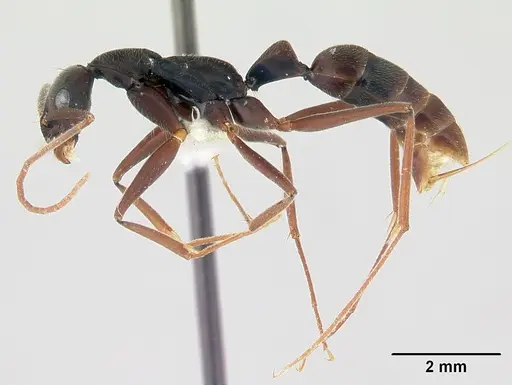
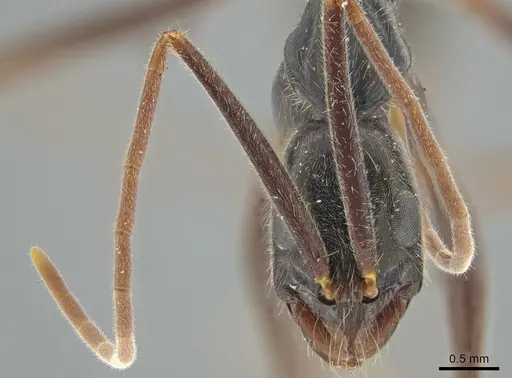
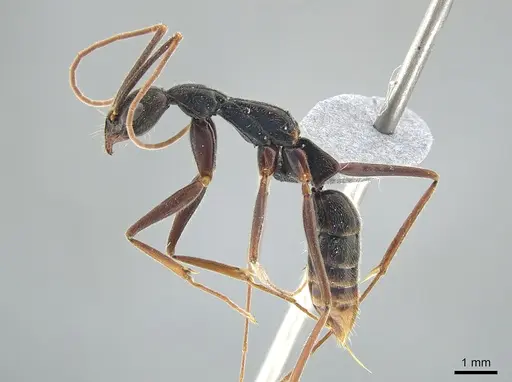
Leptogenys cuneata is a predatory ponerine ant found across the Neotropical region from Panama down through Ecuador, Peru, and into Colombia. Workers have an elongated body that is black with a distinctive blue iridescence . The species gets its name from the Latin 'cuneus' (wedge-shaped) due to its uniquely wedge-shaped petiolar node - an elongate, triangular structure when viewed from the side . This species belongs to the luederwaldti species group and is characterized by having a convex, unarmed propodeal margin (no teeth or lobes) and a translucent lobe on the protibial apex . Queens and males remain undescribed, making this a challenging species to keep due to limited biological information.
Quick Summary
- Difficulty: Hard
- Origin & Habitat: Wet tropical forests in the Chocó region of Colombia, Nariño, Valle del Cauca, and across Ecuador, Panama, and Peru [2][3][4].
- Colony Type: Colony structure is unconfirmed, queens and males have not been described in scientific literature [1].
- Size & Growth:
- Queen: Unknown, queens have not been described [1].
- Worker: Size data unavailable, the original description provides head and mesosoma measurements but not total body length [1].
- Colony: Unknown, no colony size data available.
- Growth: Unknown
- Development: Unconfirmed, no development data exists for this species. (Development timeline must be estimated from related Leptogenys species.)
- Antkeeping:
- Temperature: Based on its wet tropical forest origin, keep temperatures in the range of 24-28°C. A slight gradient allowing cooler areas around 22°C is recommended.
- Humidity: High humidity is essential, maintain 70-85% relative humidity. Keep the nest substrate consistently moist but not waterlogged, mimicking the damp forest floor conditions of its natural habitat.
- Diapause: Unlikely, being a tropical species from wet forests, it likely does not require a diapause period.
- Nesting: In the wild, this species has been collected from wet forest environments. In captivity, a naturalistic setup with moist substrate (like a dirt/soil mix) or a Y-tong/plaster nest with good moisture retention works well. Provide narrow chambers scaled to their medium size.
- Behavior: Leptogenys ants are known predators, typically hunting isopods and other small arthropods. Workers are active foragers and likely use chemical trails to recruit nestmates to prey items. They are not aggressive toward humans but will defend their nest if threatened. Escape risk is moderate, use standard barrier methods. Their large size and active foraging make them visible and engaging to watch.
- Common Issues: lack of biological data makes captive care challenging, queens and males are undescribed., high humidity requirements can lead to mold problems if ventilation is inadequate., predatory diet means they need a constant supply of live prey, not suitable for keepers who want simple feeding routines., tropical species may not tolerate temperature drops below 20°C., slow colony development due to limited information on optimal conditions.
Species Identification and Appearance
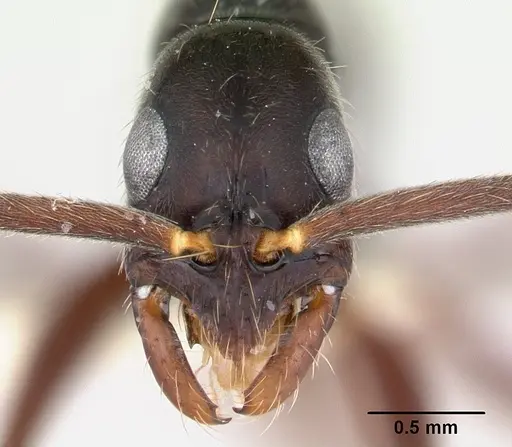
Leptogenys cuneata is a distinctive ant within the luederwaldti species group. Workers have an elongated head and body. The most recognizable feature is the wedge-shaped (cuneate) petiolar node, triangular and elongate when viewed from the side, with a straight anterodorsal margin [1]. The body is black with a beautiful blue iridescence that catches the light. Unlike many Leptogenys species, L. cuneata has an unarmed propodeal margin, it lacks the teeth or lobes found on the propodeum of related species. The protibial apex features a translucent lobe next to the strigil (cleaning brush), a character shared with Leptogenys gaigei but distinguishing it from other members of the group [1]. The compound eye is broadly convex and covers about one-third of the lateral cephalic margin.
Distribution and Habitat
This species is known from the Neotropical region, specifically Panama, Ecuador, Peru, and Colombia [2][3][4]. In Colombia, it has been recorded in the Chocó region, Nariño, and Valle del Cauca, all areas known for their exceptional biodiversity and wet forest ecosystems. The type specimen was collected from Los Tayos in Morona-Santiago, Ecuador, in August 1978 [1]. The original specimen from Panama was collected from wet forest habitat [1]. This distribution pattern places L. cuneata in lowland to mid-elevation tropical rainforests, typically below 1000 meters altitude. The Chocó region in particular is one of the wettest places on Earth, suggesting this species has very high humidity requirements.
Feeding and Diet
Like other members of the genus Leptogenys, this species is predatory. Leptogenys ants are specialized predators, primarily hunting isopods (woodlice) and other small arthropods in their natural habitat. In captivity, you should offer a diet based on live small invertebrates such as fruit flies, small crickets, mealworms, and isopods if available. Some Leptogenys species will accept protein gels or dead insects, but live prey is typically preferred and encourages natural foraging behavior. Feed prey items approximately twice weekly, adjusting based on colony consumption. Remove any uneaten prey after 24-48 hours to prevent mold. Sugar sources are not typically a significant part of their diet, though a small dish of sugar water may be occasionally accepted. Always provide a shallow water source.
Temperature and Humidity Requirements
As a tropical wet forest species, Leptogenys cuneata requires warm and humid conditions. Maintain temperatures between 24-28°C, with a slight gradient allowing workers to self-regulate. A heating cable on one side of the nest can create this gradient, but ensure the heating element is placed on top of the nest to avoid evaporating moisture too quickly. Humidity should be kept high at 70-85% relative humidity. The nest substrate should remain consistently moist, think damp forest floor. Allow some areas to dry slightly so ants can choose their preferred microclimate. Good ventilation is essential to prevent mold while maintaining humidity, avoid both stagnant air and excessive airflow that dries the nest.
Nesting Preferences
In the wild, Leptogenys cuneata nests in soil or rotting wood in wet forest environments. For captive care, a naturalistic setup with a moist soil substrate works well, a mix of topsoil and sand or peat works nicely. Alternatively, a Y-tong or plaster nest with good moisture retention provides the humidity control this species needs. The chambers should be appropriately scaled to their medium size, not too large or too small. Provide a water reservoir connected to the nest to maintain humidity through evaporation. A foraging area connected to the nest allows for feeding and waste management.
Colony Structure and Development
Unfortunately, very little is known about the colony structure of Leptogenys cuneata. The original description only covers workers, queens and males remain undescribed [1]. This means we don't know whether colonies are single-queen (monogyne) or multi-queen (polygyne), nor do we have information on founding behavior or development timelines. Based on patterns seen in related Leptogenys species, queens are likely claustral (seal themselves in to raise the first brood alone) and the colony develops moderately. Expect the first workers (nanitics) to emerge within several months under optimal conditions, similar to other ponerine ants. Colony size in the wild is unknown.
Frequently Asked Questions
How long does it take for Leptogenys cuneata to produce first workers?
The exact development timeline has not been documented for this species. Based on related Leptogenys and other ponerine ants, expect several months from egg to first worker at optimal temperatures of 26-28°C. This is an estimate, actual times may vary.
What do Leptogenys cuneata ants eat?
They are predatory ants that hunt small invertebrates. Offer live prey such as fruit flies, small crickets, mealworms, and isopods. Feed approximately twice weekly and remove uneaten prey after 24-48 hours.
Are Leptogenys cuneata ants good for beginners?
No, this species is not recommended for beginners. It has high humidity requirements, needs a constant supply of live prey, and there is very limited biological information available since queens and males have not been described. This makes optimal captive care difficult to achieve.
What temperature should I keep Leptogenys cuneata at?
Keep them warm at 24-28°C. A slight temperature gradient allowing cooler areas around 22°C is recommended so workers can self-regulate. Avoid temperatures below 20°C.
Do Leptogenys cuneata need hibernation?
No, as a tropical species from wet forests in Panama, Ecuador, Peru, and Colombia, they do not require hibernation or diapause. Maintaining consistent warm temperatures year-round is best.
How big do Leptogenys cuneata colonies get?
Colony size is unknown for this specific species.
Can I keep multiple Leptogenys cuneata queens together?
This is unknown, queens and colony structure have not been documented for this species. Without this information, it is not recommended to attempt multi-queen setups.
What humidity level do Leptogenys cuneata need?
High humidity is essential, maintain 70-85% relative humidity. Keep the nest substrate consistently moist but not waterlogged. Good ventilation is needed to prevent mold while maintaining humidity.
Where is Leptogenys cuneata found?
This species is known from Panama, Ecuador, Peru, and Colombia, specifically in wet forest regions like the Chocó. The type locality is Los Tayos in Ecuador [2][3][4].
Report an Issue
The current care sheet is based fully on literature. See inconsistencies, or something that's incorrect? Please , it will be resolved after review from an admin. Contributing to the blogs tab also helps providing information, to make us be able to further improve the caresheets. Thank you for your support!
References

Esta ficha de cuidados é licenciada sob CC BY-SA 4.0 .
Blogs da comunidade
CASENT0178802
Ver no AntWeb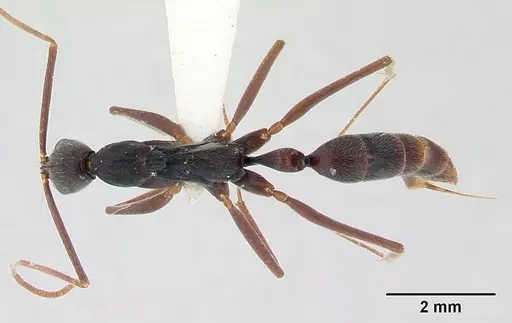
DZUP549119
Ver no AntWeb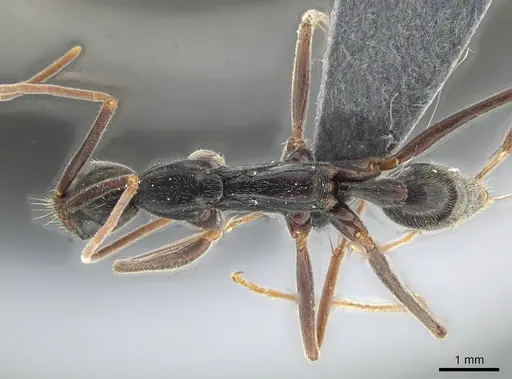
Literatura
A carregar mapa de distribuição...A carregar produtos...