
Leptanilla exigua
- Nome cient.
- Leptanilla exigua
- Tribo
- Leptanillini
- Subfamília
- Leptanillinae
- Autor
- Santschi, 1908
- Distribuição
- Encontrado em 0 países
Introdução
Leptanilla exigua is an extremely rare ant known only from Tunisia in North Africa, and only male specimens have ever been scientifically described. The workers and queens remain completely unknown to science. This species belongs to the Leptanillinae subfamily, which contains some of the smallest and most rarely collected ants. Males have a distinctively long head (at least 1.75 times longer than wide) and short, square-like antenna segments, with reduced wing venation . The original material was collected by Santschi in 1908 near Kairouan, Tunisia, and later studies of the types revealed errors in Santschi's original figures, especially regarding wing venation and genitalia . Due to the lack of worker and queen descriptions, this species is virtually impossible to identify in the field and has never been seen alive in modern times.
Quick Summary
- Difficulty: Expert
- Origin & Habitat: Tunisia (North Africa), specifically the Kairouan region in the central part of the country. The natural habitat is arid to semi-arid Mediterranean landscape typical of inland Tunisia [2][3][1].
- Colony Type: Unknown, only male specimens have ever been collected, the colony structure, including the number of queens, is completely undocumented.
- Size & Growth:
- Queen: Unknown, queens have never been described [2]
- Worker: Unknown, workers have never been documented [2]
- Colony: Unknown, no colony has ever been sampled [2]
- Growth: Unknown
- Development: Unknown (No colony has ever been studied. Related Leptanilla species typically have small colonies of fewer than 100 workers, but this is only a guess.)
- Antkeeping:
- Temperature: Unknown, no captive observations exist. Based on Tunisia's climate, it likely tolerates warm conditions (20-30°C), but this is an estimate only.
- Humidity: Unknown, no data. The arid habitat suggests moderate to low humidity, but this is speculative.
- Diapause: Unknown, no seasonal data exists for this species.
- Nesting: Unknown, no nesting observations are documented. Related Leptanilla species typically nest in soil or under stones. In theory, a test tube setup with moist substrate would be a starting point, but this is entirely untested.
- Behavior: Unknown, no behavioral studies exist. Based on related Leptanilla species, they likely prey on small soil micro-arthropods and live underground. Escape risk cannot be assessed without worker measurements.
- Common Issues: this species has never been kept in captivity, no husbandry information exists., only males have ever been collected, making colony establishment from wild queens impossible., no workers or queens have been scientifically described, so identification of castes is impossible., the species may be extremely rare or locally extinct in its known range., without worker descriptions, accurate field identification would be impossible even if specimens were found.
Why This Species Is Extremely Difficult to Keep
Leptanilla exigua is one of the most challenging ants to keep because virtually nothing is known about its biology in captivity. Only male specimens have ever been collected and described, the worker and queen castes remain completely unknown. This means you cannot establish a colony of this species, because no one has ever found a wild colony. The original specimens were collected by Dr. Santschi in the early 1900s near Kairouan, Tunisia, and no additional field collections have been documented since. This species may be extremely rare, locally distributed, or potentially even extinct in its known range. There is no scientific data on its nesting habits, feeding preferences, temperature requirements, or any aspect of colony life. Even the most experienced antkeepers cannot successfully keep a species where no colony has ever been observed. [2][3]
Taxonomic History and Identification
This species was originally described by Felix Santschi in 1908 based on male specimens from Tunisia. The description was published in the Annales de la Société Entomologique de France, with figures showing the male's morphology including wing venation and genitalia. Later studies by Baroni Urbani in 1977 confirmed the holotype is housed in the Naturhistorisches Museum Basel, collected from Kairouan [2]. Petersen (1968) examined the type material and noted that Santschi's original figures contained serious errors, particularly regarding wing venation and the orientation of the genitalia, Santschi had drawn the aedeagus upside down [1]. The males can be distinguished from related Leptanilla species by their long head (at least 1.75 times longer than wide) combined with short, square flagellar joints. The volsellar digiti (a part of the male genitalia) are well developed and setose, similar to an unidentified Leptanilla from Le Kef [1]. Unfortunately, without worker descriptions, positive identification of any collected specimens would be extremely difficult. The only known specimens are mounted in balsam between cover glasses and are in poor condition, making new identification from fresh material essential for any future study [1]. [2][1]
The Leptanillinae Subfamily and Male Morphology
Leptanilla exigua belongs to the Leptanillinae subfamily, a group of some of the most obscure and rarely collected ants. Members are typically extremely small, underground, and found in soil or under stones. The subfamily shows significant variation in wing venation, from the relatively rich venation of Leptanilla copiosa to the highly reduced venation seen in this species [1]. The fore wing of L. exigua has a narrow subcosta, a long marginalis, a straight radialis, and a short basal vein, with a weakly indicated analis, the pterostigma is transformed into the long marginal vein, and the proximal part of the marginalis and basal vein have a brown, cracked pigmentation [1]. The male terminalia (genital capsule) are built on the same plan as other Leptanilla: a gonostylus that is apically bifurcated and turned inward under the aedeagus, and a flattened aedeagus that covers the volsellar digiti like a shield [1]. These structures are important for species identification. The tribe Leptanillini includes all known Leptanilla and related genera. [4][5]
Distribution and Habitat
Leptanilla exigua is known only from the Kairouan region of Tunisia, making it one of the few Leptanilla species confirmed from the Palearctic region [3][5]. The climate is arid to semi-arid Mediterranean, with hot, dry summers and mild, slightly wet winters. Rainfall is typically low, and the landscape consists of semi-desert vegetation and agricultural land. Nothing is known about the specific microhabitat of the original type specimens. Based on related Leptanilla species, they likely live in soil or under stones in shaded or protected spots. The fact that only males have been collected suggests that the colonies are well hidden and difficult to detect. No recent collections have been documented, so it is unknown whether the species still survives in the wild. [3][1]
Frequently Asked Questions
Can I keep Leptanilla exigua in captivity?
No, this species cannot be kept because no one has ever collected or documented a colony. Only male specimens have ever been found, and workers and queens remain unknown to science [2]. There is no way to establish a colony of this species.
Where can I get a Leptanilla exigua colony?
It is not possible to obtain this species. No colony has ever been documented, and the species may be extremely rare or locally extinct [2]. Even professional myrmecologists have not collected workers or queens.
What does Leptanilla exigua look like?
Only the male has been described. Males have a long head (at least 1.75 times longer than wide) and short, square antenna segments [1]. The wings show reduced venation with a characteristic brown pigmentation in the proximal part [1]. Workers and queens have never been described or observed. Body size is not reported in the available literature.
What is the natural habitat of Leptanilla exigua?
Known only from the Kairouan region of Tunisia. The climate is arid to semi-arid Mediterranean [3][1]. Specific nesting microhabitat is unknown, but related Leptanilla species typically nest in soil or under stones.
Are Leptanilla exigua ants dangerous?
Unknown, no workers have ever been documented, so their defensive behaviors are completely unknown [2]. Given their extremely small size, any sting would likely be negligible even if present.
How big do Leptanilla exigua colonies get?
Unknown, no colony has ever been studied [2]. Based on related Leptanilla species, colonies are likely small with fewer than 100 workers, but this is only a guess from general knowledge of the genus.
Do Leptanilla exigua queens exist?
Unknown, queens have never been documented or described [2]. The species is known only from male specimens collected in the early 1900s.
What do Leptanilla exigua ants eat?
Unknown, no feeding observations exist [2]. Based on related Leptanilla species, they are likely predatory on small soil micro-arthropods such as springtails or mites.
Can I find Leptanilla exigua in the wild?
Extremely unlikely. The species has not been documented since its original description in 1908 [2]. Even professional entomologists have not collected additional specimens. The Kairouan region of Tunisia would be the only potential location, but success would be exceptionally unlikely.
Is Leptanilla exigua a good species for beginners?
No, this species is completely unsuitable for antkeeping [2]. No information exists about its care, no colonies have ever been established, and workers have never been documented. This is an expert-level species in terms of difficulty, but it is actually impossible to keep regardless of experience.
Report an Issue
The current care sheet is based fully on literature. See inconsistencies, or something that's incorrect? Please , it will be resolved after review from an admin. Contributing to the blogs tab also helps providing information, to make us be able to further improve the caresheets. Thank you for your support!
References

Esta ficha de cuidados é licenciada sob CC BY-SA 4.0 .
Blogs da comunidade
CASENT0911447
Ver no AntWeb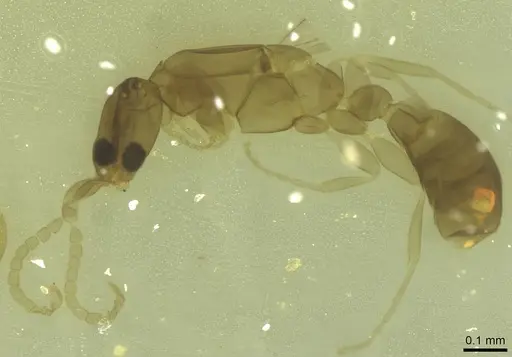
Literatura
A carregar mapa de distribuição...A carregar produtos...