
Lepisiota harteni
- Nome cient.
- Lepisiota harteni
- Tribo
- Plagiolepidini
- Subfamília
- Formicinae
- Autor
- Collingwood & Agosti, 1996
- Distribuição
- Encontrado em 0 países
Introdução
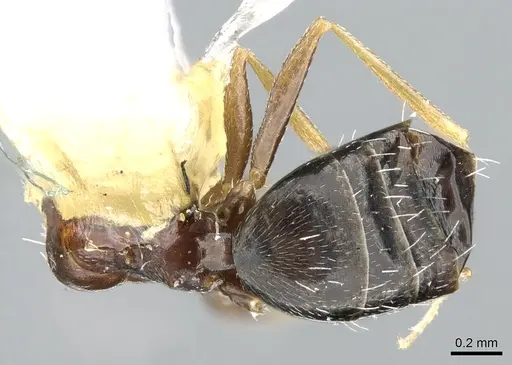
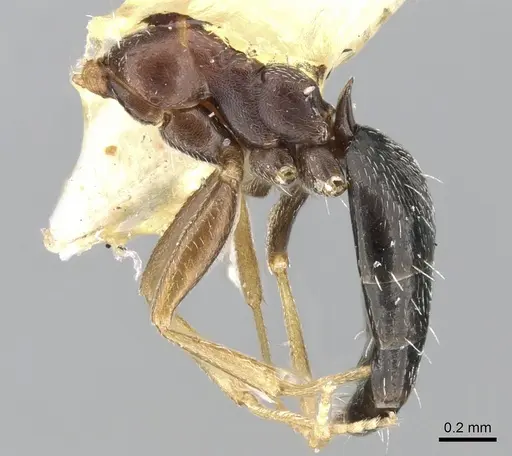
Lepisiota harteni is a tiny ant species native to Yemen in the Afrotropical region. Workers measure 2.80mm in total length, making them one of the smaller ant species you'll encounter. They have a distinctive bicolored appearance with a reddish mesosoma (middle body section) contrasting against a brown head, petiole, and gaster (abdomen). The entire body has a dull, densely punctate texture, and the gaster sports six pairs of long pale hairs on the upper surface. Their propodeal spines are short and broad-based, and the petiole has a truncate shape without lateral teeth. This species is endemic to Yemen, meaning it's found nowhere else in the world . Unfortunately, almost nothing is known about their biology in the wild - no one has documented how they build nests, what they eat, or how their colonies develop.
Quick Summary
- Difficulty: Expert
- Origin & Habitat: Yemen in the Afrotropical region. This species is endemic to the Arabian Peninsula, specifically found in Yemen. The natural habitat is not documented, but the region's climate suggests warm, likely semi-arid to dry conditions [4][1][2].
- Colony Type: Colony structure is unconfirmed. No data exists on whether they are single-queen (monogyne) or multi-queen (polygyne) colonies.
- Size & Growth:
- Queen: Unconfirmed, no queen specimens have been described in the scientific literature
- Worker: 2.80mm total length [1][3]
- Colony: Unknown, no colony size data exists for this species
- Growth: Unknown, no development data exists for this species
- Development: Unknown, this species has never been studied in captivity. Development time is unconfirmed. (Development timeline is unconfirmed. The estimate is based on genus-level patterns for small tropical ants, not on direct observation.)
- Antkeeping:
- Temperature: Not directly studied. Based on their origin in Yemen (tropical/subtropical), they likely prefer warm conditions. Start around 26°C and observe colony activity. A heating cable on one side of the nest creates a useful temperature gradient.
- Humidity: Not directly studied. Yemen has a generally dry to semi-arid climate. Keep nest substrate moderately moist but allow some drying between waterings. Provide a water test tube as a permanent moisture source. Avoid both waterlogging and complete drying.
- Diapause: Unknown, no data on overwintering requirements. Yemen has mild winters, so they may not require a true diapause. If activity slows in winter, reduce feeding and lower temperatures slightly rather than forcing full hibernation.
- Nesting: Natural nesting behavior is unconfirmed. Based on related Lepisiota species, they likely nest in soil or under stones in natural conditions. For captivity, a Y-tong (AAC) nest or plaster nest with small chambers works well for their tiny size. Test tubes can work for founding colonies but may need to be upsized as the colony grows. Their very small size means escape prevention must be excellent, use fine mesh and tight-fitting barriers.
- Behavior: Not directly studied. Based on related species in the genus Lepisiota, they are likely moderately active foragers with a generally non-aggressive temperament. Their tiny size means they pose no sting threat to humans. However, their small size makes them excellent escape artists, they can squeeze through remarkably tiny gaps. Excellent escape prevention is essential.
- Common Issues: their tiny 2.80mm size means escapes are likely without fine mesh barriers and tight-fitting lids, complete lack of biological data means you're essentially pioneering captive care for this species, expect a steep learning curve, without documented feeding preferences, you'll need to experiment to determine what they accept, wild-caught colonies may have unknown parasites or health issues since no captive breeding data exists, their unknown colony structure means you may not know optimal queen numbers for success
Housing and Nest Setup
Because Lepisiota harteni workers are tiny at 2.80mm, housing them requires attention to escape prevention. A Y-tong (AAC) nest or plaster formicarium with small, appropriately-sized chambers works well. The chambers should be tight enough that the ants feel secure but not so large that they can easily wander and get lost. Test tubes can work for founding colonies, use a cotton ball to separate the water reservoir from the ants, and ensure the opening is covered with fine mesh. Whatever nest type you choose, check all seams and openings carefully. These ants can and will squeeze through gaps you wouldn't believe possible. A layer of Fluon (ant barrier) around the edges of any outworld area adds an extra layer of protection. For the outworld, keep it simple, a small container with a sugar water feeder and protein food dish is sufficient.
Feeding and Diet
What Lepisiota harteni eats in the wild has never been documented, so you'll need to experiment based on what related Lepisiota species typically consume. Most members of this genus are omnivorous, feeding on honeydew, small insects, and nectar. Start with a diet of sugar water (or honey water diluted 1:4 with water) offered constantly on a cotton ball or through a feeder. For protein, offer small soft-bodied prey like fruit flies, pinhead crickets, or small mealworms. Because these ants are so tiny, their prey items must be appropriately sized, something no larger than their own body size. Observe what gets consumed and adjust accordingly. Some antkeepers report that Lepisiota species accept a wide variety of foods, while others are more selective. Feed protein every 2-3 days, removing any uneaten prey after 24 hours to prevent mold.
Temperature and Humidity
Since this species comes from Yemen, a warm country with a subtropical to tropical climate, they likely prefer temperatures in the 24-30°C range. Start around 26°C as a baseline and watch how your colony behaves. If workers are very active and clustered near a heat source, you can increase slightly. If they seem sluggish or avoid heated areas, reduce temperature. A heating cable placed on one side of the nest creates a natural temperature gradient that lets the ants choose their ideal spot. For humidity, Yemen is generally dry, so aim for moderate moisture in the nest, damp but not wet substrate. A water test tube provides constant humidity access. Monitor for condensation, if you see excessive moisture, improve ventilation. If the nest appears to dry out quickly between waterings, increase moisture slightly. The key is consistency, avoid dramatic swings in either temperature or humidity.
Observing and Learning
The biggest challenge with Lepisiota harteni is that almost nothing is known about their biology. This isn't a species for beginners who want clear care guidelines backed by years of captive breeding experience. Instead, this is a species for advanced antkeepers who enjoy the process of discovery and don't mind experimenting. Keep detailed notes on everything: what foods they accept, what temperatures they prefer, how quickly their colony grows, and any behaviors you observe. Take photos and compare with other antkeepers working with Lepisiota species. Over time, you'll build up knowledge that helps not just your colony but the broader antkeeping community. Consider sharing your observations, this species needs dedicated keepers willing to document their findings. The lack of data also means you may encounter issues no one has seen before, so be prepared to adapt and troubleshoot.
Frequently Asked Questions
How long does it take for Lepisiota harteni to produce first workers?
Unknown, this species has never been studied in captivity. Development time is unconfirmed. Your colony may be faster or slower depending on conditions.
What do Lepisiota harteni ants eat?
Feeding preferences are unconfirmed for this species. Based on related Lepisiota species, they likely accept sugar water/honey water and small soft-bodied insects. Start with sugar water constantly available and protein prey (fruit flies, small mealworms) offered every 2-3 days. Adjust based on what your colony actually consumes.
Can I keep Lepisiota harteni in a test tube?
Yes, test tubes work well for founding colonies. Use a small test tube with a cotton separator and water reservoir. Cover the opening with fine mesh, their tiny 2.80mm size means they can escape through surprisingly small gaps. You'll need to upgrade to a larger nest as the colony grows.
Are Lepisiota harteni good for beginners?
No. This is an expert-level species due to the complete lack of biological data. There are no established care guidelines, no documented development timelines, and no known optimal feeding or temperature ranges. You will be essentially pioneering their captive care. Choose a better-documented species for your first colony.
What temperature do Lepisiota harteni need?
Temperature requirements are not directly studied. Based on their origin in Yemen, aim for warm conditions around 24-30°C, starting at 26°C. Use a heating cable on one side of the nest to create a gradient, and adjust based on colony behavior.
Do Lepisiota harteni need hibernation?
Unknown, no data exists on overwintering requirements. Yemen has mild winters, so they may not need a true diapause. If activity decreases in cooler months, reduce feeding and lower temperatures slightly rather than forcing full hibernation.
How big do Lepisiota harteni colonies get?
Colony size is unknown, no data exists for this species.
When should I move Lepisiota harteni to a formicarium?
Move from a test tube to a proper nest (Y-tong, plaster, or naturalistic setup) when the colony reaches around 50-100 workers or when the test tube shows signs of drying out too quickly. Their tiny size means you can keep them in appropriately-sized setups longer than you might with larger species.
Why are my Lepisiota harteni dying?
Without documented care requirements, troubleshooting is difficult. Common issues likely include: temperature too cold (they prefer warmth), humidity wrong (too wet or too dry), escape-related losses, or accepting foods they don't actually need. Start by ensuring warm temperatures (24-30°C), moderate humidity, and excellent escape prevention. Consider whether wild-caught colonies may have parasites.
Report an Issue
The current care sheet is based fully on literature. See inconsistencies, or something that's incorrect? Please , it will be resolved after review from an admin. Contributing to the blogs tab also helps providing information, to make us be able to further improve the caresheets. Thank you for your support!
References

Esta ficha de cuidados é licenciada sob CC BY-SA 4.0 .
Blogs da comunidade
CASENT0906339
Ver no AntWeb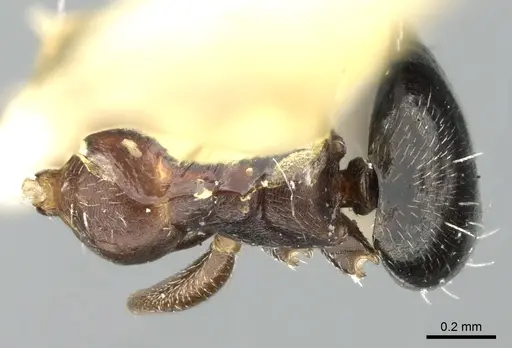
Literatura
A carregar mapa de distribuição...A carregar produtos...