
Labidus truncatidens
- Nome cient.
- Labidus truncatidens
- Subfamília
- Dorylinae
- Autor
- Santschi, 1920
- Distribuição
- Encontrado em 1 países
Introdução
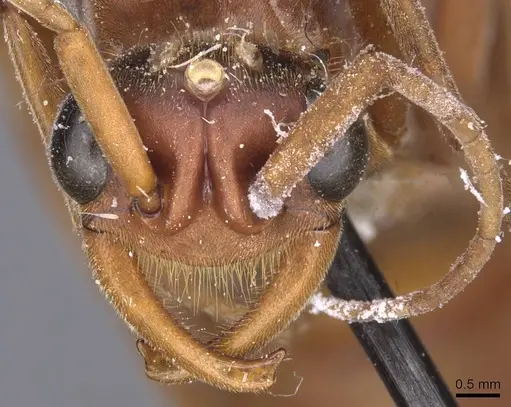
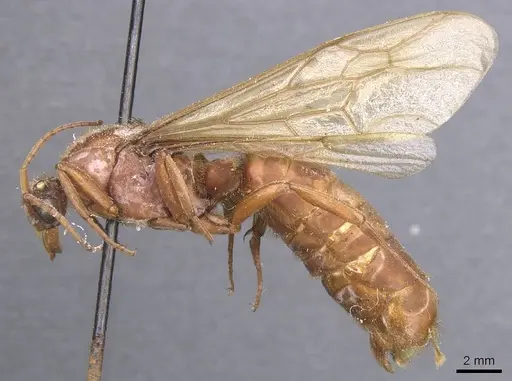
Labidus truncatidens has no available data on physical appearance or body size. It is known only from the Maroni region in French Guiana , where it was originally described. This species is one of the least studied ants in the hobby, with no documented captive colonies or biological studies since its description.
Quick Summary
- Difficulty: Expert
- Origin & Habitat: French Guiana, Maroni region [1]
- Colony Type: Unconfirmed
- Size & Growth:
- Queen: Unknown, no body size data available
- Worker: Unknown, no body size data available
- Colony: Unknown
- Growth: Unknown
- Development: Unknown (No development data exists for this species)
- Antkeeping:
- Temperature: Unknown, no specific data available
- Humidity: Unknown, no specific data available
- Diapause: Unknown
- Nesting: Unconfirmed, no data on natural nesting behavior
- Behavior: Behavior is unconfirmed for this species.
- Common Issues: this species has never been documented in captivity, no established care protocols exist, extremely limited scientific data makes reliable care recommendations impossible, related army ants are notoriously difficult to keep long-term due to their nomadic nature and specialized dietary needs, no information on whether this species accepts captive food sources or requires live ant brood, colony establishment is uncertain, only known from type specimens collected decades ago
Species Status and Availability
Labidus truncatidens is known only from type specimens collected in the Maroni region of French Guiana [1]. The species has not been observed in the wild since its original description, and there are no documented captive colonies. No other biological data is available from scientific literature.
Lack of Biological Data
This species is poorly studied, and care requirements are unknown. You should not attempt to keep this species due to the complete lack of information on behavior, diet, or nesting preferences.
Frequently Asked Questions
Can I keep Labidus truncatidens as a pet ant?
No. This species is not available to antkeepers and has never been documented in captivity. It is known only from historical museum specimens collected decades ago in French Guiana [1].
Where can I find Labidus truncatidens for sale?
This species is not available in the antkeeping hobby. It is extremely rare in scientific collections and has not been observed in the wild since its original description [1].
What do Labidus truncatidens ants eat?
Unknown for this specific species. No dietary data is available.
How big do Labidus truncatidens colonies get?
Unknown. Colony size has not been documented for this species.
What temperature and humidity do Labidus truncatidens need?
Unknown. No specific requirements are documented for this species.
How long does it take for Labidus truncatidens to develop from egg to worker?
Unknown. No development data exists for this species.
Is Labidus truncatidens good for beginners?
No. This species is not suitable for any keeper due to the complete lack of captive care information.
Do Labidus truncatidens need hibernation?
Unknown. No seasonal data exists for this species.
Can I catch a Labidus truncatidens queen from the wild?
Extremely unlikely. The species has not been documented in the wild since its original collection in the early 20th century and may be extremely rare or geographically restricted [1].
Report an Issue
The current care sheet is based fully on literature. See inconsistencies, or something that's incorrect? Please , it will be resolved after review from an admin. Contributing to the blogs tab also helps providing information, to make us be able to further improve the caresheets. Thank you for your support!
References

Esta ficha de cuidados é licenciada sob CC BY-SA 4.0 .
Blogs da comunidade
CASENT0911394
Ver no AntWeb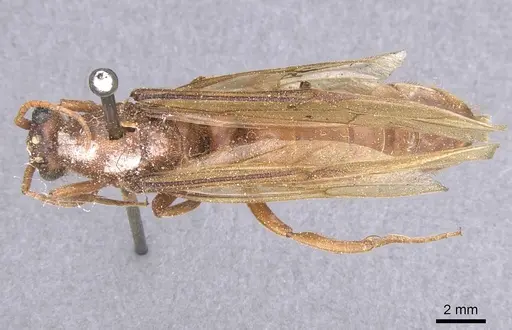
Literatura
A carregar mapa de distribuição...A carregar produtos...