
Hylomyrma reginae
- Nome cient.
- Hylomyrma reginae
- Tribo
- Pogonomyrmecini
- Subfamília
- Myrmicinae
- Autor
- Kutter, 1977
- Distribuição
- Encontrado em 4 países
Introdução
Hylomyrma reginae is a medium to large-sized Neotropical ant from northern South America, found in Brazil, French Guiana, Guyana, and Suriname. Workers measure 4.71-5.60 mm with a shiny body and distinctive striation patterns: the head has longitudinal striae that diverge toward the posterior margin, while the mesosoma shows striae in multiple directions. A key identifying feature is a well-developed, subtriangular subpostpetiolar process. Queens are larger (5.63-6.64 mm) and were only described in 2021 . This species inhabits tropical rainforests (Amazon and Inselberg forests) at elevations of 60-1051 m, typically collected from leaf litter in both primary and secondary forests. Intercastes (intermediate forms between workers and queens) have been documented in Guyana populations .
Quick Summary
- Difficulty: Hard
- Origin & Habitat: Tropical rainforests of northern South America (Brazil, French Guiana, Guyana, Suriname) at elevations 60-1051 m. Found in Amazon and Inselberg forests, both primary and secondary growth [1][2].
- Colony Type: Colony structure is unconfirmed. Intercastes have been documented, suggesting flexibility in caste development, but whether colonies are single-queen or multi-queen is unknown [1].
- Size & Growth:
- Queen: 5.63-6.64 mm [1]
- Worker: 4.71-5.60 mm [1]
- Colony: Unknown, no colony size data available
- Growth: Unknown, no development data available
- Development: Unknown, development has not been studied for this species. (No data on egg-to-worker time. Tropical species may develop faster, but this is speculative.)
- Antkeeping:
- Temperature: As a tropical rainforest species [1], keep warm year-round. Estimated ideal range 24-26°C. Provide a temperature gradient with a heating cable on one side of the nest. Avoid temperatures below 20°C.
- Humidity: High humidity is needed. Maintain 70-85% relative humidity and keep the nest substrate moist but not waterlogged. Frequent misting or a water reservoir helps.
- Diapause: No, as a tropical species from lowland rainforests [1], they do not require hibernation. Keep warm year-round.
- Nesting: In nature, nests are in fallen logs, rotten wood, between leaves, or in cavities in the upper soil layers [2]. In captivity, use a naturalistic setup with deep (5-8 cm) moist soil/peat mix, or a Y-tong/plaster nest with chambers scaled to their medium size. Provide plenty of hiding spots and leaf litter cover.
- Behavior: Behavior is largely unknown due to lack of biological studies. This is a leaf-litter species, so it likely spends most time hidden in substrate. Escape risk is moderate for medium-sized ants (standard barriers work), but no specific aggression data exists.
- Common Issues: high humidity is critical, dry conditions likely cause colony death [1]., no confirmed founding method or diet data, so experimentation is needed., wild-caught colonies may have parasites that are hard to treat., growth rate is unknown, so patience is required.
Natural History and Distribution
Hylomyrma reginae is endemic to northern South America, with records from Brazil, French Guiana, Guyana, and Suriname [1][2]. It inhabits tropical rainforests, including both Amazon and Inselberg (rocky outcrop) forests, at elevations between 60 and 1051 m. It is found in primary and secondary forests. Specimens are most often collected by sifting leaf litter, suggesting nests are hidden in fallen logs, rotten wood, between leaves, or in natural cavities just below the soil surface [2]. Intercastes (intermediate forms between workers and queens) have been documented in some Guyanan populations, hinting at unusual caste development flexibility, but the overall colony structure remains unknown [1].
Identification and Morphology
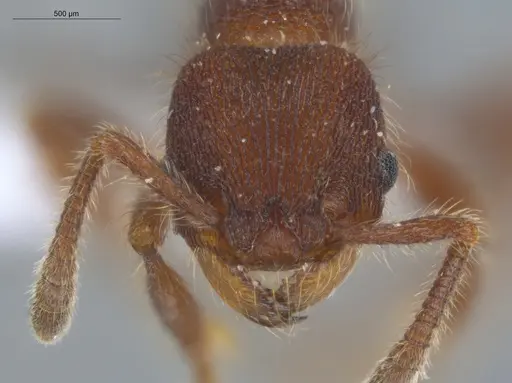
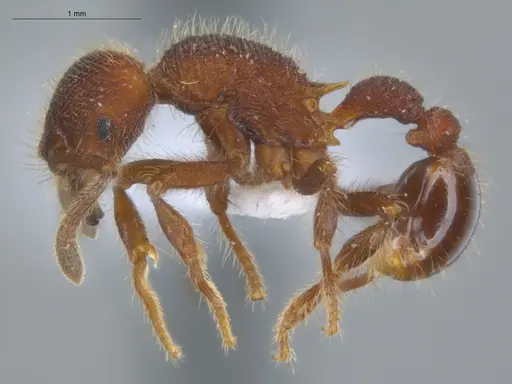
Hylomyrma reginae can be distinguished from other Hylomyrma by its prominent, subtriangular subpostpetiolar process. Workers are medium to large, total length 4.71-5.60 mm, with a shiny body. The head has regular to slightly irregular longitudinal striae that diverge toward the posterior margin, the striation crests are punctuated. On the mesosoma, striae go in multiple directions, making the interspaces hard to see. The pronotum, mesonotum, and metanotal groove have semielliptical to V-shaped striae. The petiole has a continuous, convex dorsal margin and a subtriangular projection on its lower front surface. The first gastral segment has striation only at the base. Queens are larger (5.63-6.64 mm) with larger eyes and were first described in 2021 [1].
Housing and Nest Setup
Because Hylomyrma reginae is a leaf-litter species [2], a naturalistic setup works best. Use a formicarium with at least 5-8 cm of a moist soil/peat mixture that mimics the forest floor. Add pieces of rotting wood, bark, and dried leaves to provide cover and nesting material. Alternatively, a Y-tong (AAC) or plaster nest with chambers sized for medium ants can work if kept moist. The outworld should have plenty of hiding spots (leaf litter, bark) and low lighting, as these shy ants prefer dark conditions. Keep the nest substrate consistently moist but not waterlogged. A water test tube or cotton reservoir helps maintain humidity.
Feeding and Diet
The natural diet of Hylomyrma reginae has not been studied. No specific dietary data is available. For captive feeding, try offering small protein sources like fruit flies, pinhead crickets, or pieces of mealworm, along with sugar water or honey. Start with small prey and observe acceptance. Remove uneaten food after 24-48 hours to prevent mold. Acceptance of various foods may vary, be prepared to experiment.
Temperature and Seasonal Care
Hylomyrma reginae lives in tropical rainforests [1], so it needs warm conditions year-round. Aim for 24-26°C, but exact temperature tolerance is unknown. Provide a gradient with a heating cable on one side of the nest so ants can self-regulate. Avoid direct heat on the nest material to prevent drying. Do not let temperature drop below 20°C for extended periods. As a tropical species, diapause is not required. Keep the colony warm all year and do not expose to air conditioning drafts.
Behavior and Colony Dynamics
Virtually nothing is known about the behavior of Hylomyrma reginae in the wild or captivity. It is a leaf-litter dweller, so it likely stays hidden in the substrate and forages in the upper soil layers. No data exists on aggression, defensive behavior, or activity patterns. The presence of intercastes in some populations suggests flexibility in caste development, but the significance is unknown [1]. Colony structure and size are unstudied. Keepers should expect a secretive lifestyle and be prepared for surprises.
Frequently Asked Questions
How long does it take for Hylomyrma reginae to produce first workers?
Unknown, no scientific data exists on egg-to-worker development for this species. Be patient and maintain stable warm, humid conditions.
What do Hylomyrma reginae ants eat?
Their natural diet is unknown. Offer small protein sources (fruit flies, pinhead crickets) and sugar water. Acceptance may vary, you may need to experiment with different foods.
Are Hylomyrma reginae ants aggressive?
Unknown, no observations have been reported. As a leaf-litter species, they likely avoid confrontation, but this is speculation. Treat them as non-aggressive until evidence suggests otherwise.
Do Hylomyrma reginae need hibernation?
No, as a tropical rainforest species [1], they do not require hibernation. Keep them warm year-round at 24-26°C.
Can I keep Hylomyrma reginae in a test tube setup?
A test tube can work for a founding queen, but since founding behavior is unconfirmed, start with a standard test tube setup. Once workers appear, they will likely need a naturalistic formicarium with moist substrate to thrive.
How big do Hylomyrma reginae colonies get?
Unknown, no data on maximum colony size exists. Related leaf-litter Myrmicinae often reach a few hundred workers, but this is purely speculative.
What humidity do Hylomyrma reginae need?
High humidity (70-85%) is crucial because of their rainforest habitat [1]. Keep the nest substrate moist but not waterlogged. Monitor for drying out.
Are Hylomyrma reginae good for beginners?
No, rated Hard due to a complete lack of care data. Only keep this species if you are experienced and prepared for uncertainty in founding, diet, and growth.
What temperature should I keep Hylomyrma reginae at?
Based on its tropical rainforest habitat [1], aim for 24-26°C. Do not let it drop below 20°C. Provide a temperature gradient in the nest.
When should I move Hylomyrma reginae to a formicarium?
Because founding behavior is unknown, keep the queen in a test tube setup until the first workers emerge. Then, transition to a naturalistic formicarium with moist soil substrate. Observe colony needs carefully.
Do Hylomyrma reginae queens fight?
Unknown, colony structure has not been studied. Do not attempt to combine foundresses. Keep one queen per setup to avoid risk of aggression.
Why are my Hylomyrma reginae dying?
The most likely cause is insufficient humidity. Ensure the nest substrate stays moist and ambient humidity is high. Other possibilities include low temperatures, mold, or stress from too much light. Review your husbandry first.
Report an Issue
The current care sheet is based fully on literature. See inconsistencies, or something that's incorrect? Please , it will be resolved after review from an admin. Contributing to the blogs tab also helps providing information, to make us be able to further improve the caresheets. Thank you for your support!
References

Esta ficha de cuidados é licenciada sob CC BY-SA 4.0 .
Blogs da comunidade
CASENT0900392
Ver no AntWeb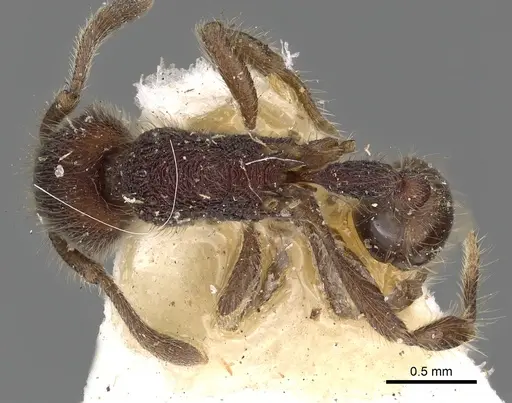
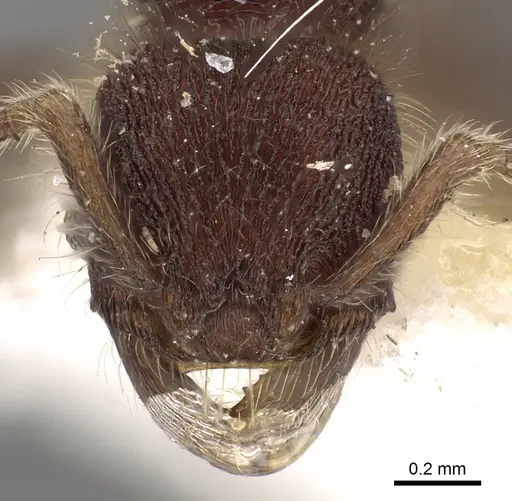
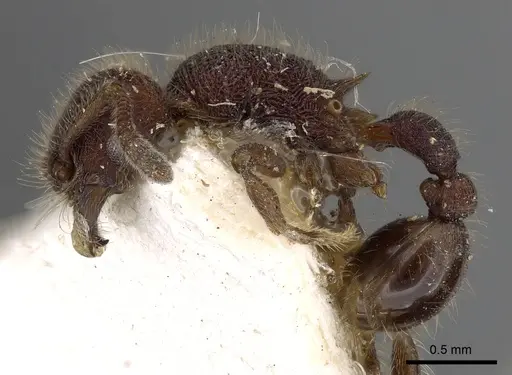
ECOFOG-IT14-0272-77
Ver no AntWeb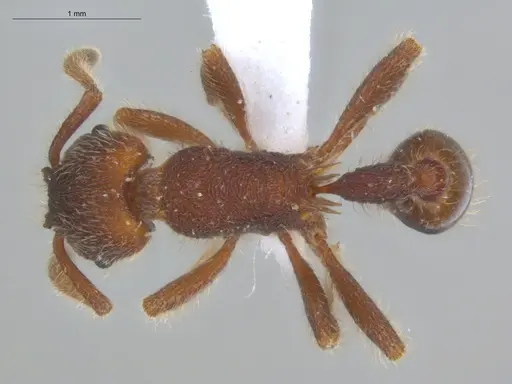
Literatura
A carregar mapa de distribuição...A carregar produtos...