
Hylomyrma marielleae
- Nome cient.
- Hylomyrma marielleae
- Tribo
- Pogonomyrmecini
- Subfamília
- Myrmicinae
- Autor
- Ulysséa, 2021
- Distribuição
- Encontrado em 4 países
Introdução
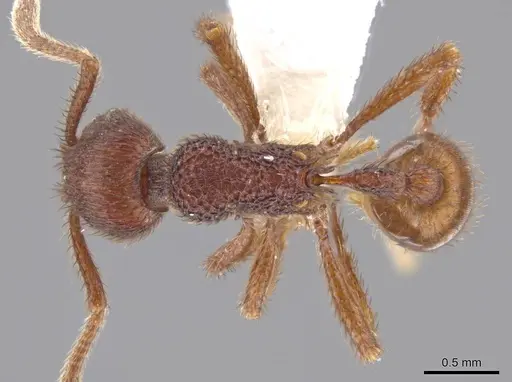
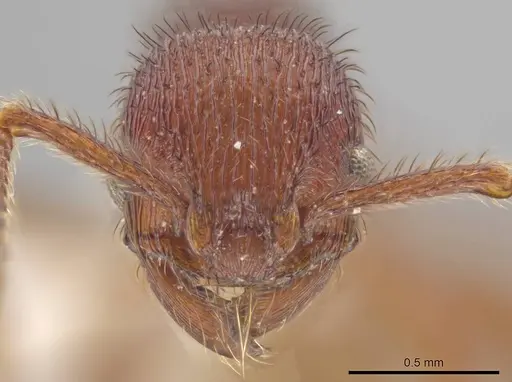
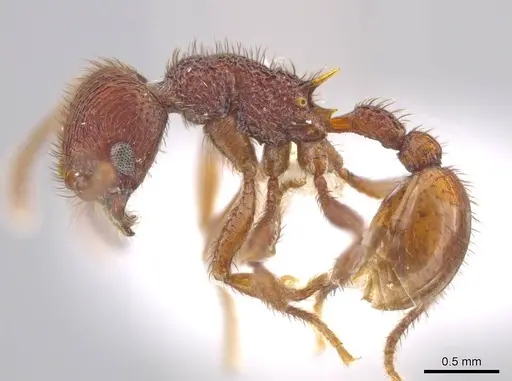
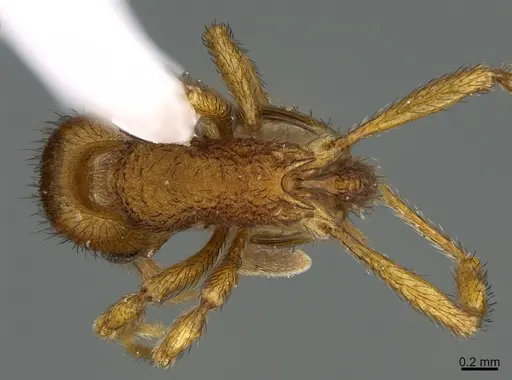
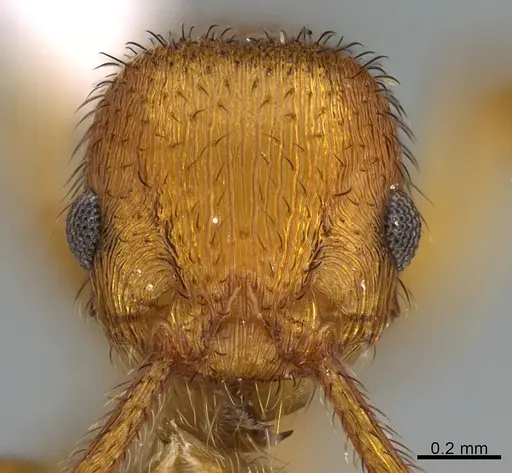
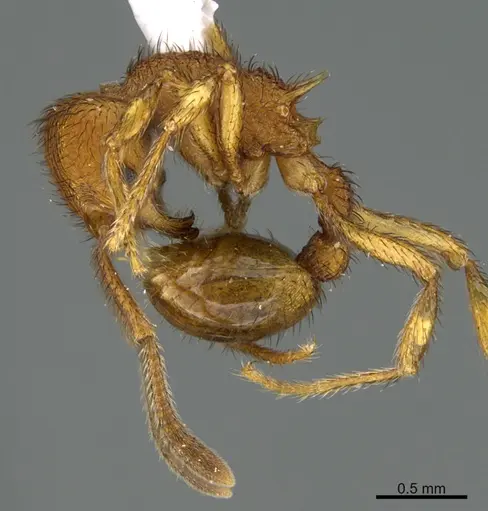
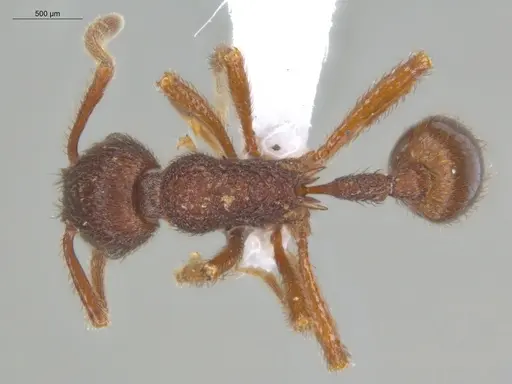
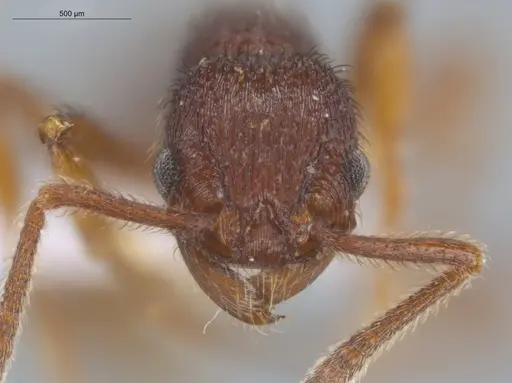
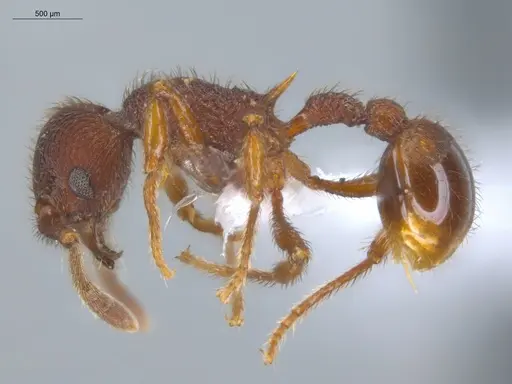
Hylomyrma marielleae is a small to midsized ant with workers measuring 4.58-4.93 mm and queens 5.29-5.52 mm in total length . The species has a shiny body covered in thick, unbranched setae, with distinctive striation patterns on the head and mesosoma . It is found in northern South America, including Brazil, Bolivia, Ecuador, French Guiana, and Peru, at elevations between 120 and 590 meters . This ant inhabits tropical rainforest, semideciduous forest, and other habitats, nesting in leaf-litter or superficial soil cavities . The species was named in 2021 after Marielle Franco, a Brazilian politician and human rights activist .
Quick Summary
- Difficulty: Hard
- Origin & Habitat: Tropical forests of northern South America at 120-590 m elevation [1][2]
- Colony Type: Unconfirmed, no data on colony structure
- Size & Growth:
- Antkeeping:
- Temperature: Keep warm, roughly 22-28°C, based on natural habitat [1]
- Humidity: Keep substrate consistently moist but not waterlogged, based on leaf-litter habitat [2]
- Diapause: No, tropical species does not require diapause [1]
- Nesting: Natural nesting in leaf-litter or superficial soil cavities, in captivity, use moist substrate nests [2]
- Behavior: Behavior is unstudied. Based on genus placement, they are likely moderate foragers. Escape prevention should be adequate as they are not extremely small [1].
- Common Issues: very limited biological data makes care recommendations uncertain, no information on founding behavior or colony development timeline, wild-caught colonies may have parasites given they are collected from leaf-litter, tropical species may be sensitive to temperature drops, no documented diet preferences, unknown what they accept in captivity
Species Discovery and Naming
Hylomyrma marielleae was described in 2021 by Ulysséa and Brandão as part of a revision of the genus Hylomyrma [1]. The species is named after Marielle Franco, a Brazilian politician and human rights activist [1]. Type specimens were collected from multiple locations in Brazil [1].
Natural Habitat and Distribution
This species lives in tropical forests at elevations of 120-590 meters in South America [1]. It inhabits rainforest, semideciduous forest, and other habitats, nesting in leaf-litter or superficial soil cavities [2].
Identification and Morphology
Workers measure 4.58-4.93 mm in total length, queens 5.29-5.52 mm [1]. The body is shiny with thick setae and distinctive striation patterns [1].
Housing and Nesting in Captivity
Since no captive care data exists, base housing on natural history. They nest in leaf-litter, so a naturalistic setup with moist substrate is recommended [2]. Use Y-tong or plaster nests with appropriate moisture.
Temperature and Humidity Requirements
Based on tropical habitat, keep temperatures around 22-28°C [1]. Humidity should be high, with moist substrate [2].
Feeding and Diet
Diet has not been studied. Offer standard ant foods like sugar water and small insects, and observe preferences.
Frequently Asked Questions
How long does it take for Hylomyrma marielleae to produce first workers?
The development timeline is unknown, no captive breeding data exists for this species.
What do Hylomyrma marielleae ants eat?
Diet has not been documented. Offer standard ant foods like sugar sources and small insects, and observe what they accept.
Can I keep multiple Hylomyrma marielleae queens together?
Colony structure is unconfirmed, it is not recommended to combine unrelated foundress queens.
What temperature should I keep Hylomyrma marielleae at?
Based on their tropical habitat, aim for 22-28°C [1].
How big do Hylomyrma marielleae colonies get?
Colony size is unknown, no data exists on maximum colony size.
Is Hylomyrma marielleae good for beginners?
No, due to the complete lack of captive care information. Only experienced keepers should attempt this species.
What type of nest should I use for Hylomyrma marielleae?
Based on natural history, a naturalistic setup with moist substrate works best [2].
Do Hylomyrma marielleae need hibernation?
No, they are a tropical species and do not require diapause [1].
Where is Hylomyrma marielleae found in the wild?
This species is found in northern South America, including Brazil, Bolivia, Ecuador, French Guiana, and Peru, at elevations of 120-590 meters [1][2].
Report an Issue
The current care sheet is based fully on literature. See inconsistencies, or something that's incorrect? Please , it will be resolved after review from an admin. Contributing to the blogs tab also helps providing information, to make us be able to further improve the caresheets. Thank you for your support!
References

Esta ficha de cuidados é licenciada sob CC BY-SA 4.0 .
Blogs da comunidade
Literatura
A carregar mapa de distribuição...A carregar produtos...