
Formicoxenus sibiricus
- Nome cient.
- Formicoxenus sibiricus
- Tribo
- Crematogastrini
- Subfamília
- Myrmicinae
- Autor
- Forel, 1899
- Distribuição
- Encontrado em 0 países
Introdução
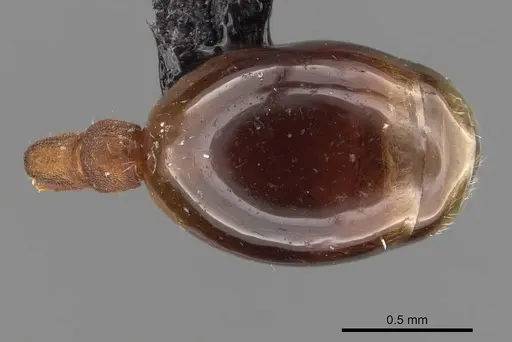
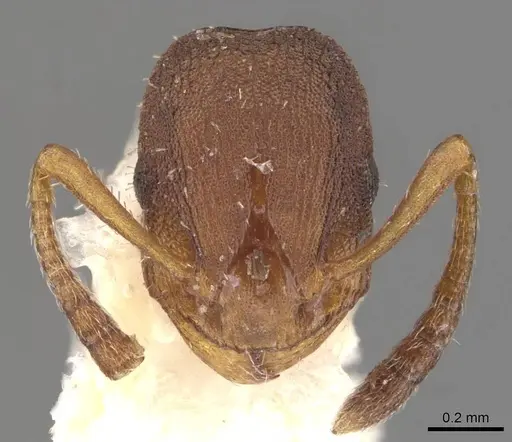
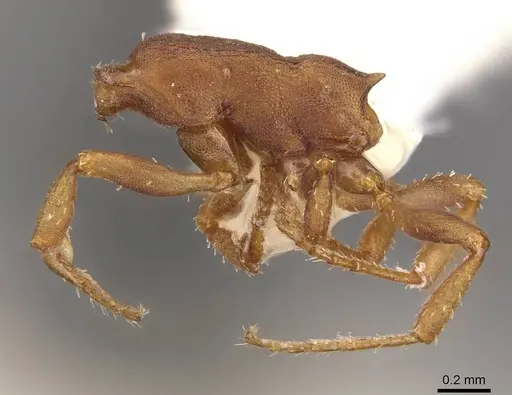
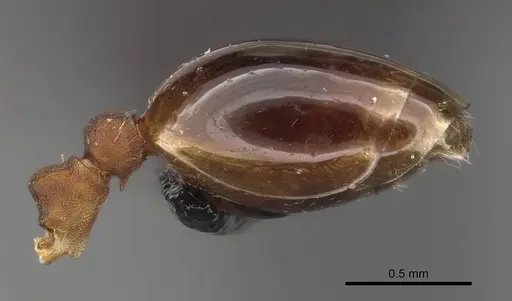
Formicoxenus sibiricus is an exceptionally tiny ant species native to Southern Central to East Siberia . These ants have a distinctly elongated head, yellowish-brown coloration throughout, and very small eyes with noticeable microsetae . The body is covered in a matt reticulate microsculpture, and they have characteristic short, blunt, fringed setae that widen from base to apex . Workers are approximately 2-3mm in total length - inferred from the Formicoxenus genus . This species is a xenobiotic ant, meaning it cannot establish its own colony and must live within the nests of host ant species . Unlike many social parasites, F. sibiricus shows no host specificity - it has been found living with Formica clara and Formica pisarskii as confirmed hosts . The species is found across Southern Central to East Siberia, with records from the Saur Mountains in Kazakhstan, the Helanshan National Nature Reserve in Inner Mongolia, and the Kulinda waterfall near Dunayevo in eastern Siberia . The biology of this species in captivity remains completely unknown, making it one of the most challenging ants to keep.
Quick Summary
- Difficulty: Expert
- Origin & Habitat: Southern Central to East Siberia. Found in the Saur Mountains (47.29°N 85.62°E), Helanshan National Nature Reserve in Inner Mongolia (38.7°N 105.9°E), and near Dunayevo in eastern Siberia (52.50°N 116.72°E) [1]. The species is associated with subtaiga-forest-steppe communities in the Baikal region [2]. Recorded in Russia in East Siberia (Buryatia, Zabaikalsk) and Far East (Primorye) [3].
- Colony Type: Xenobiotic social parasite, requires a host Formica colony to survive. Only ergatomorphs (wingless reproductive forms) are known, males have never been documented [4]. The species cannot found its own colony and must integrate into an established host nest.
- Size & Growth:
- Queen: Unconfirmed, only ergatomorphs (wingless queens/workers) are known [4]. Ergatomorphs are similar in size to workers.
- Worker: Approximately 2-3mm in total length, inferred from Formicoxenus genus [1].
- Colony: Unknown, no colony size data available.
- Growth: Unknown, cannot be measured as the species cannot establish independent colonies.
- Development: Unconfirmed, this species cannot found independent colonies and requires a host Formica colony. (As a social parasite, F. sibiricus does not produce its own worker brood independently. Instead, it relies on the host colony to raise any brood.)
- Antkeeping:
- Temperature: Unknown, no specific temperature data exists for this species. Given its Siberian distribution, it likely tolerates cooler temperatures but specific requirements are unconfirmed.
- Humidity: Unknown, no humidity data exists. The species inhabits the Baikal region which has continental climate with dry, cold winters and warm summers.
- Diapause: Likely yes, based on Siberian distribution and host species (Formica) biology. Formica species typically require winter hibernation.
- Nesting: Xenobiotic, lives within the nests of host Formica species. In captivity, this would require maintaining a healthy host Formica colony and introducing the parasites into it. Standard test tube or formicarium setups are not suitable for this species.
- Behavior: Behavior is unstudied. As a xenobiotic ant, it lives harmoniously within host Formica colonies. The species is not aggressive and cannot defend itself independently, it relies entirely on host workers for protection and food. Escape risk is extremely high given their tiny size of approximately 2-3mm.
- Common Issues: requires a host Formica colony, cannot be kept as an independent species., extremely tiny size makes escape prevention nearly impossible with standard equipment., biology completely unknown, no established care protocols exist., only ergatomorphs known, cannot establish colony through nuptial flights., host specificity is low but requires Formica species as hosts., cannot be collected from the wild and maintained without a host colony.
Understanding Xenobiotic Ants
Formicoxenus sibiricus belongs to a rare category of ants called xenobiotic ants, social parasites that live within the nests of other ant species without founding their own colonies [1]. Unlike temporary social parasites that invade a host colony, kill the host queen, and then use host workers to raise their own brood, xenobiotic ants live permanently alongside their hosts in a seemingly harmonious relationship. This makes them fundamentally different from most ants you can keep. You cannot establish a Formicoxenus colony the way you would establish a Camponotus or Lasius colony, they must already live in a host nest to survive. This species has been found with multiple host species (Formica clara and Formica pisarskii), showing it is not particularly choosy about which Formica species it lives with [1]. Only ergatomorphs (wingless reproductive forms) have been documented for this species, no winged queens or males have ever been observed [4].
Why This Species Is Extremely Difficult to Keep
Formicoxenus sibiricus is one of the most challenging ant species to keep in captivity, possibly the most challenging. The primary reason is that it cannot form independent colonies, it requires a host Formica colony to survive. Even if you could obtain specimens, you would need to maintain a healthy Formica colony (likely Formica clara or a related species) and successfully introduce the parasites into it. The biology of how this integration works is completely unknown in scientific literature [4]. Additionally, workers are extremely tiny at approximately 2-3mm [1], meaning they could escape through gaps invisible to the naked eye. There is no established protocol for keeping this species, and no one has documented success in captivity. The species has never been observed producing its own workers, it appears to exist entirely within host colonies.
Housing and Host Requirements
If you were to attempt keeping this species, you would need to maintain a host Formica colony first. Formica species are large, aggressive ants that require their own specific care conditions, typically room-temperature to warm conditions, dry to moderately humid nests, and protein-based diets. Once you have a thriving Formica colony, you would need to figure out how to introduce F. sibiricus without the host workers killing them. The introduction method is completely unknown, there is no research on how these parasites integrate into host colonies. Standard ant-keeping equipment like test tubes and small formicaria would not work for such tiny ants, as they would escape immediately. This species is not recommended for any keeper regardless of experience level, as the fundamental biological requirements for success are completely unknown.
Legal and Ethical Considerations
This species is native to Russia (East Siberia), Mongolia, and northern China. Keeping this species would require obtaining them from the wild in these regions, which raises significant legal and ethical concerns. Many countries have regulations about collecting native insects, and international transport may be restricted. Additionally, because the species is a social parasite that requires a host colony, removing individuals from the wild would likely result in their death unless you also collect a compatible host colony. Given that the biology is completely unknown and success in captivity has never been documented, there is no ethical way to keep this species as a hobbyist antkeeper.
Frequently Asked Questions
Can I keep Formicoxenus sibiricus like other ants?
No. Unlike most ant species, F. sibiricus is a xenobiotic social parasite that cannot establish independent colonies. It requires a host Formica colony to survive. There is no established method for keeping this species in captivity, and it is not recommended for any keeper.
How do I start a Formicoxenus sibiricus colony?
You cannot. This species has never been documented producing its own colony through nuptial flights. Only ergatomorphs (wingless reproductive forms) are known, no winged queens or males have ever been observed [4]. Even if you could obtain specimens, they would die without a host Formica colony.
What do Formicoxenus sibiricus eat?
Unknown. Their feeding biology within host colonies has never been studied. They likely receive food through trophallaxis (mouth-to-mouth sharing) with host workers, similar to other xenobiotic ants.
Do Formicoxenus sibiricus ants sting?
Given their extreme tiny size (approximately 2-3mm), any sting would be completely imperceptible to humans. However, these ants are completely dependent on their host colony for defense and would not be able to sting independently.
Are Formicoxenus sibiricus good for beginners?
No. This species is not suitable for any level of ant keeper. The biology is completely unknown, they cannot form independent colonies, and success in captivity has never been documented. Keeping this species would require both a host Formica colony and knowledge that does not yet exist in the ant-keeping hobby.
What temperature do Formicoxenus sibiricus need?
Unknown. No temperature requirements have been documented in scientific literature. The species is found in Siberia, so it likely tolerates cool temperatures, but specific requirements are unconfirmed.
Do Formicoxenus sibiricus need hibernation?
Likely yes, based on their Siberian distribution and the biology of their host species (Formica). Formica species typically require winter hibernation. However, this is inferred from related species rather than directly studied for F. sibiricus.
Where can I find Formicoxenus sibiricus?
This species is found in East Siberia (Russia), Mongolia, and northern China. It lives within nests of Formica species, specifically Formica clara and Formica pisarskii have been confirmed as hosts [1]. However, collecting this species is not recommended as keeping them is not currently possible.
Report an Issue
The current care sheet is based fully on literature. See inconsistencies, or something that's incorrect? Please , it will be resolved after review from an admin. Contributing to the blogs tab also helps providing information, to make us be able to further improve the caresheets. Thank you for your support!
References

Esta ficha de cuidados é licenciada sob CC BY-SA 4.0 .
Blogs da comunidade
CASENT0909066
Ver no AntWeb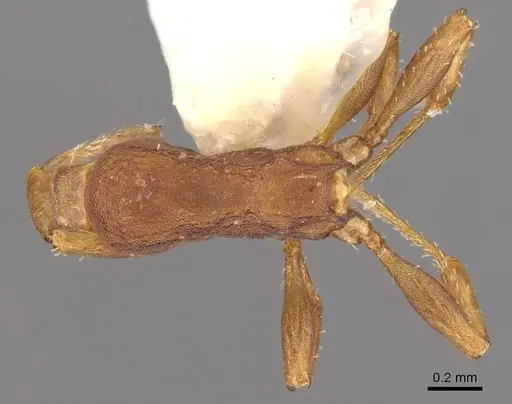
Literatura
A carregar mapa de distribuição...A carregar produtos...