
Formica indianensis
- Nome cient.
- Formica indianensis
- Tribo
- Formicini
- Subfamília
- Formicinae
- Autor
- Cole, 1940
- Distribuição
- Encontrado em 0 países
Introdução
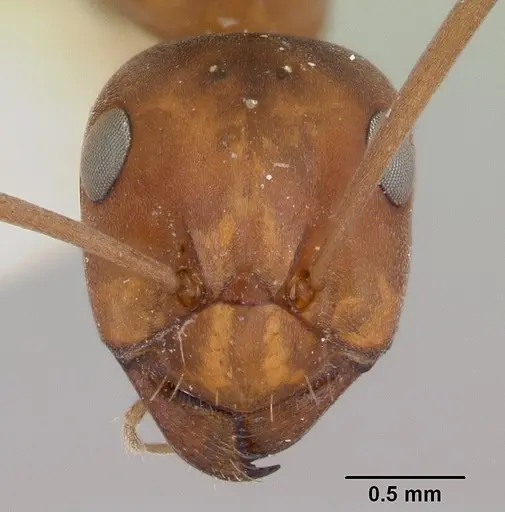
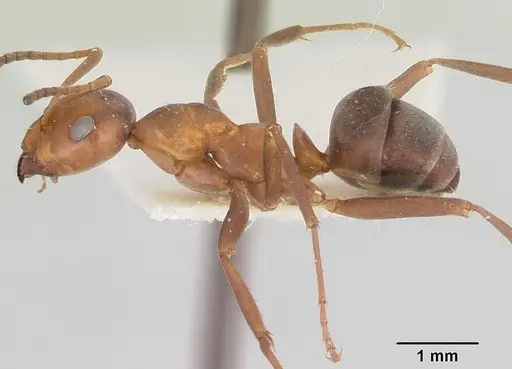
Formica indianensis is a small to medium-sized ant measuring 4.0-6.0mm in body length . Workers are reddish-brown to dark brown with a dark brown gaster, and all surfaces appear dull and punctate [AntWiki]. The scape and tibiae have very few erect hairs, with only scattered bristles on the flexor surface of the tibiae. This species belongs to the Formica microgyna group. Found across the eastern United States from New York south to Florida and west to Texas, these ants inhabit wooded areas . The most notable aspect of this species is its biology as a likely temporary social parasite - the queen invades a host colony of another Formica species, kills or replaces the host queen, and uses the host workers to raise her first brood.
Quick Summary
- Difficulty: Expert
- Origin & Habitat: Eastern United States (New York to Florida, west to Michigan, Illinois, Missouri, Texas). Inhabits wooded areas [1].
- Colony Type: Temporary social parasite, queen must invade host colony of another Formica species to establish.
- Size & Growth:
- Antkeeping:
- Temperature: Keep around 20-24°C. No specific data exists for this species.
- Humidity: Moderate humidity, they inhabit wooded areas which are not extremely wet or dry.
- Diapause: Likely required, typical of temperate Formica species from this region.
- Nesting: Standard formicarium setups work well, Y-tong, plaster, or soil nests. As a woodland species, they appreciate some substrate depth and moderate darkness.
- Behavior: Workers are active foragers, typical of Formica species. They are not particularly aggressive but will defend the colony. Escape prevention is important, use standard barriers like Fluon. As a temporary parasite, the founding queen cannot found a colony alone.
- Common Issues: temporary parasitic founding makes colony establishment extremely difficult, queens cannot found alone, host species is unknown, finding the right host is nearly impossible, rare species with limited data, care information is largely inferred, colonies may fail if host colony dies or is rejected, winter dormancy requirements are not well documented but likely necessary
Understanding Temporary Parasitism in Formica indianensis
Formica indianensis is classified as a likely temporary social parasite, meaning the queen cannot found a colony independently like most ant species. Instead, a newly mated queen must locate and invade an established colony of another Formica species. She kills or replaces the host queen and uses the host workers to raise her first brood. This behavior is called temporary parasitism because the queen eventually establishes her own colony with her offspring taking over the nest. The challenge for antkeepers is that the specific host species for F. indianensis is unknown [2]. Without the correct host species, a founding queen cannot establish a colony. This makes F. indianensis one of the most difficult North American ants to keep.
Housing and Nest Setup
Once established with a host colony, standard Formica housing works well. Use a test tube setup for the founding queen and colony, then transition to a formicarium as the colony grows. Y-tong nests, plaster nests, or soil nests all work for Formica species. Provide a water source via test tube reservoir and maintain moderate humidity. These ants inhabit wooded areas, so they appreciate some substrate depth and darker nesting chambers. Escape prevention is important, use Fluon on all edges and ensure any connections between outworld and nest are secure. Workers are 4-6mm so they cannot squeeze through standard barriers, but vigilance is still important. [1]
Feeding and Diet
Formica species are omnivorous, feeding on honeydew, nectar, and insects. Feed sugar water or honey water as a constant energy source. Offer protein sources like small insects (fruit flies, small crickets, mealworms) regularly. In established colonies with a host, the host workers will forage and care for the brood. Do not overfeed, excess food mold can kill colonies. Remove uneaten prey after 24-48 hours. [2]
Temperature and Seasonal Care
Keep colonies at room temperature (20-24°C) with slight warming if possible. No specific thermal data exists for this species, so monitor colony activity to find the ideal range. Like most temperate Formica species, they likely require a winter dormancy period (diapause). During winter (roughly November-February in the Northern Hemisphere), reduce temperature to 5-10°C and reduce feeding. Do not feed during diapause but ensure some moisture is available. Resume normal temperatures and feeding in spring. [1]
Challenges and Why This Species Is Expert-Only
Formica indianensis is not recommended for beginners for several critical reasons. First, the founding biology is extremely challenging, queens cannot found colonies alone and require a specific (unknown) host Formica species. Second, even if you obtain a queen, introducing her to a host colony is complex and often fails. Third, the host colony may reject or kill the intruding queen. Fourth, this is a rare species with very limited documented care information, most advice is inferred from related species. Fifth, obtaining stock is difficult since they are not commonly available in the antkeeping hobby. If you are interested in Formica species, consider starting with more established species like Formica fusca or Formica rufa which have well-documented care requirements and can be founded normally. [3][1]
Frequently Asked Questions
Can I keep Formica indianensis in a test tube?
Only after obtaining an established colony with host workers. A founding queen cannot survive alone in a test tube, she requires a host colony to survive. If you obtain an established colony, a test tube setup works fine as a founding setup.
How do I start a Formica indianensis colony?
You cannot start from a single queen like most ants. This species is a temporary social parasite, meaning the queen must invade and take over a host Formica colony. The host species is unknown, making this extremely difficult. Your best option is to obtain an established colony from an experienced keeper who has already propagated them.
What is the host species for Formica indianensis?
The host species is unknown [2]. This is one of the major challenges with keeping this species, even if you find a queen, you need to identify and obtain the correct host Formica species for her to establish a colony.
How long does it take for Formica indianensis to develop from egg to worker?
Unknown, no specific development data exists for this species. Based on typical Formica development patterns, it likely takes 6-10 weeks from egg to worker at optimal temperature (around 20-24°C).
Are Formica indianensis good for beginners?
No. This species is considered expert-only due to its temporary parasitic founding biology. Beginners should start with easier species like Formica fusca, Lasius niger, or Camponotus species that can found colonies independently.
Do Formica indianensis need hibernation?
Likely yes. As a temperate species from the eastern United States, they probably require a winter dormancy period (diapause) of 2-3 months at 5-10°C during winter months.
How big do Formica indianensis colonies get?
Unknown, no colony size data exists for this rare species.
Where is Formica indianensis found in the wild?
Eastern United States, ranging from New York south to Florida and west to Michigan, Illinois, Missouri, and Texas. They inhabit wooded areas [1]. In Indiana, they are rare and only known from Jasper County [3].
Report an Issue
The current care sheet is based fully on literature. See inconsistencies, or something that's incorrect? Please , it will be resolved after review from an admin. Contributing to the blogs tab also helps providing information, to make us be able to further improve the caresheets. Thank you for your support!
References

Esta ficha de cuidados é licenciada sob CC BY-SA 4.0 .
Blogs da comunidade
CASENT0103358
Ver no AntWeb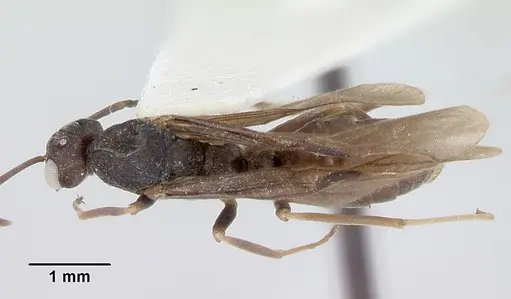
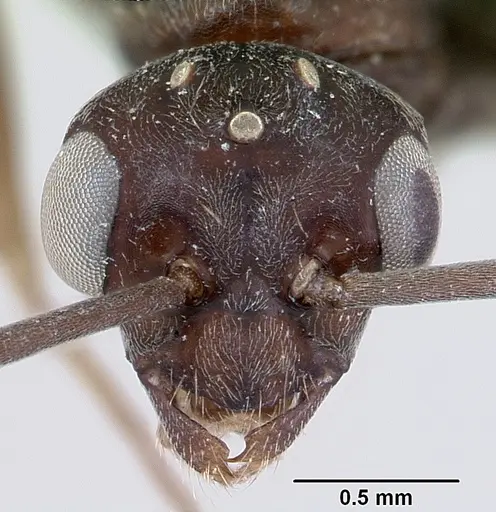
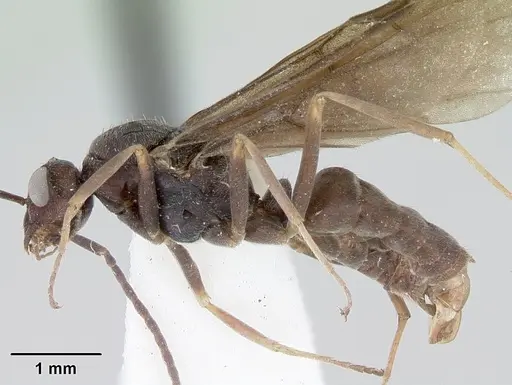
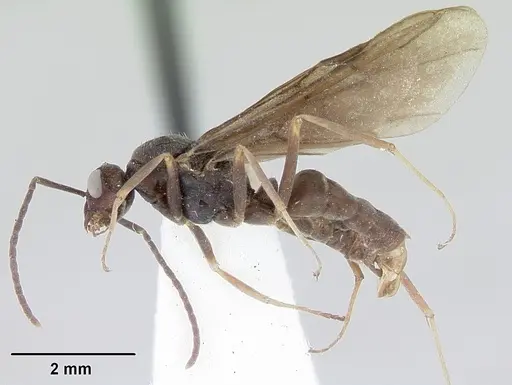
CASENT0105749
Ver no AntWeb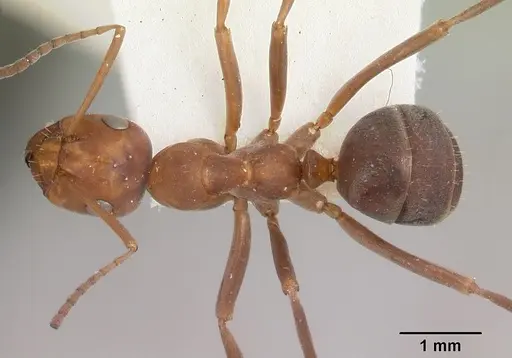
Literatura
A carregar mapa de distribuição...A carregar produtos...