
Emeryopone loebli
- Nome cient.
- Emeryopone loebli
- Tribo
- Ponerini
- Subfamília
- Ponerinae
- Autor
- Baroni Urbani, 1975
- Distribuição
- Encontrado em 0 países
Introdução
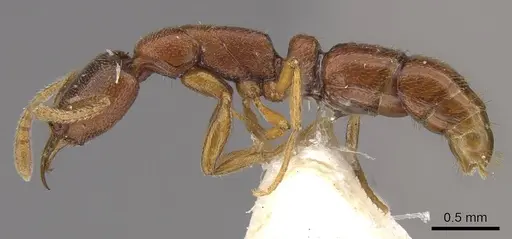
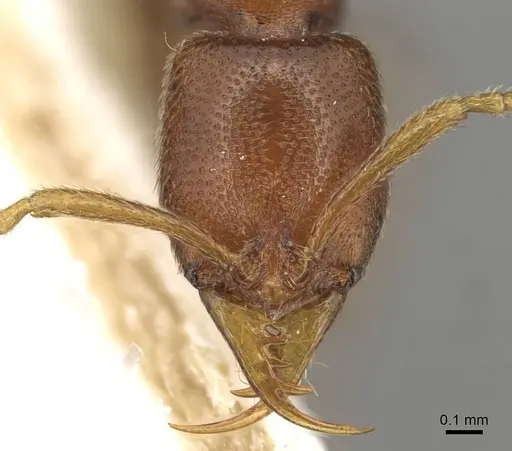
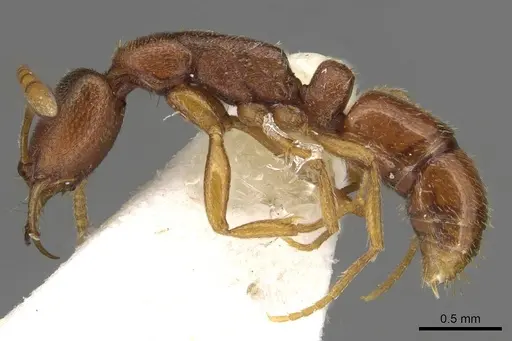
Emeryopone loebli is an extremely rare Ponerine ant known from only a handful of specimens across the Eastern Mediterranean. Workers are slender with distinctive elongated mandibles, adapted for their predatory lifestyle. The species was originally described from northern Israel (Galilea) in an arid area with Eucalyptus and Opuntia . Subsequent records include a single worker from Saudi Arabia (Al Qatif) found in soil litter under a date palm , and most recently a worker collected from rotting oak wood in the Zagros Mountains of Iran at 1645m elevation . This disjunct distribution is unusual - the genus Emeryopone is primarily tropical American, making this one of the few Old World representatives . The species remains one of the least-studied ants in the region, with virtually no captive breeding records or detailed biological observations.
Quick Summary
- Difficulty: Expert
- Origin & Habitat: Eastern Mediterranean, northern Israel (Galilea), Saudi Arabia (Al Qatif), and western Iran (Zagros Mountains). Found in diverse habitats: arid areas with Eucalyptus and Opuntia [1], soil litter under date palms [1], and oak forest at 1645m elevation with rotting wood [1].
- Colony Type: Unknown. Colony structure has not been documented in scientific literature.
- Size & Growth:
- Queen: Unknown, queens have not been described in the scientific literature
- Worker: Unknown, only workers described, exact measurements not available in the source material
- Colony: Unknown, no colony size data exists
- Growth: Unknown
- Development: Unknown, no development data exists for this species. Based on related Ponerinae, estimate 6-10 weeks at warm temperatures, but this is purely speculative. (Development timeline is unconfirmed. This is one of the least-studied ant species in the region.)
- Antkeeping:
- Temperature: Likely warm conditions based on Eastern Mediterranean origin. Start around 22-26°C and observe colony activity. Related Ponerinae typically prefer temperatures in the low-to-mid 20s°C.
- Humidity: Variable based on collection data, from arid Israeli conditions to damp oak forest in Iran. Provide a gradient with both drier and moister areas in the nest. Aim for moderate humidity (50-70%) with substrate moisture available.
- Diapause: Unknown. Eastern Mediterranean species may tolerate cooler winters but diapause requirements have not been studied.
- Nesting: In nature, workers have been found in rotting wood and soil litter [1]. In captivity, a naturalistic setup with rotting wood pieces or a Y-tong/plaster nest with moisture chambers works well. Avoid overly dry conditions.
- Behavior: Behavior is unstudied. As a Ponerine, it likely possesses a functional sting, but detailed behavior is unknown. Escape prevention should be excellent given the unknown size of workers, assume they are small to medium based on the genus.
- Common Issues: extremely limited availability, this species is rarely available in the antkeeping hobby, no captive breeding records exist, expect significant trial and error, diet preferences unknown, must experiment with various prey items, humidity and temperature requirements are speculative, wild-caught colonies may have high parasite loads given their rarity
Rarity and Collection History
Emeryopone loebli is one of the rarest ants in the Eastern Mediterranean region. The species was originally described in 1975 from just four workers collected in Galilee, Israel [1]. For nearly a decade, this remained the only known record until a single worker was reported from Saudi Arabia (Al Qatif) found in soil litter under a date palm [2][1]. The most recent record comes from Iran (2023), where a single worker was collected from rotting oak wood in the Zagros Mountains at 1645m elevation [1]. This species remains known from fewer than 10 specimens worldwide. The unusual distribution pattern, with the genus primarily being tropical American, suggests either ancient dispersal events or possible intermediate populations yet to be discovered [2].
Natural Habitat and Microclimate
The known collection sites paint a picture of a habitat generalist that tolerates diverse conditions. In Israel, workers were found in an arid area overgrown with Eucalyptus trees and Opuntia (prickly pear) cacti, suggesting tolerance for dry, somewhat disturbed environments [1]. The Saudi Arabian record from under a date palm indicates adaptation to agricultural settings with leaf litter [1]. The Iranian record from oak forest at 1645m elevation shows the species can also thrive in cooler, more humid montane environments [1]. This ecological flexibility suggests the species may be more widespread than currently known, potentially occupying microhabitats that are undersampled [1].
Taxonomy and Relationships
Emeryopone loebli was originally described as Emeryopone loebli by Baroni Urbani in 1975 before being transferred to the genus Emeryopone by Bolton in 1995 [1]. The genus Emeryopone belongs to the subfamily Ponerinae, tribe Ponerini, a group known for their relatively primitive social structure and often powerful stingers. The most zoogeographically interesting aspect of this species is the genus distribution: Emeryopone is primarily distributed in tropical America, making E. loebli one of the few Old World representatives [2]. This disjunction is unusual and raises questions about the species' evolutionary history and whether intermediate populations exist in Africa or elsewhere in the Middle East [2].
Keeping an Extremely Rare Species
Emeryopone loebli represents a significant challenge even for experienced antkeepers due to the complete lack of captive husbandry information. No established protocols exist for breeding this species, and keepers must essentially become pioneers. Start with standard Ponerinae care: a naturalistic setup with moist substrate, multiple hiding spots, and a consistent food source. Since nothing is known about their exact diet, begin with small live prey (fruit flies, pinhead crickets, mealworms) and sugar water. Monitor colony behavior closely, if workers ignore certain prey, try alternatives. The key to success with such rare species is patience and careful observation. Document your results thoroughly as any captive breeding information would be scientifically valuable for this poorly known ant.
Temperature and Seasonal Considerations
Given the species' distribution spanning from arid Israel to montane Iran, some temperature flexibility is likely. However, the Iranian collection at 1645m elevation in April suggests activity during warmer months [1]. Maintain nest temperatures in the low-to-mid 20s Celsius (approximately 22-26°C) as a starting point. Provide a temperature gradient so the colony can self-regulate. During winter, reduce temperatures gradually to simulate natural seasonal cycles, even though diapause is not confirmed, the Eastern Mediterranean climate includes a cool winter period that likely influences their cycle. Avoid extreme drops below 15°C until more is known about their cold tolerance.
Frequently Asked Questions
How rare is Emeryopone loebli in the antkeeping hobby?
Extremely rare. This species is known from fewer than 10 specimens worldwide and has never been documented in commercial ant trade. Finding a colony would be exceptional [1].
What do Emeryopone loebli ants eat?
Diet is completely unstudied. Based on Ponerinae biology, they are likely predatory using their elongated mandibles to capture small arthropods. Start with live prey like fruit flies, springtails, and small crickets. Sugar sources may or may not be accepted, offer honey or sugar water occasionally but do not rely on it.
How long does it take for Emeryopone loebli to develop from egg to worker?
Unknown, no development data exists for this species. Based on related Ponerinae, estimate 6-10 weeks at optimal warm temperatures, but this is purely speculative.
Can beginners keep Emeryopone loebli?
No. This species is recommended only for expert antkeepers with significant experience. There are no established care protocols, and success requires extensive experimentation and documentation.
What type of nest does Emeryopone loebli need?
Based on collection data (rotting wood, soil litter), a naturalistic setup with rotting wood pieces or a well-structured Y-tong/plaster nest with moisture-retentive chambers works best. Provide both humid and drier areas [1].
Do Emeryopone loebli need hibernation?
Diapause requirements are unknown. The Eastern Mediterranean distribution suggests they experience cooler winters. Provide a cool period (15-18°C) during winter months but avoid true cold hibernation until more is known.
How big do Emeryopone loebli colonies get?
Unknown, no colony size data exists. Based on related Ponerinae, colonies likely reach several hundred workers at most, but this is purely speculative.
Where does Emeryopone loebli come from?
The species is known from northern Israel (Galilea), Saudi Arabia (Al Qatif), and western Iran (Zagros Mountains). This Eastern Mediterranean distribution is unusual for a genus primarily found in tropical America [1][3].
Is Emeryopone loebli aggressive?
Aggression level is unstudied. Ponerine ants are typically not highly aggressive toward humans but will defend their nest. They are ambush predators by nature, using their elongated mandibles rather than swarm defense.
Report an Issue
The current care sheet is based fully on literature. See inconsistencies, or something that's incorrect? Please , it will be resolved after review from an admin. Contributing to the blogs tab also helps providing information, to make us be able to further improve the caresheets. Thank you for your support!
References

Esta ficha de cuidados é licenciada sob CC BY-SA 4.0 .
Blogs da comunidade
CASENT0911131
Ver no AntWeb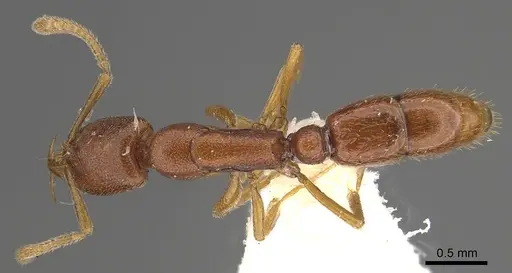
CASENT0915184
Ver no AntWeb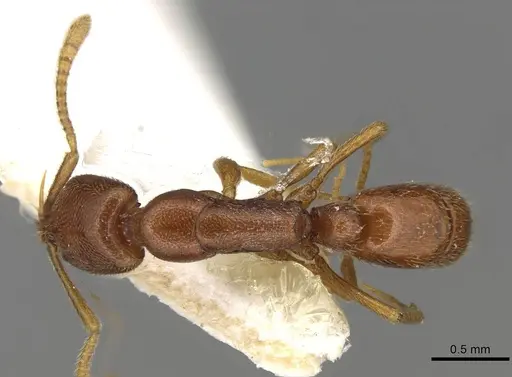
Literatura
A carregar mapa de distribuição...A carregar produtos...