
Echinopla subtilis
- Nome cient.
- Echinopla subtilis
- Tribo
- Camponotini
- Subfamília
- Formicinae
- Autor
- Zettel & Laciny, 2015
- Distribuição
- Encontrado em 0 países
Introdução
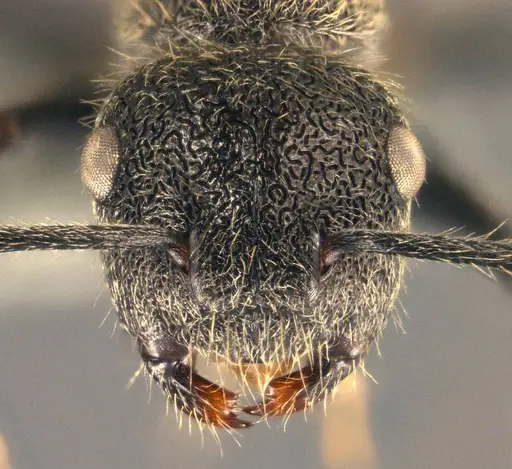
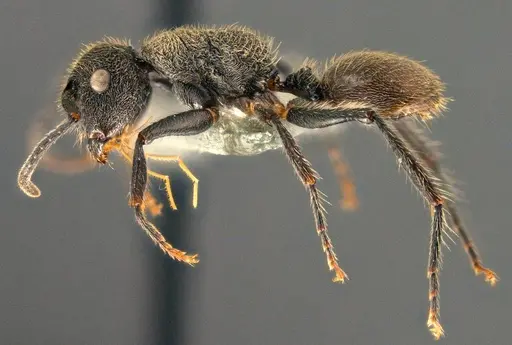
Echinopla subtilis is a medium-sized, slender ant measuring 6.1-6.8mm in total length, predominantly black in coloration with distinctive white setae covering its dorsal surface . This species was only recently described in 2015 and is the sole member of the Echinopla subtilis group, known only from worker castes . The most striking feature is its unique sculpture: the dorsal surface of the head and mesonotum has irregularly winding deep impressions, while the gaster (abdomen) appears dull due to very fine, dense puncturation . The petiole (the 'waist' segment) features prominent lateral spines and a dorsal crest with small teeth and tubercles . Found exclusively on Borneo in lower montane mixed dipterocarp forests above 650m elevation, this is a rarely kept species in the antkeeping hobby due to limited distribution and recent scientific description .
Quick Summary
- Difficulty: Unknown, no established husbandry data
- Origin & Habitat: Borneo (Indonesia, Malaysia) in lower montane mixed dipterocarp forest above 650m elevation [1][3]
- Colony Type: Unknown, only workers have been collected, colony structure has not been documented
- Size & Growth:
- Queen: Unknown, queen caste has not been described in scientific literature
- Worker: 6.1-6.8mm [1]
- Colony: Unknown, no colony size data available
- Growth: Unknown
- Development: Unknown, no development data exists for this species (Based on typical Formicinae patterns, development likely takes 6-10 weeks at optimal temperature, but this is unconfirmed for this species)
- Antkeeping:
- Temperature: Unknown, no thermal studies exist. Based on montane forest origin (>650m elevation in Borneo), likely prefers temperatures in the low-to-mid 20s°C range. Start around 22-25°C and observe colony activity.
- Humidity: Unknown, no humidity data. Montane forest habitat suggests moderate to high humidity needs (60-80%). Keep substrate consistently moist but not waterlogged.
- Diapause: Unknown, no seasonal studies exist. Tropical montane species may have reduced diapause requirements compared to temperate species, but this is unconfirmed.
- Nesting: No captive nesting data exists. In the wild, specimens were collected via fogging from vegetation (Aporusa sp.) in lower montane forest, suggesting they may be arboreal or nest in elevated locations [1]. Based on related Echinopla species, likely accepts naturalistic setups with access to vertical structures or cork bark setups.
- Behavior: No behavioral studies exist for this species. As a Formicinae ant, they lack a functional sting but may bite and spray formic acid from their acidopore as a defense mechanism (typical for the subfamily). Their distinctive spines suggest potential defensive capabilities. Escape risk is moderate given their 6-8mm size, standard barrier methods should suffice.
- Common Issues: no established husbandry guidelines, this is a newly described species with no captive care history, queen and colony structure unknown, keepers cannot easily start colonies, limited availability, rarely collected or available in the antkeeping trade, montane origin suggests specific temperature and humidity needs that differ from common tropical species, no dietary preferences documented, unknown what foods they will accept
Species Discovery and Taxonomy
Echinopla subtilis was only formally described in 2015 by Herbert Zettel and Alice Laciny, making it one of the more recently described ant species available in the hobby [1]. It is the type species of the newly established Echinopla subtilis group, which is distinct from other Echinopla species groups due to its unique sculptural features [2]. The species name 'subtilis' is Latin for 'fine' or 'subtle', referring to the fine sculpture of the first gaster tergite that gives it a matt appearance [1]. The type specimens were collected in Sabah, Malaysia (Borneo), from a lower montane mixed dipterocarp forest at an elevation exceeding 650 meters [1]. Only the worker caste has been scientifically described, queens and males remain unknown.
Identification and Distinguishing Features
Echinopla subtilis can be identified by several unique characteristics that set it apart from other Echinopla species. The head is wider than long, and the dorsal surface features irregularly winding deep impressions that are most visible in the center of the face where pilosity is reduced [1]. The maxillary palpi are exceptionally long, a distinctive morphological feature [2]. The mesosoma is slender. The petiole (waist segment) has prominent lateral spines and a dorsal crest bearing small teeth and tubercles [2]. The gaster's first tergite has very fine, dense puncturation giving it a dull, matt appearance, and it does not fully cover the following tergites [1]. The body is covered in dense, appressed white pilosity, with relatively short white standing setae on the dorsal surface.
Natural Habitat and Distribution
This species is known only from Borneo, specifically from the Poring Spring area in Sabah, Malaysia [1]. The habitat is a lower montane mixed dipterocarp forest at an elevation above 650 meters [1]. This montane forest environment is characterized by cooler temperatures and higher humidity compared to lowland tropical forests. The specimens were collected by fogging vegetation, specifically from an Aporusa sp. plant, suggesting this species may be arboreal or frequently forages on vegetation [1]. The elevational preference above 650m indicates this species is adapted to cooler, more temperate conditions than typical lowland tropical ants.
Current State of Husbandry Knowledge
Echinopla subtilis represents one of the least-documented species in the antkeeping hobby. No established care guidelines exist because the species was only described in 2015 and has rarely been kept in captivity. The queen caste has not been scientifically described, meaning founding a colony from a wild-caught queen is currently impossible. Colony size, structure, and social organization remain unknown. This species is essentially a 'blank slate' for antkeepers, there are no published accounts of captive husbandry success or failure. Anyone attempting to keep this species will be pioneering their care entirely through observation and experimentation rather than following established protocols. [1][2]
Potential Care Approaches (Inferred)
While no specific care data exists, we can make educated inferences based on related Echinopla species and the ant family's biology. As a Formicinae ant (same subfamily as Camponotus and Lasius), they likely share some basic care requirements with these common genera. The montane forest origin suggests they prefer temperatures cooler than typical tropical ants, aim for the low-to-mid 20s°C range rather than the high 20s or 30s. The arboreal collection method suggests providing vertical space or elevated foraging areas may be beneficial. High humidity (60-80%) would align with their montane forest origin. For feeding, Formicinae ants typically accept sugar sources and protein, start with standard ant diet offerings and observe acceptance. Given the lack of any established data, keepers should document their observations carefully to contribute to the species' husbandry knowledge.
Frequently Asked Questions
How do I care for Echinopla subtilis ants?
No established care guidelines exist for this species. It was only described in 2015 and has rarely been kept in captivity. Based on its montane forest origin (>650m elevation in Borneo), aim for temperatures in the low-to-mid 20s°C range with moderate to high humidity (60-80%). Provide a naturalistic setup with access to vertical structures since specimens were collected from vegetation. This is a pioneering species where you will need to develop husbandry through careful observation.
Where is Echinopla subtilis found in the wild?
Echinopla subtilis is found only on Borneo, specifically in the Poring Spring area of Sabah, Malaysia. It lives in lower montane mixed dipterocarp forests at elevations above 650 meters [1][3].
How big is Echinopla subtilis?
Workers measure 6.1-6.8mm in total length, making them medium-sized ants [1]. They are described as slender in body form.
What does Echinopla subtilis look like?
This is a predominantly black ant with distinctive white setae covering its dorsal surface. The most unique feature is the irregularly winding deep impressions on the head and mesosoma, and the gaster has a dull, matt appearance due to very fine, dense puncturation. The petiole has prominent lateral spines and a dorsal crest with small teeth and tubercles [1][2].
Can I keep multiple Echinopla subtilis queens together?
Unknown. The colony structure of this species has not been documented, only workers have been collected and described. The queen caste has not been scientifically described, so we have no information about whether they are single-queen (monogyne) or multi-queen (polygyne) species.
How long does it take for Echinopla subtilis to develop from egg to worker?
Unknown. No developmental data exists for this species. Based on typical Formicinae species, development likely takes 6-10 weeks at optimal temperature, but this is purely an estimate with no direct evidence for this species.
Does Echinopla subtilis need hibernation or diapause?
Unknown. No seasonal studies exist for this species. As a tropical montane species from Borneo, it may have reduced or modified diapause requirements compared to temperate species, but this is unconfirmed.
What do Echinopla subtilis ants eat?
Unknown. No dietary studies exist for this species. As a Formicinae ant, they likely accept sugar sources (honey, sugar water) and protein (insects) similar to related genera like Camponotus and Lasius. However, specific acceptance is unconfirmed.
Is Echinopla subtilis good for beginners?
No. This species is not recommended for beginners or even experienced keepers due to the complete lack of established husbandry data. It was only described in 2015, the queen has not been described, and no captive care records exist. Keeping this species would be entirely experimental.
Where can I get Echinopla subtilis queens?
This species is extremely rare in the antkeeping hobby. The queen caste has not been scientifically described, meaning wild-queen collection is not possible. Even worker specimens are rarely available, as the species is only known from a few specimens collected in a limited area of Borneo.
What nest type is best for Echinopla subtilis?
Unknown. No captive nesting data exists. The fact that specimens were collected by fogging vegetation suggests an arboreal or semi-arboreal lifestyle. A naturalistic setup with cork bark, vertical structures, or a Y-tong nest with narrow chambers may be appropriate, but this is entirely speculative.
Report an Issue
The current care sheet is based fully on literature. See inconsistencies, or something that's incorrect? Please , it will be resolved after review from an admin. Contributing to the blogs tab also helps providing information, to make us be able to further improve the caresheets. Thank you for your support!
References

Esta ficha de cuidados é licenciada sob CC BY-SA 4.0 .
Blogs da comunidade
CASENT0914951
Ver no AntWeb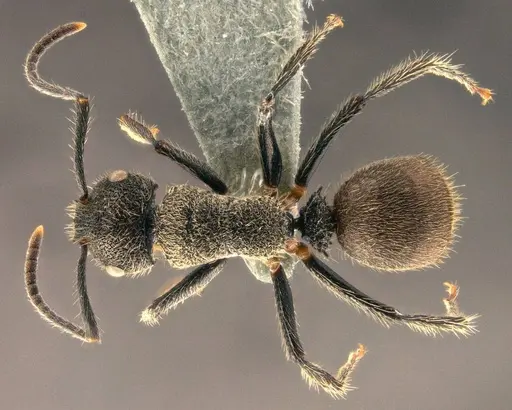
Literatura
A carregar mapa de distribuição...A carregar produtos...