
Echinopla lateropilosa
- Nome cient.
- Echinopla lateropilosa
- Tribo
- Camponotini
- Subfamília
- Formicinae
- Autor
- Zettel & Laciny, 2017
- Distribuição
- Encontrado em 0 países
Introdução
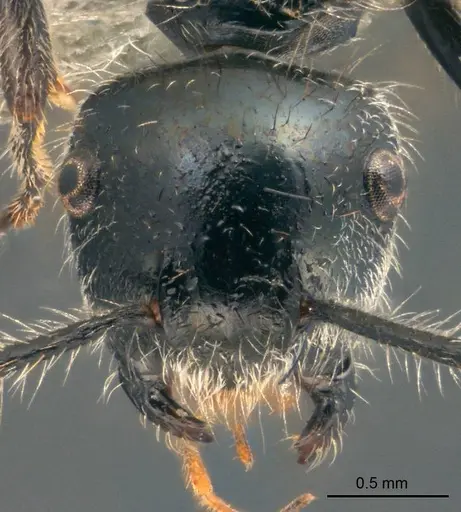
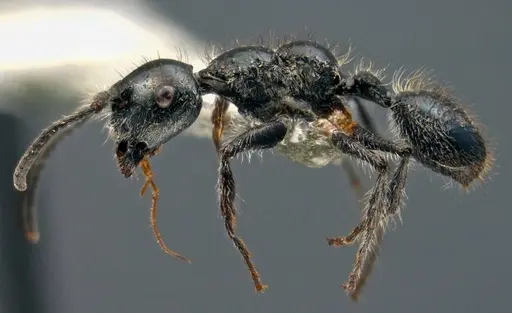
Echinopla lateropilosa is a distinctive arboreal ant species from the Echinopla striata species group, native to the forests of Malaysia and Brunei. Workers measure approximately 6.6mm in total length and feature a predominantly black coloration with a delicate bluish-green shimmer. Unlike most members of their species group, they lack the typical longitudinal dorsal striation, instead showing an almost smooth and shiny surface. The most distinctive trait is the dense white fur-like pilosity covering the sides of their mesosoma. They have a relatively low petiole with lateral spines and long standing setae across their body. This is a canopy-dwelling species collected in forest treetops using malaise traps, making them quite different from typical ground-nesting ants .
Quick Summary
- Difficulty: Expert
- Origin & Habitat: This species is found in the Indomalaya region, specifically Peninsular Malaysia (Perak) and Brunei on Borneo. They inhabit lowland dipterocarp forests, with specimens collected in canopy malaise traps at elevations around 900m in Malaysia. The type locality is in the Banjaran Titi Wangsa mountain range near Ringlet, Perak [1][3].
- Colony Type: Colony structure is unconfirmed. As an Echinopla species, they are likely arboreal nesters, possibly in rotting wood or tree cavities in the forest canopy. No data exists on queen number or colony size for this species.
- Size & Growth:
- Antkeeping:
- Temperature: Keep at 24-28°C as a starting point. As a tropical forest species from Malaysia and Brunei, they likely prefer warm, stable conditions with moderate humidity.
- Humidity: Maintain moderate to high humidity. Keep nest substrate consistently moist but not waterlogged. Provide a water gradient so ants can choose their preferred moisture level.
- Diapause: No, this is a tropical species from lowland forests that does not require hibernation. Maintain warm conditions year-round.
- Nesting: As an arboreal species, they likely nest in rotting wood or tree cavities in the canopy. In captivity, a Y-tong (AAC) nest or plaster nest with wood elements works well. Provide narrow chambers scaled to their medium size.
- Behavior: Behavior is poorly documented. As an Echinopla species, they are likely moderately active foragers with a more arboreal lifestyle than ground-nesting ants. Their long legs and moderate size suggest they are agile climbers. Escape risk is moderate, they are not tiny but use fine mesh barriers as a precaution. Temperament is unknown but related species are typically not aggressive.
- Common Issues: lack of biological data makes captive care largely experimental, be prepared to adjust conditions based on colony response, tropical arboreal requirements mean standard ground-nesting setups may not work well, no information on accepted foods, start with sugar water and small protein sources and observe acceptance, canopy-dwelling species may be sensitive to humidity fluctuations, newly described species (2017) means captive breeding experience is essentially nonexistent
Species Identification and Appearance
Echinopla lateropilosa is a distinctive species within the Echinopla striata group. Workers measure approximately 6.6mm in total length, making them a medium-sized ant. The most striking visual features include their predominantly black coloration with a delicate bluish-green shimmer, and the dense white fur-like pilosity covering the sides of their mesosoma. Unlike other members of the striata group, they lack the characteristic longitudinal dorsal striation, instead having an almost smooth and shiny dorsal surface. Their petiole is relatively narrow and very low compared to congeners, with lateral spines and several pairs of denticles on the underside. The long white setae on their legs and the dense pilosity on their body sides make them quite distinctive under magnification. The species was only described in 2017, which explains why so little is known about their biology in captivity [1][2].
Natural Habitat and Distribution
This species is known from the Indomalaya region, specifically Peninsular Malaysia and Brunei on Borneo. The type specimen was collected in the Banjaran Titi Wangsa mountain range in Perak, Malaysia, at an elevation of around 900m. More recent records show they also occur in Brunei, representing a new record for Borneo. They inhabit lowland dipterocarp forests, with specimens collected using canopy malaise traps, this is significant because it indicates they are primarily arboreal, living in the forest canopy rather than on the ground. This arboreal lifestyle is consistent with other Echinopla species, which typically nest in rotting wood or tree cavities. Their preference for canopy habitats means they are adapted to more stable temperature and humidity conditions than ground-nesting ants [3][1].
Housing and Nest Setup
Since Echinopla lateropilosa is an arboreal species from tropical forests, housing should reflect their natural preferences. A Y-tong (AAC) nest or plaster formicarium with some wood elements works well as a starting point. The chambers should be appropriately scaled to their medium size, not too tight, but with no excessive open space. Include a water chamber for humidity control. Given their canopy origin, they likely prefer conditions with moderate to high humidity and stable temperatures. Place the nest in an area away from direct sunlight and drafts. Since this species has never been kept in captivity before, be prepared to experiment with different setups and adjust based on colony behavior. Start with standard arboreal ant setups and modify as needed based on how the colony responds.
Feeding and Nutrition
Feeding requirements are unconfirmed for this species, but based on related Echinopla and general Formicinae patterns, they likely have a typical ant diet. Offer sugar water or honey as an energy source and small protein sources like fruit flies, small crickets, or mealworms. Start with small amounts and observe what the colony accepts. Since they are from a tropical forest canopy, they may have more specialized feeding habits than typical ground-nesting ants, but without any documented observations, we can only make educated guesses. Remove uneaten food after 24-48 hours to prevent mold. Do not rely heavily on sugar sources until acceptance is confirmed, protein should form the primary diet. The complete lack of captive feeding data for this species means you will be essentially pioneering their care.
Temperature and Seasonal Care
As a tropical species from Malaysia and Brunei, Echinopla lateropilosa likely requires warm conditions year-round with no hibernation period. Aim for temperatures in the 24-28°C range as a starting point. Use a heating cable on one side of the nest to create a gentle thermal gradient if your room temperature is below this range. Place the heating on top of the nest material, not underneath, to avoid excessive drying. Monitor colony activity, if workers cluster consistently near the heat source, increase temperature slightly, if they avoid the heated area, reduce heat. The stable conditions of their forest canopy habitat suggest they prefer consistency over dramatic temperature swings. Since no specific thermal data exists for this species, you will need to fine-tune based on colony health and activity levels.
Defense Mechanism
As a member of the subfamily Formicinae and tribe Camponotini, Echinopla lateropilosa lacks a functional sting. Their primary defense mechanism is spraying formic acid from an acidopore onto the target after biting. This is typical of most Formicinae ants, including related genera like Camponotus and Polyrhachis.
Challenges and Experimental Care
Echinopla lateropilosa represents one of the most challenging species to keep because it was only described in 2017 and has never been maintained in captivity. There is essentially no captive care information available, meaning you will be pioneering their husbandry. Key challenges include: no confirmed diet preferences, unknown colony structure and founding behavior, no documented temperature or humidity requirements, and uncertainty about their arboreal nesting preferences. Start with conditions that match their natural habitat, warm, humid, tropical forest canopy, and adjust based on colony response. Document your observations carefully as they will be valuable for building husbandry knowledge for this species. Consider this an experimental species best suited for experienced antkeepers who enjoy the process of discovering what works through trial and error.
Frequently Asked Questions
How long does it take for Echinopla lateropilosa to develop from egg to worker?
The development timeline is unconfirmed, no research exists on their development time.
What do Echinopla lateropilosa ants eat?
Feeding is unconfirmed for this species. Based on related Echinopla and Formicinae patterns, they likely accept sugar sources (honey, sugar water) and protein (small insects like fruit flies, pinhead crickets, mealworms). Start with small offerings and observe acceptance.
Are Echinopla lateropilosa good for beginners?
No, this species is not recommended for beginners. It was only described in 2017 and has never been kept in captivity. There is no established care information, making this an experimental species best suited for experienced antkeepers who can adapt to unknown requirements.
Do Echinopla lateropilosa ants need hibernation?
No, this is a tropical species from Malaysia and Brunei that does not require hibernation. Keep them warm year-round at 24-28°C.
What type of nest should I use for Echinopla lateropilosa?
As an arboreal species, use a Y-tong (AAC) nest or plaster formicarium with some wood elements. Provide appropriately scaled chambers for their medium size (around 6.6mm). Include humidity control via a water chamber.
How big do Echinopla lateropilosa colonies get?
Colony size is unknown, no colony size data exists for this species.
Can I keep multiple Echinopla lateropilosa queens together?
Colony structure is unconfirmed, no data exists on whether they are single-queen or multi-queen colonies. Combining unrelated queens is not recommended since this has not been studied and could result in aggression.
Where does Echinopla lateropilosa live in the wild?
They are found in lowland dipterocarp forests in Malaysia (Peninsular Malaysia, Perak) and Brunei (Borneo). They are arboreal, living in the forest canopy rather than on the ground. Specimens have been collected in canopy malaise traps at elevations around 900m [3][1].
Why is Echinopla lateropilosa special?
This species is unique within the Echinopla striata group because it lacks the typical longitudinal dorsal striation found in other members. It also has distinctive dense white fur-like pilosity on its mesosoma sides and a relatively low petiole. It was only described in 2017, making it one of the newest described ant species in the hobby [1][2].
Report an Issue
The current care sheet is based fully on literature. See inconsistencies, or something that's incorrect? Please , it will be resolved after review from an admin. Contributing to the blogs tab also helps providing information, to make us be able to further improve the caresheets. Thank you for your support!
References

Esta ficha de cuidados é licenciada sob CC BY-SA 4.0 .
Blogs da comunidade
CASENT0922769
Ver no AntWeb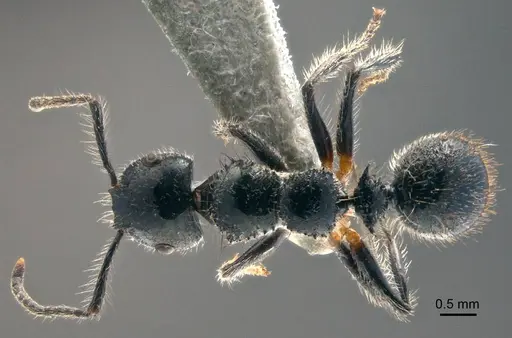
Literatura
A carregar mapa de distribuição...A carregar produtos...