
Dolichoderus furcifer
- Nome cient.
- Dolichoderus furcifer
- Tribo
- Dolichoderini
- Subfamília
- Dolichoderinae
- Autor
- Emery, 1887
- Distribuição
- Encontrado em 0 países
Introdução
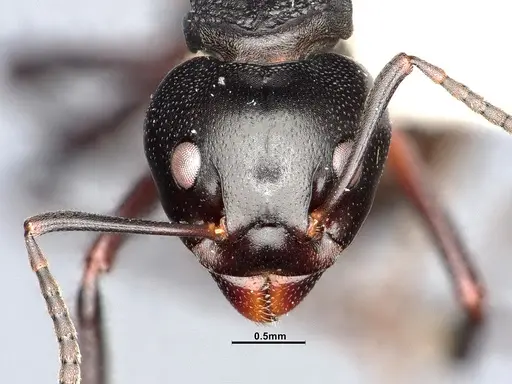
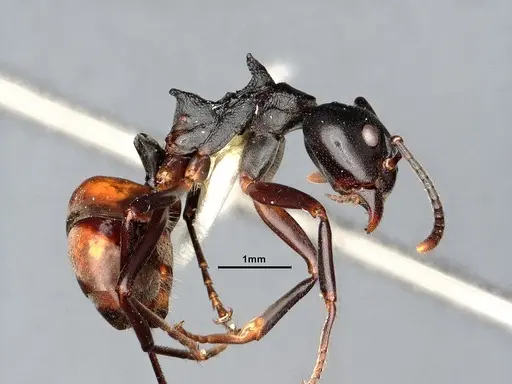
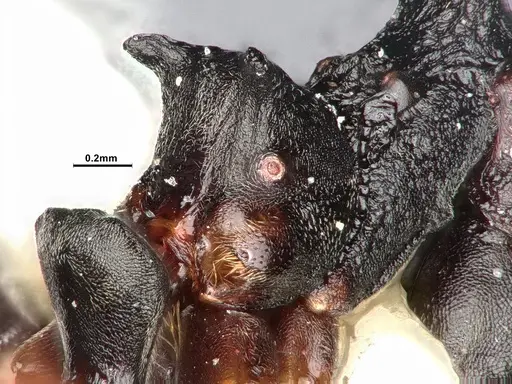
Dolichoderus furcifer is a medium-sized ant measuring 5.4-6.4mm in total length, native to the Indonesian islands of Sumatra and Nias . Workers have a robust build with distinctive features including moderately long mesonotal spines and broad propodeal spines that are blunt at the tips. The head often displays a unique median superoccipital pit, and the petiole scale has a smooth, unbroken apical margin. Their coloration ranges from reddish-brown to black, with the alitrunk typically darker than the head. These ants belong to the Dolichoderus cuspidatus species group, commonly known as 'herdsmen ants' due to their remarkable symbiotic relationship with mealybugs . What makes this species unusual is their specialized herdsmen lifestyle. Unlike most ants that simply tend aphids or mealybugs for honeydew, these ants actively carry mealybugs (Archeomyrmococcus dolichoderi) both spontaneously and when disturbed, transporting them between feeding sites . This indicates a highly developed mutualistic relationship where the ants essentially farm their mealybug partners. Additionally, they exhibit nomadic nesting behavior, moving their colonies periodically rather than establishing permanent nests . This combination of behaviors makes them a challenging but rewarding species for experienced antkeepers.
Quick Summary
- Difficulty: Medium
- Origin & Habitat: Native to West Sumatra and Nias Island, Indonesia, in the Indomalaya region [1]. In their natural habitat, they live in tropical lowland environments and are associated with mealybugs that they tend for honeydew. They practice nomadic nesting, periodically moving their colonies rather than staying in fixed locations [2].
- Colony Type: Colony structure is not documented in available scientific literature.
- Size & Growth:
- Queen: Size data unavailable, no queen measurements exist in available literature
- Worker: 5.4-6.4mm total length [1]
- Colony: Unknown, no colony size data available
- Growth: Unknown, no development timing data available
- Development: Unknown, no species-specific development data available (Development timing has not been studied for this species.)
- Antkeeping:
- Temperature: Keep at 24-28°C. These are tropical ants from Sumatra, so they need warm, stable temperatures similar to other Southeast Asian Dolichoderus species. A heating cable on one side of the nest can create the gradient they prefer.
- Humidity: Maintain high humidity (70-85%). Their natural habitat in West Sumatra is consistently humid. Keep the nest substrate moist but not waterlogged, and provide a water tube for drinking water.
- Diapause: No diapause required. Being a tropical species from near the equator, they do not experience cold winters and remain active year-round. Maintain consistent temperatures throughout the year.
- Nesting: Use a moist nest setup such as a Y-tong (AAC) or plaster nest that can hold humidity well. The nomadic nesting behavior suggests they may benefit from occasional relocation options. Provide connections to an outworld with good climbing surfaces.
- Behavior: Dolichoderus furcifer is generally calm and not particularly aggressive. They are specialized trophobiont herders, meaning their primary foraging activity centers on tending mealybugs rather than hunting or scavenging like many other ants [2]. Workers will actively seek out and protect mealybug colonies, collecting the honeydew secretions. This means they are less interested in traditional ant foods like protein sources or sugar water, their diet centers on the honeydew from their symbiotic partners. They have functional stingers but rarely use them defensively. Escape risk is moderate due to their medium size, standard formicarium barriers work well, but ensure connections are secure. Their nomadic tendency means they may relocate within the setup periodically, which is normal behavior for this species.
- Common Issues: Mealybug dependency, without their symbiotic partners, these ants may refuse standard foods and struggle to survive, Nomadic behavior, colonies may attempt to relocate, requiring flexible housing options, Slow acceptance of captive diet, they are specialized feeders and may not immediately accept conventional ant food, High humidity requirements, improper humidity leads to desiccation and colony decline, Limited availability, this species is rarely available in the ant hobby due to specialized care requirements
The Herdsmen Lifestyle
Dolichoderus furcifer belongs to a unique group of ants known as 'herdsmen ants' that have evolved an extraordinary mutualistic relationship with mealybugs. In West Sumatra, these ants are associated specifically with Archeomyrmococcus dolichoderi, a species of mealybug [1]. What sets herdsmen ants apart from simple honeydew collectors is their active management of their mealybug partners. Workers carry mealybugs spontaneously, meaning they pick them up and move them to new feeding sites, and continue carrying them even when disturbed [1]. This behavior indicates a deeply integrated symbiosis where the ants essentially ranch their mealybug herds for the continuous honeydew production. Three specimens from Nias were even found with mealybug larvae still held in their mandibles, showing this relationship extends to caring for the next generation [1]. For antkeepers, this means providing access to mealybugs or honeydew sources is essential for keeping these ants healthy and thriving.
Feeding and Diet
Feeding Dolichoderus furcifer requires a different approach than most ant species. Because they are specialized trophobiont herders, their primary food source in nature is honeydew collected from mealybugs rather than typical ant prey or sugar sources [2]. In captivity, you should provide them with access to mealybugs (like the related species they partner with) or offer honeydew substitutes. Pure honey or sugar water may be accepted occasionally, but do not rely on these as primary foods. Small amounts of protein (like fruit flies or tiny insects) may be offered experimentally, but expect lower acceptance than with predatory ants. The key to success is providing a consistent honeydew source, either through maintaining a mealybug culture or by offering honeydew-rich alternatives. Some keepers report success with specialized honeydew gels or by growing small scale insect colonies on suitable host plants.
Nomadic Nesting Behavior
One of the most unusual aspects of Dolichoderus furcifer is their nomadic nesting strategy [2]. Unlike most ants that establish permanent nests and defend a fixed territory, herdsmen ants periodically relocate their colonies. This behavior makes sense evolutionarily, as they exhaust the honeydew supply in one area, they pack up their mealybug partners and move to fresh feeding grounds. In captivity, this translates to providing flexibility in their housing. Do not be alarmed if your colony suddenly seems restless or begins relocating within their setup. They may benefit from having multiple connected spaces or occasional opportunities to relocate to fresh territory. This nomadic tendency also means they may not thrive in completely sealed formicariums, providing them with some control over their environment can reduce stress.
Temperature and Humidity
As tropical ants from the Indonesian archipelago, Dolichoderus furcifer requires warm and humid conditions year-round. Maintain temperatures between 24-28°C, avoiding any prolonged drops below 22°C. A heating cable placed on one side of the nest can create a thermal gradient that allows the ants to regulate their own temperature. Humidity should remain high at 70-85%, reflecting the consistently moist conditions in their Sumatran habitat. Use a moist nest medium (plaster, Y-tong with water reservoir, or soil-based setup) that can hold humidity without becoming waterlogged. Always provide a clean water source, a test tube water tube works well. Unlike temperate species, they do not require any winter cooling or diapause period. Maintaining consistent conditions year-round is essential for colony health.
Housing and Escape Prevention
Dolichoderus furcifer is a medium-sized ant (5.4-6.4mm workers) that requires secure housing but is not an extreme escape artist like tiny species. Standard formicarium connections and barriers are generally sufficient, though you should still use fluon on connections and ensure lids fit tightly. They do best in nests that can maintain high humidity, Y-tong (AAC) nests with water reservoirs or plaster nests work well. Because of their nomadic tendencies, consider providing multiple connected spaces or a setup that allows for easy relocation within the enclosure. The outworld should have good climbing surfaces (vinyl tubing, fluon-coated rims) and should be escape-proof. These ants are not aggressive and rarely sting, so they pose minimal danger to keepers. [1]
Frequently Asked Questions
What do Dolichoderus furcifer ants eat?
Dolichoderus furcifer is a specialized herdsmen ant that primarily feeds on honeydew from mealybugs. In captivity, you should provide access to mealybugs or honeydew sources. They typically ignore standard ant foods like sugar water or protein. Some keepers have success with honeydew gels or by culturing small scale insect colonies.
How long does it take for Dolichoderus furcifer to develop from egg to worker?
Exact development timing has not been documented for this species. There is no available research on their development timeline.
Do Dolichoderus furcifer ants need hibernation?
No, they do not require hibernation. Being a tropical species from near the equator in Indonesia, they remain active year-round and need consistent warm temperatures (24-28°C) throughout the year.
Are Dolichoderus furcifer ants good for beginners?
Dolichoderus furcifer is not recommended for beginners. Their specialized diet requiring mealybugs or honeydew, combined with their nomadic nesting behavior and high humidity needs, makes them a challenging species. They are best suited for antkeepers with experience keeping specialized tropical species.
How big do Dolichoderus furcifer colonies get?
Maximum colony size is not documented in available literature. The exact colony size for this species is unknown.
Can I keep multiple Dolichoderus furcifer queens together?
Colony structure for this specific species is not documented in available literature. Combining unrelated queens is not recommended as there is no research on their social structure.
Why is my Dolichoderus furcifer colony trying to relocate?
This is normal behavior. Dolichoderus furcifer exhibits nomadic nesting behavior in nature, periodically relocating their colonies as they exhaust honeydew sources in one area. In captivity, they may show restlessness and attempt to relocate. This is not a problem, provide them with flexible housing options.
What temperature do Dolichoderus furcifer ants need?
Keep them at 24-28°C. These are tropical ants from Sumatra that need warm, stable temperatures year-round. A heating cable on one side of the nest can create a gradient for them to regulate their temperature.
What makes Dolichoderus furcifer different from other ants?
Dolichoderus furcifer is a 'herdsmen ant', they actively tend and carry mealybugs (Archeomyrmococcus dolichoderi) as part of a mutualistic relationship [1]. They also exhibit nomadic nesting behavior, periodically moving their colonies rather than staying in fixed nests [2]. This combination of behaviors is unique among common ant species.
Report an Issue
The current care sheet is based fully on literature. See inconsistencies, or something that's incorrect? Please , it will be resolved after review from an admin. Contributing to the blogs tab also helps providing information, to make us be able to further improve the caresheets. Thank you for your support!
References

Esta ficha de cuidados é licenciada sob CC BY-SA 4.0 .
Blogs da comunidade
CASENT0905024
Ver no AntWeb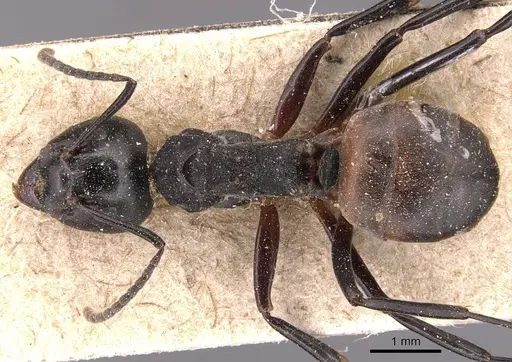
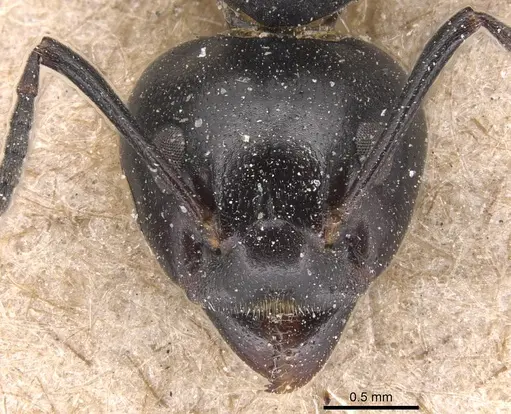
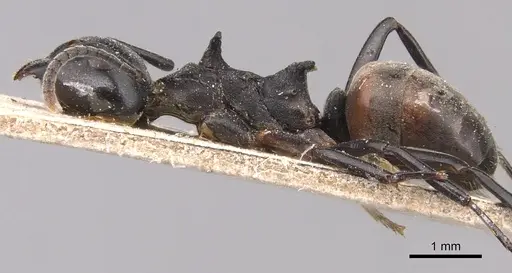
SMFHYM0008895
Ver no AntWeb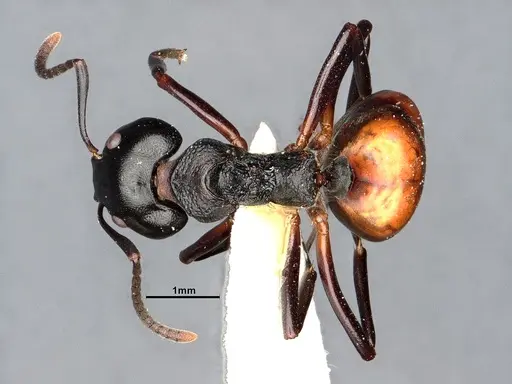
Literatura
A carregar mapa de distribuição...A carregar produtos...