
Diacamma palawanicum
- Nome cient.
- Diacamma palawanicum
- Tribo
- Ponerini
- Subfamília
- Ponerinae
- Autor
- Emery, 1900
- Distribuição
- Encontrado em 0 países
Introdução
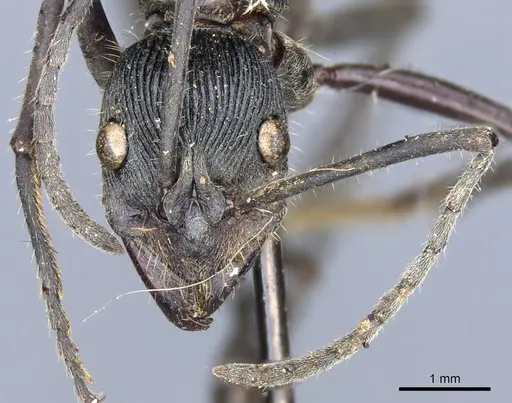
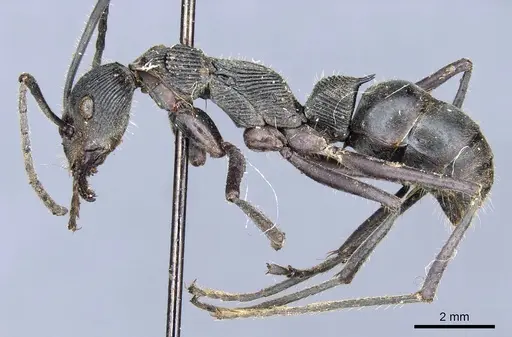
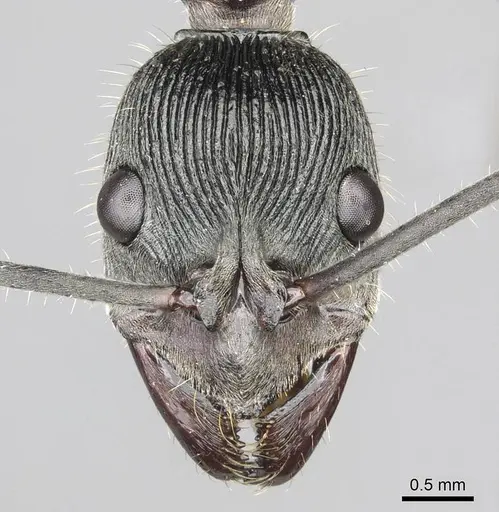
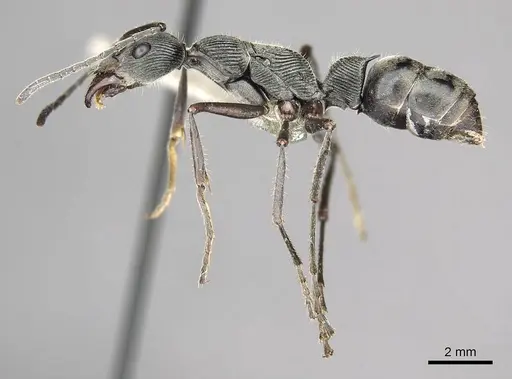
Diacamma palawanicum is a large ant species measuring around 14mm in total length. Workers have a chiefly black body that appears grey due to dense whitish pilosity (short lying-down hairs). The trunk is strongly ridged from the cheek area to the petiole, with the head showing longitudinal ridges toward the back. The petiole is stout with relatively long, widely-spaced teeth. This species is only known from Palawan Island in the Philippines, making it a rare and geographically restricted species in the ant-keeping hobby. The genus Diacamma is notable for having gamergates - workers that can become reproductive and replace the queen if she dies - a fascinating social structure that sets them apart from most other ants.
Quick Summary
- Difficulty: Medium
- Origin & Habitat: Palawan Island, Philippines. Found in the center of the island in tropical forest habitats [1][2]. The exact nesting habitat is unconfirmed, but related Diacamma species typically nest in soil or under stones in forested areas.
- Colony Type: Queenless, no distinct queen caste, reproduction by gamergates (reproductive workers).
- Queen Status: Queenless Colony
- Colony: Monogyne
- Special: Gamergates
- Size & Growth:
- Queen: Queenless species, reproduction by gamergate (reproductive worker) instead of a distinct queen caste.
- Worker: Approximately 14mm total length [1]
- Colony: Colony size data unavailable, typical for Diacamma genus colonies reach several hundred workers
- Growth: Moderate, Ponerinae ants typically develop slower than many Myrmicinae species
- Development: Estimated 8-12 weeks at optimal temperature based on typical Ponerinae development patterns (Ponerine ants generally have longer development times than house ants (Myrmicinae). Expect roughly 2-3 months from egg to first worker at warm temperatures.)
- Antkeeping:
- Temperature: Keep at 24-28°C. Tropical species from the Philippines require warm conditions. A heating cable on one side of the nest creates a temperature gradient.
- Humidity: Keep moderately humid at 60-80%. These are forest-floor ants that need moisture but not saturation. Provide a water tube for drinking access.
- Diapause: No true diapause required. As a tropical species from Palawan, they do not need hibernation. Keep them warm year-round.
- Nesting: Y-tong (AAC) nests or naturalistic setups work well. Provide moist substrate (soil or plaster) that holds humidity. Related Diacamma species often nest in soil or under stones in nature.
- Behavior: Diacamma palawanicum is a predatory ant that hunts small invertebrates. Workers are moderately active and will forage for prey. They have a functional stinger, while not aggressive, they may sting if threatened. Escape prevention is important as they are large and capable climbers. The genus is known for unique self-grooming behaviors where workers clean each other extensively. Gamergate presence means colonies can survive queen loss without collapse.
- Common Issues: queen loss is not colony death, gamergates can take over reproduction, which is unusual but not a problem, predatory nature means they need live protein prey regularly, sugar alone is insufficient, tropical warmth is essential, temperatures below 22°C can slow activity and harm brood, large size and strength means they can chew through weak barriers, use secure setups, Ponerine stings can cause mild pain, handle gently and avoid provocation
Housing and Nest Setup
Diacamma palawanicum does well in Y-tong (AAC) nests or naturalistic setups with soil. Because they are large ants (around 14mm), they need appropriately sized chambers, avoid cramped spaces but also avoid very large open areas that make them feel insecure. A nest size of roughly 100x100mm with chambers 8-12mm tall works well for a starting colony. The nest material should hold moisture, either a plaster/gypsum setup or a soil-based naturalistic formicarium. Add a water tube or small water dish for drinking access, as Ponerinae ants often drink directly. The outworld (foraging area) should be simple but spacious enough for hunting and waste disposal. Use a tight-fitting lid as these large ants can climb smooth surfaces and may escape through gaps. [1]
Feeding and Diet
As predatory Ponerinae ants, Diacamma palawanicum needs a protein-rich diet. Offer small live prey such as fruit flies, small crickets, mealworms, or other appropriately sized insects. Feed prey 2-3 times per week, adjusting based on colony size and consumption. Remove uneaten prey after 24-48 hours to prevent mold. While some Ponerinae will occasionally accept sugar water or honey, protein is essential, do not rely on sugar alone. A small dish of sugar water can be offered occasionally but should not be the primary food source. Fresh water must always be available.
Temperature and Heating
Being from tropical Palawan Island, these ants require warm conditions year-round. Maintain nest temperatures between 24-28°C. Below 22°C, activity slows significantly and brood development may stall. Use a heating cable placed on one side of the nest to create a warm gradient, workers can then choose their preferred temperature zone. Never let temperatures drop to room temperature if your home is below 24°C. A small thermostat or temperature controller helps maintain stable conditions. Avoid direct heat on the nest as it can dry out moisture too quickly.
Behavior and Colony Dynamics
Diacamma palawanicum has a fascinating social structure unique to its genus, the gamergate system. Unlike most ants where only the queen lays eggs, Diacamma colonies can have reproductive workers (gamergates) that mate and take over egg-laying if the queen dies. This makes colonies more resilient to queen loss. Workers are moderately aggressive when defending the nest and have a functional stinger. They are not typically aggressive toward keepers but will sting if provoked or threatened. The species is known for extensive allogrooming (mutual cleaning) behavior, where workers clean each other, this helps maintain colony hygiene and social bonds.
Growth and Development
Ponerine ants like Diacamma palawanicum develop more slowly than many common ant species. Expect 8-12 weeks from egg to first worker at optimal temperature (around 26°C). The first workers (nanitics) may be slightly smaller than normal workers. Growth rate is moderate, a newly founded colony might take 6-12 months to reach 50 workers under good conditions. Colonies likely reach several hundred workers at maturity. Be patient with Ponerinae, they are not fast growers but can live for many years once established. Regular feeding and warm temperatures are key to healthy development.
Frequently Asked Questions
How long does it take for Diacamma palawanicum to produce first workers?
Expect 8-12 weeks from egg to first worker at optimal temperature (around 26°C). Ponerine ants develop slower than common Myrmicinae species, so patience is needed during the founding stage.
What do I feed Diacamma palawanicum?
Feed small live prey such as fruit flies, small crickets, or mealworms 2-3 times per week. Protein is essential, they are predatory ants. You can occasionally offer sugar water but do not rely on it as a primary food source.
Can I keep multiple queens together?
No, Diacamma palawanicum is monogyne (single queen). Unlike some species that can have multiple queens, this species forms single-queen colonies. However, the gamergate system means the colony can survive if the queen dies.
What temperature do Diacamma palawanicum need?
Keep them warm at 24-28°C. As a tropical species from Palawan Island, they require year-round warmth. Use a heating cable on one side of the nest to maintain proper temperatures.
Are Diacamma palawanicum good for beginners?
They are considered medium difficulty. While not as challenging as some exotic species, they do require warm temperatures, regular protein feeding, and understanding of their unique gamergate system. Not the best choice for a first ant but manageable for those with some experience.
How big do Diacamma palawanicum colonies get?
Colonies likely reach several hundred workers at maturity. They are not supercolonial like some ants, expect moderate-sized colonies typical of the Diacamma genus.
Do they need hibernation?
No, they do not need hibernation. As a tropical species from the Philippines, keep them warm year-round. No diapause or cold period is required.
What makes Diacamma palawanicum special?
They are one of the few ant species where workers can become reproductive (gamergates). If the queen dies, a mated worker can take over egg-laying, this makes colonies remarkably resilient to queen loss. They are also only known from Palawan Island, making them geographically rare in the hobby.
When should I move them to a formicarium?
Wait until the colony has at least 20-30 workers before moving from a founding test tube setup. Ponerinae colonies grow more slowly than Myrmicinae, so wait until you see consistent brood development and the colony is clearly established.
Report an Issue
The current care sheet is based fully on literature. See inconsistencies, or something that's incorrect? Please , it will be resolved after review from an admin. Contributing to the blogs tab also helps providing information, to make us be able to further improve the caresheets. Thank you for your support!
References

Esta ficha de cuidados é licenciada sob CC BY-SA 4.0 .
Blogs da comunidade
CASENT0903865
Ver no AntWeb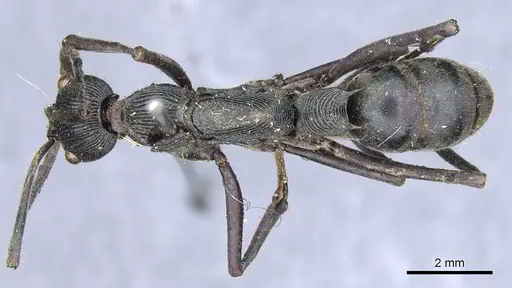
CASENT0915961
Ver no AntWeb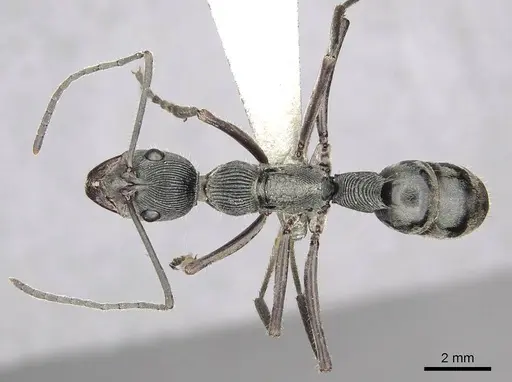
Literatura
A carregar mapa de distribuição...A carregar produtos...