
Diacamma excellens
- Nome cient.
- Diacamma excellens
- Tribo
- Ponerini
- Subfamília
- Ponerinae
- Autor
- Zettel <i>et al.</i>, 2016
- Distribuição
- Encontrado em 0 países
Introdução
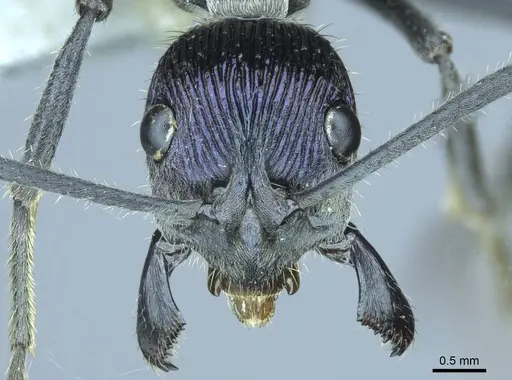
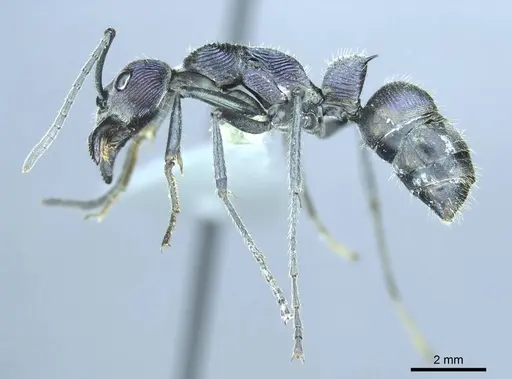
Diacamma excellens is a large ponerine ant endemic to the Philippines, known only from Biliran Island. Workers measure 12.2-13.5mm in total length and are visually striking, featuring a strong metallic blue to purple shimmer across the trunk . The body is coarsely striated from the cheeks (genae) to the first abdominal segment, and the head is relatively short with strongly convex sides toward the back. This species was described relatively recently in 2016. As with other Diacamma species, workers can become reproductive (gamergates), potentially serving as replacement egg-layers if the primary reproductive dies.
Quick Summary
- Difficulty: Medium
- Origin & Habitat: Philippines (Biliran Island only), a tropical island environment with warm, humid conditions [1]
- Colony Type: Queenless, no distinct queen caste, reproduction by gamergates (reproductive workers).
- Queen Status: Queenless Colony
- Special: Gamergates
- Size & Growth:
- Queen: Queenless species, reproduction by gamergate (reproductive worker) instead of a distinct queen caste.
- Worker: 12.2-13.5mm total length [1]
- Colony: Unknown, no colony size data available for this species
- Growth: Unknown, no development data available for this species
- Development: Unknown, no direct development studies exist for this species (Development timeline is unconfirmed. Related Diacamma species suggest several months from egg to adult worker.)
- Antkeeping:
- Temperature: Keep at 24-28°C, these are tropical ants from the Philippines requiring warm conditions. A heating cable on one side of the nest creates a gradient allowing workers to self-regulate.
- Humidity: Maintain high humidity (70-80%). Keep the nest substrate consistently moist but not waterlogged. Ponerine ants typically prefer damp conditions.
- Diapause: No, as a tropical species from the Philippines, they do not require hibernation. Keep temperatures stable year-round.
- Nesting: In the wild, Diacamma species typically nest in soil or rotting wood. In captivity, a naturalistic setup with moist substrate (soil/peat mix) or a Y-tong/plaster nest works well. Provide a damp nest chamber with some drier areas available.
- Behavior: Diacamma excellens is a predatory ant that hunts small invertebrates. Workers are large and can deliver a painful sting, handle with caution. They are active foragers and will hunt live prey. Escape prevention is important given their size, standard barriers work well but ensure lids are secure. The genus is known for its gamergate system where workers can become reproductive, making colony dynamics interesting to observe.
- Common Issues: limited availability, this species was only described in 2016 and is rarely available in the antkeeping trade, no species-specific care data exists, keepers must rely on genus-level information, tropical requirements mean temperature drops can be harmful, predatory diet requires consistent access to live prey, sting is painful, exercise caution during maintenance
Appearance and Identification
Diacamma excellens is a visually striking ant. Workers are large and slender, measuring 12.2-13.5mm in total length. The most distinctive feature is the strong metallic blue to purple shimmer covering the trunk. The head is comparatively short with strongly convex sides toward the back, and the eyes are small. The entire body from the cheeks (genae) to the first abdominal segment is coarsely striated, giving it a textured appearance. The petiole (the narrow waist segment) is stout with medium-sized teeth that are spaced apart. This species can be distinguished from other Diacamma by its combination of large size, metallic coloration, and the specific striation pattern on the head and body [1].
Distribution and Habitat
Diacamma excellens is endemic to the Philippines, known only from Biliran Island [1]. This makes it a rare species in both the wild and in captivity. Biliran is a volcanic island in the Eastern Visayas region, characterized by a tropical climate with high year-round humidity. In their natural habitat, these ants likely live in forest floor environments where they nest in soil or rotting wood. The limited distribution makes wild colonies particularly precious, and any captive colonies should never be released in non-native areas.
Social Structure and Reproduction
The genus Diacamma is well-known for its unique gamergate system. Unlike most ants where only the queen lays eggs, Diacamma workers can become reproductive, these are called gamergates (from Greek gamos meaning marriage and ergate meaning worker). A colony typically has one functional reproductive at a time, whether that is the founding queen or a dominant gamergate worker. If the primary reproductive dies, a new gamergate will take over egg-laying duties. This creates fascinating colony dynamics where workers compete for reproductive status. For keepers, this means your colony can potentially survive even if the original queen dies, as a replacement gamergate may emerge from the worker population.
Feeding and Diet
Diacamma excellens is a predatory ant, meaning it hunts and kills live prey. In the wild, workers hunt small invertebrates including other ants, springtails, and various soil arthropods. In captivity, you should offer a diet based on live small invertebrates such as fruit flies, pinhead crickets, small mealworms, and other appropriately-sized prey. Protein is essential for brood development. While sugar sources may occasionally be accepted, these ants are primarily predatory and protein-focused. Feed prey 2-3 times per week, adjusting based on colony size and consumption rate. Remove any uneaten prey after 24 hours to prevent mold.
Temperature and Humidity
As a tropical species from the Philippines, Diacamma excellens requires warm and humid conditions. Keep the nest area at 24-28°C. A heating cable placed on one side of the nest creates a temperature gradient, allowing ants to regulate their own temperature by moving between warmer and cooler areas. Humidity should be maintained at 70-80%. The nest substrate should feel consistently moist but never waterlogged. Allow some areas of the nest to be slightly drier so ants can choose their preferred humidity zone. Avoid temperature drops below 22°C as this can stress the colony.
Nesting Requirements
In nature, Diacamma species typically nest in soil or rotting wood on the forest floor. For captivity, a naturalistic setup works well, a container filled with moist soil, peat, or a soil-sand mixture provides appropriate nesting conditions. The substrate should be deep enough (at least 5-10cm) to allow queens and workers to dig chambers. Alternatively, Y-tong or plaster nests with moist chambers can work, provided humidity is maintained. The outworld (foraging area) should be escape-proof with standard barrier methods. Given the large size of workers, standard test tubes can work for founding colonies but will need upgrading as the colony grows.
Sting and Defense
Diacamma excellens workers are capable of delivering a painful sting. As a member of the subfamily Ponerinae, these ants have a functional sting that they use for subduing prey and defending the colony. When handling or maintaining the colony, exercise caution. If threatened, workers may sting. The sting pain level is moderate to significant for larger species in this genus. Keepers with allergies to insect stings should take extra precautions. During routine maintenance, work calmly and avoid disturbing the nest excessively to minimize defensive responses.
Frequently Asked Questions
How long does it take for Diacamma excellens to produce first workers?
The exact development timeline is unknown for this species as it has not been scientifically studied. Based on typical Ponerinae development patterns, expect 6-10 weeks from egg to worker at optimal temperature (24-28°C). The founding queen will remain in her chamber until the first workers emerge.
What do Diacamma excellens eat?
They are predatory ants that require live prey. Feed small live invertebrates such as fruit flies, small crickets, mealworms, and other appropriately-sized arthropods. Protein is essential for brood development. Offer prey 2-3 times per week and remove uneaten items after 24 hours.
Do Diacamma excellens ants sting?
Yes, they can sting. As a Ponerine ant, they have a functional sting used for prey capture and defense. The sting is painful, so handle with caution. If you are stung, the pain is typically moderate and subsides within a short time.
What temperature do Diacamma excellens need?
Keep them warm at 24-28°C. As a tropical species from the Philippines, they do not tolerate cool temperatures. Use a heating cable on one side of the nest to create a gradient, and avoid temperatures below 22°C.
How big do Diacamma excellens colonies get?
The maximum colony size is unknown for this species. Based on related Diacamma species, colonies likely reach several hundred workers. This is a relatively newly described species, so exact colony sizes in the wild have not been documented.
Can I keep multiple Diacamma excellens queens together?
This has not been studied for this specific species. The genus Diacamma typically has single-queen colonies with gamergate replacement reproductives. Combining unrelated foundress queens is not recommended as they may fight. If you acquire multiple queens, house them separately until you determine colony structure.
Do Diacamma excellens need hibernation?
No, they do not require hibernation. As a tropical species from the Philippines, they need warm conditions year-round. Maintain stable temperatures of 24-28°C throughout the year without any cooling period.
Are Diacamma excellens good for beginners?
This species is rated as medium difficulty. While visually stunning, it is rarely available (only described in 2016) and requires specific warm, humid conditions. The lack of species-specific care data means keepers must rely on genus-level knowledge. The painful sting also requires careful handling. Beginners may want to start with more common, better-documented species.
What type of nest should I use for Diacamma excellens?
A naturalistic setup with moist soil or peat substrate works well, or a Y-tong nest with damp chambers. The nest material should retain moisture well. Provide a deep substrate (5-10cm) if using a naturalistic setup, as they will dig their own chambers.
Why is my Diacamma excellens colony declining?
Common causes include: temperature too low (below 22°C), humidity too low or too high, lack of protein in diet, stress from excessive disturbance, or disease. Review your husbandry conditions and ensure prey is being offered regularly. If the colony was wild-caught, parasites or stress from collection may also be factors.
Report an Issue
The current care sheet is based fully on literature. See inconsistencies, or something that's incorrect? Please , it will be resolved after review from an admin. Contributing to the blogs tab also helps providing information, to make us be able to further improve the caresheets. Thank you for your support!
References

Esta ficha de cuidados é licenciada sob CC BY-SA 4.0 .
Blogs da comunidade
CASENT0916095
Ver no AntWeb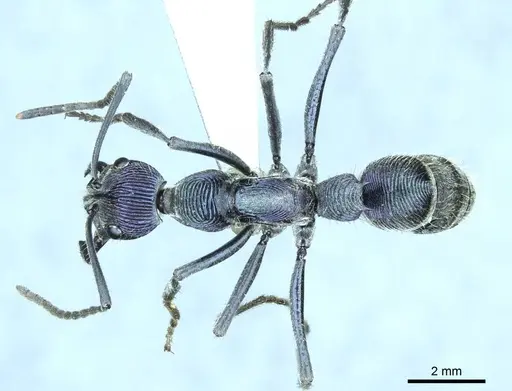
Literatura
A carregar mapa de distribuição...A carregar produtos...