
Crematogaster polymnia
- Nome cient.
- Crematogaster polymnia
- Subgénero
- Orthocrema
- Tribo
- Crematogastrini
- Subfamília
- Myrmicinae
- Autor
- Santschi, 1922
- Distribuição
- Encontrado em 0 países
Introdução
Crematogaster polymnia is a small ant species native to northern Argentina, specifically recorded in the provinces of Jujuy and Santa Fe . Workers are small, dark-colored ants with a distinctive heart-shaped abdomen that they can raise over their thorax like an acrobat - this behavior gives them their common name 'acrobat ants'. This species belongs to the Crematogastrini tribe within the Myrmicinae subfamily and is classified as part of the Generalized Myrmicinae functional group . No specific research exists on this species' biology, but it shares typical Crematogaster traits - generalist foragers that likely nest in rotting wood or under stones in the warm, subtropical lowlands of Argentina.
Quick Summary
- Difficulty: Medium
- Origin & Habitat: Native to northern Argentina, recorded in Jujuy and Santa Fe provinces [1][2]. The region features warm subtropical to temperate conditions with distinct seasons. Based on genus patterns, they likely nest in rotting wood, under stones, or in soil cavities.
- Colony Type: Colony structure is unconfirmed. Most Crematogaster species are monogyne, though some can form polygyne colonies.
- Size & Growth:
- Queen: ~6-9mm, inferred from Crematogaster genus patterns
- Worker: ~3-5mm, inferred from Crematogaster genus patterns
- Colony: Likely several hundred workers, estimated from genus patterns
- Growth: Moderate, estimated from genus patterns
- Development: ~6-8 weeks at optimal temperature, inferred from related Crematogaster species (Development time is estimated from genus patterns. Actual timing may vary.)
- Antkeeping:
- Temperature: Keep around 22-26°C. Based on their Argentine distribution, they prefer warm conditions but can tolerate room temperature. A gentle gradient allowing them to choose their preferred spot is ideal.
- Humidity: Moderate humidity around 50-70%. Provide a moisture gradient with a damp section and drier area.
- Diapause: Yes, based on Argentine distribution, they experience seasonal changes. Provide a cool period around 10-15°C for 2-3 months during winter, reducing feeding frequency.
- Nesting: Y-tong (AAC) nests work well for this size class. They also do well in plaster nests. Provide nesting chambers scaled to colony size, start small for founding colonies and expand as they grow.
- Behavior: Crematogaster ants are active foragers with a curious temperament. Workers are fast-moving and will explore their outworld thoroughly. They have a functional stinger and may use it defensively, the sting is painful for their size but not dangerous to healthy humans. They are escape artists due to their small size, use tight-fitting lids and consider fluon barriers on test tube rims. They communicate through chemical signals and will recruit nestmates to food sources quickly.
- Common Issues: escape prevention is critical due to their small size, use fine mesh and barrier tape, colonies can stall if temperatures drop too low, keep warm year-round except during hibernation, overfeeding can lead to mold in nesting areas, remove uneaten prey promptly, wild-caught colonies may have parasites, quarantine and observe new colonies carefully, stress from disturbance during founding can cause queen abandonment
Housing and Nest Setup
For founding colonies, a standard test tube setup works well. Fill the tube about 1/3 with water stopped by a cotton ball, this provides humidity without flooding. Cover the tube with a dark sleeve for the first few weeks to reduce stress. Once the colony reaches 15-20 workers, you can move them to a proper formicarium. Y-tong (AAC) nests are excellent for Crematogaster, the narrow chambers match their preferred tight spaces. Plaster nests also work well. Always provide an outworld area for foraging, this can be a simple plastic box connected to the nest via tubing. The outworld should have a barrier (fluon or baby powder mixed with rubbing alcohol) to prevent escapes.
Feeding and Diet
Crematogaster polymnia is a generalist omnivore like most Crematogaster species. Offer a varied diet: protein sources like small insects (fruit flies, pinhead crickets, mealworms), and sugar sources like honey water or sugar water. They particularly enjoy sweet liquids, you can spot-feed with a syringe or soaked cotton ball. Feed protein 2-3 times per week, and keep a sugar source available constantly. Remove uneaten prey after 24-48 hours to prevent mold. Fresh fruit pieces can also be offered occasionally. Observe your colony's preferences, some colonies are more protein-focused, others prefer sweets.
Temperature and Seasonal Care
Maintain temperatures between 22-26°C for optimal colony health and development. They can tolerate brief periods slightly outside this range, but prolonged cold slows growth significantly. During summer months, room temperature is usually sufficient. In winter, you can reduce temperatures to 15-18°C to simulate their natural seasonal cycle, this is optional but may promote healthier long-term colonies. During the cool period, reduce feeding to once weekly and reduce humidity slightly. Do not let temperatures drop below 10°C. A small heat cable on one side of the nest can create a beneficial gradient if your room runs cool.
Colony Development and Growth
A newly mated queen will seal herself in a small chamber and lay her first eggs. She feeds them from her stored fat reserves, this is called claustral founding. The first workers (called nanitics) are smaller than normal workers and emerge after 6-8 weeks under optimal conditions. After the nanitics arrive, the colony enters a growth phase. Growth rate is moderate, expect several months to reach 50 workers, and over a year to reach several hundred. Colonies can live for many years with a healthy queen. Watch for signs of health: active workers, brood present at multiple stages, and the queen laying regularly. A stalled colony (no brood for extended periods) may indicate poor conditions.
Behavior and Defense
Crematogaster ants are known for their defensive behavior, when threatened, they raise their abdomen over their head like an acrobat, ready to use their stinger. They have a painful sting for their size, though it's not medically significant for healthy adults. They are not aggressive toward humans but will defend if provoked. In the colony, they maintain clear trails and quickly recruit nestmates to food sources. Workers are active and curious, exploring their territory thoroughly. They communicate primarily through chemical signals, you may observe them antennating (touching antennae) when exchanging information about food or threats.
Frequently Asked Questions
How long does it take for Crematogaster polymnia to get their first workers?
Expect 6-8 weeks from egg to first worker at optimal temperature (22-26°C). This is based on typical Crematogaster development patterns since specific timing for this species hasn't been documented.
Do Crematogaster polymnia ants sting?
Yes, they have a functional stinger and will use it defensively. The sting is painful for their small size but not medically dangerous to healthy humans. Most keepers experience a mild burning sensation.
Can I keep multiple Crematogaster polymnia queens together?
This hasn't been specifically studied for this species. Most Crematogaster species are monogyne (single queen), and combining unrelated queens is not recommended unless you have evidence they accept each other. If you want to try, introduce them slowly in a large space with multiple escape routes and monitor for aggression.
What do Crematogaster polymnia eat?
They are omnivores. Offer small insects (fruit flies, pinhead crickets, mealworms) for protein 2-3 times weekly, and keep a sugar source (honey water or sugar water) available at all times. They will also accept fruit and other sweet liquids.
Do Crematogaster polymnia need hibernation?
Yes, they benefit from a cool period in winter. Reduce temperatures to 10-15°C for 2-3 months during winter, reduce feeding frequency, and slightly lower humidity. This mimics their natural seasonal cycle in Argentina.
Are Crematogaster polymnia good for beginners?
They are considered medium difficulty. They are more active and require better escape prevention than larger, slower ants. However, they are hardy and adaptable once basic conditions are met. They are more challenging than species like Lasius or Camponotus but easier than some exotic tropical species.
How big do Crematogaster polymnia colonies get?
Based on typical Crematogaster patterns, colonies likely reach several hundred workers. Maximum size isn't documented for this specific species.
When should I move my colony to a formicarium?
Move them once they reach 15-30 workers and the test tube is becoming crowded. A Y-tong or plaster nest works well. Make sure the chambers are appropriately sized, too large a space can stress small colonies.
Why are my Crematogaster polymnia dying?
Common causes include: temperatures too low (keep above 20°C), poor escape prevention (check for tiny gaps), mold from overfeeding or too much moisture, stress from disturbance, or parasites in wild-caught colonies. Review each of these factors and adjust accordingly.
Report an Issue
The current care sheet is based fully on literature. See inconsistencies, or something that's incorrect? Please , it will be resolved after review from an admin. Contributing to the blogs tab also helps providing information, to make us be able to further improve the caresheets. Thank you for your support!
References

Esta ficha de cuidados é licenciada sob CC BY-SA 4.0 .
Blogs da comunidade
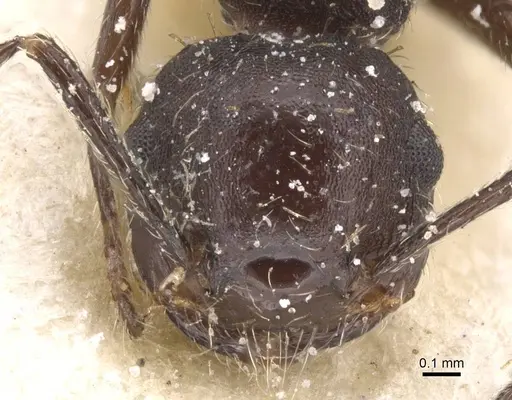
CASENT0912715
Ver no AntWeb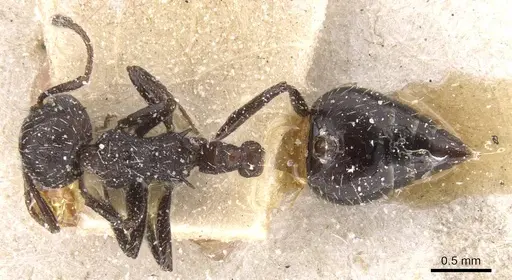
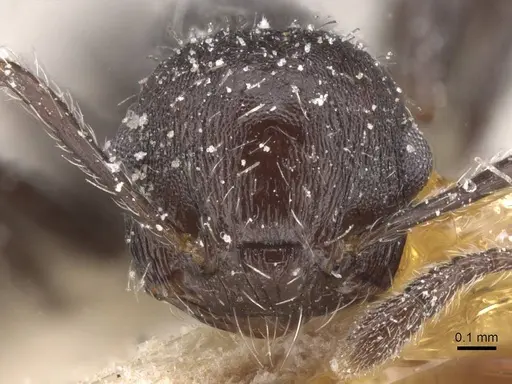
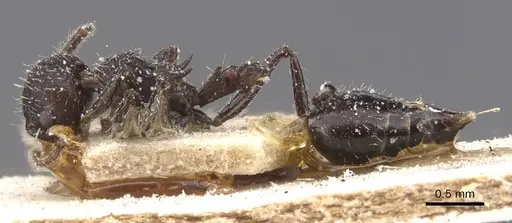
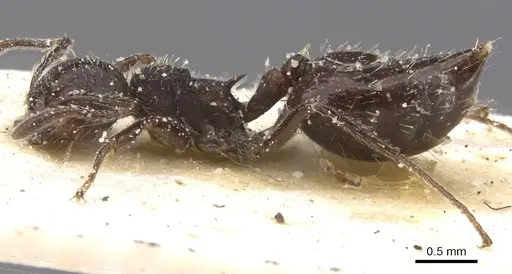
CASENT0912716
Ver no AntWeb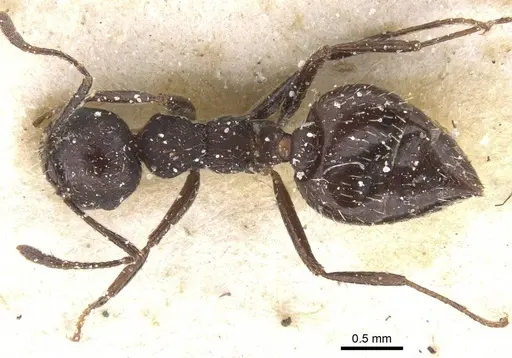
Literatura
A carregar mapa de distribuição...A carregar produtos...