
Crematogaster mucronata
- Nome cient.
- Crematogaster mucronata
- Tribo
- Crematogastrini
- Subfamília
- Myrmicinae
- Autor
- Emery, 1900
- Distribuição
- Encontrado em 0 países
Introdução
Crematogaster mucronata is a small myrmicine ant endemic to the island of Sumatra, Indonesia. Workers are tiny, measuring approximately 2.5-3mm in total length based on the available head and mesosoma measurements . They feature a distinctive rufous to brown coloration and a unique combination of morphological traits including a 3-jointed antennal club, steeply raised pronotum, and developed propodeal spines that distinguish them from related species . This species belongs to the C. difformis-subgroup within the Physocrema subgenus and represents possibly the earliest branching member of the group based on its plesiomorphic character state of propodeal spines . For antkeepers, this represents an opportunity to work with a poorly documented species where captive observations could contribute meaningfully to our understanding.
Quick Summary
- Difficulty: Unknown
- Origin & Habitat: Endemic to Sumatra, Indonesia, found only on this island in the Indomalaya region [2][1]
- Colony Type: Unknown, colony structure has not been documented for this species
- Size & Growth:
- Queen: size data unavailable
- Worker: ~2.5-3mm (inferred from genus measurements) [1]
- Colony: Unknown, no colony size data available
- Growth: Unknown
- Development: Unknown, no development data available (Development timeline is unconfirmed for this species)
- Antkeeping:
- Temperature: Unknown for this species. Based on its Sumatran origin (tropical rainforest climate), likely requires warm conditions around 24-28°C. Start in this range and observe colony activity
- Humidity: Unknown. Tropical Sumatra typically has high humidity. Keep nest substrate consistently moist but not waterlogged
- Diapause: Unknown, no data on overwintering requirements. As a tropical species from near the equator, likely does not require formal hibernation
- Nesting: Not documented. Most Crematogaster species are arboreal or semi-arboreal, often nesting in hollow twigs, under bark, or in rotting wood. A Y-tong or plaster nest with some vertical orientation may work well
- Behavior: Behavior is undocumented for this species. Crematogaster genus members are generally known for their characteristic habit of raising their abdomen when alarmed, giving them the common name 'acrobat ants.' They are typically not aggressive but will defend their nest vigorously. Their small size means escape prevention is critical, they can squeeze through remarkably small gaps. Use fine mesh and tight-fitting barriers.
- Common Issues: no biological data means all care is speculative, start with genus-typical conditions and adjust based on colony response, tiny worker size creates significant escape risk, use fine mesh barriers and check for gaps regularly, completely unconfirmed colony structure means you may not know if your colony is single-queen or multi-queen, no documented feeding preferences, begin with sugar sources and small protein prey, observe what they accept, lack of development data makes it difficult to assess if colony growth is normal
Appearance and Identification
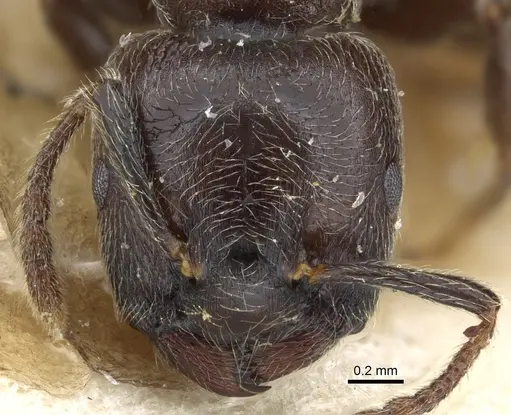
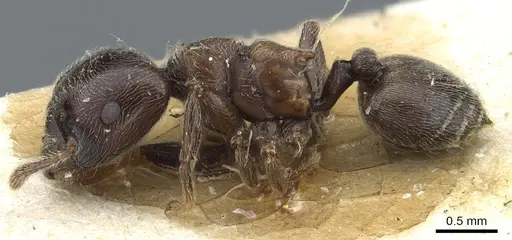
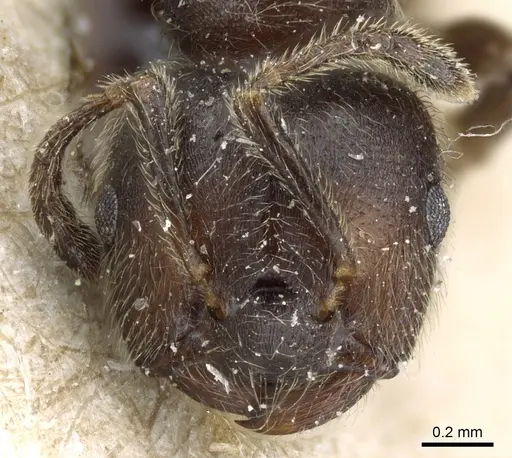
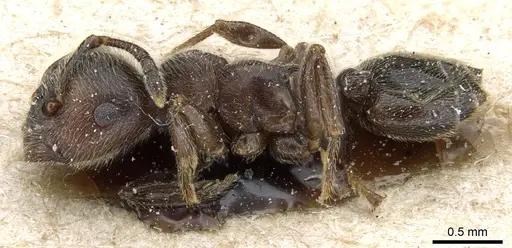
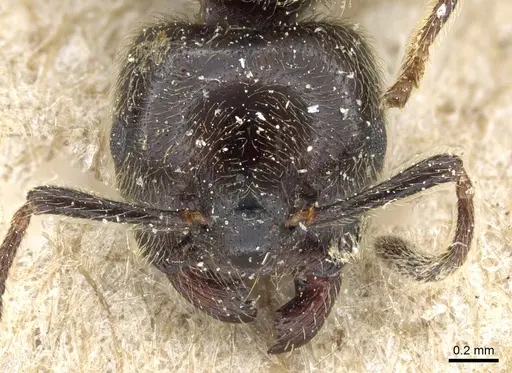
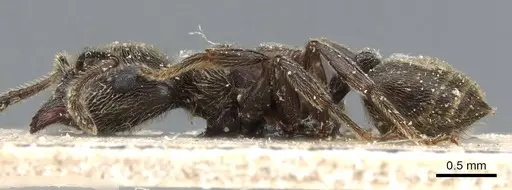
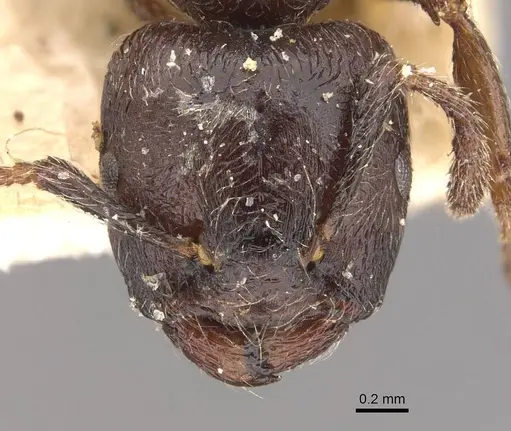
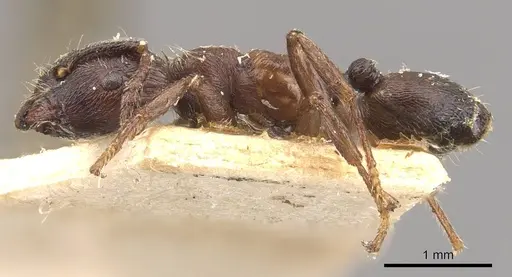
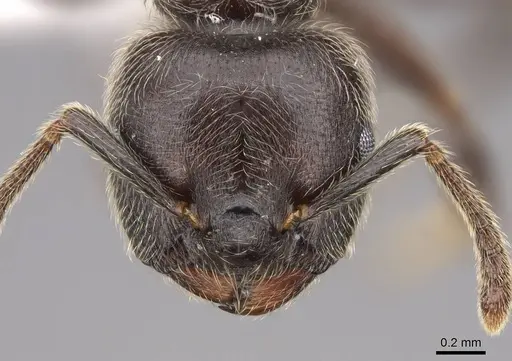
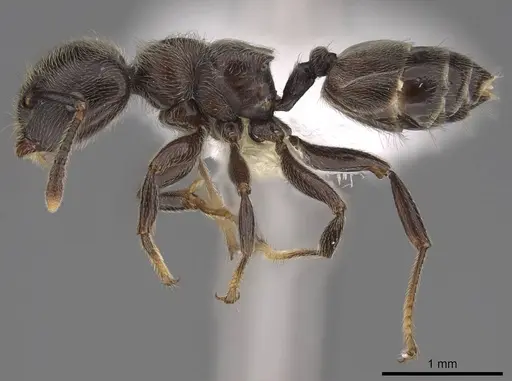
Crematogaster mucronata workers are tiny ants measuring approximately 2.5-3mm in total length based on the available measurements [1]. Their body color ranges from rufous to brown, making them relatively inconspicuous compared to some brighter Crematogaster species. The most distinctive morphological features include a 3-jointed antennal club (a unique reduction from the typical 4 segments found in this species group), a steeply raised pronotum, and developed propodeal spines [1]. In profile view, the propodeum is moderately swollen, appearing as high as the promesonotum. The petiole is subquadrate with subparallel sides when viewed from above, and the postpetiole shows weakly bilobed characteristics. These specific morphological traits help distinguish C. mucronata from other Crematogaster species in the region, particularly within the Physocrema subgenus [1].
Distribution and Habitat
This species is endemic to Sumatra, Indonesia, meaning it is found nowhere else in the world [2][1]. The type locality is Pangherang-Pisang in Sumatra, where the original specimen was collected by E. Modigliani [1]. As an island near the equator, Sumatra features a tropical rainforest climate with consistently warm temperatures year-round and high humidity. The specific microhabitats C. mucronata occupies in the wild are unknown, the biology of this species has never been studied in detail. However, related species in the C. difformis-subgroup typically nest in rotting wood, under bark, or in hollow twigs, often in forested areas. This species was originally described as a variety of C. deformis before being elevated to species status, and it was later synonymized with C. fulmeki (described in 1922) [2].
Taxonomy and Classification
Crematogaster mucronata belongs to the subgenus Physocrema and is a member of the C. difformis-subgroup within that subgenus [2]. Phylogenetic analysis has placed this species as sister to a clade containing C. ampullaris and C. sewardi, though this placement has moderate to high statistical support depending on the analytical method used [2]. Interestingly, researchers note that C. mucronata may actually belong in a different subgenus in the future due to its unique combination of characters that set it apart from other Physocrema species [1]. The species was originally described by Emery in 1900 from specimens collected in Sumatra, and the worker measurements and morphological description were recently updated in a 2009 taxonomic revision by Hosoishi and Ogata [1].
Keeping Crematogaster mucronata in Captivity
Because absolutely no biological data exists for this species, all care recommendations must be considered speculative and based on genus-typical behavior combined with what we know about its Sumatran origin. Start with a standard setup for small tropical Crematogaster: a test tube setup for founding colonies, transitioning to a Y-tong or plaster nest as the colony grows. Temperature should be in the tropical range of 24-28°C, these ants come from near the equator where temperatures are consistently warm. Humidity should be high with consistently moist but not waterlogged substrate. For feeding, begin with sugar water or honey diluted with water, and offer small protein sources like fruit flies, small mealworms, or other appropriately-sized insects. Observe what your colony accepts and adjust accordingly. The most important practical consideration is their tiny size, workers are only about 2.5-3mm, meaning they can escape through remarkably small gaps. Use fine mesh on all ventilation holes and ensure all connections are sealed [1].
What We Don't Know
Antkeepers should be aware that this is one of the least documented ant species in the hobby. We have no information on: colony founding behavior (whether queens are claustral or semi-claustral), colony structure (single-queen or multi-queen), nuptial flight timing, development timeline from egg to worker, specific humidity and temperature preferences, overwintering requirements, or even what foods they prefer in captivity. This represents both a challenge and an opportunity. The challenge is that there's no established care protocol to follow. The opportunity is that any successful captive breeding of this species would be genuinely novel information that could contribute to our understanding of this poorly known ant. Keep detailed notes on your colony's behavior, growth, and preferences, your observations could be scientifically valuable for such an understudied species.
Frequently Asked Questions
How difficult is Crematogaster mucronata to keep?
Difficulty is unknown since this species has never been documented in the ant-keeping hobby. Based on its tiny size and complete lack of biological data, it should be considered an expert-level species until more is learned about its care requirements.
What do Crematogaster mucronata ants eat?
Feeding preferences are unconfirmed for this species. Start with sugar water or honey as an energy source, and offer small protein prey like fruit flies, pinhead crickets, or small mealworms. Observe what your colony accepts and adjust accordingly.
What temperature should I keep Crematogaster mucronata at?
Temperature requirements are unconfirmed. Based on its Sumatran origin (tropical climate near the equator), start around 24-28°C and observe colony behavior. If workers are sluggish, increase slightly, if they avoid heated areas, reduce temperature.
Do Crematogaster mucronata ants need hibernation?
Unknown. As a tropical species from near the equator, formal hibernation is likely not necessary. The colony may slow down during cooler periods but probably will not enter true diapause.
How big do Crematogaster mucronata colonies get?
Colony size is unknown, no scientific data exists on maximum colony size for this species.
Do Crematogaster mucronata ants sting?
Stinging behavior is not documented for this specific species. Crematogaster genus members can bite and some have stingers, but their small size typically makes them harmless to humans.
Can I keep multiple Crematogaster mucronata queens together?
Unknown, colony structure has not been documented for this species. Most Crematogaster are polygynous (multi-queen) or facultatively polygynous, but we have no data on this specific species.
How long does it take for Crematogaster mucronata to produce first workers?
Development timeline is unconfirmed. No data exists for this specific species.
What size nest should I use for Crematogaster mucronata?
Not documented. Given their small worker size, use nests with small chambers and narrow passages. Y-tong or plaster nests work well for small Crematogaster species.
Are Crematogaster mucronata good for beginners?
No, this species cannot be recommended for beginners due to the complete lack of any biological or husbandry data. Working with such an undocumented species requires experience with ant care and willingness to experiment with conditions.
Report an Issue
The current care sheet is based fully on literature. See inconsistencies, or something that's incorrect? Please , it will be resolved after review from an admin. Contributing to the blogs tab also helps providing information, to make us be able to further improve the caresheets. Thank you for your support!
References

Esta ficha de cuidados é licenciada sob CC BY-SA 4.0 .
Blogs da comunidade
CASENT0904532
Ver no AntWeb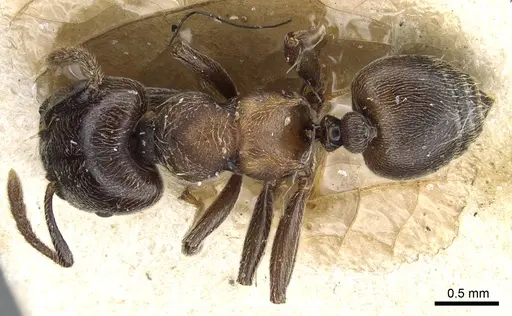
CASENT0904535
Ver no AntWeb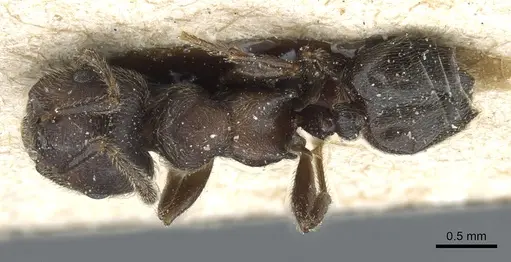
CASENT0905762
Ver no AntWeb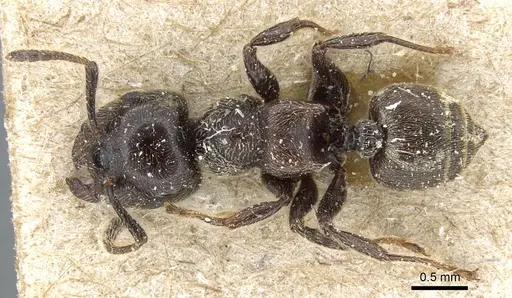
CASENT0908466
Ver no AntWeb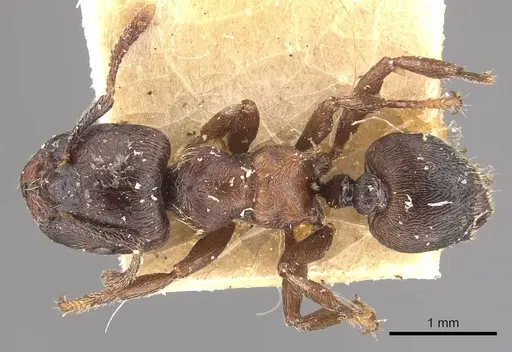
CASENT0922672
Ver no AntWeb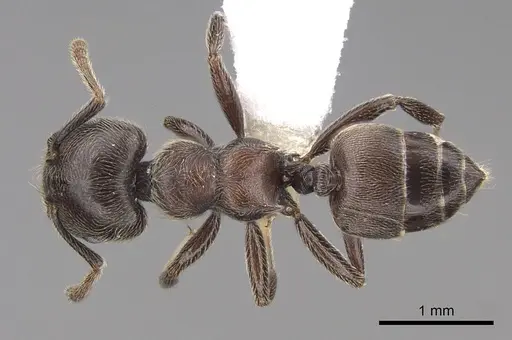
Literatura
A carregar mapa de distribuição...A carregar produtos...