
Crematogaster mesonotalis
- Nome cient.
- Crematogaster mesonotalis
- Subgénero
- Orthocrema
- Tribo
- Crematogastrini
- Subfamília
- Myrmicinae
- Autor
- Emery, 1911
- Distribuição
- Encontrado em 1 países
Introdução
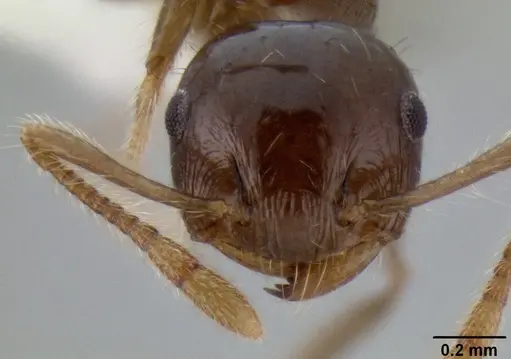
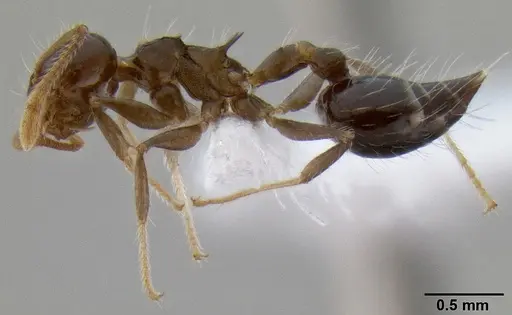
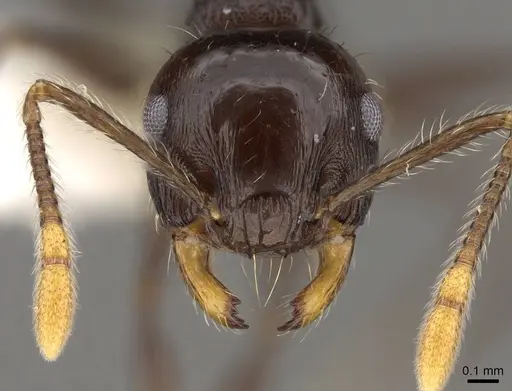
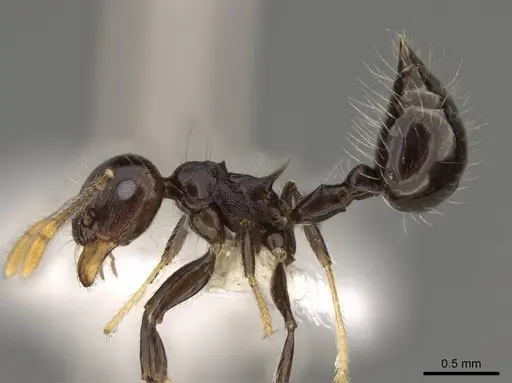
Crematogaster mesonotalis is a small ant species native to the island of New Guinea in Indonesia. Workers measure 3mm in total length and feature a distinctive dark maroon-brown coloration with yellow antennae, mandibles, and leg tips. The genus name 'Crematogaster' comes from Greek and means 'split belly' - referring to the heart-shaped petiole that these ants use as a weapon, raising their abdomen over their head when threatened to spray formic acid. This species belongs to the Orthocrema clade, a group of Crematogaster ants characterized by their relatively small size and specific morphological features . What makes this species interesting is its phylogenetic placement within the Orthocrema clade, where it groups with other New Guinea endemics like C. paradoxa and C. emeryi. Acrobat ants are known for their entertaining behavior - they run with their gasters held high like scorpions and will defend their colonies with chemical sprays.
Quick Summary
- Difficulty: Medium
- Origin & Habitat: Native to New Guinea (Irian Jaya, Indonesia) in the Australasian region. Found in tropical forest environments where they typically nest in rotting wood, under bark, or in hollow plant stems [1][3].
- Colony Type: Colony structure is not documented for this specific species. Most Crematogaster species form single-queen colonies, but this is unconfirmed for C. mesonotalis.
- Size & Growth:
- Queen: Size data unavailable, no specific measurements exist for this species. Based on typical Crematogaster genus patterns, queens likely measure 5-8mm.
- Worker: 3mm [1]
- Colony: Colony size is unconfirmed for this specific species. Based on typical Crematogaster patterns, colonies likely reach several hundred workers.
- Growth: Moderate, inferred from typical Crematogaster genus patterns
- Development: Development time is unconfirmed for this species. Based on typical Crematogaster patterns, first workers likely emerge in 6-8 weeks at tropical temperatures (25-28°C). (Tropical species generally develop faster than temperate ones. Temperature strongly affects development speed.)
- Antkeeping:
- Temperature: Keep at 24-28°C (warm tropical conditions). A slight gradient allowing cooler areas around 22°C is beneficial. Avoid temperatures below 20°C for extended periods [3].
- Humidity: High humidity (70-80%). These ants come from tropical New Guinea and need consistently moist conditions. Keep nest substrate damp but not waterlogged [3].
- Diapause: No, as a tropical species from near the equator, they do not require hibernation. Maintain warm conditions year-round [3].
- Nesting: In captivity, they do well in Y-tong (AAC) nests, plaster nests, or naturalistic setups with rotting wood. They prefer enclosed nests with narrow chambers. Test tubes with cotton can work for founding colonies but may need upgrading as the colony grows [3].
- Behavior: Crematogaster mesonotalis is defensive but not overly aggressive toward keepers. When threatened, workers will raise their abdomen over their head and spray formic acid, this is their primary defense mechanism as members of the Myrmicinae subfamily. They are active foragers and will readily explore their outworld searching for food. Their small size (3mm) means they can escape through tiny gaps, so escape prevention must be excellent. They are arboreal-leaning and often nest in elevated locations in the wild, so they appreciate vertical space in captivity [3].
- Common Issues: escape prevention is critical due to their tiny 3mm size, use fine mesh and tight-fitting lids, tropical humidity requirements can lead to mold if ventilation is poor, balance humidity with airflow, formic acid spraying can irritate eyes, handle gently and avoid putting your face near agitated colonies, small colony size means slow growth, resist the urge to overfeed which can attract pests and cause mold
Housing and Nest Setup
For Crematogaster mesonotalis, start with a simple test tube setup for the founding queen. Use a standard test tube with a water reservoir stopped with cotton, the queen will seal herself in the dry end and raise her first workers there. Once the colony reaches 20-30 workers, you can upgrade to a proper formicarium. Y-tong (AAC) nests work very well because they provide the dark, enclosed spaces these ants prefer while allowing you to observe colony development. Plaster nests are another excellent option, especially if you keep the plaster consistently moist to maintain humidity. For the outworld, a simple plastic container works fine, just ensure all connections are sealed because these tiny ants will find any gap. Add some fake plants or decorations if you want to make it look nicer, but keep cleaning easy. Many keepers connect multiple formicaria as the colony grows, giving them more expansion space. [1][3]
Feeding and Nutrition
Crematogaster mesonotalis is an omnivorous species that will accept a variety of foods. In captivity, they do well on sugar water, honey, or diluted maple syrup offered in a shallow dish or directly on the nest. For protein, offer small insects like fruit flies, small mealworms, or crickets. Being a small species, their prey items should be appropriately sized, tiny insects are better than large ones. They also eat honeydew in the wild, so sugar sources are definitely accepted. Feed them every 2-3 days, removing any uneaten prey after 24 hours to prevent mold. A constant sugar source (like a cotton ball soaked in sugar water) should be available. Watch how quickly they consume food, a hungry colony will swarm over new food within minutes, while a satiated colony may ignore it. [3]
Temperature and Humidity Management
As a tropical species from New Guinea, Crematogaster mesonotalis needs warm and humid conditions year-round. Keep the nest area at 24-28°C, you can achieve this with a small heat mat placed under or to one side of the formicarium, but always use a thermostat to prevent overheating. Room temperature may be sufficient if your home is naturally warm (above 24°C). For humidity, aim for 70-80% in the nest area. You can maintain this by keeping the water reservoir in test tube setups filled, using moist plaster or soil in naturalistic nests, and misting occasionally. However, balance humidity with ventilation, stagnant, overly wet conditions lead to mold which can kill colonies. If you see condensation constantly pooling or mold starting to grow, increase airflow immediately. A small ventilation hole or occasional airing out helps significantly. [3]
Behavior and Defense
The common name 'acrobat ant' perfectly describes their most distinctive behavior, when disturbed, workers run with their gasters held high above their heads, ready to spray formic acid at any threat. This is an effective defense that gives them their scientific name 'Crematogaster' (split belly). They are not particularly aggressive toward humans but will defend their nest vigorously. Their formic acid spray can cause mild irritation to skin and eyes, so handle gently and avoid leaning your face close to an agitated colony. They are active foragers and will explore their outworld regularly, making them fun to watch. Their small size means they can access food items that larger ants might ignore, and they often work together to tackle prey. In the wild, Crematogaster species often nest in elevated locations, so they may prefer formicaria with some vertical space. [3]
Colony Development and Growth
Starting with a newly mated queen, you can expect the first workers (nanitics) to emerge in about 6-8 weeks under optimal conditions. These first workers will be smaller than mature workers but will immediately begin caring for the brood and foraging for food. Colony growth is moderate, expect the population to roughly double every few months under good conditions. A mature colony may reach several hundred workers. The queen can live for many years, with some Crematogaster queens living 15-20 years in captivity. Growth rate depends heavily on temperature, feeding consistency, and humidity stability. Colonies grow fastest when kept consistently warm (25-28°C) and fed regularly with both protein and sugar sources. Patience is key, small colonies can take months to establish firm footing. [3]
Frequently Asked Questions
How long does it take for Crematogaster mesonotalis to produce first workers?
Based on typical Crematogaster patterns, first workers (nanitics) likely emerge in about 6-8 weeks after the queen lays her first eggs, assuming optimal conditions of 25-28°C and good humidity. Development time is unconfirmed for this specific species.
Do Crematogaster mesonotalis ants sting?
They do not sting. Instead, they spray formic acid as their defense mechanism, this is typical for Myrmicinae ants. The spray can irritate skin and eyes, so handle gently and avoid close contact with agitated workers.
What size colony does Crematogaster mesonotalis reach?
Based on typical Crematogaster patterns, expect a mature colony of several hundred workers. Exact maximum is unconfirmed for this specific species.
Can I keep multiple Crematogaster mesonotalis queens together?
Colony structure is unconfirmed for this species. Most Crematogaster species are single-queen, though some can have multiple queens. Combining unrelated queens is not recommended as they typically fight. If you catch multiple queens, keep them separate until you determine which one establishes.
What do Crematogaster mesonotalis eat?
They are omnivores accepting sugar sources (honey, sugar water, maple syrup) and protein (small insects like fruit flies, pinhead crickets, small mealworms). Feed protein every 2-3 days and keep a constant sugar source available.
Do Crematogaster mesonotalis need hibernation?
No. As a tropical species from New Guinea near the equator, they do not require hibernation. Keep them warm year-round at 24-28°C.
Why are my Crematogaster mesonotalis escaping?
At only 3mm, they are tiny and can squeeze through remarkably small gaps. Check all connections, lid seams, and ventilation holes. Use fine mesh (at least 0.5mm or smaller) and seal any gaps with fluon or silicone.
When should I move my colony to a formicarium?
Move from test tube to a proper nest once the colony reaches 20-30 workers or when the test tube becomes crowded. Y-tong or plaster nests work well for this species.
Are Crematogaster mesonotalis good for beginners?
They are rated as medium difficulty. They require tropical conditions and excellent escape prevention due to their tiny size, which may challenge complete beginners. However, they are rewarding to keep.
How do I prevent mold in my ant setup?
Balance humidity with ventilation. Remove uneaten food promptly, don't overfeed, and ensure water reservoirs aren't overflowing. If mold appears, increase airflow and replace the affected substrate. Good ventilation is key.
Report an Issue
The current care sheet is based fully on literature. See inconsistencies, or something that's incorrect? Please , it will be resolved after review from an admin. Contributing to the blogs tab also helps providing information, to make us be able to further improve the caresheets. Thank you for your support!
References

Esta ficha de cuidados é licenciada sob CC BY-SA 4.0 .
Blogs da comunidade
CASENT0193622
Ver no AntWeb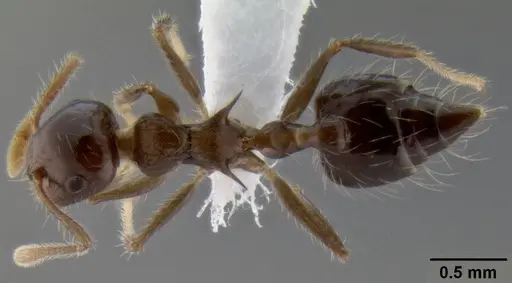
CASENT0914540
Ver no AntWeb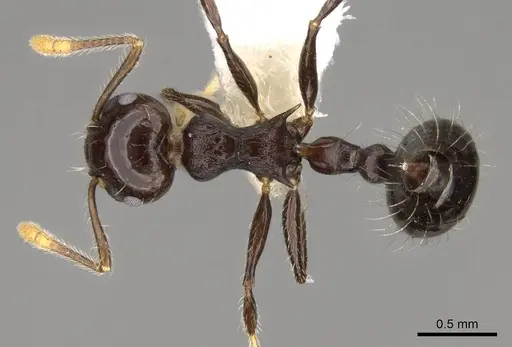
Literatura
A carregar mapa de distribuição...A carregar produtos...