
Crematogaster dorsidens
- Nome cient.
- Crematogaster dorsidens
- Subgénero
- Orthocrema
- Tribo
- Crematogastrini
- Subfamília
- Myrmicinae
- Autor
- Santschi, 1925
- Distribuição
- Encontrado em 0 países
Introdução
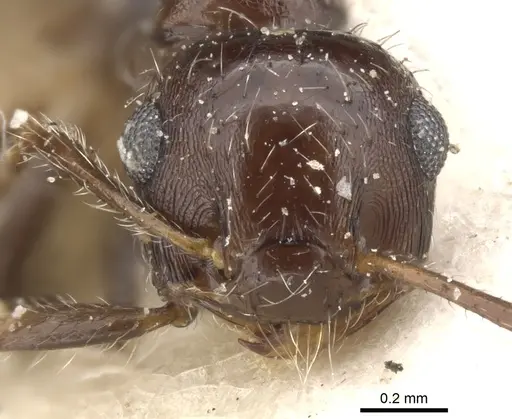
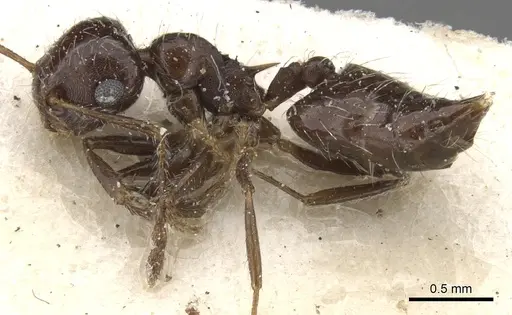
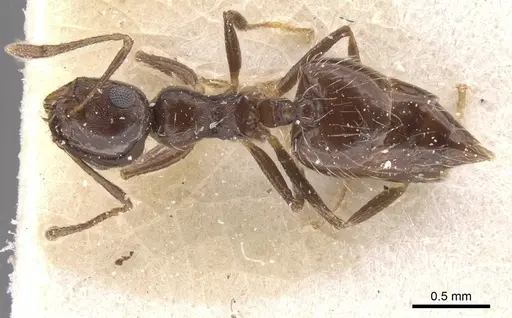
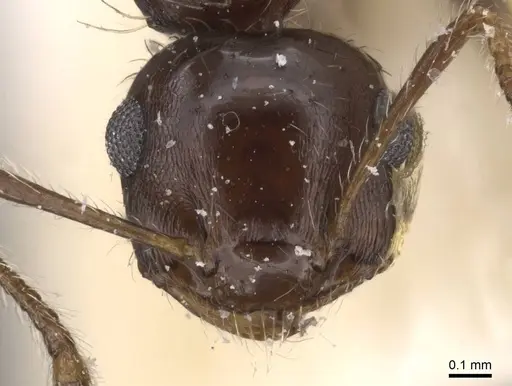
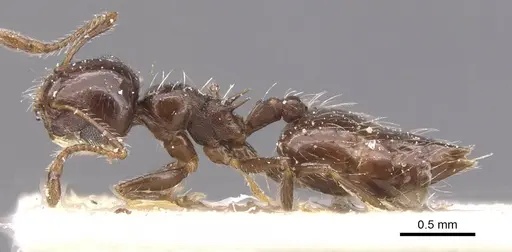
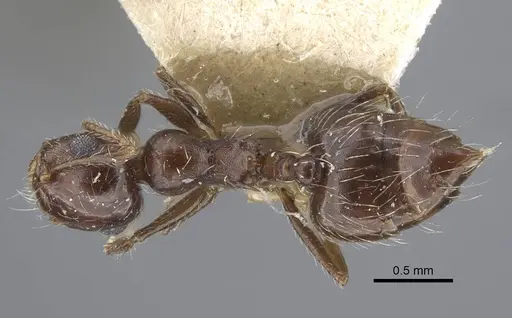
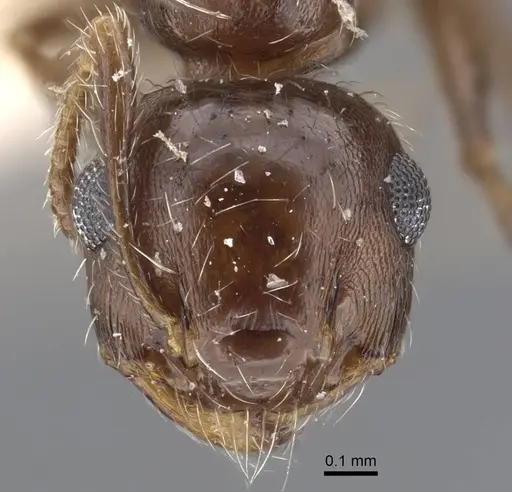
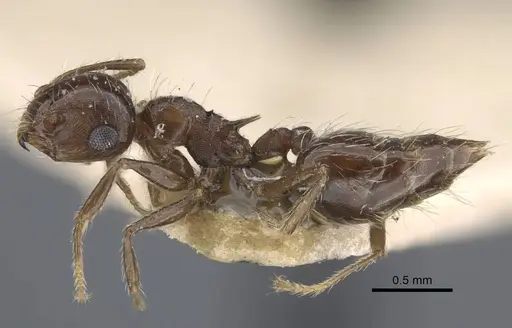
Crematogaster dorsidens is a small ant species in the Myrmicinae subfamily. Workers have the genus' distinctive heart-shaped gaster that can be raised over the head like an acrobat - giving these ants their common name 'acrobat ant'. This species was described by Santschi in 1925 and is found exclusively in Brazil, specifically documented in the Bahia region and the Fernando de Noronha archipelago [AntWiki]. As a Neotropical species, it inhabits warm, humid coastal and forest environments typical of Brazilian habitats. The genus Crematogaster is known for arboreal or semi-arboreal nesting preferences, often found in dead wood, under bark, or in plant cavities.
Quick Summary
- Difficulty: Medium
- Origin & Habitat: Native to Brazil, specifically documented in Bahia and the Fernando de Noronha archipelago [1][2]. As a Neotropical species, it inhabits warm, humid coastal and forest environments.
- Colony Type: Colony structure is unconfirmed for this specific species. Based on typical Crematogaster patterns, likely single-queen (monogyne) colonies.
- Size & Growth:
- Queen: Size data unavailable, no species-specific measurements exist. Based on genus patterns, estimated around 5-8 mm.
- Worker: Size data unavailable, no species-specific measurements exist. Typical Crematogaster workers range approximately 2-5 mm based on genus patterns [2].
- Colony: Unknown, no colony size data available for this species.
- Growth: Unknown, no development data available for this species.
- Development: Estimated 6-8 weeks based on typical Crematogaster development patterns at warm temperatures (25-28°C). (Development time is estimated from genus-level data since no species-specific research exists. Warm temperatures will accelerate development.)
- Antkeeping:
- Temperature: Keep nest area at 24-28°C. As a Brazilian species, they prefer warm, stable conditions. A heating cable on one side of the nest creates a suitable gradient [2].
- Humidity: Maintain moderate to high humidity (60-80%). These ants prefer damp conditions but not waterlogged nests. Provide a water tube for drinking access.
- Diapause: No true diapause required. As a tropical species, they do not need hibernation. However, slight temperature reduction during winter months (to around 20-22°C) may slow activity naturally.
- Nesting: Based on typical Crematogaster preferences, they prefer nesting in dead wood, under bark, or in plant cavities. In captivity, Y-tong (AAC) nests, plaster nests, or naturalistic setups with wood pieces work well. Avoid dry, arid setups.
- Behavior: Crematogaster dorsidens displays typical genus behavior, they are active foragers that readily climb and may nest in elevated positions. Workers are medium-sized and can be identified by their heart-shaped gaster. They are generally not aggressive toward keepers but will defend their nest if threatened. This species has a modified stinger used to smear venom onto enemies rather than pierce flesh (typical of Crematogastrini tribe). Escape prevention should be moderate, they are not extremely small but can squeeze through small gaps. They feed opportunistically on honeydew, small insects, and sugar sources.
- Common Issues: limited data, this species has not been well-studied in captivity, so care recommendations are based on genus patterns rather than species-specific research, humidity control is important, being from humid Brazilian habitats, they may struggle in dry environments, temperature maintenance matters, being tropical, they need consistent warmth to thrive, wild-caught colonies may have parasites or diseases that can cause colony failure in captivity, slow colony growth is normal, Crematogaster colonies often take time to establish
Nest Preferences
Crematogaster dorsidens, like most species in this genus, prefers nesting in dead wood, under bark, or in pre-existing plant cavities. They are semi-arboreal, meaning they often nest above ground level rather than in soil. In captivity, Y-tong (AAC) nests work well because they provide smooth walls and chambers that mimic tree hollows. Plaster nests can also work if kept adequately moist. Naturalistic setups with pieces of cork bark or soft wood allow them to create their own galleries. Avoid fully soil-based nests unless mixed with wood material. The nest should have some vertical orientation since they naturally gravitate upward. [2]
Feeding and Diet
Crematogaster species are omnivorous and opportunistic feeders. They naturally tend honeydew from aphids and scale insects, and will hunt small insects for protein. In captivity, offer a mix of sugar sources (honey water, sugar water) and protein foods (small crickets, mealworms, fruit flies). Feed protein prey 2-3 times per week and keep sugar water available at all times. They are not picky eaters but prefer fresh prey over dried options. Remove uneaten prey after 24 hours to prevent mold. A varied diet helps promote colony growth. [2]
Temperature and Care
As a Brazilian (Neotropical) species, Crematogaster dorsidens requires warm conditions to thrive. Keep the nest area at 24-28°C consistently. Temperatures below 20°C can slow activity and potentially harm brood development. Use a heating cable on one side of the nest to create a gentle temperature gradient, allowing workers to choose their preferred zone. Place the heating on top of the nest, not underneath, to avoid drying out the substrate too quickly. Room temperature may be sufficient if your home stays in the low-to-mid 20s°C range. Monitor colony behavior, if workers cluster near the heat source, increase temperature slightly, if they avoid it and seem sluggish, the area may be too warm. [2]
Behavior and Temperament
Crematogaster ants get their common name 'acrobat ants' from their behavior of raising their heart-shaped gaster over their head when disturbed, they look like little acrobats doing a handstand. Workers are active foragers and will readily explore outworlds in search of food. They are generally not aggressive toward humans and rarely sting, though they may bite if handled roughly. Their moderate size makes them easy to observe. They communicate through chemical trails and will quickly recruit nestmates to good food sources. Colonies establish relatively quickly once the first workers (nanitics) emerge, but growth to full size takes time. [2]
Colony Establishment
Since specific founding behavior for Crematogaster dorsidens has not been documented, care is based on typical Crematogaster patterns. A claustral founding queen will seal herself in a small chamber and survive on stored fat reserves until her first workers emerge. This typically takes 4-8 weeks depending on temperature. During this time, the queen needs complete darkness and minimal disturbance. Do not feed the founding queen, she does not forage and may become stressed by food presence. Once workers emerge (nanitics), you can begin offering tiny food items like a drop of honey water, but the colony will be fragile for the first few months. Allow the colony to grow naturally without forcing feeding schedules.
Frequently Asked Questions
How long does it take for Crematogaster dorsidens to produce first workers?
Based on typical genus development, expect first workers (nanitics) to emerge 6-8 weeks after the queen lays eggs, assuming temperatures around 25-28°C. Cooler temperatures will slow development significantly.
What do Crematogaster dorsidens ants eat?
They are omnivorous, offer sugar water or honey constantly for energy, and protein prey (small crickets, mealworms, fruit flies) 2-3 times per week. They will also accept fruit and small amounts of protein-rich foods.
Do Crematogaster dorsidens ants sting?
Crematogaster ants have a modified stinger but rarely use it on humans. They are generally docile and focused on foraging rather than defending against large threats. If handled roughly, they may bite or attempt to smear venom, but the effect is minimal for most people.
What temperature do Crematogaster dorsidens need?
Keep them warm at 24-28°C. As a Brazilian species, they prefer consistent warmth. A heating cable on one side of the nest can help maintain proper temperatures, especially in cooler climates.
Can I keep multiple Crematogaster dorsidens queens together?
Colony structure is unconfirmed for this species. Most Crematogaster are single-queen colonies, but some species can be polygynous. It is generally safer to start with one queen per colony unless you have specific information about this species accepting multiple queens.
Are Crematogaster dorsidens good for beginners?
This species is rated Medium difficulty. While Crematogaster are generally hardy once established, the lack of species-specific care data means you should have some antkeeping experience. Their warmth and humidity requirements are straightforward but must be maintained consistently.
What type of nest is best for Crematogaster dorsidens?
Y-tong (AAC) nests or plaster nests work well. They prefer semi-arboreal setups that mimic their natural wood-nesting habits. Avoid completely soil-based nests unless mixed with wood material. The nest should allow for some vertical space.
Do Crematogaster dorsidens need hibernation?
No. As a tropical Brazilian species, they do not require true hibernation. You can slightly reduce temperatures in winter (to around 20-22°C) to simulate natural seasonal slowing, but full diapause is not necessary or recommended.
How big do Crematogaster dorsidens colonies get?
Colony size is not documented for this specific species. Based on genus patterns, expect colonies to reach several hundred to perhaps a thousand workers over time. Crematogaster colonies are typically moderate-sized compared to some other genera.
Why is my Crematogaster dorsidens colony declining?
Common causes include: low humidity (they need 60-80% moisture), temperatures below 20°C, poor nutrition, mold from overwatering, or stress from disturbance during founding. Check all environmental parameters first. Wild-caught colonies may also carry parasites that can cause decline.
Report an Issue
The current care sheet is based fully on literature. See inconsistencies, or something that's incorrect? Please , it will be resolved after review from an admin. Contributing to the blogs tab also helps providing information, to make us be able to further improve the caresheets. Thank you for your support!
References

Esta ficha de cuidados é licenciada sob CC BY-SA 4.0 .
Blogs da comunidade
Literatura
A carregar mapa de distribuição...A carregar produtos...