
Cladomyrma nudidorsalis
- Nome cient.
- Cladomyrma nudidorsalis
- Tribo
- Lasiini
- Subfamília
- Formicinae
- Autor
- Agosti <i>et al.</i>, 1999
- Distribuição
- Encontrado em 0 países
Introdução
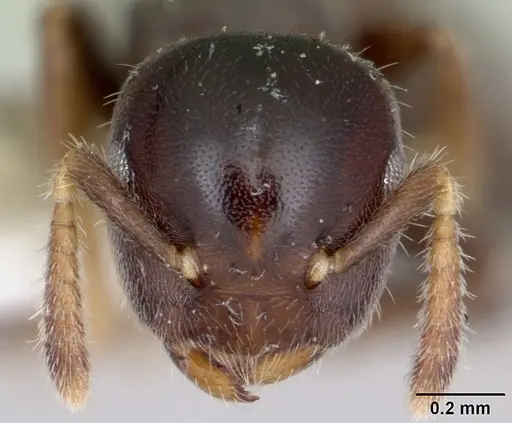
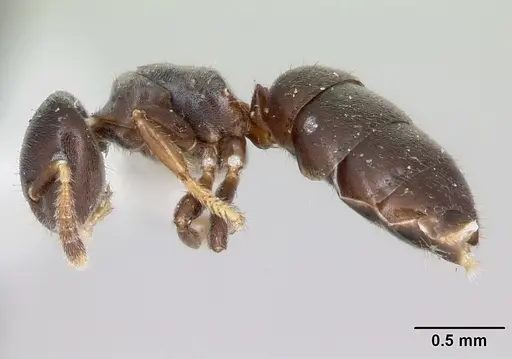
Cladomyrma nudidorsalis is a small plant-ant native to the rainforests of West Malaysia, found living inside the stems of understorey trees Ryparosa fasciculata and Drypetes longifolia at elevations around 650-850 meters . Queens are approximately 3-4 mm total length, while workers are tiny at around 2-3 mm depending on caste . The species is easily recognized in the queen by the unique lack of erect hairs on the alitrunk (the middle body section) and very short hairs on the abdomen, unlike other Cladomyrma species . Their body color is bright yellowish brown with black markings on the rear of the abdominal segments . This species is a true plant-ant that lives inside hollow plant stems, forming colonies of 3000-5000 workers in mature trees over 5 meters tall . Unlike many plant-ants that rely on preformed hollow spaces, founding queens actively chew entry holes into plant internodes to create their nests . They maintain a mutualistic relationship with scale insects (coccoids) which they tend inside the stems for honeydew .
Quick Summary
- Difficulty: Advanced
- Origin & Habitat: West Malaysian rainforests (Fraser's Hill, Belum near Thai border), living inside stems of understorey trees Drypetes longifolia and Ryparosa fasciculata at 650-850m elevation [1][2].
- Colony Type: Monogyne, colonies start with multiple founding queens but eventually a single queen monopolizes the entire host plant [2]. Colonies reach approximately 3000-5000 workers in trees over 5 meters tall [2].
- Size & Growth:
- Queen: ~3-4 mm (inferred from genus, research provides alitrunk length 2.20-2.40 mm) [1]
- Worker: ~2-3 mm (inferred from genus, research provides alitrunk length 0.76-1.14 mm) [1]
- Colony: Up to 3000-5000 workers in mature trees [2]
- Growth: Moderate
- Development: Unknown (Development timeline has not been studied for this species.)
- Antkeeping:
- Temperature: Keep at 24-28°C. They come from tropical rainforest understorey at moderate elevation, so warmth with moderate humidity is ideal.
- Humidity: High humidity (70-85%). These ants live inside plant stems which maintain consistent moisture. Use a naturalistic setup with plant stems that retain humidity.
- Diapause: No, being a tropical species, they do not require hibernation. Keep temperatures stable year-round [1].
- Nesting: This is the most critical aspect. They need hollow stems or stem-like structures to nest in. A naturalistic terrarium setup with suitable plant material works best. They cannot be kept in standard soil nests or test tubes long-term. Queens chew into plant internodes to found colonies, so provide appropriate substrate [2].
- Behavior: These are gentle, non-aggressive ants that focus on tending scale insects for honeydew rather than defending territory [2]. Workers slowly patrol young foliage and shoots, licking the surface [2]. They are not defensive and unlikely to sting. Escape risk is moderate, their small size means they can squeeze through small gaps, but they are not strong climbers like some Formicinae.
- Common Issues: specialized habitat requirements, cannot be kept in standard soil nests or test tubes long-term, need for live scale insects or alternative honeydew source, they rely on tending coccoids, difficulty establishing founding queen, she must chew into plant material, not just find a cavity, colony collapse if host plant material dries out or becomes unsuitable, slow colony growth means keepers may lose patience and abandon the colony
Housing and Nest Setup
Cladomyrma nudidorsalis cannot be kept in conventional ant keeping setups. They are specialized plant-ants that require hollow stems or stem-like structures to thrive. A naturalistic terrarium with suitable plant material is essential. You can use hollow bamboo, dried plant stems, or artificial stem structures filled with moist substrate. The key is providing chambers that the ants can occupy and expand. Unlike soil-nesting ants, they need vertical spaces that mimic their natural tree-dwelling habitat. The enclosure should include live plant material if possible, as the ants prefer to tend their scale insect partners on young growth. Ensure the setup allows for humidity control while preventing mold buildup [2].
Feeding and Diet
In the wild, these ants derive most of their nutrition from tending hemipteran scale insects (coccoids) inside their host plant stems. They maintain a mutualistic relationship with species including Pseudococcidae and Coccidae [2]. The ratio of scale insects to workers ranges from 1:5 to 1:13,averaging 1:9 [2]. In captivity, you must replicate this by providing scale insects or a reliable honeydew source. Offer sugar water or honey occasionally, but this alone will not sustain the colony long-term. Live scale insects (mealybugs or soft scale) are the ideal food source. Place them inside the stem structures where the ants can tend them. Workers also patrol young foliage and may collect surface substances, but they have not been observed harvesting food bodies [2]. Protein supplementation through small insects may help but is not their primary diet.
Temperature and Humidity
Keep these ants warm and humid to match their rainforest understorey origin. Temperature should be maintained at 24-28°C with minimal fluctuation. A heating cable placed on one side of the enclosure creates a gentle gradient. Humidity is critical, aim for 70-85% relative humidity. The stem material should remain consistently moist but not waterlogged. These ants are adapted to the stable tropical climate of Malaysian rainforests and do not tolerate cool or dry conditions. Avoid placing the colony near air conditioning or heating vents that cause temperature swings. Unlike temperate species, they do not require any cooling period or diapause [1].
Colony Establishment
Getting a colony established is the biggest challenge with this species. In the wild, founding queens chew entry holes into plant internodes rather than using preformed cavities [2]. Multiple founding queens commonly colonize a single plant, but competition eventually results in a single monogynous colony monopolizing the entire host [2]. For captive breeding, you will need to provide a queen with appropriate plant material she can chew into. The queen should be given a hollow stem section she can access and modify. After the founding chamber is established, she raises her first workers alone. The first workers then begin enlarging the nest and tending any scale insects present. Queens do not carry coccoids during nuptial flight, nymphal stages either enter the founding chamber on their own or are collected by the first workers [2]. This means you may need to introduce scale insects to the colony once workers have hatched.
Behavior and Colony Dynamics
Established colonies form continuous interconnected tunnel systems throughout their host plant [2]. Workers show a strong preference for young, immature plant parts where they patrol slowly, examining surfaces [2]. They are not aggressive or territorial like many ant species. Instead, their main activity is tending their scale insect partners and collecting honeydew. Workers walk slowly over leaf surfaces, licking them and discarding larger particles [2]. This calm, methodical behavior makes them fascinating to observe but less exciting than more active ant species. The colony grows over time as workers expand into new stem sections and the scale insect population increases. A mature colony of 3000-5000 workers represents a significant investment in time and proper care.
Frequently Asked Questions
Can I keep Cladomyrma nudidorsalis in a test tube?
No. This is a specialized plant-ant that cannot live in test tubes or soil nests. They require hollow stems or stem-like structures to nest in. A naturalistic setup with plant material is essential for their survival.
What do Cladomyrma nudidorsalis eat?
They primarily eat honeydew from scale insects (coccoids) that they tend inside their nest. In captivity, you must provide live scale insects or a honeydew substitute. Occasional sugar water or honey may be accepted but is not sufficient as a primary food source.
How long does it take for the first workers to appear?
The exact development timeline has not been studied for this species. Colony growth is slow compared to many common ant species.
How big do Cladomyrma nudidorsalis colonies get?
In the wild, mature colonies reach 3000-5000 workers in trees over 5 meters tall. In captivity, expect colonies of several hundred to a few thousand workers with proper care over several years.
Are Cladomyrma nudidorsalis good for beginners?
No. This is an advanced species with very specialized care requirements. They need a naturalistic plant-based habitat, live scale insects to tend, and specific humidity and temperature conditions. They are best suited for experienced antkeepers interested in exotic plant-ant species.
Do Cladomyrma nudidorsalis need hibernation?
No. Being a tropical species from Malaysian rainforests, they do not require hibernation or any cooling period. Keep temperatures stable year-round at 24-28°C.
Why is my colony dying?
The most likely causes are: unsuitable nesting material (they must have stems, not soil), lack of scale insects for food, incorrect humidity (too dry), or temperature problems (too cold). This species is highly specialized and will not survive in standard ant keeping setups.
Can I keep multiple queens together?
In the wild, multiple founding queens may initially colonize a plant, but competition results in a single queen dominating. In captivity, it is not recommended to combine unrelated foundresses as fighting is likely. Once established, colonies should remain single-queen.
When should I move them to a formicarium?
This species should never be moved to a conventional formicarium. They require a naturalistic setup with plant stems throughout their life. Attempting to keep them in acrylic, gypsum, or soil nests will result in colony failure.
Report an Issue
The current care sheet is based fully on literature. See inconsistencies, or something that's incorrect? Please , it will be resolved after review from an admin. Contributing to the blogs tab also helps providing information, to make us be able to further improve the caresheets. Thank you for your support!
References

Esta ficha de cuidados é licenciada sob CC BY-SA 4.0 .
Blogs da comunidade
CASENT0173892
Ver no AntWeb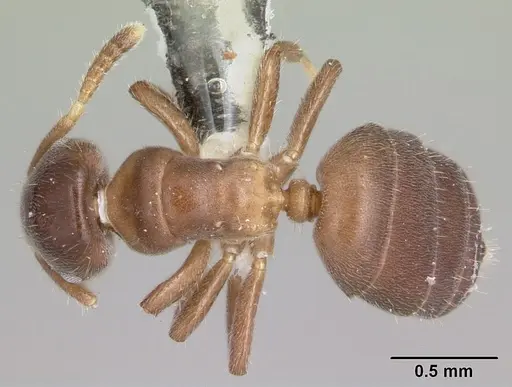
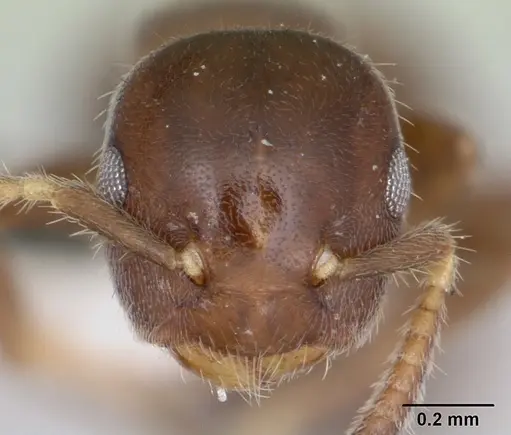
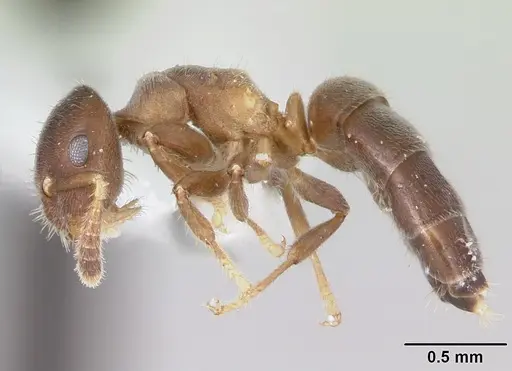
CASENT0173893
Ver no AntWeb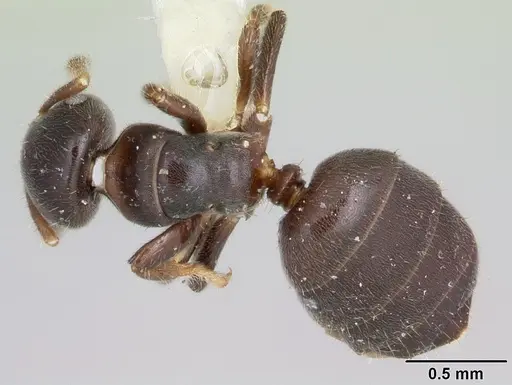
Literatura
A carregar mapa de distribuição...A carregar produtos...