
Chelaner sublamellatus
- Nome cient.
- Chelaner sublamellatus
- Tribo
- Solenopsidini
- Subfamília
- Myrmicinae
- Autor
- Heterick, 2003
- Distribuição
- Encontrado em 0 países
Introdução
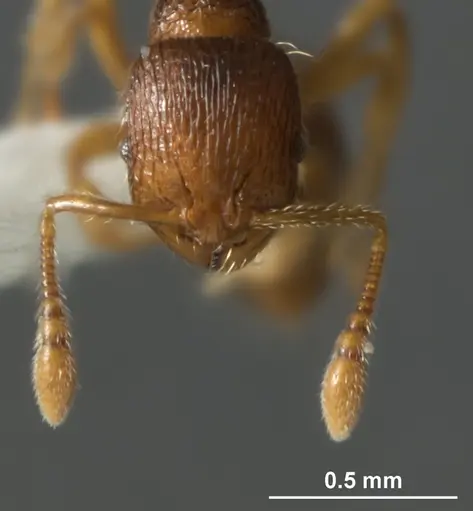
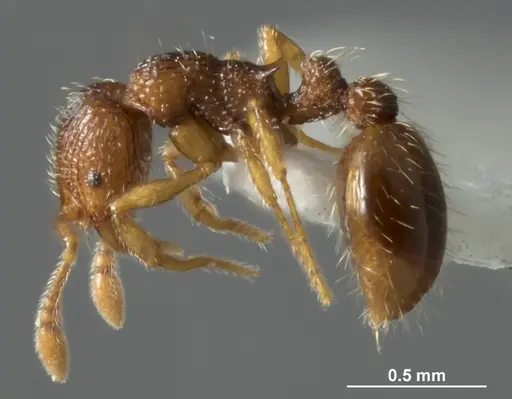
Chelaner sublamellatus is a tiny yellow ant species native to the Recherche Archipelago off the coast of Western Australia. Workers are small, measuring approximately 1.5mm in total length, making them one of the smaller ant species you'll encounter . They have a distinctive uniform rich yellow coloration and 12-segmented antennae that gradually taper without a clearly differentiated club - a trait they share with other Chelaner species . This species was originally described from a single specimen collected on North Twin Peaks Island, an offshore island about 100km east of Esperance that remains largely in a natural state . The mandibles have seven teeth and denticles, which is unique among Australian Monomorium species, and they possess a large subpetiolar process - a thick flange on the underside of the petiole that serves as a distinctive identifying feature . What makes this species particularly interesting is its extreme rarity - only one specimen has ever been collected, making it one of the least-known Australian ants. The original location was on granite rock face on the island's northeast side . This means virtually all care information must be inferred from related species in the Solenopsidini tribe, so you'll need to be prepared to adjust based on your own observations.
Quick Summary
- Difficulty: Unknown, species too poorly known to assess
- Origin & Habitat: North Twin Peaks Island, Recherche Archipelago, Western Australia. Found on granite rock face in a largely natural offshore island environment [1].
- Colony Type: Unknown, only a single worker has ever been collected. Based on genus Chelaner patterns, likely single-queen colonies, but this is unconfirmed.
- Size & Growth:
- Queen: Size data unavailable, no queen has been described.
- Worker: Approximately 1.5mm, inferred from measurement data [1]
- Colony: Unknown, no colony data exists.
- Growth: Unknown, no development data exists.
- Development: Unknown, no direct development data exists for this species. (This is an unstudied species. Expect to adjust based on your colony's actual performance.)
- Antkeeping:
- Temperature: No specific data exists. Start around 22-26°C and observe colony activity. Related Monomorium species prefer warm conditions. Adjust based on whether workers cluster near heat or avoid it.
- Humidity: No specific data exists. Based on the island habitat (coastal, exposed granite), they likely tolerate drier conditions than forest-dwelling ants. Keep nest substrate moderately moist but allow some drying between waterings.
- Diapause: Unknown, no seasonal data exists. Western Australian coastal species may have reduced activity in cooler months. Consider providing a cool period during winter and observe whether the colony slows down.
- Nesting: No captive nesting data exists. The single specimen was collected from a granite rock face, suggesting they may nest in small crevices or under loose substrate. A small test tube setup or Y-tong nest with narrow chambers scaled to their tiny size would be appropriate. Avoid large open spaces.
- Behavior: No behavioral observations exist in captivity. Based on related Monomorium species, they are likely generalist foragers that scavenge and tend aphids for honeydew. Their small size means they can escape through standard mesh, use fine mesh or fluon barriers. Temperament is unknown but related species are typically non-aggressive. As members of the Solenopsidini tribe, they possess a sting but due to their tiny size, it would be negligible.
- Common Issues: escape prevention is critical, at around 1.5mm, they can squeeze through gaps too small for most ants to notice, no established care guidelines exist, you are essentially pioneering husbandry for this species, slow growth and small size make them vulnerable to stress from overhandling or disturbance, lack of baseline data means you must document your own observations to help future keepers, wild-caught colonies may have unknown parasites or diseases since this species has never been kept in captivity
Housing and Setup
Since this species has never been kept in captivity, you'll need to start with standard small Myrmicinae setups and adapt based on your observations. A test tube setup works well for founding colonies, use a small test tube with a cotton ball providing water access. The tiny worker size means you should use very fine mesh on any ventilation holes. A Y-tong or plaster nest with narrow chambers scaled to their size would work for established colonies. Since the single known specimen was found on a granite rock face, they may prefer tighter, more enclosed spaces than open nests. Avoid large formicarium chambers, these tiny ants do best in compact spaces that match their natural crevice-nesting habits. [1]
Feeding and Diet
No direct feeding observations exist for this species. Based on related Monomorium and Chelaner species, they are likely generalist omnivores that scavenge for small insects and tend honeydew-producing insects. Offer sugar water or honey water as a constant energy source. For protein, small soft-bodied prey like fruit flies, pinhead crickets, or small mealworms work well. Start with small portions and remove uneaten food within 24-48 hours to prevent mold. Since they're very small, prey items should be appropriately sized, nothing larger than their own body length. Observe whether they readily accept different foods and adjust accordingly.
Temperature and Seasonal Care
No thermal tolerance data exists for this species. The Recherche Archipelago has a temperate coastal climate with mild winters, so they likely tolerate a range from roughly 18-28°C. Start around 22-26°C as a baseline and watch your colony's behavior, if workers cluster near a heat source, increase temperature slightly, if they avoid it, reduce heat. A small heating cable on one side of the nest can create a temperature gradient. For winter, consider reducing to 15-18°C and see if the colony shows reduced activity, this may simulate their natural seasonal cycle, though this is unconfirmed. Always provide a temperature gradient so ants can choose their preferred zone.
Observation and Documentation
Because this species has never been documented in captivity, your colony could provide the first-ever observations of its behavior in captivity. Take detailed notes on: founding behavior (does the queen seal herself in?), worker interactions, preferred foods, temperature preferences, humidity tolerance, and any unique behaviors. Photograph and document everything, this information could be scientifically valuable given how little is known about this species. Join antkeeping communities and share your findings. The lack of existing care guidelines means you're essentially pioneering husbandry for Chelaner sublamellatus, which is both a challenge and an opportunity.
Frequently Asked Questions
How long does it take for Chelaner sublamellatus to produce first workers?
This is unknown, no development data exists for this species. Based on related Solenopsidini species, expect roughly 6-8 weeks from egg to worker at optimal temperature. Be patient and document your timeline to help future keepers.
What do Chelaner sublamellatus ants eat?
No feeding data exists for this species specifically. Based on related Monomorium species, they likely accept sugar sources (honey water, sugar water) and small protein prey (fruit flies, small insects). Offer variety and observe preferences.
Are Chelaner sublamellatus good for beginners?
No, this species cannot be recommended for beginners. It has never been kept in captivity, no care guidelines exist, and only a single specimen has ever been collected in the wild. You would be pioneering all aspects of husbandry, which carries significant risk of colony failure.
How big do Chelaner sublamellatus colonies get?
Unknown, no colony size data exists. Based on related Monomorium species, they likely form small colonies. This species appears to be naturally rare or localized.
What temperature should I keep Chelaner sublamellatus at?
No specific requirements are known. Start around 22-26°C and observe your colony. Provide a temperature gradient so ants can self-regulate. Adjust based on their activity patterns.
Can I keep multiple Chelaner sublamellatus queens together?
Unknown, colony structure has never been documented. Do not attempt combining unrelated queens without evidence they tolerate this. Most Myrmicinae are single-queen species.
Where is Chelaner sublamellatus found in the wild?
Only from North Twin Peaks Island in the Recherche Archipelago, Western Australia, about 100km east of Esperance. The single known specimen was collected from a granite rock face in 1976 [1].
How do I prevent Chelaner sublamellatus from escaping?
Use excellent escape prevention regardless of behavior, at around 1.5mm, they can slip through gaps invisible to the naked eye. Use fine mesh, apply fluon to container edges, and ensure all lids fit tightly. Check for gaps around any tubing connections.
Does Chelaner sublamellatus need hibernation?
Unknown, no seasonal data exists. The Recherche Archipelago has mild winters, so a cool period may or may not be necessary. Consider providing a cool zone in winter and observe whether the colony reduces activity.
Report an Issue
The current care sheet is based fully on literature. See inconsistencies, or something that's incorrect? Please , it will be resolved after review from an admin. Contributing to the blogs tab also helps providing information, to make us be able to further improve the caresheets. Thank you for your support!
References

Esta ficha de cuidados é licenciada sob CC BY-SA 4.0 .
Blogs da comunidade
ANTWEB1041381
Ver no AntWeb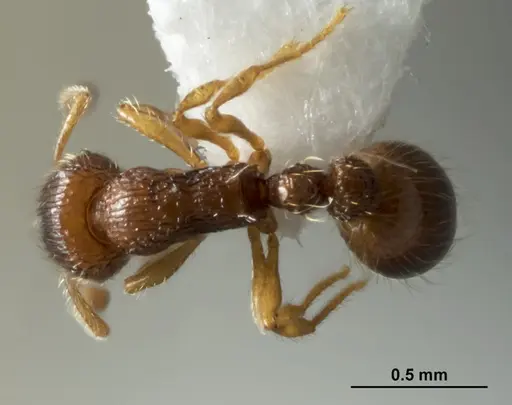
Literatura
A carregar mapa de distribuição...A carregar produtos...