
Carebara termitolestes
- Nome cient.
- Carebara termitolestes
- Tribo
- Crematogastrini
- Subfamília
- Myrmicinae
- Autor
- Wheeler, 1918
- Distribuição
- Encontrado em 0 países
Introdução
Carebara termitolestes is a tiny myrmicine ant species native to Central Africa, found in the Democratic Republic of Congo and Nigeria. The genus Carebara contains some of the smallest ants in the world, and this species fits that pattern as a minute, cryptic subterranean ant. Workers were originally described as Paedalgus termitolestes by W.M. Wheeler in 1918,and the species was transferred to Carebara by Fernández in 2004 . This species is notable for its ecological association with termites. The original genus name 'Paedalgus' was associated with 'lestobiotic' behavior - a term describing ants that have close associations with termite colonies. This relationship is not well understood but makes this species potentially interesting for advanced antkeepers studying specialized ant-termite interactions .
Quick Summary
- Difficulty: Expert
- Origin & Habitat: Central Africa, Democratic Republic of Congo and Nigeria. This species inhabits tropical forest environments in the Afrotropical region. Workers were collected from the type locality at Malela in the DRC. The species is associated with forest environments and shows ecological connections to termites [1][2].
- Colony Type: Colony structure is not documented in scientific literature. Only the original type series of workers has been collected and described. No queen, male, or colony structure information exists [1].
- Size & Growth:
- Queen: Size data unavailable, no queen has been described in scientific literature [1]
- Worker: Size data unavailable, no body measurements (TL) exist for this species. Based on Carebara genus patterns for small species, workers are likely only a few millimeters [1]
- Colony: Unknown, no colony size data available [1]
- Growth: Unknown, no development data exists for this species
- Development: Unknown, no direct measurements available (No data exists on development time for this species.)
- Antkeeping:
- Temperature: Keep at tropical temperatures around 24-28°C. Based on their Central African origin, they require warm, stable conditions [1].
- Humidity: High humidity is likely essential, these are subterranean ants that probably prefer damp conditions. Keep nest substrate consistently moist but not waterlogged. Provide a humidity gradient so ants can choose their preferred zone [1].
- Diapause: No, as a tropical species, they do not require hibernation. Maintain consistent tropical conditions year-round [1].
- Nesting: This species likely nests in soil or within termite structures in the wild. In captivity, a small test tube setup or mini formicarium with fine, moist substrate works best. The tiny size means chambers and passages must be appropriately scaled [1].
- Behavior: This species is poorly documented in captivity. Based on genus behavior, they are likely cryptic and subterranean. Workers are extremely small and likely forage underground or in hidden locations. The documented association with termites suggests a specialized ecological relationship, though the exact nature is unclear. Escape prevention is critical due to their tiny size, even standard barrier methods may be insufficient. They are not aggressive and likely avoid confrontation [1].
- Common Issues: lack of documented captive care makes successful husbandry extremely challenging, tiny size creates severe escape prevention challenges, standard barriers may not work, no confirmed food preferences, diet experimentation may be necessary, no available colony foundation information, obtaining a colony may be impossible, risk of wild-caught colonies having parasites that kill them in captivity, no scientific data on any aspect of their biology limits informed care
Species Background and Taxonomy
Carebara termitolestes was originally described as Carebara termitolestes by W.M. Wheeler in 1918 based on worker and larva specimens collected from Malela in the Democratic Republic of Congo. The species was later transferred to the genus Carebara by Fernández in 2004. The original genus name 'Paedalgus' was associated with 'lestobiotic' behavior, a term describing ants that have close associations with termite colonies. This species remains one of the more obscure ants in the Carebara genus, with limited scientific documentation beyond the original type description [1].
Distribution and Habitat
This species is known only from two countries in Central Africa: the Democratic Republic of Congo and Nigeria. The type locality in the DRC is Malela, a region in the central African rainforest zone. The species appears to be associated with forest environments and shows ecological connections to termites. In the wild, they likely nest in soil or within termite structures, taking advantage of the protected environment that termite colonies provide. Their extremely small size makes them difficult to find and study in the field, which explains the limited collection records [1][2].
Feeding and Diet
The diet of Carebara termitolestes is not documented. The genus Carebara consists primarily of omnivorous ants that feed on small insects, honeydew, and various organic matter. The documented association with termites suggests they may have a specialized relationship with termite colonies, though the exact nature is unclear. In captivity, you should experiment with offering small live prey such as springtails, fruit flies, and other tiny insects. Sugar sources may also be accepted but should not be the primary food. Start with small live prey items and observe acceptance [1].
Temperature and Care Requirements
As a tropical African species, Carebara termitolestes requires warm, humid conditions similar to other Central African ants. Maintain temperatures in the range of 24-28°C, avoiding any prolonged drops below 22°C. Room temperature in most homes may be insufficient, so a small heating setup may be necessary. Use a heating cable or mat on one side of the nest to create a gentle temperature gradient. Humidity should be high, these are subterranean ants that naturally live in damp conditions. Keep the nest substrate consistently moist but not saturated. Unlike temperate species, they do not require any diapause or winter rest period. Maintain consistent tropical conditions year-round [1].
Housing and Nest Setup
Due to their extremely small size, Carebara termitolestes requires carefully designed housing. A small test tube setup with a water reservoir works well for founding colonies. The tube should have appropriate dimensions for their tiny size, standard test tubes are likely too large, so consider using micro test tubes or similar small containers. The nest material should be kept consistently moist. Escape prevention is critical, their tiny size allows them to squeeze through gaps that larger ants cannot. Use fine mesh barriers and ensure all connections are sealed [1].
Challenges and Considerations
Carebara termitolestes is one of the most challenging ant species to keep in captivity due to the complete lack of documented captive husbandry information. There are no established care protocols, no confirmed diet preferences, no known colony sizes, and no information on queen founding behavior. This species is recommended only for expert antkeepers who are prepared to experiment and document their findings. Obtaining a colony may be extremely difficult since they are not commonly available in the antkeeping hobby. If you do obtain workers, expect a period of experimentation to determine their needs. Document your observations carefully as any successful husbandry information would be valuable for future keepers [1].
Frequently Asked Questions
How difficult is Carebara termitolestes to keep?
This species is rated as Expert difficulty due to the complete lack of documented captive care information. There are no established protocols for housing, feeding, or breeding this species. Only experienced antkeepers should attempt to keep them, and success would require significant experimentation and documentation [1].
What do Carebara termitolestes eat?
Their exact diet is not documented. Based on general Carebara genus patterns, they likely feed on small insects, honeydew, and organic matter. In captivity, offer small live prey such as springtails, fruit flies, and tiny insects. They may also accept sugar water or honey as a supplementary energy source [1].
What temperature do they need?
Keep them at tropical temperatures of 24-28°C. As a Central African species, they require warm conditions year-round. A small heating cable on part of the nest can help maintain appropriate temperatures if room temperature is insufficient [1].
Do they need hibernation?
No, they do not require hibernation. As a tropical species from Central Africa, they need consistent warm conditions year-round. Do not expose them to cool temperatures or attempt to cool them for any period [1].
How big do colonies get?
The maximum colony size is unknown. No colony size data exists in scientific literature for this species [1].
Are they aggressive?
There is no specific data on their temperament, but given their tiny size and subterranean lifestyle, they are likely not aggressive. They probably avoid confrontation and rely on cryptic behavior rather than direct defense. Their small size means they pose no threat to humans [1].
Can beginners keep Carebara termitolestes?
No, this species is not suitable for beginners. The complete lack of care information, difficulty in obtaining colonies, and specialized requirements make it appropriate only for expert antkeepers willing to experiment and document their findings [1].
Where does Carebara termitolestes live?
This species is found in Central Africa, specifically the Democratic Republic of Congo and Nigeria. They inhabit tropical forest environments and are associated with termite colonies. In the wild, they likely nest in soil or within termite structures [1][2].
How do I set up a nest for such a tiny ant?
Use appropriately scaled housing, standard test tubes may be too large. Micro test tubes or small containers with fine, moist substrate work best. Escape prevention is critical since they can squeeze through tiny gaps. Use fine mesh and seal all connections thoroughly. Keep the substrate consistently moist [1].
Is this species available in the antkeeping hobby?
This species is extremely rare in the antkeeping hobby. There are no documented captive breeding programs or regular availability. Obtaining a colony would likely require field collection in Central Africa, which presents significant challenges and legal considerations [1].
Report an Issue
The current care sheet is based fully on literature. See inconsistencies, or something that's incorrect? Please , it will be resolved after review from an admin. Contributing to the blogs tab also helps providing information, to make us be able to further improve the caresheets. Thank you for your support!
References

Esta ficha de cuidados é licenciada sob CC BY-SA 4.0 .
Blogs da comunidade
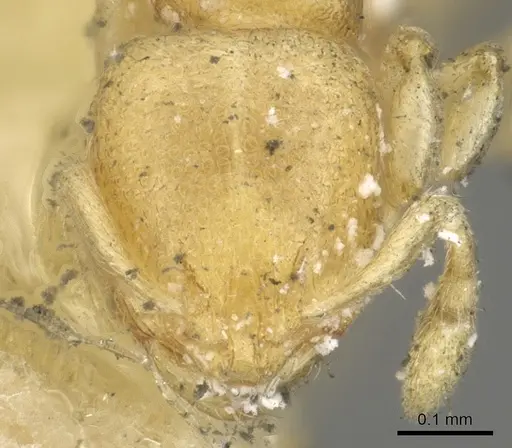
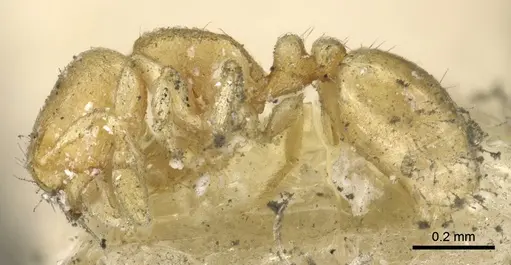
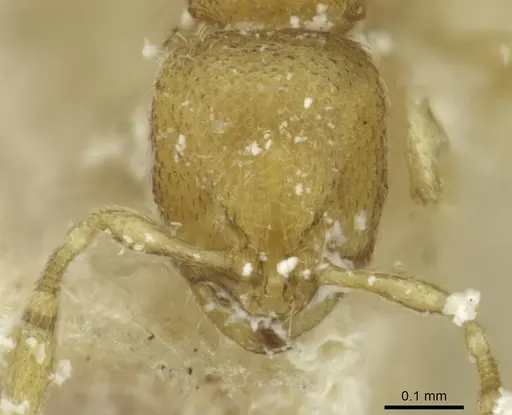
CASENT0902371
Ver no AntWeb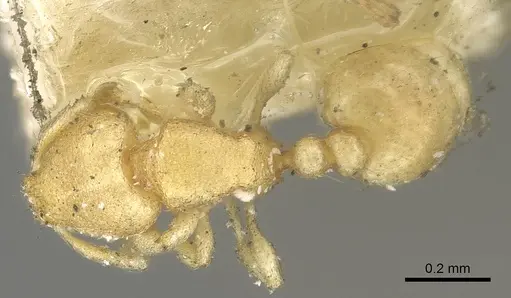
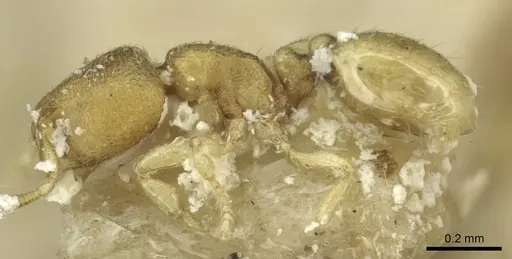
CASENT0913527
Ver no AntWeb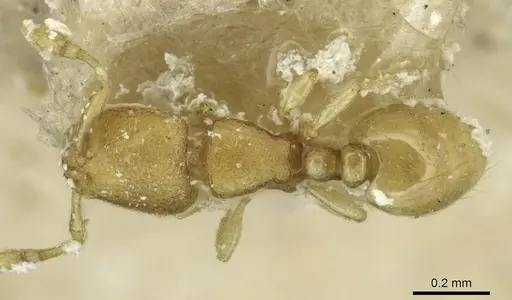
Literatura
A carregar mapa de distribuição...A carregar produtos...