
Carebara audita
- Nome cient.
- Carebara audita
- Tribo
- Crematogastrini
- Subfamília
- Myrmicinae
- Autor
- Fernández, 2004
- Distribuição
- Encontrado em 0 países
Introdução
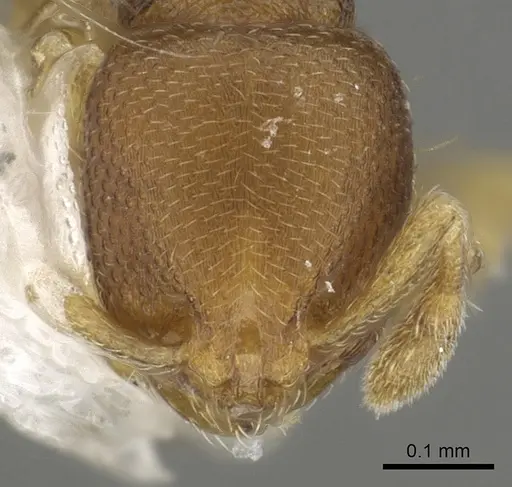
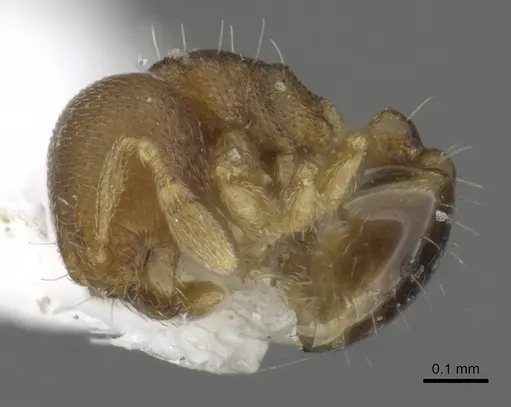
Carebara audita is an extremely tiny ant species native to Colombia, South America. Workers measure just 1.16-1.30mm in total length, making them among the smallest ants in the world . Their body is yellowish brown with a darker gaster, and they have remarkably reduced eyes containing only 4 ommatidia . The head is slightly longer than wide with a concave posterior border, and the body is nearly naked of long hairs, having only a few tiny hairs scattered across the head and body . This species belongs to the Carebara escherichi species complex and can be recognized by the distinctive concavity between the clypeal carinae and the longer petiolar peduncle . What makes this species particularly interesting is its extremely limited distribution - it is only known from a single locality in Nariño, Colombia, at 700m elevation in tropical forest . The type specimens were collected from forest litter samples using Winkler traps, indicating they live in the dense leaf litter of the forest floor . Their tiny size and reduced eyes suggest they are adapted to life in dark, humid microhabitats within the litter layer.
Quick Summary
- Difficulty: Expert
- Origin & Habitat: Only known from Orito, Nariño, Colombia at 700m elevation in tropical forest [1]. Collected from forest litter samples using Winkler traps [1][3].
- Colony Type: Colony structure is unconfirmed. No data on queen number or colony size exists for this species.
- Size & Growth:
- Antkeeping:
- Temperature: Based on the tropical lowland origin (700m in Colombia), keep at roughly 24-28°C. Start in the mid-range and observe colony activity.
- Humidity: High humidity is essential, these ants live in forest floor litter. Keep the nest substrate consistently moist but not waterlogged.
- Diapause: Unlikely, being a tropical species from low elevation in Colombia, they probably do not require a diapause period.
- Nesting: Natural nesting: forest litter and soil. In captivity, use a test tube setup with moist substrate or a small nest with tight chambers scaled to their tiny size. The chambers must be very small, these are among the smallest ants in the world.
- Behavior: Behavior is unstudied in captivity. Based on genus patterns, they are likely cryptic, slow-moving ants that forage in the litter layer. Their tiny size and reduced eyes suggest they are adapted to dark, confined spaces. Escape prevention is absolutely critical, at 1.2mm, they can squeeze through the tiniest gaps. Use fine mesh and tight-fitting barriers.
- Common Issues: escape prevention is critical, they are tiny enough to squeeze through standard barrier gaps., no captive husbandry information exists, this is an advanced species for experienced keepers., humidity control is challenging, too wet causes flooding, too dry causes desiccation., finding appropriate prey items for such small ants is difficult.
Housing and Escape Prevention
Housing Carebara audita presents unique challenges due to their extreme small size. At just over 1mm in length, they are among the smallest ants in the world and can squeeze through gaps that would hold back much larger species. You must use excellent escape prevention, fine mesh (at least 0.5mm or smaller), tight-fitting lids, and reliable barrier methods like fluon on any edges. A test tube setup works well for founding colonies, but ensure the cotton plug is packed tightly. For growing colonies, use nests with very small chambers scaled to their tiny size, standard formicarium chambers are far too large. Keep the nest in a humid, dark location as these ants are adapted to life in forest floor litter. [1]
Feeding and Diet
The diet of Carebara audita has not been studied. Based on genus patterns, they are likely omnivorous, feeding on small invertebrates and scavenged organic matter. Their tiny size means you will need to offer appropriately sized prey. Live micro-arthropods like springtails, tiny mites, or fruit fly larvae are ideal. You can also offer diluted sugar water or honey occasionally, but the primary food should be small protein sources. Feed small amounts every few days and remove any uneaten prey to prevent mold.
Temperature and Humidity
Being from tropical Colombia at 700m elevation, these ants require warm, humid conditions. Aim for temperatures in the 24-28°C range, stable warmth without temperature swings. A heating cable on one side of the nest can create a gentle gradient, but ensure the ants can move to cooler areas if needed. Humidity is critical, they come from forest floor litter which is consistently moist. Keep the nest substrate damp but not waterlogged. Some condensation on the nest walls is acceptable and even desirable. [1]
Colony Establishment
Establishing a colony of Carebara audita is challenging because no captive breeding information exists for this species. If you obtain a founding queen, she should be housed in a small test tube with clean water (not chlorinated) and kept in darkness with minimal disturbance. Based on genus patterns, she is likely claustral, sealing herself in and living off stored fat until the first workers emerge. Do not feed the founding queen, claustral queens do not forage during founding. Once workers emerge, they will be nanitics, extremely tiny first workers. The colony should be moved to a small nest with appropriately sized chambers only when it grows significantly.
Understanding Their Rarity
Carebara audita is known only from a single locality in Nariño, Colombia, making it one of the rarest ant species in captivity if available at all. The type specimens were collected in 1998 from forest litter at 700m elevation in the Kofán Territory [1]. This limited distribution means they are adapted to very specific conditions, the humid, stable microclimate of tropical forest floor litter. In captivity, replicating these conditions is challenging. If you do obtain this species, you are working with extremely limited husbandry information, and success requires careful attention to the basics: proper humidity, appropriate prey size, and excellent escape prevention.
Frequently Asked Questions
How long does it take for Carebara audita to produce first workers?
The egg-to-worker timeline is unknown for this species as it has never been studied in captivity.
What do Carebara audita ants eat?
Their exact diet is unstudied. Based on genus patterns, they likely eat small invertebrates and scavenged matter. Feed them tiny live prey like springtails, micro mites, or fruit fly larvae. They may also accept sugar water occasionally.
Do Carebara audita ants need hibernation?
Unlikely. Being from tropical Colombia, they probably do not require a diapause period. Maintain stable temperatures year-round.
Are Carebara audita good for beginners?
No. This is an expert-level species due to their extreme tiny size, lack of captive husbandry information, and specific humidity requirements. They are also extremely rare in the antkeeping hobby.
How big do Carebara audita colonies get?
Unknown, no colony size data exists for this species.
Can I keep Carebara audita in a test tube?
Yes, a test tube setup is appropriate for founding colonies. Use a small test tube with clean water (not chlorinated) and pack the cotton tightly, these ants are tiny enough to squeeze through standard cotton. Keep the tube in darkness with minimal disturbance.
What temperature do Carebara audita ants need?
Keep them at roughly 24-28°C based on their tropical origin in Colombia. Use a heating cable on one side of the nest to create a gentle gradient if room temperature is below this range.
Why are my Carebara audita escaping?
At just over 1mm, they can squeeze through tiny gaps. Use fine mesh (0.5mm or smaller), tight-fitting lids, and apply fluon or other barriers to all edges.
Do Carebara audita ants sting?
Unknown, their tiny size likely makes them unable to penetrate human skin, but they may bite if handled. Given their size, they pose no danger to keepers.
Where is Carebara audita found in the wild?
Only known from Orito, Nariño, Colombia at 700m elevation in tropical forest. They live in the forest floor litter layer.
When do Carebara audita have nuptial flights?
Unknown, nuptial flight timing has not been documented for this species.
How do I set up a nest for Carebara audita?
Use nests with very small chambers, standard formicarium tunnels are far too large. Small nests with narrow passages or plaster nests with appropriately sized chambers work best. The nest should be kept consistently moist and in darkness.
Report an Issue
The current care sheet is based fully on literature. See inconsistencies, or something that's incorrect? Please , it will be resolved after review from an admin. Contributing to the blogs tab also helps providing information, to make us be able to further improve the caresheets. Thank you for your support!
References

Esta ficha de cuidados é licenciada sob CC BY-SA 4.0 .
Blogs da comunidade
CASENT0902394
Ver no AntWeb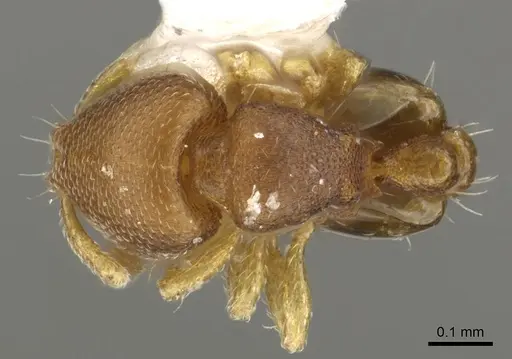
Literatura
A carregar mapa de distribuição...A carregar produtos...