
Cardiocondyla sekhemka
- Nome cient.
- Cardiocondyla sekhemka
- Tribo
- Crematogastrini
- Subfamília
- Myrmicinae
- Autor
- Bolton, 1982
- Distribuição
- Encontrado em 0 países
Introdução
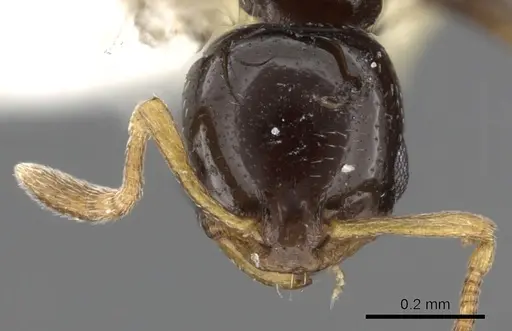
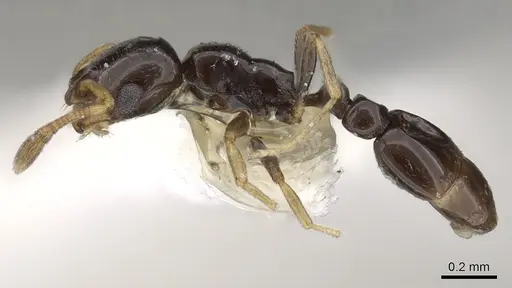
Cardiocondyla sekhemka is an extremely small myrmicine ant measuring 1.8mm in total length. Workers have a distinctive appearance with a relatively short, broad head, short scapes, and virtually no propodeal spines - most of the body is smooth and unsculptured. They are uniformly glossy blackish-brown with lighter legs and antennae. The eyes are relatively large and uniquely shaped, narrowed and drawn out anteroventrally. This species was originally described from Ghana and has recently been recorded in Nigeria, making it one of the rarest Cardiocondyla species in captivity . Nothing is known about the biology of this species in the wild. The genus Cardiocondyla is known for unusual behaviors including male fighting and ergatoid (wingless) queen production, but C. sekhemka has only been documented from the worker caste. This makes it a species for advanced antkeepers who enjoy observing and learning from species with completely undocumented captive behavior.
Quick Summary
- Difficulty: Expert
- Origin & Habitat: Afrotropical region, originally described from Tumu, Ghana and recently recorded in Badagry, Nigeria [1]. The specific habitat preferences are unknown.
- Colony Type: Colony structure is completely unconfirmed. Only workers and a single queen have been collected (from Nigeria). No data exists on whether colonies are single-queen or multi-queen.
- Size & Growth:
- Queen: Unknown, the single documented queen from Nigeria was not measured [1].
- Worker: 1.8mm total length (very small) [2]
- Colony: Unknown, no colony size data exists.
- Growth: Unknown, no development data exists
- Development: Unknown, no species-specific data exists. (No development timing data is available for this species.)
- Antkeeping:
- Temperature: No specific data exists. Based on typical Afrotropical ant requirements, start around 24-28°C and observe colony activity.
- Humidity: No specific data exists. Keep nest substrate moderately moist, damp but not waterlogged. Provide a moisture gradient so ants can choose their preferred zone.
- Diapause: Unknown, no seasonal data exists. As an Afrotropical species, likely no true hibernation but may show reduced activity during cooler periods.
- Nesting: Natural nesting is unconfirmed. Related Cardiocondyla species typically nest in soil or under stones. For captivity, use small test tubes with tight connections or a Y-tong style nest with very small chambers. The tiny worker size requires excellent escape prevention, fine mesh and tight-fitting lids are essential.
- Behavior: Behavior is completely undocumented. The genus Cardiocondyla is generally known for relatively docile, non-aggressive workers. The tiny size means escape prevention must be excellent, they can squeeze through gaps that seem impossible. This species has a smear-type defense mechanism typical of the Crematogastrini tribe.
- Common Issues: escape prevention is critical, at 1.8mm, they can squeeze through the tiniest gaps, use fine mesh and check all connections, completely undocumented biology means you are essentially pioneering captive care, expect surprises, no data on founding behavior means queen introduction and colony establishment may require experimentation, slow or absent acceptance of standard ant foods, have backup prey options ready, risk of colony collapse with no known cause if conditions don't match undocumented requirements
Housing and Escape Prevention
Housing Cardiocondyla sekhemka requires attention to detail due to their extremely small size. Workers measure just 1.8mm, making them one of the smallest ant species kept in captivity. This tiny size means they can escape through gaps that would hold back much larger species. Use test tubes with tight-fitting cotton plugs, or Y-tong style nests with very small chamber dimensions. All connections must be sealed with cotton or fluon, even tiny gaps at tube junctions can become escape routes. Fine mesh on any ventilation holes is essential. The outworld should also have barrier protection, as these ants are excellent climbers and will explore every seam and edge. Many antkeepers use fluon or petroleum jelly barriers on the outer edges of formicaria. [2]
Feeding and Nutrition
Feeding requirements are completely unconfirmed for this species. Based on genus patterns, they likely accept small protein sources like fruit flies, pinhead crickets, and other tiny arthropods. Sugar sources may or may not be accepted, some Cardiocondyla species show little interest in sweets while others readily take honey or sugar water. Start with small live prey and observe acceptance. If the colony accepts protein, you can experiment with other options. Do not rely heavily on sugar sources until you confirm acceptance. Feed small amounts every few days and remove uneaten prey to prevent mold. The tiny worker size means even small prey items may need to be pre-killed or disabled.
Temperature and Seasonal Care
No specific temperature data exists for this species. As an Afrotropical ant from Ghana and Nigeria, they likely prefer warmer conditions. Start around 24-28°C and monitor colony behavior, active workers typically indicate acceptable conditions. If workers cluster together constantly, they may want it warmer, if they avoid heated areas, reduce temperature. A heating cable on one side of the nest can create a gradient. For winter care, rather than full hibernation (which may not be natural for this species), consider a slight reduction to around 20°C. This mimics seasonal cooling without the stress of true diapause. Avoid temperatures below 18°C unless you observe clear dormancy signs.
Colony Establishment and Founding
Colony founding behavior is completely unconfirmed for this species. If you obtain a founding queen, provide a small test tube setup with a water reservoir and keep it stable at around 24-26°C. Do not disturb the queen during the founding period, this can cause her to abandon or consume the brood. Wait several weeks before checking for eggs, then larvae, then pupae. The first workers will likely be very small. If the colony fails to establish, try slight temperature adjustments or providing tiny prey items once workers emerge. With no documented biology, patience and careful observation are essential.
Understanding the Challenge
Cardiocondyla sekhemka represents a genuine challenge in antkeeping: a species with completely undocumented biology that you are essentially pioneering in captivity. This is not a species for beginners or those who want clear care guidelines. Every aspect of their care, from temperature preferences to food acceptance to colony structure, may require experimentation and observation. Keep detailed notes on your conditions and colony responses. Join antkeeping communities to share findings. The reward is being among the first to document the captive behavior of an extremely rare species. If you succeed, your observations could contribute to our understanding of this ant.
Frequently Asked Questions
How long does it take for Cardiocondyla sekhemka to produce first workers?
This is completely unknown, no development data exists for this species. Be patient and do not disturb the founding queen.
What do Cardiocondyla sekhemka ants eat?
Feeding is unconfirmed. Based on genus patterns, they likely accept small live prey like fruit flies, springtails, or tiny crickets. Sugar acceptance is unknown, some Cardiocondyla take honey, others ignore it. Start with small protein sources and observe.
Are Cardiocondyla sekhemka good for beginners?
No. This is an expert-level species because their biology is completely undocumented. There are no established care guidelines, no known temperature or humidity requirements, and no data on founding behavior. This is a species for experienced antkeepers who enjoy experimenting.
Do Cardiocondyla sekhemka ants sting?
At 1.8mm, they are far too small to sting humans. Their stingers cannot penetrate human skin. However, they may bite if handled roughly.
How big do Cardiocondyla sekhemka colonies get?
Colony size is completely unknown. No colony size data exists for this species.
Can I keep multiple Cardiocondyla sekhemka queens together?
This is unknown. Only one queen has ever been documented for this species. No data exists on whether they are monogyne (single queen) or polygyne (multiple queens). Do not attempt combining unrelated queens without understanding their social structure.
What temperature do Cardiocondyla sekhemka need?
No specific data exists. Start around 24-28°C based on typical Afrotropical ant requirements. Observe your colony, if they cluster together, they may want warmer, if they avoid heat, try cooler. A temperature gradient allows them to choose.
Do Cardiocondyla sekhemka need hibernation?
Unknown, no seasonal data exists. As an Afrotropical species from Ghana and Nigeria, they likely do not require true hibernation. A slight winter temperature reduction to around 20°C may be appropriate rather than full diapause.
Why are my Cardiocondyla sekhemka dying?
Without documented biology, diagnosing problems is extremely difficult. Common issues may include: temperature too high or too low, humidity wrong (too wet or too dry), escape-related losses, starvation despite food being present, or simply conditions not matching their unknown requirements. Keep detailed records and vary one condition at a time.
When should I move Cardiocondyla sekhemka to a formicarium?
Wait until the colony has at least 20-30 workers and is clearly established. For this tiny species, a test tube setup can work long-term. Only move if the tube is becoming moldy, the water reservoir is exhausted, or the colony has outgrown the space.
Are Cardiocondyla sekhemka aggressive?
Behavior is unconfirmed. The genus Cardiocondyla is generally considered docile with relatively non-aggressive workers. Expect modest foraging activity rather than aggressive defense, but this specific species has not been studied.
Report an Issue
The current care sheet is based fully on literature. See inconsistencies, or something that's incorrect? Please , it will be resolved after review from an admin. Contributing to the blogs tab also helps providing information, to make us be able to further improve the caresheets. Thank you for your support!
References

Esta ficha de cuidados é licenciada sob CC BY-SA 4.0 .
Blogs da comunidade
CASENT0901749
Ver no AntWeb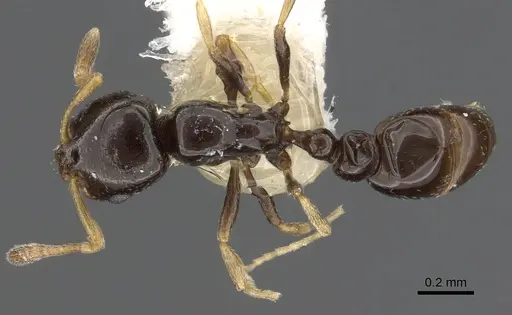
Literatura
A carregar mapa de distribuição...A carregar produtos...