
Cardiocondyla rugulosa
- Nome cient.
- Cardiocondyla rugulosa
- Tribo
- Crematogastrini
- Subfamília
- Myrmicinae
- Autor
- Seifert, 2003
- Distribuição
- Encontrado em 0 países
Introdução
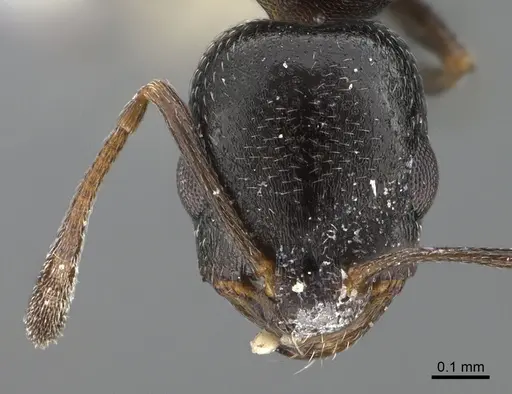
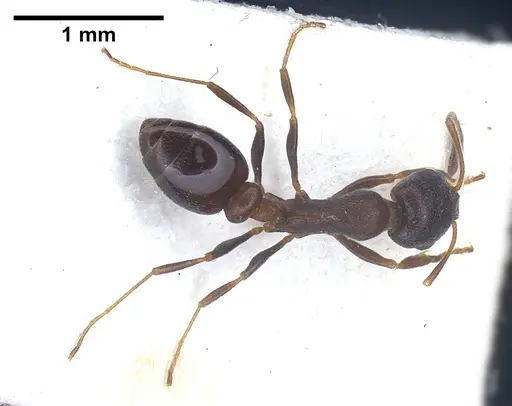
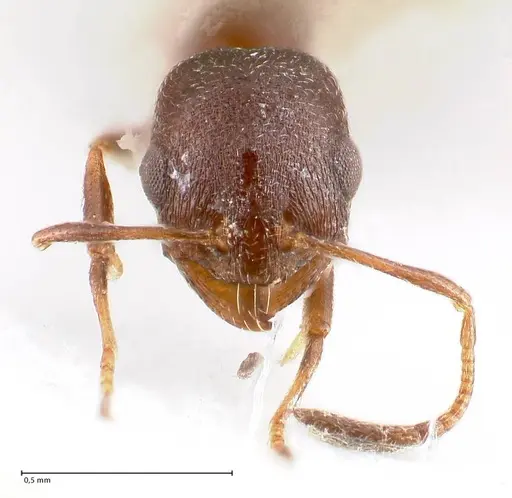
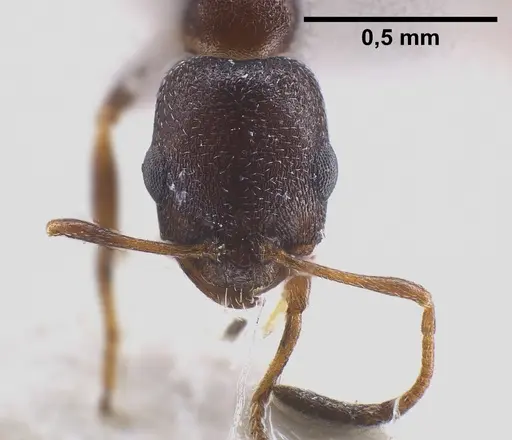
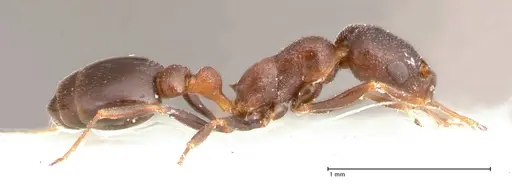
Cardiocondyla rugulosa is an extremely rare ant species known only from a single worker specimen collected in Sana'a, Yemen in 1991 . This species belongs to the C. batesii species group and is distinguished by strong longitudinal rugulae (grooves) covering the entire dorsal head surface, giving it a matte, textured appearance - this is the key diagnostic feature separating it from related species like Cardiocondyla nigra . The body is dark brown to blackish brown, with the mesosoma having a reddish tint and the petiole being lighter orange-brown . Nothing is known about their biology, colony structure, or captive care requirements - this is one of the least-studied ant species in the world .
Quick Summary
- Difficulty: Unknown, extremely limited data available
- Origin & Habitat: Known only from Sana'a, Yemen at 2265m elevation (15.37°N, 44.19°E). This is a high-altitude location in the Arabian Peninsula [1].
- Colony Type: Unknown, only a single worker has ever been collected. Based on typical Cardiocondyla patterns, likely single-queen colonies, but this is unconfirmed.
- Size & Growth:
- Queen: Unknown, no queens have ever been documented [1]
- Worker: ~1.5mm, inferred from Cardiocondyla genus (size data unavailable for this species) [1]
- Colony: Unknown, no colony data exists
- Growth: Unknown
- Development: Unknown, no development data exists for this species (No direct data exists for this species.)
- Antkeeping:
- Temperature: Unconfirmed. Based on the Yemen highlands location (2265m elevation), they likely tolerate cooler temperatures than tropical lowland species. Start around 20-24°C and observe colony activity.
- Humidity: Unconfirmed. Sana'a is in a relatively dry highland region. Likely prefers moderate humidity rather than wet conditions.
- Diapause: Unknown. High-altitude Yemen location suggests some seasonal adaptation, but specific diapause requirements are unconfirmed.
- Nesting: Unknown natural nesting behavior. Based on genus patterns, likely nests in soil or under stones. For captivity, a small test tube setup or Y-tong nest with fine chambers scaled to their tiny size would be appropriate.
- Behavior: Completely unstudied. Based on genus patterns, Cardiocondyla are typically docile, non-aggressive ants that forage individually for small prey and honeydew. Their tiny size means escape prevention is critical, they can squeeze through extremely small gaps. The subfamily Myrmicinae typically has a sting, but given their minute size, any sting would likely be negligible.
- Common Issues: no biological data exists, this is one of the least-studied ant species in the world, so all care is speculative, only a single worker specimen has ever been collected, meaning no queens, colonies, or behavioral observations are documented, extremely small size requires excellent escape prevention with fine mesh barriers, high-altitude origin (2265m) may mean different temperature needs than typical lowland tropical ants, no confirmed diet information, must experiment with small live prey and sugar sources, this species is essentially unkeepable in captivity due to complete lack of available specimens
Why This Species Is So Challenging
Cardiocondyla rugulosa presents a unique challenge for antkeepers: virtually nothing is known about its biology. Only a single worker specimen has ever been collected, from Sana'a, Yemen in 1991 [1]. This means we have no information about queens, colony size, founding behavior, diet, temperature preferences, or any aspect of their care. What we know is limited to physical measurements of one worker ant. For antkeepers, this means you would be pioneering entirely new husbandry methods, there are no established care guides, no experienced keepers to consult, and no guarantee that any approach you try will succeed. This species is truly at the frontier of antkeeping knowledge.
What We Know From Physical Description
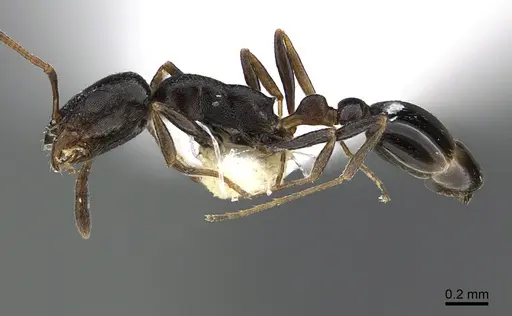
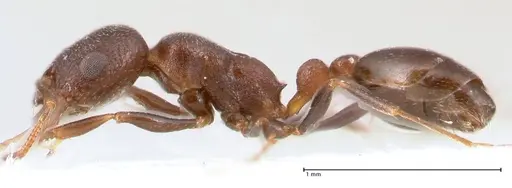
The holotype worker provides detailed morphometric data. The most distinctive feature is the strong longitudinal rugulae (grooves) covering the entire dorsal head surface, giving it a matte appearance, this is the key diagnostic character [1]. The head is moderately elongated, with relatively large eyes and a notably concave hind margin. The mesosoma has a characteristic shape with a weakly convex promesonotum contrasting against a more strongly convex propodeum. Short spines are present. The body coloration is dark brown to blackish brown, with the mesosoma having a reddish tint and the petiole being lighter orange-brown [2]. These physical details suggest a typical small Cardiocondyla worker morphology.
Inferred Care Based on Genus Patterns
Since no biological data exists for this species, we must infer care requirements from what we know about the genus Cardiocondyla and the species' native habitat. The type locality is Sana'a, Yemen at 2265m elevation, this is a relatively cool, dry, high-altitude location in the Arabian Peninsula [1]. This suggests they may tolerate cooler temperatures than typical tropical ants. Most Cardiocondyla species are monogyne with claustral founding, where the queen seals herself in a chamber and lives off stored fat until workers emerge. They are typically docile and feed on small insects and honeydew. For housing, their tiny size means you need chambers scaled appropriately, standard test tubes work, but ensure no gaps exist for escape. Start with moderate temperatures (20-24°C), moderate humidity, and small live prey like springtails or fruit fly offspring. Observe your colony closely and adjust based on activity levels.
Habitat Clues From Type Locality
Sana'a, Yemen sits at 2265 meters elevation in the highlands of Yemen. This is a relatively cool, dry region compared to tropical lowlands, average temperatures are moderate, and the climate is arid to semi-arid [1]. The high elevation suggests this species is adapted to cooler conditions than many lowland tropical ants. However, it's important to note that we have no data about the specific microhabitat where the single specimen was collected, it could have been from a rock crevice, soil cavity, under a stone, or elsewhere. For captive care, this suggests avoiding very hot, humid conditions and instead providing a more moderate, drier environment. A temperature gradient allowing workers to choose their preferred zone would be ideal.
Legal and Ethical Considerations
Given that this species is only known from Yemen and has never been kept in captivity, there are several important considerations. First, wild collection is extremely difficult, only a single specimen has been found in over 30 years of sampling, suggesting they are either very rare or have a very limited range. Second, if specimens were to become available, there would be significant legal questions about collection and export from Yemen. Third, establishing a captive breeding program would be essentially experimental and would require significant resources to even determine basic requirements. For most antkeepers, this species is not a practical choice, it exists at the very edge of what we could potentially keep, with no established husbandry methods and no source for specimens. [1]
Frequently Asked Questions
Can I keep Cardiocondyla rugulosa in captivity?
It is extremely unlikely you will ever find this species for sale. Only a single worker specimen has ever been collected, from Yemen in 1991. No colonies exist in captivity, and no one has documented how to keep them. This is not a species you can realistically obtain or keep.
What do Cardiocondyla rugulosa ants eat?
No diet information exists for this species. Based on genus patterns, they likely accept small live prey and sugar sources, but this is entirely unconfirmed.
How big do Cardiocondyla rugulosa colonies get?
Unknown, no colony data exists. Based on related Cardiocondyla species, small colonies would be typical, but this is a guess.
Do Cardiocondyla rugulosa ants sting?
Unknown. Given their extremely small size, any sting would likely be negligible even if present. No documentation of sting potency exists.
What temperature do Cardiocondyla rugulosa need?
Unconfirmed. Based on their high-altitude Yemen origin (2265m), they likely prefer cooler conditions than tropical ants. Start around 20-24°C with a gradient, but no specific requirements are documented.
Are Cardiocondyla rugulosa good for beginners?
No. This species is not available and has no established care requirements. Even if specimens became available, there would be no established protocol, you would be pioneering entirely new husbandry methods. This is not a beginner species.
How long does it take for Cardiocondyla rugulosa to develop from egg to worker?
Unknown, no development data exists for this species.
Where is Cardiocondyla rugulosa found?
Only known from Sana'a, Yemen at 2265m elevation. This is the only location where the species has ever been collected, a single worker in 1991.
Can I keep multiple Cardiocondyla rugulosa queens together?
No information exists about colony structure for this species. Most Cardiocondyla are monogyne, but we have no data for C. rugulosa specifically. Do not attempt combining queens without any species-specific guidance.
Do Cardiocondyla rugulosa need hibernation?
Unknown. The high-altitude Yemen location suggests some seasonal adaptation, but specific diapause requirements are unconfirmed. No information exists about overwintering behavior.
Report an Issue
The current care sheet is based fully on literature. See inconsistencies, or something that's incorrect? Please , it will be resolved after review from an admin. Contributing to the blogs tab also helps providing information, to make us be able to further improve the caresheets. Thank you for your support!
References

Esta ficha de cuidados é licenciada sob CC BY-SA 4.0 .
Blogs da comunidade
ANTWEB1041915
Ver no AntWeb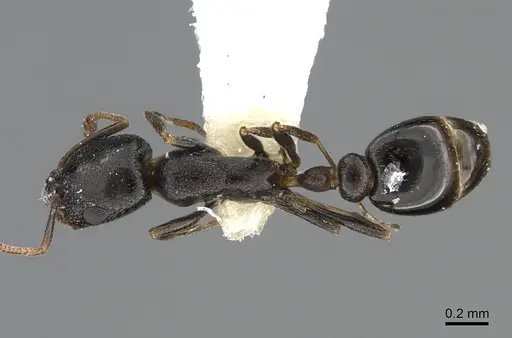
FOCOL0731
Ver no AntWeb
Literatura
A carregar mapa de distribuição...A carregar produtos...