
Cardiocondyla goroka
- Nome cient.
- Cardiocondyla goroka
- Tribo
- Crematogastrini
- Subfamília
- Myrmicinae
- Autor
- Seifert, 2023
- Distribuição
- Encontrado em 0 países
Introdução
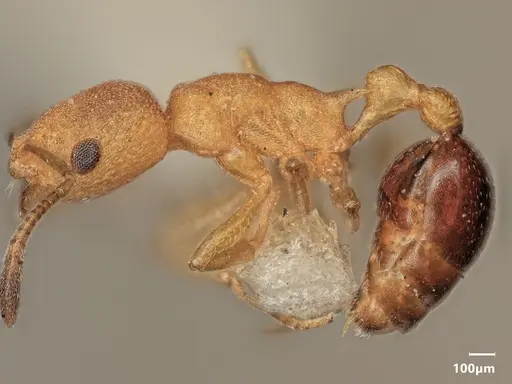
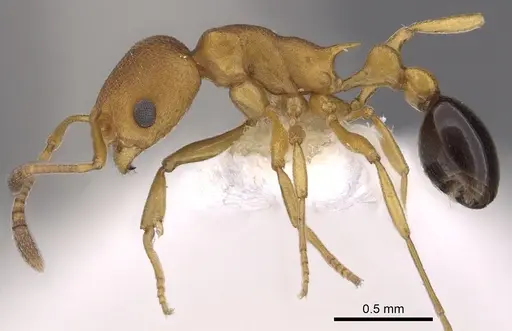
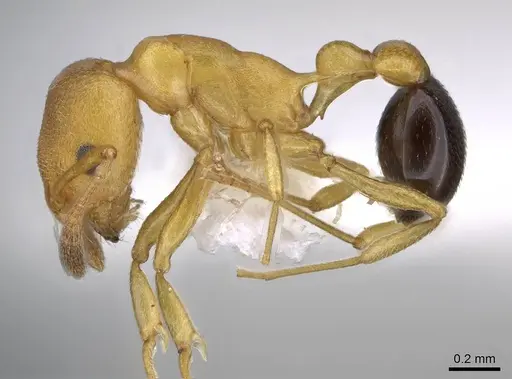
Cardiocondyla goroka is a tiny ant species described in 2022, known only from Papua New Guinea highlands. Workers have a yellowish body with a distinctive blackish gaster and belong to the Cardiocondyla wheeleri species group. This species has been collected at three highland sites between 1500-2600m elevation: Rihona near Goroka, Wau Mt. Kaindi, and Keglsugl. The only documented forager was found in a cleared grassy area, suggesting preference for open or disturbed habitats at higher altitudes. They are larger than their close relatives C. wheeleri and C. excavata, with a characteristic convexity on the mesonotal area.
Quick Summary
- Difficulty: Unknown, too little data to assess
- Origin & Habitat: Papua New Guinea highlands (1500-2600m elevation). Collections from Rihona between Goroka and Markham River, Wau Mt. Kaindi, and Keglsugl [1]. One forager collected in cleared grassy area [1].
- Colony Type: Unconfirmed, colony structure has not been documented for this species.
- Size & Growth:
- Queen: Unknown, no queen specimens have been described [1]
- Worker: Size data unavailable, the only measurement available is centroid size (590µm) which measures head width only [1]
- Colony: Unknown, no colony size data exists
- Growth: Unknown
- Development: Unknown, no development data exists for this species (, )
- Antkeeping:
- Temperature: Unknown, likely prefer cooler highland conditions. Based on elevation (1500-2600m), they may prefer temperatures in the high teens to low twenties Celsius. Start around 18-22°C and observe colony activity.
- Humidity: Unknown, likely requires moderate to high humidity given their highland origin. Keep the nest substrate consistently moist but not waterlogged.
- Diapause: Unknown, highland tropical species may have reduced seasonal activity but diapause requirements are unstudied
- Nesting: Unknown natural nesting behavior. Most Cardiocondyla nest in soil, under stones, or in small cavities. Use a test tube setup or small nest with fine chambers scaled to their tiny size.
- Behavior: Behavior is unstudied for this species. Cardiocondyla ants are generally non-aggressive and shy. Their tiny size makes escape likely, use fine mesh and excellent barrier protection.
- Common Issues: this species has never been kept in captivity, no husbandry information exists, tiny size makes escape prevention critical, they can squeeze through standard barriers, no established feeding guidelines, start with sugar water and small live prey, highland origin means they may not tolerate warm conditions, no colony founding information available
Species Overview and Discovery
Cardiocondyla goroka was described in 2022 by Bernhard Seifert, making it one of the most recently described Cardiocondyla species. It is known from just three worker specimens collected at widely separated highland sites in Papua New Guinea: Rihona at 1500m elevation, Wau Mt. Kaindi at 2200m, and Keglsugl at 2600m. These sites are all within roughly 190km of each other in the eastern highlands region. The species is hypothesized to be a sister species to C. wheeleri, but it is notably larger and has distinct morphological features including a conspicuous convexity on the mesonotal area and stronger spines. The type locality is named after the town of Goroka, near where the holotype was collected. [1]
Identification and Morphology
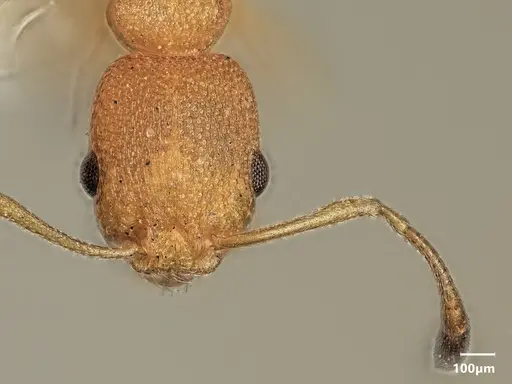
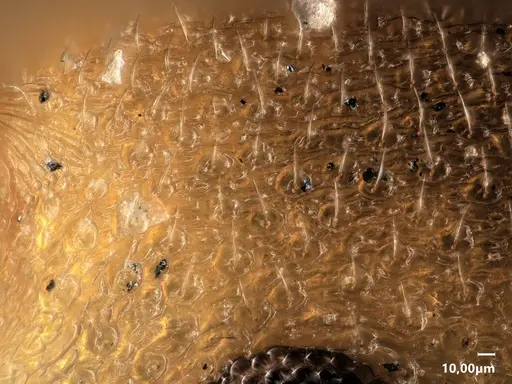
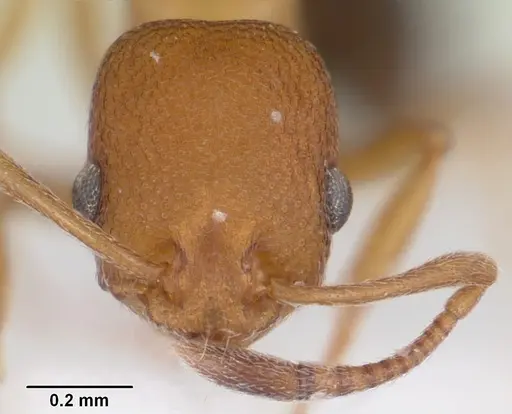
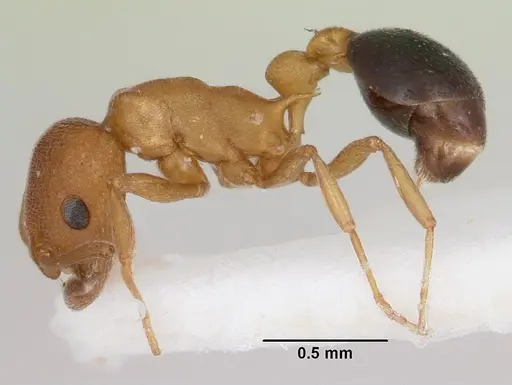
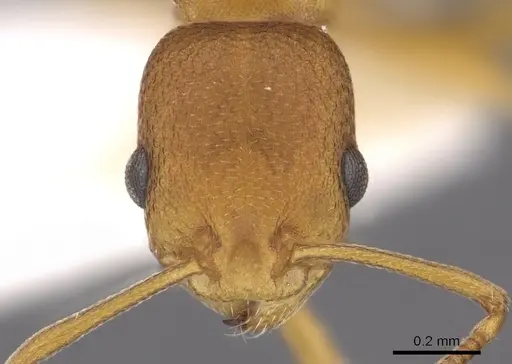
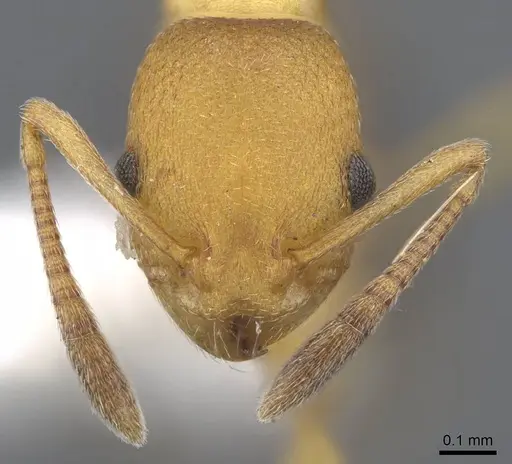
This is a very small ant species. Workers have a yellowish body overall, with the gaster being blackish or darkly pigmented. The head is relatively short, and the eyes are small. The pronotal corners are prominent but blunt, forming roughly 90-95 degree angles. The spines are strong but shorter than in related species C. wheeleri and C. excavata. The petiole is rather wide and high, with a globular node when viewed from above. The postpetiole is broad but relatively narrow compared to C. wheeleri. The dorsal surface of the head has a matt appearance with distinctive bicoronate foveolae (small pits) that are more pronounced than in related species. [1]
Natural History and Habitat
Almost nothing is known about the biology of Cardiocondyla goroka in the wild. The only documented ecological observation is a single forager collected by P.S. Ward in a cleared grassy area, suggesting these ants may tolerate or prefer open habitats. Their occurrence at elevations ranging from 1500 to 2600 meters suggests they are adapted to cooler highland conditions. The three known collection sites span a significant elevation range of over 1000 meters, indicating some environmental flexibility. No information exists on colony size, nesting behavior, queen reproduction, or seasonal activity patterns for this species. [1]
Keeping Cardiocondyla goroka - Practical Considerations
This species has never been kept in captivity, so no established husbandry protocols exist. Any care recommendations must be considered highly experimental. Based on their tiny size and highland origin, key considerations include: escape prevention must be excellent, their small size allows them to pass through standard barriers, temperature should likely be kept cooler than typical room temperature, possibly in the high teens to low twenties Celsius, humidity should be moderate to high to simulate their likely montane forest floor origin, nesting should use very small chambers scaled to their minute size. The best approach for interested keepers would be to obtain wild colonies if possible and document all observations carefully to build husbandry knowledge for this poorly understood species.
Related Species and Context
Cardiocondyla goroka belongs to the C. wheeleri species group, which contains several small to minute species distributed primarily in the Oriental and Australasian regions. The genus Cardiocondyla is known for some unusual behaviors including male dimorphism (some species have winged and wingless males) and in rare cases, ergatoid (worker-like) queens. However, these traits have not been documented for C. goroka specifically. Related species like C. wheeleri are common in tropical areas and often nest in soil or under stones. Many Cardiocondyla species are considered tramp species that have spread through human commerce, though C. goroka appears to have a restricted natural distribution in Papua New Guinea highlands. [1]
Frequently Asked Questions
How do I keep Cardiocondyla goroka ants?
No established husbandry protocol exists, this species has never been kept in captivity. If you obtain a colony, use a small test tube setup with fine chambers, keep temperatures cool (around 18-22°C), maintain moderate humidity, and use excellent escape prevention due to their tiny size. Document your observations carefully to help build knowledge for this species.
What do Cardiocondyla goroka ants eat?
Unknown for this specific species. Most Cardiocondyla are generalists that eat small insects, honeydew, and nectar. Start by offering sugar water and tiny live prey like springtails or fruit flies. Observe what they accept and adjust accordingly.
How big do Cardiocondyla goroka colonies get?
Unknown, no colony size data exists for this species.
Do Cardiocondyla goroka ants sting?
Cardiocondyla ants have stingers but are too small to effectively sting humans. They are not considered dangerous.
Is Cardiocondyla goroka a good species for beginners?
No, this species is not recommended for beginners. It was only described in 2022 and has never been kept in captivity. There is no established husbandry knowledge, making successful keeping very uncertain.
Where does Cardiocondyla goroka come from?
This species is known only from Papua New Guinea, specifically from highland areas around Goroka and Wau at elevations between 1500 and 2600 meters.
How long does it take for Cardiocondyla goroka to develop from egg to worker?
Unknown, no development data exists for this species.
Can I keep multiple Cardiocondyla goroka queens together?
Unknown, colony structure has not been documented for this species. Without data, combining queens is not recommended.
What temperature do Cardiocondyla goroka ants need?
Unknown, likely cooler conditions due to their highland origin (1500-2600m elevation). Start around 18-22°C and observe colony behavior. Avoid warm conditions that might stress them.
Do Cardiocondyla goroka ants need hibernation?
Unknown, as a highland tropical species, they may have reduced activity during cooler seasons but diapause requirements are unstudied. Do not assume they need hibernation without evidence.
Report an Issue
The current care sheet is based fully on literature. See inconsistencies, or something that's incorrect? Please , it will be resolved after review from an admin. Contributing to the blogs tab also helps providing information, to make us be able to further improve the caresheets. Thank you for your support!
References

Esta ficha de cuidados é licenciada sob CC BY-SA 4.0 .
Blogs da comunidade
ANTWEB1048515
Ver no AntWeb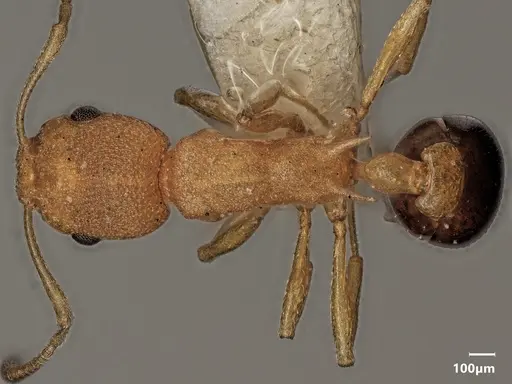
CASENT0103275
Ver no AntWeb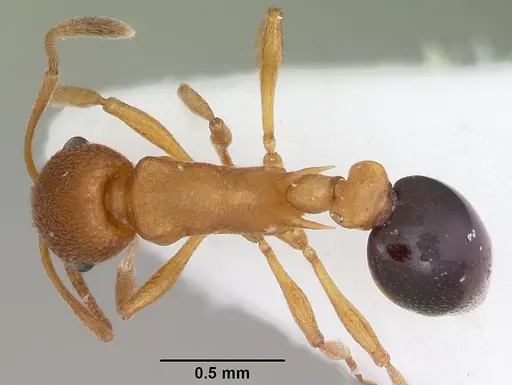
CASENT0901761
Ver no AntWeb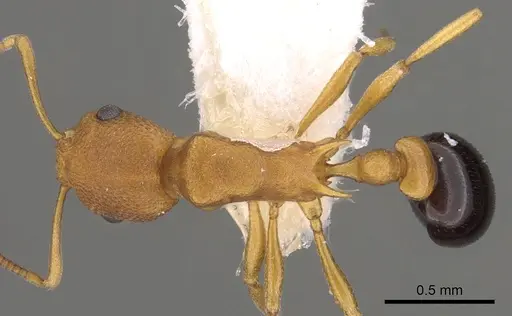
CASENT0914971
Ver no AntWeb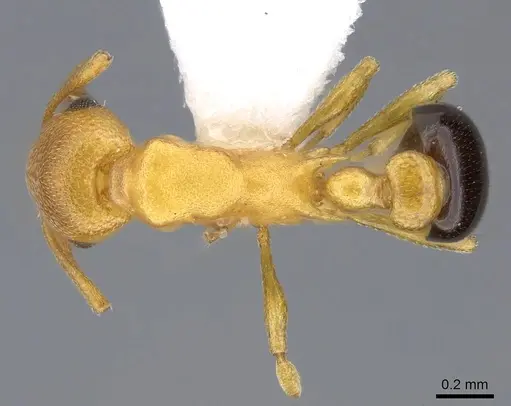
Literatura
A carregar mapa de distribuição...A carregar produtos...