
Cardiocondyla gibbosa
- Nome cient.
- Cardiocondyla gibbosa
- Tribo
- Crematogastrini
- Subfamília
- Myrmicinae
- Autor
- Kuznetsov-Ugamsky, 1927
- Distribuição
- Encontrado em 0 países
Introdução
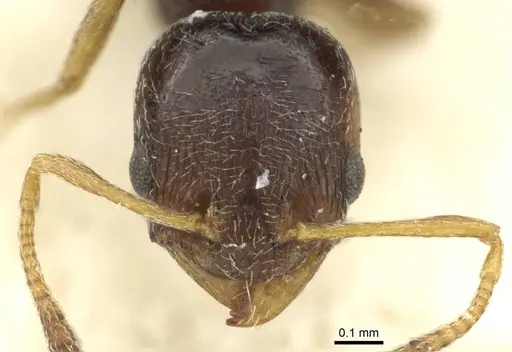
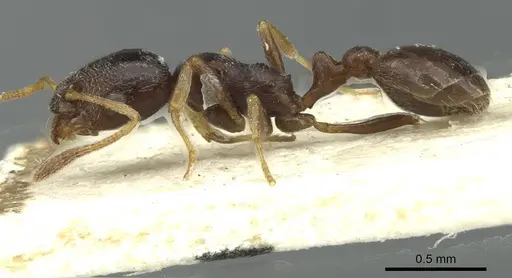
Cardiocondyla gibbosa is a tiny ant species belonging to the stambuloffii species group. Workers are very small, approximately 1.5-2mm in body length based on genus patterns . They have a distinctive appearance with a relatively long head, very small eyes, and short propodeal spines reduced to small angles. The species is characterized by unique head sculpture - the posterior 40% of the vertex is completely smooth except for tiny pits around hair bases - and notably long pubescence compared to related species . This ant is known only from Kazakhstan and Kyrgyzstan in Central Asia, where it inhabits semi-arid steppe habitats at low to moderate elevations . The biology of Cardiocondyla gibbosa remains completely unstudied - there is no published information on colony structure, founding behavior, diet, or development [AntWiki]. This makes it a species for more experienced antkeepers who can adapt care based on observations rather than following established protocols. The genus Cardiocondyla is known for interesting behaviors including ergatoid (wingless) males and male-only colonies in some species, but whether C. gibbosa exhibits these traits is unknown.
Quick Summary
- Difficulty: Expert
- Origin & Habitat: Central Asia (Kazakhstan, Kyrgyzstan), semi-arid steppe habitats at 322m elevation [1][3]
- Colony Type: Unknown, no data on colony structure. Based on genus patterns, likely single-queen colonies
- Size & Growth:
- Antkeeping:
- Temperature: Unknown for this species. Based on Central Asian distribution, likely tolerates 18-28°C with preference around 22-25°C. Provide a temperature gradient
- Humidity: Likely prefers dry to moderate conditions typical of semi-arid habitats. Keep nest substrate slightly moist but allow drying periods, avoid constant saturation
- Diapause: Likely required, temperate Central Asian species typically need winter dormancy. Provide 3-4 months at 5-10°C
- Nesting: Natural nesting habits unknown. Likely nests in soil or under stones in compact chambers. In captivity, use small test tubes or tight acrylic chambers scaled to their tiny size. Avoid large open spaces
- Behavior: Behavior is unstudied. Based on genus patterns, they are likely relatively docile and non-aggressive. Workers are tiny so escape prevention is critical, they can easily pass through standard mesh. Expect shy, less active foragers compared to larger ant species. No data on stingers, but given their minute size, any sting would be negligible to humans.
- Common Issues: no biological data exists, all care is speculative and based on genus patterns, tiny size makes escape prevention challenging, use fine mesh and tight-fitting barriers, colony may fail if conditions do not match unknown natural requirements, no information on acceptable foods, start with sugar water and small live prey, winter dormancy requirements are unconfirmed but likely necessary
Identification and Distinction
Cardiocondyla gibbosa belongs to the stambuloffii species group and is closely related to Cardiocondyla stambuloffii and C. koshewnikovi. It can be distinguished from related species by its unique head sculpture, the posterior 40% of the vertex is completely smooth except for tiny pits around hair bases, a character not found in any other species [1]. Workers have notably longer pubescence than related species and a more elongated head. The propodeal spines are extremely short, reduced to small obtuse angles rather than true spines. The postpetiole is wide, more than half the width of the gaster. Workers are very small, approximately 1.5-2mm in body length based on genus patterns [2][5].
Distribution and Habitat
This species is known only from Central Asia, specifically Kazakhstan and Kyrgyzstan, with unconfirmed reports from China [3]. The type locality is Suzak in Kazakhstan at coordinates 44.140°N, 68.467°E at 322m elevation [1]. This region features semi-arid to steppe climate conditions with cold winters and warm summers. The specific microhabitat preferences are unknown, but the general climate suggests adaptation to dry conditions with significant seasonal temperature variation. No information exists on nest site selection in the wild [4].
Why Keep This Species?
Cardiocondyla gibbosa is not a species for beginners. With absolutely no published biological data, keepers must rely on genus-level inferences and careful observation to establish successful care protocols. The main appeal is the opportunity to contribute to our understanding of this species, there are genuine discoveries to be made about its colony structure, behavior, and requirements. The tiny workers are also visually distinctive, with their relatively long heads and unusually long pubescence setting them apart from more common pet ants. This is a species for experienced antkeepers who enjoy the challenge of establishing care for poorly-studied species and who can adapt based on colony responses rather than following established guidelines. [4]
Housing and Escape Prevention
Given the tiny worker size, escape prevention is paramount. Standard test tube setups work but must have absolutely tight-fitting cotton plugs. Any gap larger than 0.2mm risks worker escape. For outworlds, use containers with tight lids and consider petroleum jelly barriers on smooth walls. Fine mesh is essential for any ventilation. The nest chambers should be small and compact, these tiny ants feel exposed in large spaces. Acrylic nests with narrow tunnels or small test tube setups work best. Avoid Y-tong nests with large chambers, instead, use setups with tight, small-diameter tunnels scaled to their minute size. [4]
Feeding and Diet
No specific dietary information exists for this species. Based on genus patterns, they likely accept sugar sources (honey water, sugar water) and small protein sources. Given their tiny size, any prey items must be extremely small. Offer fruit flies, newly hatched mealworms cut into tiny pieces, or other appropriately-sized micro-arthropods. Start with a variety of offerings and observe what the colony accepts. Sugar water should always be available once workers emerge. Given their unknown biology, experimental feeding is necessary, keep detailed records of what works and what does not. [4]
Temperature and Seasonal Care
No species-specific temperature data exists. Based on their Central Asian distribution, they likely tolerate a broad temperature range and may prefer warmer conditions during the active season. Start with a gradient of 20-26°C in the nest area, with one side slightly warmer. Observe worker activity levels, if they cluster in warmer areas, increase temperature slightly, if they avoid heated areas, reduce. For winter dormancy, provide 3-4 months at 5-10°C, this is standard for temperate species from this region. Monitor the colony closely during seasonal transitions, the lack of biological data means you will be learning through observation. [4]
Frequently Asked Questions
How long does it take for Cardiocondyla gibbosa to develop from egg to worker?
This is unknown, no development data exists for this species.
Are Cardiocondyla gibbosa good for beginners?
No. This species has no published biological data, meaning all care is speculative. Beginners should start with species like Lasius niger, Messor structor, or other well-documented ants. C. gibbosa requires experienced keepers who can adapt care based on observation rather than established protocols.
What do Cardiocondyla gibbosa eat?
Unknown specifically. Based on genus patterns, offer sugar water or honey water and small protein sources like fruit flies or tiny insect pieces. Start with varied offerings and note what the colony accepts. Experimental feeding is necessary.
Do Cardiocondyla gibbosa ants sting?
No data exists, but given their minute size, any sting would be negligible to humans. Most Myrmicinae have stingers, but they are often too small to penetrate human skin effectively.
Can I keep multiple Cardiocondyla gibbosa queens together?
Unknown, no data exists on colony structure or founding behavior. Do not attempt combining unrelated queens without documented evidence that this species tolerates pleometrosis. Based on genus patterns, single-queen colonies are likely.
What size do Cardiocondyla gibbosa colonies reach?
Unknown, no colony size data exists for this species. The genus typically produces colonies of several hundred to a few thousand workers, but this may not apply to C. gibbosa.
Do Cardiocondyla gibbosa need hibernation?
Likely yes, based on their Central Asian distribution. Provide 3-4 months of winter dormancy at 5-10°C. This is standard for temperate species from this region, though specific requirements are unconfirmed.
What is the best nest type for Cardiocondyla gibbosa?
Small, tight chambers scaled to their tiny size. Standard test tubes work if sized appropriately. Avoid large open spaces, these ants prefer compact nesting areas. Fine-tuned escape prevention is essential.
Where is Cardiocondyla gibbosa found in the wild?
Only known from Kazakhstan and Kyrgyzstan in Central Asia. The type locality is Suzak, Kazakhstan at 322m elevation. This is a semi-arid steppe region with cold winters.
Why is so little known about Cardiocondyla gibbosa?
This species was only recently recognized as valid, it was previously synonymized with C. koshewnikovi before being revived as a separate species by Seifert in 2003. Very few specimens have been collected, and no focused biological studies exist. This makes it one of the least-known ant species in the hobby.
Report an Issue
The current care sheet is based fully on literature. See inconsistencies, or something that's incorrect? Please , it will be resolved after review from an admin. Contributing to the blogs tab also helps providing information, to make us be able to further improve the caresheets. Thank you for your support!
References

Esta ficha de cuidados é licenciada sob CC BY-SA 4.0 .
Blogs da comunidade
CASENT0912878
Ver no AntWeb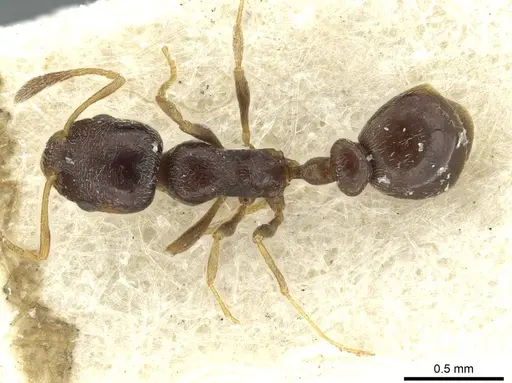
Literatura
A carregar mapa de distribuição...A carregar produtos...