
Cardiocondyla britteni
- Nome cient.
- Cardiocondyla britteni
- Tribo
- Crematogastrini
- Subfamília
- Myrmicinae
- Autor
- Crawley, 1920
- Distribuição
- Encontrado em 0 países
Introdução
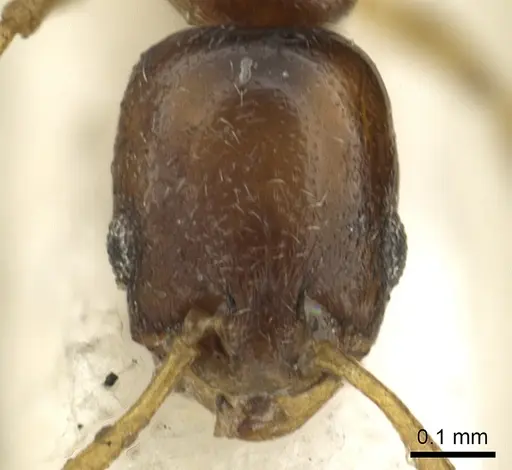
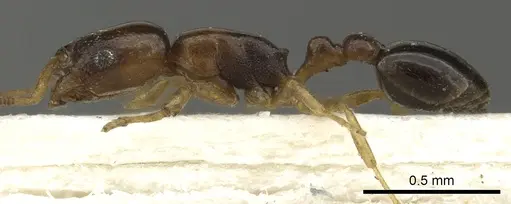
Cardiocondyla britteni is an extremely small ant, one of the smallest in the genus Cardiocondyla. The head is notably elongated, and the body has a shiny appearance with reduced surface sculpture compared to related species . The ant is dark brown on the gaster and mesosoma, with lighter yellowish-brown coloration on the head, waist, and legs . This species belongs to the Cardiocondyla minutior group, which contains small, cryptic ants that often nest in disturbed areas . This is one of the rarest ants in the world - known from only a single worker specimen collected in 1919 in West Didsbury, England, likely imported with butter beans from India or the Oriental region . No living colonies have ever been found or documented. The species was briefly considered a synonym of C. nuda but was revived as a valid species in 2003 .
Quick Summary
- Difficulty: Unknown, species not kept in captivity
- Origin & Habitat: Only known from a single specimen collected in England, likely imported from India or the Oriental region with butter beans [3]. The Cardiocondyla minutior group originates from the Oriental/Australasian region [1].
- Colony Type: Unconfirmed, only a single worker has ever been documented.
- Size & Growth:
- Queen: Size data unavailable, no queen specimens have been collected or described [5]
- Worker: Size data unavailable, the only specimen measured 402 µm in cephalic size (head), which is not a full body measurement [2]
- Colony: Unknown, no colony data exists
- Growth: Unknown
- Development: Unknown, no development data exists for this species (No data available.)
- Antkeeping:
- Temperature: Unknown for this species. Based on related Cardiocondyla species from tropical/subtropical origins, aim for 22-28°C and monitor colony activity.
- Humidity: Unknown for this species. Cardiocondyla species typically prefer moderate humidity, keep nest substrate lightly moist.
- Diapause: Unknown, likely no diapause required given likely tropical origin.
- Nesting: No specific data exists. Related Cardiocondyla species often nest in small cavities under stones, in rotting wood, or in disturbed ground. A small test tube setup or mini formicarium would be appropriate.
- Behavior: No behavioral observations exist for this species. Based on genus-level knowledge, Cardiocondyla ants are typically docile and non-aggressive. The genus is known for 'sneaking' behavior where males can disperse on foot to find mates rather than flying [3]. Escape prevention is critical given their extremely tiny size, they can squeeze through gaps far smaller than other ants.
- Common Issues: This species has never been kept in captivity, no care information exists., Only a single specimen has ever been documented, making even genus-level care uncertain., Extremely small size creates significant escape risk., No established breeding stock exists in the antkeeping hobby., Wild populations may not exist, the species may be extinct or was a single accidental introduction.
Species Status and Rarity
Cardiocondyla britteni is perhaps the rarest ant species in the world, it has only ever been documented from a single worker specimen collected in 1919 in West Didsbury, England [4]. The ant was found among imported butter beans (Lablab purpureus), which were likely shipped from India or Southeast Asia [3]. This means the species was probably accidentally introduced to Britain but was never established. No additional specimens have been found despite extensive ant surveys in Britain since then. Either the species went extinct shortly after introduction, or it was never actually present in sufficient numbers to form a population. The species was once considered a synonym of C. nuda but was revived as a distinct species in 2003 following detailed morphological analysis [2]. This species represents a fascinating case of an ant known only from an accidental introduction that may have never actually established in the wild.
Identification and Morphology
This is an extremely small ant, one of the smallest Cardiocondyla species, with a cephalic size of just 402 micrometers [2]. The worker has a notably elongated head (CL/CW ratio of 1.249) and very short spines on the propodeum [1]. The most distinctive features are the reduced surface sculpture, the foveolae (small pits) on the head are much smaller and shallower than in related species, and the head and mesosoma have a distinctly shiny appearance [1]. The body coloration is bicolored: dark to blackish-brown on the gaster, propodeum, and pleurae, with lighter yellowish-brown on the vertex, promesonotum, waist, and legs [2]. These subtle morphological differences distinguish it from other members of the C. minutior group, which are otherwise very similar to each other.
Keeping Considerations
This species is NOT available in the antkeeping hobby and has never been successfully kept in captivity. There is no documented care information, no established breeding stock, and no biological data on colony structure, founding behavior, or development. If a specimen were to be found, care would need to be extrapolated from related Cardiocondyla species. Based on genus patterns, these are small, docile ants that typically nest in small cavities. They would require excellent escape prevention due to their extremely small size. The genus Cardiocondyla includes species that have become invasive in many parts of the world through human commerce, so any future specimens would need to be carefully contained. For all practical purposes, this species cannot be kept by hobbyists because no one has ever documented a living colony.
Related Species in the Genus
Cardiocondyla britteni belongs to the C. minutior group, which contains small, cryptic ants of Oriental and Australasian origin [1]. The most well-known member is Cardiocondyla minutior, known as the 'lesser sneaking ant' because males can walk between colonies to mate rather than flying, allowing them to establish new colonies without being detected [3]. This species has spread globally through human commerce and is now found on every continent except Antarctica. Other related species like C. nuda and C. wroughtonii are also widespread due to human-assisted dispersal. The genus is known for unusual reproductive behaviors including ergatoid (wingless) queens and male dispersal strategies. If C. britteni were to be kept, care would likely be similar to other small Cardiocondyla species, warm temperatures, moderate humidity, and small prey items.
Frequently Asked Questions
Can I keep Cardiocondyla britteni ants?
No. This species has never been kept in captivity and no living colonies have ever been documented. Only a single worker specimen has ever been collected, in 1919. There is no established breeding stock in the antkeeping hobby.
Where does Cardiocondyla britteni live?
The only known specimen was collected in England, likely imported with butter beans from India or the Oriental region. No wild populations have ever been found. The species may be extinct or was a one-time accidental introduction.
How big is Cardiocondyla britteni?
Workers are extremely tiny, the only specimen measured 402 micrometers in cephalic size (head measurement). Full body size data is not available.
What does Cardiocondyla britteni look like?
They have an elongated head, very short blunt spines, and a shiny appearance with reduced surface sculpture. The body is bicolored, dark brown on the gaster and mesosoma, lighter yellowish-brown on the head and legs.
Is Cardiocondyla britteni invasive?
No. Unlike its relative Cardiocondyla minutior (the lesser sneaking ant), this species was never established anywhere. Only a single accidental specimen has ever been found.
How do I care for Cardiocondyla britteni?
No care information exists. This is one of the rarest ant species in the world, known only from a single specimen. No one has ever documented a living colony, so there is no guidance on temperature, humidity, feeding, or nesting.
Are there any Cardiocondyla species I can keep?
Yes. Cardiocondyla minutior and related species are sometimes available in the antkeeping hobby. They are small, docile ants that typically form small colonies. Care involves warm temperatures (22-28°C), moderate humidity, and small protein foods like fruit flies or pinhead crickets.
Why is Cardiocondyla britteni so rare?
Only a single worker was ever collected in 1919,probably as an accidental introduction with imported goods. No additional specimens have been found despite extensive surveys. Either the species went extinct shortly after, or it was never actually present in sufficient numbers to establish a population.
Report an Issue
The current care sheet is based fully on literature. See inconsistencies, or something that's incorrect? Please , it will be resolved after review from an admin. Contributing to the blogs tab also helps providing information, to make us be able to further improve the caresheets. Thank you for your support!
References

Esta ficha de cuidados é licenciada sob CC BY-SA 4.0 .
Blogs da comunidade
CASENT0901496
Ver no AntWeb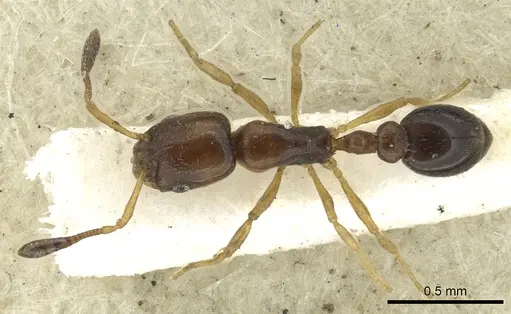
Literatura
A carregar mapa de distribuição...A carregar produtos...