
Camponotus gombaki
- Nome cient.
- Camponotus gombaki
- Subgénero
- Karavaievia
- Tribo
- Camponotini
- Subfamília
- Formicinae
- Autor
- Dumpert, 1986
- Distribuição
- Encontrado em 0 países
Introdução
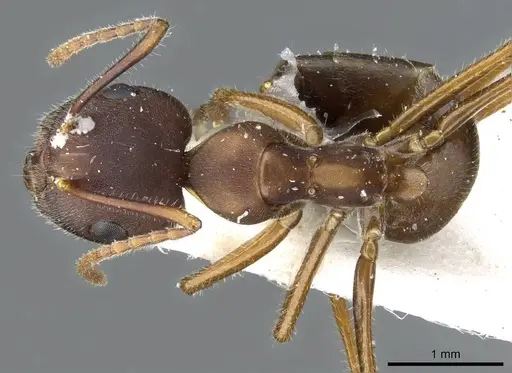
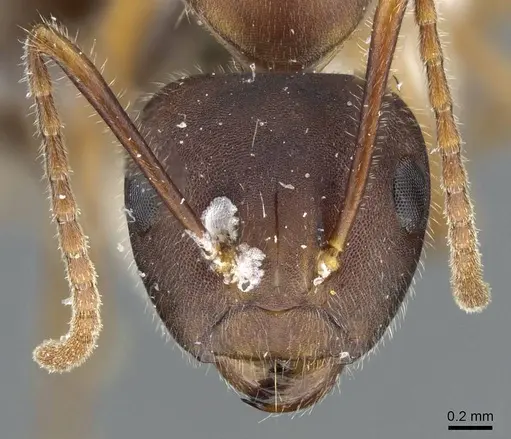
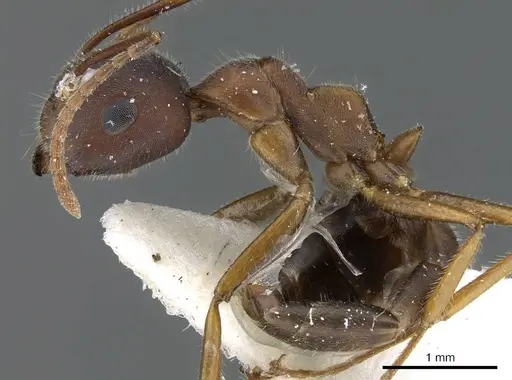
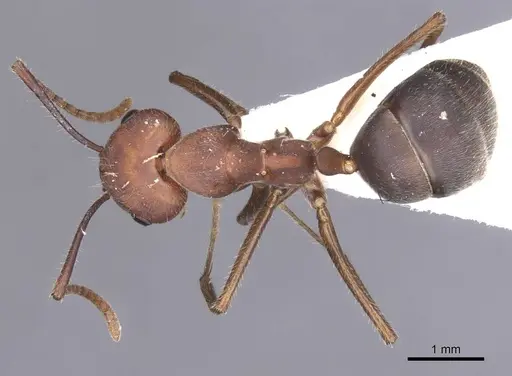
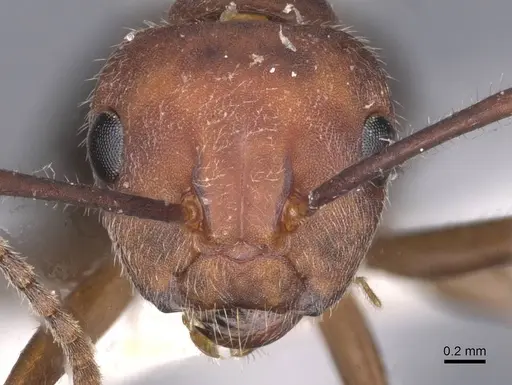
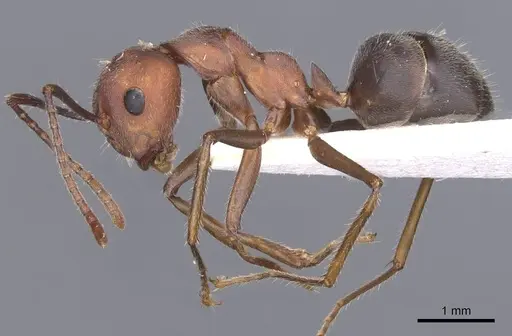
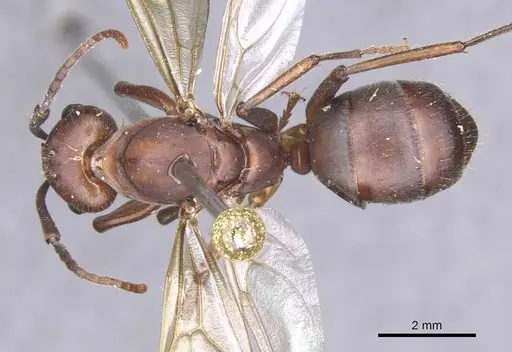
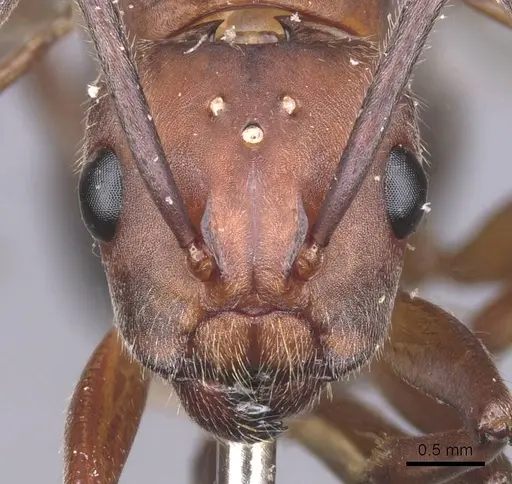
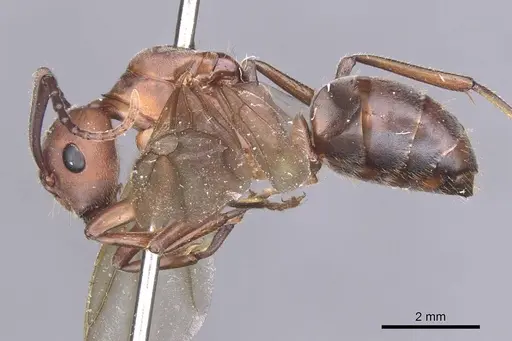
Camponotus gombaki is a weaver ant species native to the Malaysian Peninsula, specifically the Gombak Valley region near Kuala Lumpur. These ants belong to the subgenus Karavaievia, a group known for their unique nest-weaving behavior where workers use silk from larvae to bind leaves together into protective pavilions. Unlike some other weaver ants that create free-hanging pockets under leaves, C. gombaki builds its nests inside rolled leaves or between multiple overlapping leaves. Workers are monomorphic, meaning they all look the same size, and like other weaver ants in this group, they lack a metapleural gland - a feature common in most ants that helps with disease protection but has been lost in this lineage [AntWiki]. What makes this species special is its sophisticated nest architecture. The silk-binding behavior is rare among ants and represents an evolutionary innovation that allows these ants to create secure nest sites high in the rainforest canopy. Workers carry larvae in their mandibles and use them to apply silk, weaving leaves and other materials into protective nest structures.
Quick Summary
- Difficulty: Medium
- Origin & Habitat: Native to the Malaysian Peninsula, specifically the Gombak Valley about 25km north of Kuala Lumpur. They live in tropical rainforest environments where they construct woven nests between leaves in the canopy [3].
- Colony Type: Unconfirmed, colony structure has not been specifically documented for this species.
- Size & Growth:
- Queen: Size data unavailable, no specific measurements exist for this species
- Worker: Size data unavailable, male measurements exist but worker size not documented
- Colony: Unconfirmed, typical for weaver ant species to form large colonies
- Growth: Unconfirmed
- Development: Unconfirmed, no specific development data available for this species (Development time is unknown for this species. Related tropical Camponotus species typically develop from egg to worker in 6-8 weeks at warm temperatures.)
- Antkeeping:
- Temperature: Keep at 24-28°C. These are tropical ants that need warm, stable conditions. A heating cable on one side of the nest can help maintain temperature if your room is cooler.
- Humidity: High humidity (70-85%) is essential. Mist the outworld regularly and keep the nest substrate moist but not waterlogged. The rainforest environment they come from is consistently humid.
- Diapause: No, as a tropical species, they do not require hibernation. Keep them warm year-round.
- Nesting: Weaver ants need vertical space and live plants or materials they can weave. In captivity, they do well in naturalistic setups with live plants, cork bark, or artificial leaves where they can build their silk pavilions. Acrylic nests are not recommended as they prevent natural weaving behavior.
- Behavior: These ants are generally calm and not aggressive toward keepers. Workers are active foragers that search for honeydew, sugar sources, and small prey. Their escape risk is moderate, while not tiny, they are agile and can climb smooth surfaces, so standard barrier methods work well. The most notable behavior is their weaving, workers hold larvae and use them like silk glands, spinning threads to bind leaves together into nest structures.
- Common Issues: tropical humidity requirements can be difficult to maintain in dry climates or air-conditioned rooms, weaver behavior requires appropriate materials, they cannot weave in test tubes or acrylic nests, colonies can grow large over time, ensure you have space for expansion, tropical species are sensitive to temperature drops below 22°C, may not accept artificial nest materials as readily as ground-nesting ants, lack of metapleural gland means colonies may be more susceptible to pathogens, keep equipment clean
Nest Preferences and Weaving Behavior
Camponotus gombaki is a weaver ant that constructs its nests by binding leaves together with silk produced by their larvae. Unlike some other weaver ants that create distinctive hanging pockets under leaves, this species builds nests inside rolled leaves or between overlapping leaves [3]. In captivity, you should provide them with materials they can work with, live potted plants work exceptionally well, as do arrangements of cork bark, leaves, or artificial foliage. The key is giving them structures they can physically manipulate and bind together. Test tubes and acrylic nests are not ideal because they prevent the natural weaving behavior that makes this species unique. A naturalistic setup with live plants or natural materials will allow them to display their full behavioral repertoire.
Feeding and Diet
Weaver ants like C. gombaki are omnivores with a strong preference for honeydew and sugar sources. In captivity, offer sugar water, honey, or diluted maple syrup as a constant food source. They also need protein from insects, small crickets, mealworms, fruit flies, and other small arthropods make good prey items. Feed protein regularly, and keep sugar available at all times. In the wild, they also tend aphids and scale insects for honeydew, so they may ignore sugar initially if they're used to this natural honeydew source. Once they discover sugar water or honey, they typically accept it readily. Fresh fruit can also be offered occasionally.
Temperature and Humidity Requirements
As a tropical species from Malaysia, C. gombaki requires warm and humid conditions. Keep the nest area at 24-28°C, this is ideal for both the ants and their brood. A heating cable or heat mat on one side of the enclosure can help maintain these temperatures if your room runs cooler. Humidity should be high, around 70-85%. Mist the outworld regularly and ensure the nest substrate stays moist. However, avoid stagnant air, use adequate ventilation while maintaining humidity to prevent mold growth. These ants do not tolerate cool temperatures well, so avoid placing their enclosure near air conditioning vents or in cool rooms. They do not require any diapause or hibernation period. [3]
Behavior and Colony Dynamics
This species shows the fascinating weaving behavior that makes Karavaievia ants special. Workers carry larvae in their mandibles and use them to apply silk, weaving leaves and other materials into protective nest structures. This behavior is visually impressive and is one of the main reasons keepers pursue this species. The colonies are relatively calm and workers are active foragers. They will establish foraging trails and systematically search their territory for food. While they can be defensive if their nest is threatened, they are not considered particularly aggressive toward keepers. Colonies grow progressively over time, with new workers emerging regularly once the colony establishes. The queen remains hidden within the nest structure, tended by workers.
Frequently Asked Questions
Can I keep Camponotus gombaki in a test tube?
Test tubes are not ideal for this species. Weaver ants need space to display their natural weaving behavior. A naturalistic setup with live plants, cork bark, or other materials they can bind together is much better. If you must use a test tube for founding, plan to move them to a proper naturalistic setup once the colony reaches a moderate size.
How long until Camponotus gombaki produces first workers?
Specific development data for C. gombaki is not available. Based on typical tropical Camponotus development, expect first workers around 6-8 weeks after the queen lays eggs at optimal temperatures of 25-28°C. This is an estimate based on related species.
What do Camponotus gombaki eat?
They are omnivores. Offer sugar water, honey, or maple syrup constantly as an energy source. Feed protein like small crickets, mealworms, or fruit flies regularly. They may also accept fresh fruit occasionally.
Are Camponotus gombaki good for beginners?
This species is rated as medium difficulty. While not the hardest species, the need for a naturalistic setup with live plants or weaving materials, plus the requirement for high humidity and warm temperatures, makes it better suited for keepers who have some experience with ant keeping basics.
Do Camponotus gombaki need hibernation?
No. As a tropical species from Malaysia, they do not require any hibernation or diapause period. Keep them warm and active year-round at 24-28°C.
How big do Camponotus gombaki colonies get?
Specific colony size data for this species is not available. However, weaver ant species in general are capable of building large, complex colonies with thousands of workers over time.
When should I move Camponotus gombaki to a formicarium?
For weaver ants, a formicarium is not the best choice. Instead, transfer them to a naturalistic setup with live plants or natural materials they can weave. Do this once the colony outgrows the founding setup.
Why is my Camponotus gombaki colony not weaving?
Weaving requires appropriate materials. If they're in a test tube or acrylic nest, they simply cannot weave. Provide them with leaves, cork bark, or live plants. Also ensure the colony is healthy and established, newly founded colonies may take time before starting complex behaviors.
Can I keep multiple queens together in one colony?
Colony structure has not been documented for this species. Combining unrelated queens is not recommended as they would likely fight. If you acquire a colony, assume it has one reproductive queen until proven otherwise.
Report an Issue
The current care sheet is based fully on literature. See inconsistencies, or something that's incorrect? Please , it will be resolved after review from an admin. Contributing to the blogs tab also helps providing information, to make us be able to further improve the caresheets. Thank you for your support!
References

Esta ficha de cuidados é licenciada sob CC BY-SA 4.0 .
Blogs da comunidade
Literatura
A carregar mapa de distribuição...A carregar produtos...