
Calyptomyrmex friederikae
- Nome cient.
- Calyptomyrmex friederikae
- Tribo
- Crematogastrini
- Subfamília
- Myrmicinae
- Autor
- Kutter, 1976
- Distribuição
- Encontrado em 0 países
Introdução
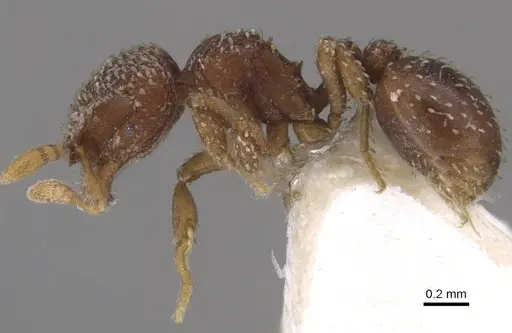
Calyptomyrmex friederikae is a small, cryptic myrmicine ant originally described from Bhutan. Workers are brown with a finely punctate first gastral segment and a visible promesonotal suture in dorsal view. The dorsal faces of the petiole and postpetiole are also distinctly punctate . This species is known only from the Samchi region of Bhutan at elevations of 350-450 meters, making it one of the rarest and least-studied ants in the antkeeping hobby. Calyptomyrmex ants are cryptic leaf-litter dwellers typically found in moist forest environments where they forage in upper soil layers and decaying wood.
Quick Summary
- Difficulty: Expert
- Origin & Habitat: Known only from Samchi, Bhutan at 350-450m elevation in the Indomalayan region [1]. The type specimens were collected in the early 1970s during a Swiss expedition to Bhutan. The natural habitat is likely subtropical forest with high humidity and shaded conditions.
- Colony Type: Colony structure is unconfirmed. Only the worker caste has been described. No data exists on queen morphology, colony size, or whether this species is single-queen (monogyne) or multi-queen (polygyne).
- Size & Growth:
- Queen: Unknown, queen caste has not been described [1]
- Worker: Approximately 3-4mm, inferred from genus morphology
- Colony: Unknown, no colony size data exists for this species
- Growth: Unknown
- Development: Unconfirmed, no development data exists for this species (Development timeline is completely unstudied.)
- Antkeeping:
- Temperature: Likely requires warm, stable conditions. Based on the subtropical elevation of its known range, room temperature (20-25°C) is likely suitable. Avoid temperature extremes.
- Humidity: Requires high humidity, think damp forest floor conditions. Keep nest substrate consistently moist but not waterlogged. Provide a gradient from damp to slightly drier areas so ants can self-regulate.
- Diapause: Unknown, no seasonal data exists. Bhutan experiences cool winters at higher elevations, so a moderate dormancy period may be beneficial, but this is unconfirmed.
- Nesting: In nature, Calyptomyrmex species are cryptic leaf-litter ants that nest in rotting wood, under stones, and in moist soil. In captivity, a naturalistic setup with moist substrate (like a terrarium-style formicarium) or a Y-tong nest with consistently damp plaster works well. Avoid dry conditions entirely.
- Behavior: Calyptomyrmex ants are cryptic and slow-moving. They are not aggressive and pose no threat to keepers. Workers likely forage individually in leaf litter, possibly preying on small arthropods. Escape risk is moderate due to their small size, standard barrier methods should suffice, but ensure lid seals are secure. This genus has a modified, flattened stinger used to smear venom onto enemies rather than piercing, so they can apply venom defensively but pose minimal threat to keepers.
- Common Issues: extreme data scarcity means no established care protocols exist, this is essentially an experimental species, wild-caught colonies may have parasites or diseases with no documented treatment, humidity requirements are critical, drying out kills colonies quickly, no information on acceptable foods, experimental feeding required, very limited availability makes this species extremely rare in the hobby
Species Overview and History
Calyptomyrmex friederikae was described by H. Kutter in 1976 based on three worker specimens collected from Samchi, Bhutan at 350-450 meters elevation. This remains the only verified record of the species. The original description was published in a Swiss entomological journal and included detailed illustrations of the worker caste. The species name 'friederikae' appears to honor someone named Friederika, though the original description does not specify who. This ant has never been rediscovered in subsequent surveys, making it one of the most enigmatic ant species in the Indomalayan region. [1]
Identification and Morphology
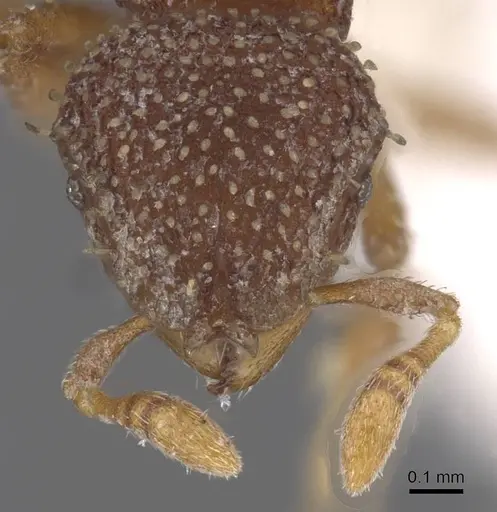
Workers of Calyptomyrmex friederikae can be identified by several key features: the promesonotal suture is visible in dorsal view, the first gastral segment is finely punctate (covered in tiny dots), and the dorsal faces of both the petiole and postpetiole are distinctly punctate. The overall body color is brown. These are small ants, approximately 3-4mm in length, typical of the genus. The punctation pattern is the most reliable diagnostic feature, as other Calyptomyrmex species in the region may have similar coloration but different surface sculpturing. [1]
Distribution and Biogeography
This species is known only from Bhutan in the Indomalayan region. The type locality is Samchi, located in the southern lowlands of Bhutan at approximately 350-450 meters elevation. This is a relatively low elevation for the Himalayan region, suggesting a subtropical habitat. A 2015 paper provided the first verified record of the genus Calyptomyrmex from India, but this was a different species, not C. friederikae. The species remains known only from the type series collected in 1972. [1]
Keeping an Undescribed Species
Calyptomyrmex friederikae presents a unique challenge: there is essentially no captive care information for this species. What we know comes from genus-level patterns and the limited habitat data. Calyptomyrmex ants are cryptic leaf-litter dwellers that prefer humid, shaded conditions. In captivity, treat this as a delicate micro-ant that requires consistent moisture and stable temperatures. Start with a small test tube setup or naturalistic terrarium with moist substrate. Monitor colony behavior closely, if workers cluster near moisture, increase humidity, if they avoid certain areas, adjust accordingly. This is an experimental species for experienced keepers only.
Feeding and Nutrition
Feeding habits are unconfirmed for this species. Based on genus-level patterns, Calyptomyrmex ants are likely omnivorous or slightly predatory, feeding on small arthropods, honeydew, and decaying organic matter. In captivity, offer a variety of foods including small live prey (fruit flies, springtails), protein sources (small pieces of mealworm, cricket), and sugar sources (honey water, sugar water). Start with small amounts and observe what the ants accept. Remove uneaten food promptly to prevent mold. Given the complete lack of species-specific data, experimental feeding is required.
Frequently Asked Questions
How do I care for Calyptomyrmex friederikae ants?
Care is essentially experimental since this species has never been kept in captivity. Based on genus patterns, provide high humidity (damp forest floor conditions), stable warmth around 20-25°C, and moist nesting material. Use a naturalistic setup or Y-tong nest with damp substrate. This is an expert-level species due to the complete lack of captive data.
What do Calyptomyrmex friederikae eat?
Diet is unconfirmed. Based on related Calyptomyrmex species, they likely accept small live prey, protein sources, and possibly sugar. Start with fruit flies, springtails, and small insect pieces. Offer honey water occasionally. Monitor acceptance and adjust accordingly.
How big do Calyptomyrmex friederikae colonies get?
Colony size is completely unknown. No colony has ever been documented. Related Calyptomyrmex species typically form small to moderate colonies, but this is just an estimate.
Where is Calyptomyrmex friederikae found?
This species is known only from Samchi, Bhutan at 350-450m elevation. It was collected in 1972 and has not been observed since. The Indomalayan region has subtropical to tropical conditions.
Do Calyptomyrmex friederikae ants sting?
Calyptomyrmex ants have a modified, flattened stinger used to smear venom onto enemies rather than pierce. They can apply venom defensively but this poses minimal threat to keepers. They are not aggressive and unlikely to use this defense unless directly handled.
Is Calyptomyrmex friederikae available for sale?
This is one of the rarest ants in the hobby. It is essentially unavailable commercially. Only three specimens have ever been collected, all in 1972. Any colony in captivity would be extremely valuable and unlikely to exist.
What temperature should I keep Calyptomyrmex friederikae at?
Temperature requirements are unconfirmed. Based on the subtropical elevation of its known range in Bhutan, room temperature (20-25°C) is likely suitable. Avoid temperature extremes in either direction.
Does Calyptomyrmex friederikae need hibernation?
Diapause requirements are completely unknown. Bhutan experiences seasonal temperature changes, so a moderate cool period may be beneficial, but this is unconfirmed. Observe your colony's activity patterns and adjust seasonally if needed.
Can beginners keep Calyptomyrmex friederikae?
No. This is an expert-only species due to the complete lack of captive care information. There are no established protocols, no documented successful colonies, and no species-specific guidance. This is a species for advanced antkeepers interested in pioneering care for poorly studied species.
How long does it take for Calyptomyrmex friederikae to develop from egg to worker?
Development timeline is completely unstudied. No data exists for this species.
Report an Issue
The current care sheet is based fully on literature. See inconsistencies, or something that's incorrect? Please , it will be resolved after review from an admin. Contributing to the blogs tab also helps providing information, to make us be able to further improve the caresheets. Thank you for your support!
References

Esta ficha de cuidados é licenciada sob CC BY-SA 4.0 .
Blogs da comunidade
CASENT0913954
Ver no AntWeb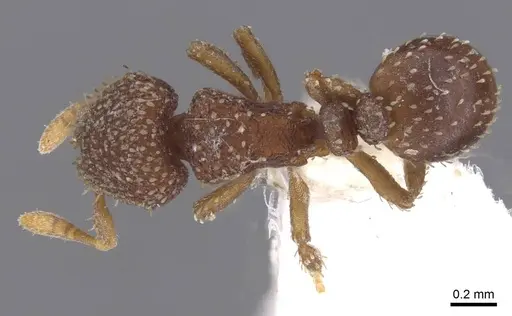
Literatura
A carregar mapa de distribuição...A carregar produtos...