
Aphaenogaster transcaucasica
- Nome cient.
- Aphaenogaster transcaucasica
- Tribo
- Stenammini
- Subfamília
- Myrmicinae
- Autor
- Karavaiev, 1926
- Distribuição
- Encontrado em 0 países
Introdução
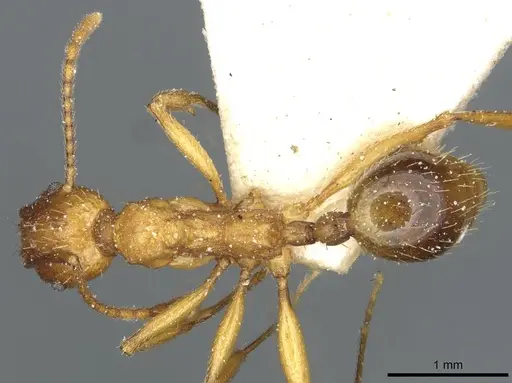
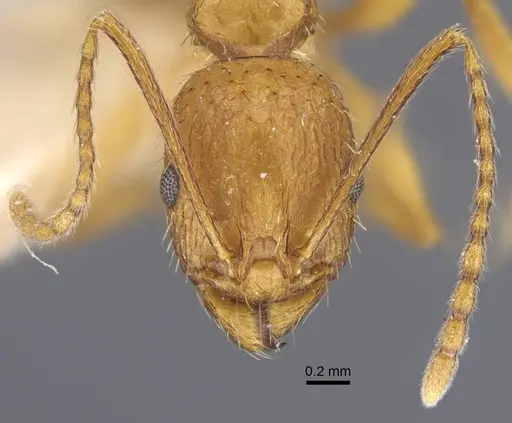
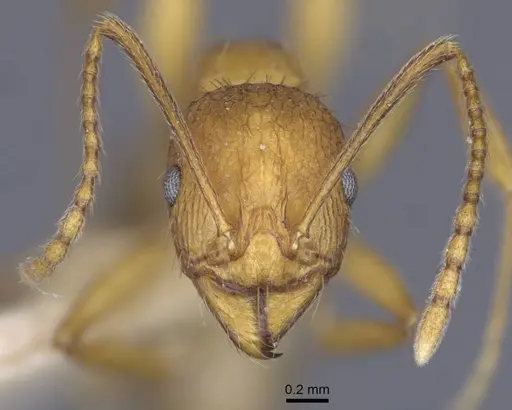
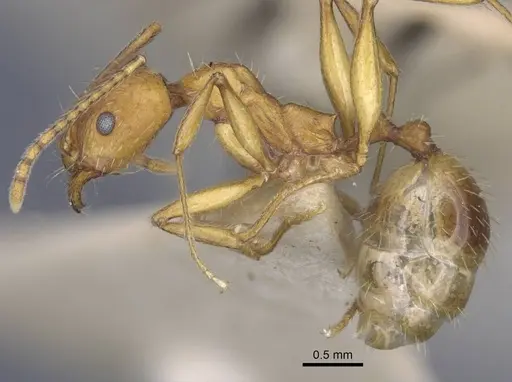
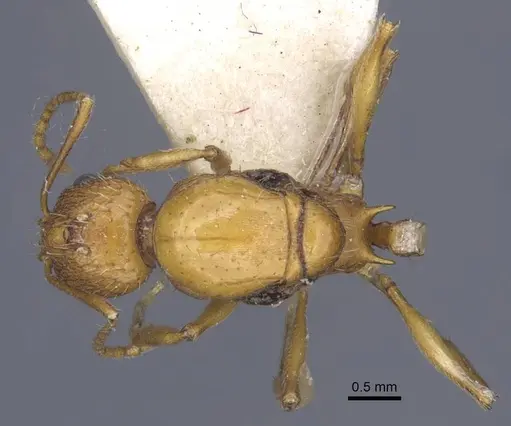
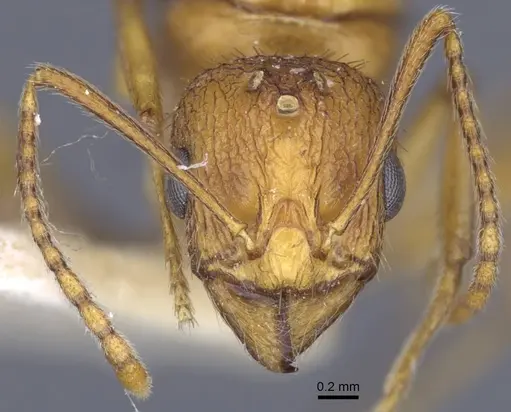
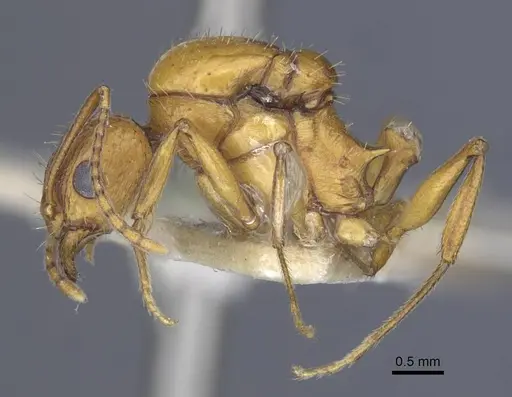
Aphaenogaster transcaucasica is a small yellow ant native to Azerbaijan. Workers are almost entirely yellow, including the legs and antennae, with only the first segment of the gaster showing a yellowish-brown color with a yellow spot at the base . They belong to the splendida species group, a cluster of similar-looking yellow Aphaenogaster found across the Middle East and Caucasus region. This species stands out because almost nothing is known about its biology. Despite being described in 1926, no researcher has ever documented a queen, observed a colony in the wild, or studied their behavior [AntWiki]. The species remains a complete mystery in terms of social structure, diet, and nesting habits.
Quick Summary
- Difficulty: Expert
- Origin & Habitat: Azerbaijan (Lenkoran, Baku, and Shamakhi regions), with possible unconfirmed records from Georgia [1][3]. Collection sites in the Lenkoran district suggest a preference for humid subtropical forest habitats near the Caspian Sea.
- Colony Type: Unknown, queen has never been documented [2]
- Size & Growth:
- Queen: Unknown, queens have never been collected [2]
- Worker: ~4-5mm, inferred from Aphaenogaster genus
- Colony: Unknown
- Growth: Unknown
- Development: Unknown (No development data exists for this species.)
- Antkeeping:
- Temperature: Unknown, based on the humid subtropical climate of Lenkoran, start with 20-25°C and adjust based on colony activity.
- Humidity: Likely moderate to high based on collection in the humid Lenkoran region [1]. Keep nest substrate damp but not waterlogged, with good ventilation to prevent mold.
- Diapause: Unknown
- Nesting: Unknown, provide options similar to other Aphaenogaster: soil or plaster nests with small chambers and humidity gradients.
- Behavior: Unknown. Based on typical Aphaenogaster behavior, they likely forage for seeds and scavenge small insects, but this is unconfirmed for this species. Their small size means escape prevention must be excellent, use fine mesh and barriers.
- Common Issues: complete lack of biological data makes captive care experimental, you will be pioneering their care with no established protocols, easily confused with the very similar Aphaenogaster schmitzi and other splendida group members without microscopic examination, unknown founding type means you cannot predict whether queens need to forage or seal themselves in, extreme rarity in collections means finding a colony to purchase or study is extremely difficult
Identification and the splendida Species Complex
Aphaenogaster transcaucasica belongs to the splendida species group, which includes Aphaenogaster festae, Aphaenogaster syriaca, and Aphaenogaster schmitzi. Workers are almost entirely yellow, including the legs and antennae, with only the first segment of the gaster showing a yellowish-brown color with a yellow spot at the base [1].
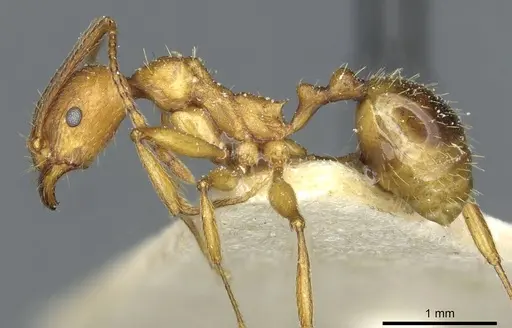
You can distinguish them from close relatives by specific measurements. The scape (first antenna segment) is relatively long compared to the head width, with a ratio of about 1.51 [1]. The mesonotum sits only slightly higher than the posterior part of the pronotum, creating a gentle curve rather than a sharp step [1].
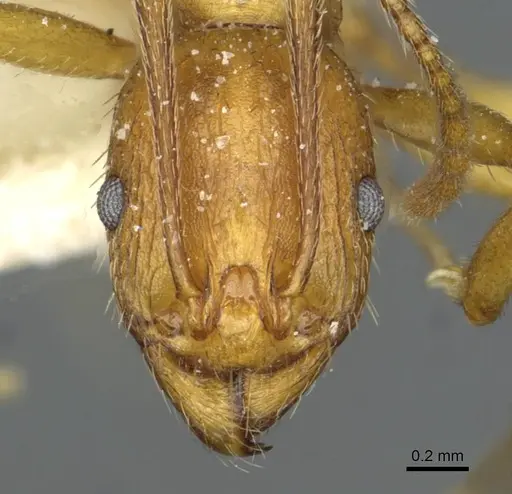
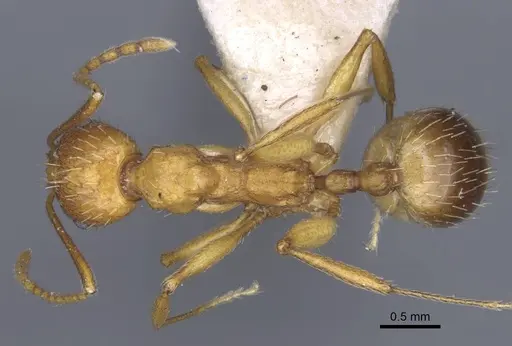
They are most similar to Aphaenogaster schmitzi, but differ in having a stouter, less elongated head with less distinct surface sculpturing, and relatively shorter antenna segments [1]. Without comparing specimens under magnification, you cannot reliably tell them apart in the field.
The Mystery of Their Biology
No researcher has ever documented the queen of this species [2]. All known specimens are workers collected from Azerbaijan in the early 1900s. This means we know nothing about how colonies are structured, how many queens they have, or even basic behaviors like how they find new nests.
The type specimens came from three locations in Azerbaijan: the Lenkoran district (humid subtropical forest near the Caspian Sea), the Shamakhi district, and near Baku [1]. The Lenkoran site is particularly important because this region has high rainfall and humidity compared to the dry interior of Azerbaijan, suggesting these ants prefer moist conditions rather than arid environments.
Because the queen remains unknown, we cannot confirm whether this species is fully claustral (queen seals herself in and lives on fat reserves), semi-claustral (queen must forage during founding), or even socially parasitic. Assume founding behavior is unconfirmed and be prepared to offer food to a founding queen if she appears to need it.
Conservative Care Recommendations
Since no captive care data exists, rely on general Aphaenogaster patterns and the climate of their collection sites. Keep the nest area around 20-25°C with a gentle heat gradient so the ants can self-regulate. The Lenkoran region has mild winters and warm summers, so they likely do not need extreme heat, but exact requirements are unknown.
Maintain moderate to high humidity. The nest substrate should feel damp to the touch but not soggy. Provide ventilation to prevent stagnant air and mold, which is a risk in humid setups.
For diet, offer a mix of seeds (millet, chia, flax) and small live or dead insects. Most Aphaenogaster are omnivorous scavengers and seed collectors, but test acceptance carefully since this specific species' diet is unstudied. Provide sugar water or honey water as a carbohydrate source.
Use a nest with small chambers appropriate for small ants. They will likely do well in plaster nests, soil setups, or Y-tong (aerated concrete) nests with narrow tunnels. [1]
Distribution and Taxonomic Notes
This species is currently confirmed only from Azerbaijan, specifically the Lenkoran district, Shamakhi district, and the Baku governorate [1]. There is a possible record from Shiraki in Georgia, but this needs confirmation because it may represent a different species or the disputed taxon Aphaenogaster georgica [3][1].
Originally described in 1926 as a variety of Aphaenogaster splendida, it was elevated to full species status in 2021 based on morphological differences [1]. However, some researchers suggest it might simply be a northern geographical form of Aphaenogaster schmitzi, given the subtle differences between them [2]. Until more specimens are studied, particularly from multiple colonies across its range, its exact status remains somewhat uncertain.
Frequently Asked Questions
How big are Aphaenogaster transcaucasica workers?
Workers are small, approximately 4-5mm based on typical Aphaenogaster size. The only available measurements are head width 0.82mm and mesosoma length 1.41mm from a single specimen [1].
Is Aphaenogaster transcaucasica good for beginners?
No. This species is suitable only for expert antkeepers because absolutely nothing is known about their biology, including colony structure, founding behavior, and care requirements. You would be attempting to keep a species with no established care guidelines [2].
How do I identify Aphaenogaster transcaucasica?
Look for a small yellow ant with a yellowish-brown band on the first segment of the gaster. Under magnification, they have a scape length to head width ratio of about 1.51, and the mesonotum sits only slightly higher than the pronotum [1]. They are nearly identical to Aphaenogaster schmitzi and require careful comparison to distinguish.
What is the difference between Aphaenogaster transcaucasica and A. schmitzi?
Aphaenogaster transcaucasica has a stouter, less elongated head with less distinct surface sculpturing, relatively shorter antenna segments, and a scape to head width ratio of 1.51 compared to 1.39 in Aphaenogaster schmitzi [1]. The differences are subtle and require measurement.
What is the colony structure of Aphaenogaster transcaucasica?
Unknown. No queen has ever been documented for this species, so we do not know if they have single queens, multiple queens, or some other arrangement [2].
What temperature do Aphaenogaster transcaucasica need?
Their exact temperature requirements are unknown. Based on their collection in the humid subtropical Lenkoran region of Azerbaijan, start with 20-25°C and adjust based on how active the colony appears [1].
Do Aphaenogaster transcaucasica need diapause?
It is unknown whether this species requires a winter rest period. The Lenkoran region has mild winters, so they may not need full hibernation, but this is unconfirmed [1].
What do Aphaenogaster transcaucasica eat?
Their specific diet is unknown. Based on typical Aphaenogaster behavior, they likely scavenge dead insects and collect seeds, but this has not been observed in this species [2].
Where does Aphaenogaster transcaucasica live in the wild?
They are known from Azerbaijan, specifically the Lenkoran district, Shamakhi district, and near Baku. There is a possible unconfirmed record from Georgia [1][3].
Report an Issue
The current care sheet is based fully on literature. See inconsistencies, or something that's incorrect? Please , it will be resolved after review from an admin. Contributing to the blogs tab also helps providing information, to make us be able to further improve the caresheets. Thank you for your support!
References

Esta ficha de cuidados é licenciada sob CC BY-SA 4.0 .
Blogs da comunidade
Literatura
A carregar mapa de distribuição...A carregar produtos...