
Anochetus horridus
- Nome cient.
- Anochetus horridus
- Tribo
- Ponerini
- Subfamília
- Ponerinae
- Autor
- Kempf, 1964
- Distribuição
- Encontrado em 2 países
Introdução
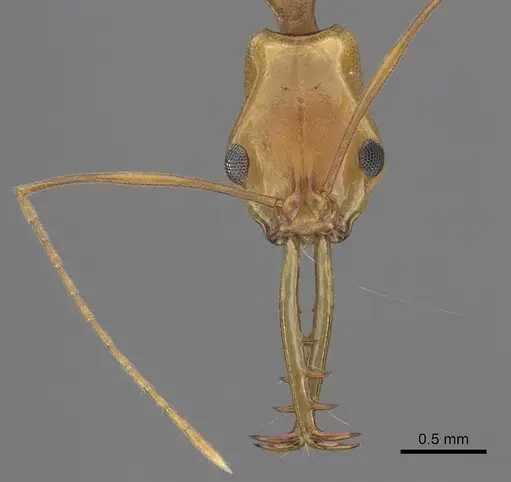
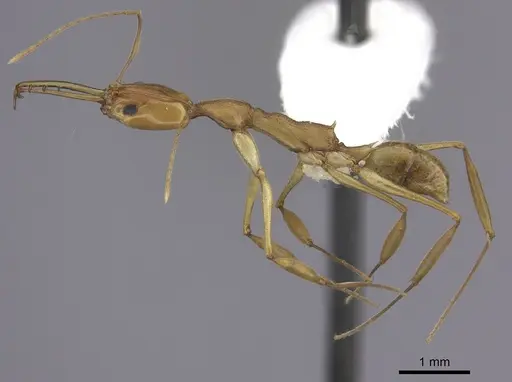
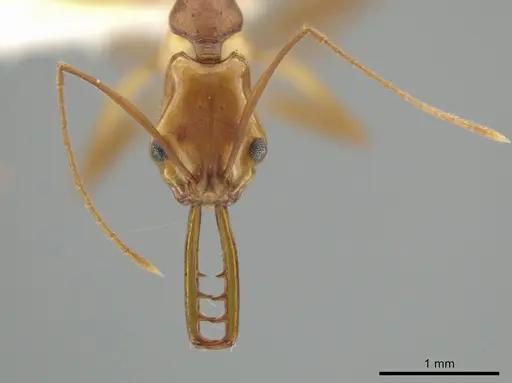
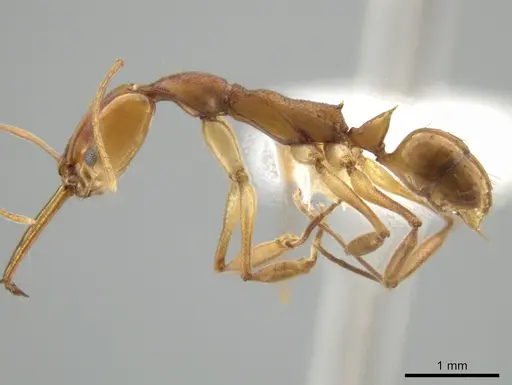
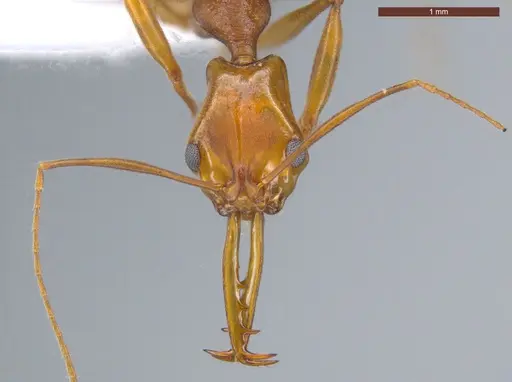
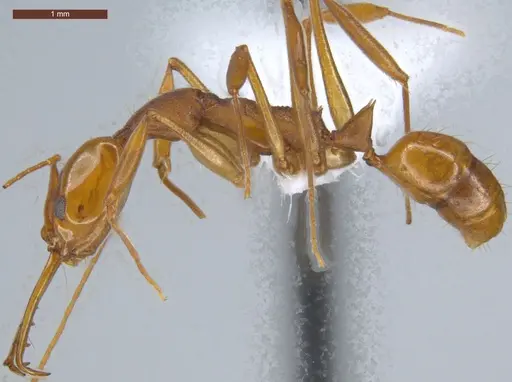
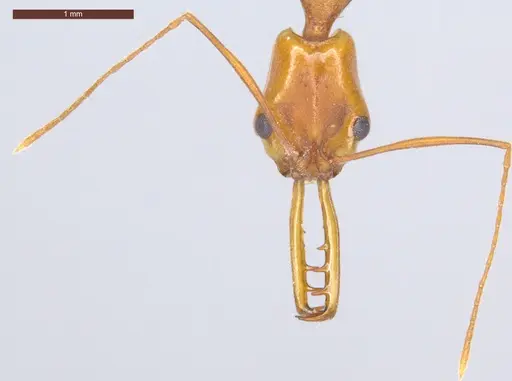
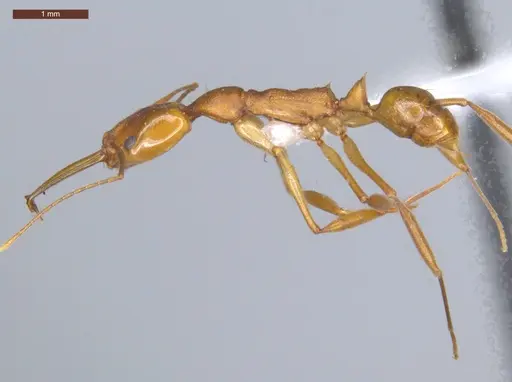
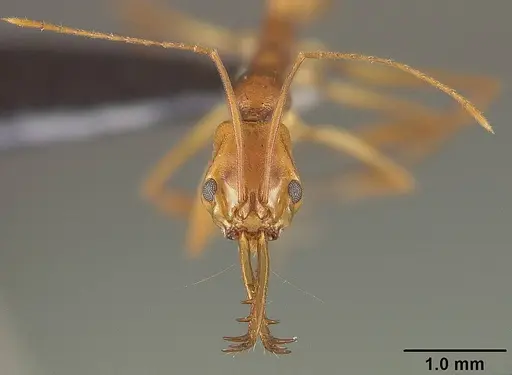
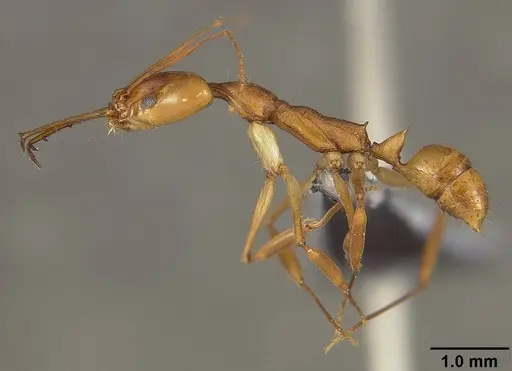
Anochetus horridus is a large trap-jaw ant found in the leaf litter and soil of Amazonian rainforests. Workers have distinctive mandibles with three large spine-like teeth along the inner edge before the tips, and measure over 2.2mm in head plus mandible length, making them relatively bulky for this genus . You can find them in Brazil, Colombia, French Guiana, and Venezuela, where they forage on the forest floor among decaying leaves and humus . Unlike their trap-jaw relatives, these ants have a slower strike, reaching about 13,000 radians per second - still incredibly fast, but not as explosive as some other Anochetus species . They also hold a genetic record within their group: they have 46 chromosomes, the highest number documented in their subtribe (Odontomachiti) . The original specimen used to describe this species was an ergatoid queen - a wingless reproductive that looks like a large worker - suggesting this species produces wingless replacement queens rather than typical winged forms .
Quick Summary
- Difficulty: Expert
- Origin & Habitat: Tropical rainforests of Brazil, Colombia, French Guiana, and Venezuela. Found in leaf litter, humus, and soil on the forest floor [3][1][4][5].
- Colony Type: Likely single queen, though ergatoid (wingless) replacement queens have been documented [7].
- Size & Growth:
- Queen: Size data unavailable, ergatoid (wingless) queens documented [7].
- Worker: Over 2.2mm in head plus mandible length [1][2], total body size inferred from Anochetus genus (~4-6mm).
- Colony: Size data unavailable.
- Growth: Growth rate data unavailable.
- Development: Development timeline unconfirmed. (Tropical species likely develop year-round without seasonal slowdowns.)
- Antkeeping:
- Temperature: 24-28°C year-round. Tropical rainforest species requiring stable warmth [6].
- Humidity: High humidity required. Keep nest substrate consistently moist but not waterlogged, mimicking damp leaf litter conditions [3][8].
- Diapause: No, tropical species active year-round [6].
- Nesting: Naturalistic setup with leaf litter layers, soil, or rotting wood. Narrow chambers preferred over open spaces [3].
- Behavior: Predatory trap-jaw hunter with slower strike mechanics than relatives. Ground-foraging and likely reclusive. Can sting but not aggressive toward humans. Escape prevention needed due to small size [3][1].
- Common Issues: founding behavior is unconfirmed, queens may need to forage or may seal themselves in, requiring observation to determine care strategy., specialist predatory diet makes feeding difficult, they require small live prey and may not accept dead insects or sugars., maintaining tropical humidity without mold growth requires careful ventilation and substrate management., slow growth and poorly documented biology mean long periods with minimal activity, requiring patience.
Natural History and Habitat
Anochetus horridus lives in the leaf litter and humus of pristine Amazonian rainforests. Researchers have collected them using Winkler extractors from forest floor samples in Brazil, French Guiana, and Colombia, showing they prefer the damp, decaying layer just above the soil [3][9][8]. They appear in both primary forest and secondary growth, and have been found in cocoa plantations adjacent to forest, suggesting some tolerance of disturbed habitat as long as leaf litter remains [10][9].
The climate across their range is tropical rainforest (Köppen classification Af), meaning year-round warmth and high humidity with no dry season [6]. They occur in various forest types including liana forest, plateau forest, and transition zones [11], always staying close to the ground rather than climbing into the canopy [3].
Trap-Jaw Mechanics and Hunting
Like all Anochetus, these ants have power-amplified trap-jaw mandibles that snap shut using stored elastic energy. However, Anochetus horridus shows slower strike kinematics than many relatives, reaching mean maximum rotational velocities around 13,000 radians per second and accelerations of 200 million radians per second squared [3]. This is still fast enough to capture prey, but less explosive than the strikes seen in Odontomachus or other Anochetus species.
The mandibles bear three large spine-like teeth on the inner margin before the tips, which help grip struggling prey [1][2]. Their large eyes suggest they hunt visually, likely targeting small soil arthropods such as springtails, mites, and tiny insect larvae. In captivity, you will need to provide small live prey, they probably will not accept dead insects or sugar water as their primary food.
Colony Founding and Reproduction
The founding behavior of Anochetus horridus has not been directly observed. The holotype specimen, the original individual used to describe the species, is an ergatoid queen, meaning a wingless reproductive that resembles a large worker [7]. This suggests the species produces wingless queens as their standard reproductive form, or at least as replacement reproductives if the primary queen dies.
Whether queens seal themselves in (claustral founding) or must forage during colony establishment (semi-claustral founding) remains unconfirmed. Most Anochetus species are semi-claustral, requiring the queen to hunt for food while raising her first workers. You should prepare for either possibility by offering small live prey to founding queens while providing a secure, humid chamber.
Housing and Nest Setup
Create a naturalistic setup that mimics damp leaf litter. A soil-based nest with layers of decaying leaves, rotting wood pieces, and a humid substrate works best. They need narrow chambers and tunnels, avoid tall, open spaces that trap-jaw ants generally dislike. The nest should have a moisture gradient, with one side damp and one side slightly drier so the ants can choose their preferred humidity.
Because they are small ants (despite being 'large' for their genus), use fine mesh or Fluon barriers to prevent escapes. Provide excellent ventilation to prevent mold in the humid conditions they require, but avoid drafts that dry out the substrate. A heating cable on one side of the nest can create a gentle temperature gradient, but keep the overall temperature within tropical ranges (24-28°C). [3]
Feeding and Diet
As specialist predators with trap-jaw mandibles, these ants require small live prey. Offer fruit flies, springtails, tiny cricket nymphs, or small soil mites. They may not recognize dead prey or sugar sources as food, especially during founding. Watch that prey is small enough for the workers to handle, despite their relatively large heads, they are still small ants.
Feed small amounts frequently rather than large boluses that could rot in the humid nest. Remove uneaten prey within 24 hours to prevent mold and mites. If the colony refuses food, try different prey types or smaller sizes until you find what triggers their hunting response.
Temperature and Seasonal Care
Maintain tropical temperatures year-round: 24-28°C during the day with a slight night drop to 22-24°C. They do not require hibernation or diapause, they evolved in equatorial forests with minimal seasonal variation [6].
Use a thermostat-controlled heating mat or cable on one side of the nest to create a gradient. Monitor temperatures carefully, overheating above 30°C can stress tropical species adapted to stable forest floor conditions. Humidity should remain high, mist the substrate when the surface begins to dry, but ensure water does not pool in the chambers.
Frequently Asked Questions
Can I keep Anochetus horridus in a test tube setup?
Yes, for founding queens, but provide more space than usual for trap-jaw ants and ensure you can introduce live prey without escapes. A small soil chamber or test tube with leaf litter substrate works better than a plain test tube.
How long until Anochetus horridus gets its first workers?
Development timeline is unconfirmed for this species. Based on related tropical Anochetus species, expect several months at 25-28°C, but this is an estimate.
Do Anochetus horridus ants need hibernation?
No. They come from tropical rainforests and remain active year-round. Keep them warm consistently.
What do Anochetus horridus eat?
Small live prey such as fruit flies, springtails, and tiny insect nymphs. They are specialist predators and may not accept dead insects or sugar water.
Are Anochetus horridus good for beginners?
No. They are expert-level ants due to their specialized predatory diet, tropical humidity requirements, and poorly documented biology.
Can I keep multiple Anochetus horridus queens together?
Not recommended. While ergatoid queens exist in this species, combining unrelated founding queens has not been documented and likely risks fighting.
Do Anochetus horridus ants sting?
Yes, like most ponerine ants they possess a stinger, though their small size means they pose little danger to humans.
What is the best nest type for Anochetus horridus?
A naturalistic setup with soil and leaf litter layers, or a Y-tong nest with narrow chambers and high humidity. Avoid acrylic nests with tall open spaces.
Why is my Anochetus horridus colony not growing?
Growth data is unavailable for this species. Ensure you are providing appropriate live prey and maintaining tropical temperatures and high humidity. Stress from improper conditions can halt brood development.
Report an Issue
The current care sheet is based fully on literature. See inconsistencies, or something that's incorrect? Please , it will be resolved after review from an admin. Contributing to the blogs tab also helps providing information, to make us be able to further improve the caresheets. Thank you for your support!
References

Esta ficha de cuidados é licenciada sob CC BY-SA 4.0 .
Blogs da comunidade
CASENT0260495
Ver no AntWeb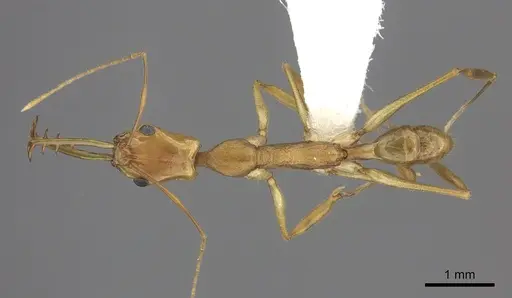
CASENT0646123
Ver no AntWeb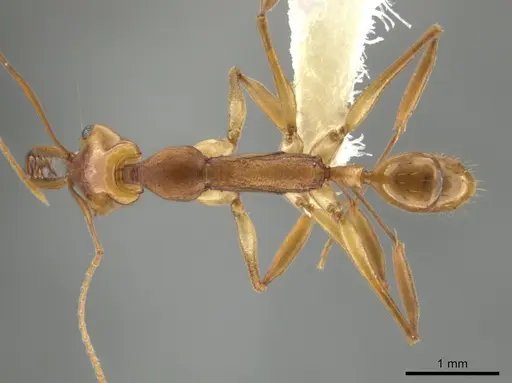
ECOFOG-MI15-0121-44
Ver no AntWeb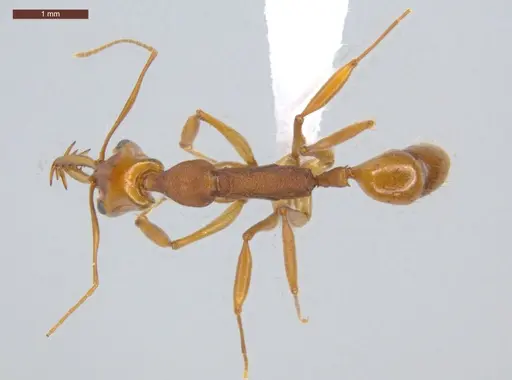
ECOFOG-SL13-0915-15
Ver no AntWeb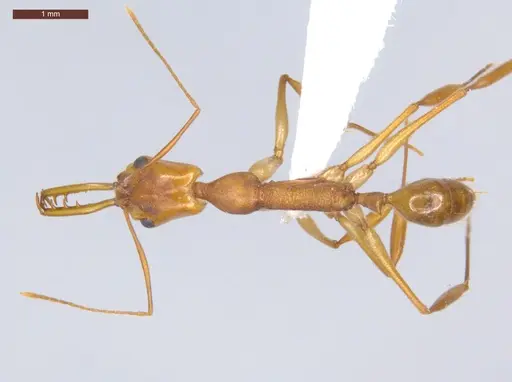
USNMENT00445957
Ver no AntWeb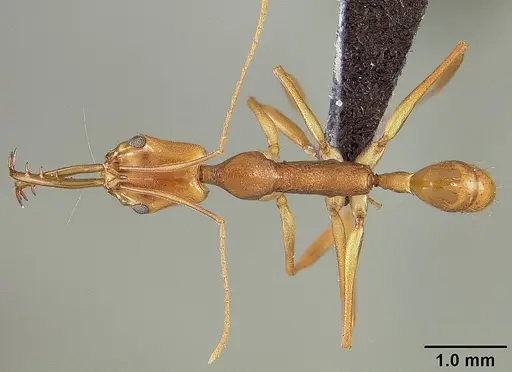
Literatura
A carregar mapa de distribuição...A carregar produtos...