
Amoimyrmex bruchi
- Nome cient.
- Amoimyrmex bruchi
- Tribo
- Attini
- Subfamília
- Myrmicinae
- Autor
- Forel, 1912
- Distribuição
- Encontrado em 0 países
Introdução
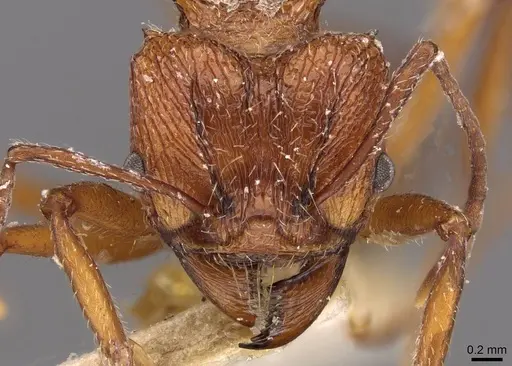
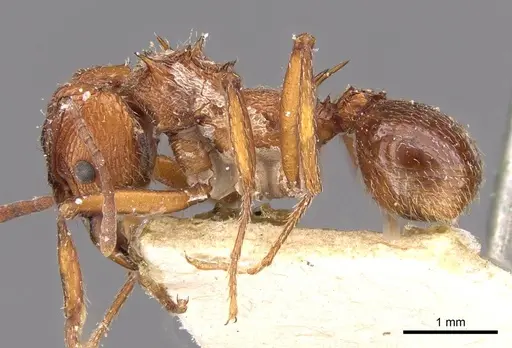
Amoimyrmex bruchi is a medium-sized leaf-cutting ant from South America. Workers range from 3.75 to 7.88 mm in total length and show reddish-brown to dark brown or black coloration, with distinctive spines on the pronotum and propodeum . Queens are larger at 9.85-10.69 mm total length . The species lives in dry, open habitats across the Chaco and Pampa regions of Argentina and into Bolivia, often found alongside the related Amoimyrmex silvestrii . As a member of the Attini tribe, these ants are fungus-growers. They cut fresh vegetation to cultivate gardens of symbiotic fungus, which serves as their primary food source. This makes their care requirements significantly different from typical pet ants, requiring specialized setups to maintain the fungus gardens that sustain the colony. Workers are slightly smaller and less shiny than their close relatives, and colonies produce alates only during specific seasonal periods .
Quick Summary
- Difficulty: Expert
- Origin & Habitat: Dry, open habitats in the Chaco and Pampa regions of Argentina, plus Bolivia [1][2]
- Colony Type: Likely single-queen based on typical leaf-cutter patterns, but unconfirmed for this species
- Size & Growth:
- Queen: 9.85-10.69 mm [1]
- Worker: 3.75-7.88 mm [1]
- Colony: Likely reaches thousands of workers based on fungus-growing ant biology, but maximum size unconfirmed
- Growth: Likely moderate to fast once fungus garden establishes, but development timeline unconfirmed
- Development: Estimated 6-10 weeks at 25-28°C based on related leaf-cutting ants, but unconfirmed for this species (First workers may emerge faster but smaller than subsequent workers. Timeline depends heavily on fungus garden health.)
- Antkeeping:
- Temperature: Warm tropical conditions, aim for 24-28°C based on classification as Tropical Climate Specialists [2] and typical fungus-growing ant requirements. Provide a gentle gradient.
- Humidity: High humidity essential, fungus gardens require consistent moisture. Keep nest substrate damp but not waterlogged, roughly 70-80% humidity, with good ventilation to prevent mold.
- Diapause: No, this is a tropical species that remains active year-round [1][2]
- Nesting: Fungus garden chambers required, not standard test tubes. Needs specialized leaf-cutter setup with substrate for fungus cultivation, drainage, and space for garden expansion.
- Behavior: Active foragers that cut vegetation and maintain complex trail systems. Moderate aggression when disturbed. Highly determined foragers require excellent escape prevention. Workers show size variation but less polymorphism than some other leaf-cutters [1].
- Common Issues: fungus garden collapse from mold contamination or desiccation, this kills the colony., offering inappropriate plant materials that the fungus won't digest or that contain toxins., insufficient humidity causing the fungus garden to dry out and die., poor ventilation leading to stagnant air and mold growth in humid fungus chambers., escape attempts, leaf-cutters are persistent foragers and will find gaps in inadequate barriers.
Fungus Garden Setup and Maintenance
Amoimyrmex bruchi requires a specialized setup designed for fungus-growing ants. Unlike most pet ants that live in test tubes or standard formicaria, leaf-cutters need chambers where they can cultivate their symbiotic fungus on fresh vegetation.
You will need a setup with two distinct zones: a humid fungus garden chamber and a drier foraging area. The fungus chamber needs substrate, typically a mix of leaf fragments and fungus, kept at high humidity (around 75-80%) but with gentle airflow to prevent mold. Use a transparent container so you can monitor the garden's health without disturbing it. The garden should show white, cottony growth when healthy, gray, green, or black patches indicate mold or contamination.
Provide a drainage layer or ensure excess moisture can escape, as waterlogged fungus dies quickly. The foraging area should connect to the garden chamber but remain drier to prevent leaf fragments from molding before the ants process them. Never allow the fungus garden to dry out completely, this will kill the colony within days. [1]
Feeding and Foraging
These ants do not eat the leaves they collect. Instead, they chew the vegetation into a pulp to grow gardens of edible fungus. You must provide fresh plant material constantly, without it, the fungus starves and the colony dies.
Offer fresh leaves, flowers, and petals from pesticide-free plants. They prefer soft, non-waxy vegetation. Roses, bramble leaves, and fresh grass work well for many leaf-cutters, though specific preferences for Amoimyrmex bruchi are unconfirmed. Avoid plants with strong oils or toxins like eucalyptus, citrus, or highly aromatic herbs. Remove old, dried-out plant material daily to prevent mold.
They also need a protein source for the brood and queen. In nature, they likely supplement their fungus diet with small amounts of plant sap or insect parts. You can offer tiny amounts of honey water or sugar water in the foraging area, but the fungus garden provides their primary nutrition. Do not overfeed sugars as this can promote mold in the humid nest environment. [1]
Temperature and Environmental Control
Keep Amoimyrmex bruchi warm. As Tropical Climate Specialists found in the Chaco and Pampa regions [2], they need temperatures around 24-28°C for optimal fungus growth and brood development. Use a heating cable or mat on one side of the nest to create a gentle gradient, allowing the ants to regulate the fungus garden temperature by moving brood to warmer or cooler spots.
Avoid temperatures below 20°C for extended periods, this slows fungus growth and can cause colony decline. Maximum safe temperatures are likely around 32-35°C, but keep the setup stable rather than fluctuating wildly.
Humidity is critical. The fungus garden needs consistent moisture, but stagnant air promotes mold. Use a well-ventilated lid with fine mesh to allow air exchange while maintaining humidity. Mist the fungus chamber lightly if the substrate surface begins to dry, but never let water pool in the garden. Check daily for condensation, too much indicates excessive moisture, none at all means too dry.
Colony Founding
Founding behavior for Amoimyrmex bruchi is unconfirmed in the available research. Based on typical patterns for fungus-growing ants in the Attini tribe, queens likely found colonies claustrally, sealing themselves in a chamber with a piece of fungus from their parent colony.
If you obtain a founding queen, provide a small, humid chamber with fungus substrate from the source colony. The queen will tend the fungus garden while her first workers develop. She does not forage during this period, she lives entirely on the fungus and her stored fat reserves. Do not disturb the founding chamber frequently as this stresses the queen and can contaminate the fragile young fungus garden.
First workers will be smaller than subsequent workers and will immediately begin foraging to expand the garden. Once you have 10-20 workers, the colony needs significantly more space and a constant supply of fresh vegetation. [1]
Behavior and Temperament
Amoimyrmex bruchi workers are active foragers that travel in distinct trails to harvest vegetation. They cut semicircular pieces from leaves using their sharp mandibles, then carry these fragments back to the nest. You will see long lines of workers carrying green fragments, this is normal foraging behavior, not aggression.
The species shows moderate aggression when the nest is disturbed. Workers may bite and can sting, as typical for ants in the Myrmicinae subfamily with functional stingers. They are less aggressive than some other leaf-cutting ants like Atta species.
Workers vary in size but show less dramatic size differences than some other leaf-cutters [1]. All workers can cut leaves and tend the fungus garden. The colony produces alates (winged reproductives) only during specific seasonal periods [1], suggesting nuptial flights follow a seasonal pattern in nature, though the exact timing is unknown.
Frequently Asked Questions
Can I keep Amoimyrmex bruchi in a test tube?
No. Leaf-cutting ants cannot be kept in standard test tubes. They require specialized setups with fungus garden chambers, proper humidity control, and space to process vegetation. Test tubes lack the volume and environmental stability needed for fungus cultivation.
How long until Amoimyrmex bruchi gets their first workers?
The exact timeline is unknown for this species. Based on related leaf-cutting ants, expect roughly 6-10 weeks from egg to first worker at 25-28°C, but this depends heavily on the health of the fungus garden and queen. Cooler temperatures will slow development significantly.
Are Amoimyrmex bruchi good for beginners?
No. These are expert-level ants. They require specialized fungus-growing setups, constant access to fresh vegetation, precise humidity control, and significant space as the colony grows. Beginners should start with easier species like Lasius or Camponotus.
Do Amoimyrmex bruchi need hibernation?
No. This is a tropical species from warm regions of Argentina and Bolivia. They remain active year-round and do not require diapause or winter rest. Keep them warm (24-28°C) throughout the year.
What do Amoimyrmex bruchi eat?
They eat fungus, not leaves. You provide fresh leaves, flowers, and plant material, which the ants chew into pulp to grow gardens of edible fungus. The fungus is their actual food source. They may also take small amounts of sugar water or honey water, but the fungus garden is essential for survival.
How big do Amoimyrmex bruchi colonies get?
The maximum colony size is unconfirmed for this species. Based on their biology as fungus-growing ants, they likely reach several thousand workers, but they probably remain smaller than massive Atta leaf-cutter colonies that can reach millions.
Can I keep multiple Amoimyrmex bruchi queens together?
Not recommended. Combining unrelated queens has not been documented for this species. Most leaf-cutting ants are monogyne (single queen), and queens will likely fight if placed together. Founding colonies with multiple queens (pleometrosis) is unconfirmed for Amoimyrmex bruchi.
Why is my Amoimyrmex bruchi fungus garden turning gray?
Gray, green, or black discoloration usually means mold contamination or the garden is dying. Check humidity levels immediately, too wet causes mold, too dry kills the fungus. Remove contaminated sections if possible, improve ventilation, and ensure you are not overfeeding or introducing contaminated plant material. A healthy garden should look white and cottony.
Report an Issue
The current care sheet is based fully on literature. See inconsistencies, or something that's incorrect? Please , it will be resolved after review from an admin. Contributing to the blogs tab also helps providing information, to make us be able to further improve the caresheets. Thank you for your support!
References

Esta ficha de cuidados é licenciada sob CC BY-SA 4.0 .
Blogs da comunidade
CASENT0909436
Ver no AntWeb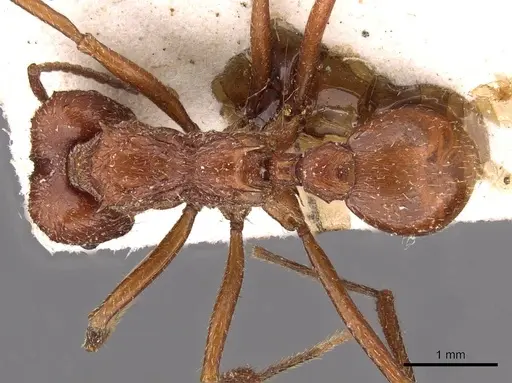
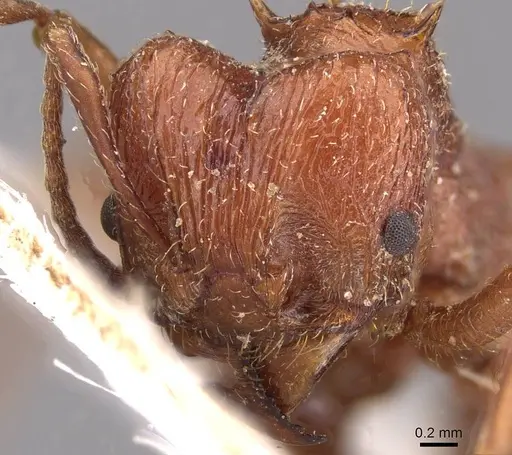
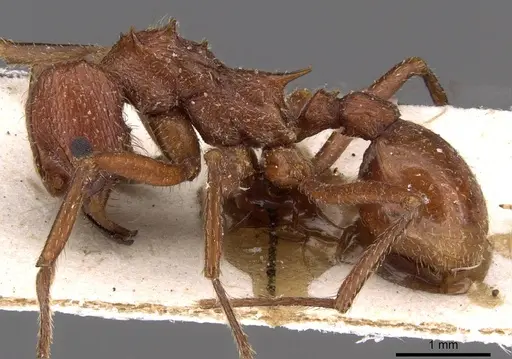
CASENT0909437
Ver no AntWeb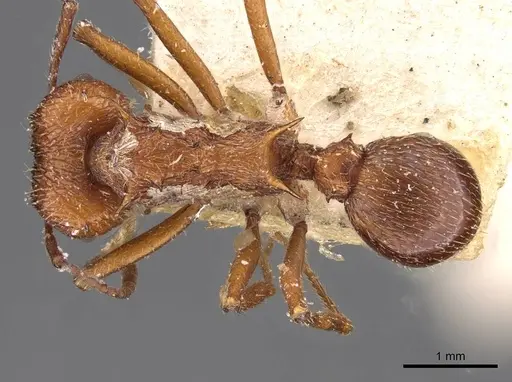
Literatura
A carregar mapa de distribuição...A carregar produtos...