
Aenictus pubescens
- Nome cient.
- Aenictus pubescens
- Subfamília
- Dorylinae
- Autor
- Smith, 1859
- Distribuição
- Encontrado em 0 países
Introdução
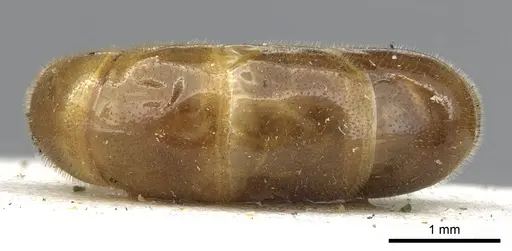
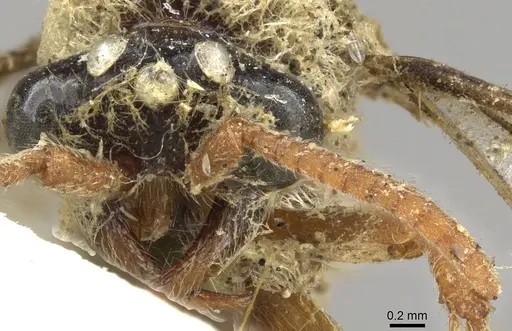
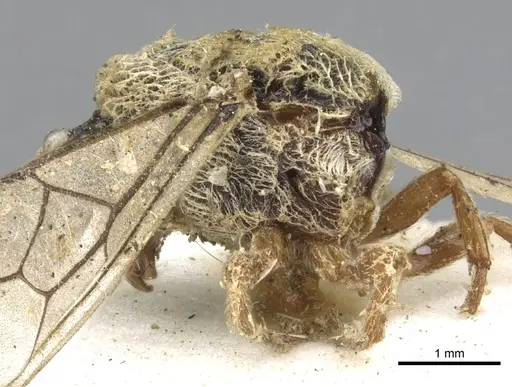
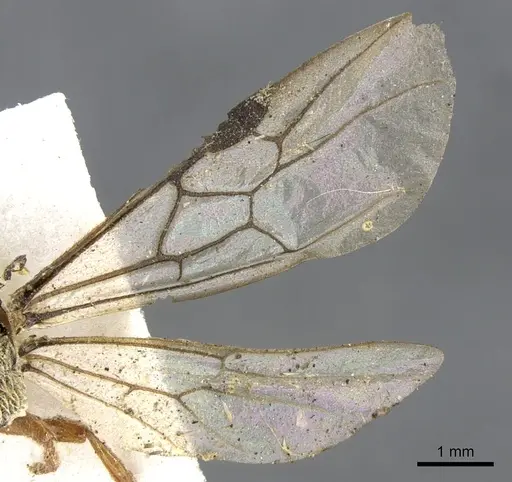
Aenictus pubescens is an army ant species endemic to northern and eastern India . Only the male caste has been formally described. Males measure about 7.5mm with a reddish-brown body covered in dense pale hairs, a black shiny head, and iridescent wings . Worker caste descriptions are unavailable in the current research. This species represents a significant antkeeping challenge. Like all army ants, they live in massive colonies and move constantly to hunt prey. They do not build permanent nests - instead, they form temporary bivouacs from living worker bodies. This nomadic lifestyle makes them nearly impossible to keep in standard ant-keeping setups.
Quick Summary
- Difficulty: Expert
- Origin & Habitat: India, specifically Arunachal Pradesh, Assam, Manipur, Sikkim, and West Bengal [1]. Inhabits tropical and subtropical forest regions.
- Colony Type: Unknown. Based on typical Aenictus genus patterns, likely single-queen colonies that reproduce through colony fission, but this is unconfirmed for this species.
- Size & Growth:
- Queen: Size data unavailable, only the male caste has been described.
- Worker: Size data unavailable, worker caste not described in available literature.
- Colony: Likely thousands of workers, inferred from typical Aenictus colony sizes.
- Growth: Unknown. Likely fast if temperature and food are adequate.
- Development: Unknown. Development time is unstudied for this species. (Cannot provide estimates as no species-specific data exists.)
- Antkeeping:
- Temperature: Unknown. Based on tropical Indian origin, likely need warm conditions around 24-28°C, but this is unconfirmed.
- Humidity: Unknown. Northeastern India has monsoon climates, so moderate to high humidity with damp substrate is likely appropriate.
- Diapause: Unlikely. Tropical origin suggests no winter diapause is needed [1].
- Nesting: Not applicable to standard captivity. In nature, they form bivouacs, temporary nests made of living worker bodies that move frequently.
- Behavior: Highly active nomadic raiders. They forage in coordinated groups and relocate the colony frequently. Escape prevention must be absolute due to their army ant nature.
- Common Issues: colonies require massive amounts of space and food that home setups cannot provide., nomadic behavior means they will abandon any standard nest quickly., collection is restricted as they are endemic to India [1]., specific care requirements remain completely unstudied., potential for painful stings exists, handle with extreme caution.
The Reality of Keeping Army Ants
Aenictus pubescens belongs to the army ant group. These ants do not live in permanent nests. Instead, they form bivouacs, temporary living structures made from the workers' own bodies that house the queen and brood. The colony moves constantly to find new prey, carrying their young with them.
This lifestyle makes them impossible to keep in standard ant farms, test tubes, or formicaria. They require massive, sealed arenas with soil substrates and constant access to large amounts of live prey. Even with perfect conditions, the colony will attempt to migrate, and they will escape any container that is not absolutely secure.
This species is not recommended for antkeepers. They are research subjects requiring specialized facilities, not pets. [2]
Natural History and Distribution
This species is endemic to India, specifically recorded from Arunachal Pradesh, Assam, Manipur, Sikkim, and West Bengal [1]. The original description was published in 1859 by Smith, based on a male specimen from northern India [3].
Only the male caste has been formally described in available literature. Males measure about 7.5mm and have a reddish-brown body covered in dense pale hairs, with a black shiny head and iridescent wings [2]. Worker caste descriptions are unavailable, which is not unusual for some army ant species where males are collected more frequently than workers during sampling.
Colony Structure and Reproduction
The exact colony structure of Aenictus pubescens is unknown. Based on patterns observed in other Aenictus species, colonies likely contain a single queen and reach sizes of thousands of workers. Army ants typically reproduce through colony fission rather than by single queens founding alone.
When a colony grows large enough, it splits into two groups. One group keeps the old queen while the other takes a new queen and leaves to form a new colony. This means you cannot start a colony from a single queen in a test tube, you would need to obtain an existing colony fragment with workers and brood already present.
Housing Requirements
Standard ant-keeping equipment will not work for this species. Test tubes are far too small. Formicaria with fixed chambers will be abandoned immediately as the colony tries to migrate.
If attempting to keep these ants, you would need a massive, sealed naturalistic setup, essentially a large terrarium with soil, good drainage, and absolute escape prevention. The setup would need to allow the colony to move as a group and form bivouacs. Maintaining proper humidity and temperature while preventing escape would be extremely difficult.
Most importantly, the colony would need constant access to food. Unlike most pet ants that can be fed every few days, army ants need daily prey items.
Feeding and Diet
The specific diet of Aenictus pubescens is unknown, but Aenictus species are specialized predators. They primarily hunt termites and other ants, overwhelming prey with sheer numbers.
In captivity, they would require massive amounts of live prey, likely termites, small crickets, or other insects, offered daily. They do not accept sugar water or standard ant foods as their primary diet. The quantity of food needed to sustain even a small army ant colony exceeds what most hobbyists can reasonably provide.
Temperature and Environment
Specific temperature requirements are unknown for this species. Coming from tropical India, they likely need warm, stable temperatures around 24-28°C [1]. They probably do not need hibernation given their tropical origin, but this is unconfirmed.
Humidity should likely be moderate to high, as northeastern India experiences monsoon seasons. Provide a damp substrate that holds moisture without becoming waterlogged. Always ensure good ventilation to prevent mold, though maintaining humidity in a large ventilated space is challenging.
Frequently Asked Questions
Can I keep Aenictus pubescens in a test tube?
No. Test tubes are far too small for army ants. They need massive spaces and will die in small containers.
How long until first workers for Aenictus pubescens?
Unknown. Development time is unstudied for this species. Without specific data, no estimate can be provided.
Are Aenictus pubescens legal to keep?
They are endemic to India [1]. Collecting them requires permits under Indian wildlife law. Do not collect wild colonies without proper authorization.
What do Aenictus pubescens eat?
Unknown specifically, but related army ants eat termites and other ants. They require massive amounts of live prey.
Do Aenictus pubescens need hibernation?
Unlikely. They come from tropical India where temperatures stay warm year-round [1].
Why are my Aenictus pubescens dying?
Likely because they are army ants being kept in inadequate conditions. They need huge spaces, constant food, and specific humidity. Most captive attempts fail.
How big do Aenictus pubescens colonies get?
Unknown exactly, but army ant colonies typically reach thousands of workers.
Can I start an Aenictus pubescens colony from a single queen?
Unknown. Army ants typically start new colonies by splitting, not by single queens founding alone. You would likely need to start with an existing colony fragment.
Report an Issue
The current care sheet is based fully on literature. See inconsistencies, or something that's incorrect? Please , it will be resolved after review from an admin. Contributing to the blogs tab also helps providing information, to make us be able to further improve the caresheets. Thank you for your support!
References

Esta ficha de cuidados é licenciada sob CC BY-SA 4.0 .
Blogs da comunidade
CASENT0902693
Ver no AntWeb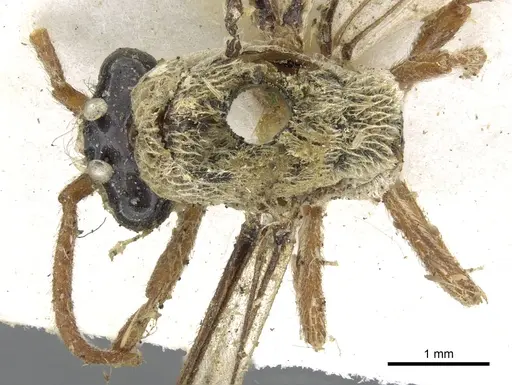
Literatura
A carregar mapa de distribuição...A carregar produtos...