
Aenictus nuchiti
- Nome cient.
- Aenictus nuchiti
- Subfamília
- Dorylinae
- Autor
- Jaitrong & Ruangsittichai, 2018
- Distribuição
- Encontrado em 1 países
Introdução
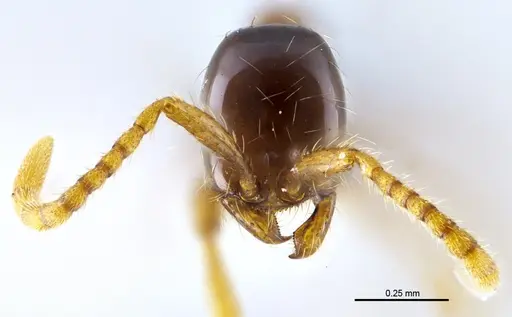
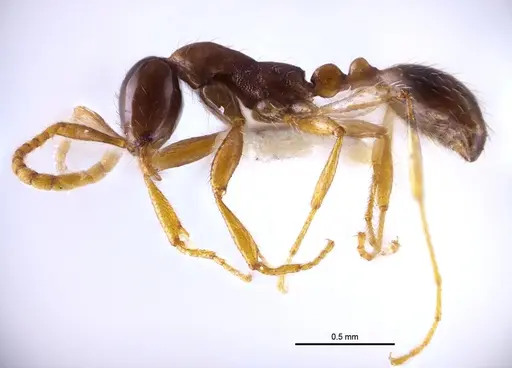
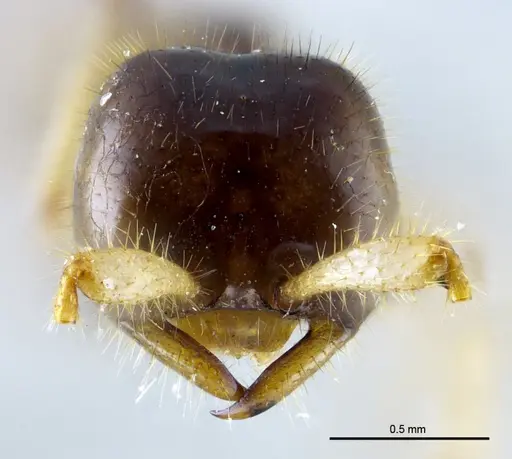
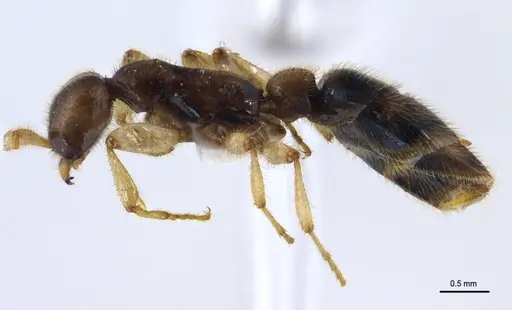
Aenictus nuchiti is a tiny army ant from northern Thailand, with workers measuring 2.24-2.41 mm in total length . Workers have dark brown heads, mesonotums, propodeums, and gasters, while their pronotums, antennae, and legs are reddish brown . This species belongs to the Dorylinae subfamily - the true army ants known for their nomadic lifestyle and bivouac nesting behavior [AntWiki]. This species was described in 2018 from dry dipterocarp forest in Chiang Mai Province at elevations of 350-1000m . It is sympatric with Aenictus artipus in this region . The type series was collected during the wet season from a bivouac under a large rotting log, with numerous pupae inside but no workers visible outside, suggesting the colony was in a stationary phase . This is an extremely rare species that presents nearly insurmountable challenges for captive keeping.
Quick Summary
- Difficulty: Expert
- Origin & Habitat: Northern Thailand (Chiang Mai Province), dry dipterocarp forest at elevations of 350-1000m [1]
- Colony Type: Army ant structure, colony organization unconfirmed for this species
- Size & Growth:
- Antkeeping:
- Temperature: Likely 24-28°C based on tropical dry dipterocarp forest habitat, inferred from habitat
- Humidity: Moderate humidity with access to damp rotting wood and leaf litter. Bivouacs require specific moisture levels to prevent desiccation while avoiding mold.
- Diapause: Likely no hibernation required, inferred from tropical distribution in Thailand
- Nesting: Bivouac-forming species requiring large spaces with rotting wood and leaf litter options. Standard formicariums and test tubes are completely unsuitable [1].
- Behavior: Nomadic army ant behavior with temporary bivouac formation. Workers are extremely small (under 2.5mm) creating severe escape risks. Predatory foraging behavior typical of the genus [1].
- Common Issues: escape prevention is nearly impossible, workers are only 2.2-2.4mm and can pass through standard mesh barriers and the tiniest gaps., army ants require massive foraging areas and constant food supply, they do not store food and colonies starve quickly without continuous prey., bivouac formation requires specific humidity and space conditions that are extremely difficult to replicate in captivity., nomadic behavior means colonies need to move their entire nest frequently, which standard ant keeping setups cannot accommodate., virtually no documented captive keeping successes exist for this genus, most attempts fail within weeks.
Nest Preferences and Bivouac Behavior
In the wild, Aenictus nuchiti forms temporary bivouacs, clusters of ants that hang together to form a living nest, rather than building permanent structures [1]. The type series was found under a large rotting log in dry dipterocarp forest at ca 1000m elevation during the wet season, with numerous pupae packed inside the bivouac but no workers visible outside [1]. This suggests they use concealed, humid microhabitats during their stationary phases.
For captive keeping, this presents extreme challenges. You cannot use standard test tubes or acrylic nests. Instead, you would need a very large, naturalistic setup with deep substrate, extensive rotting wood, and leaf litter to allow bivouac formation. The space must be large enough to accommodate their nomadic behavior, army ants do not stay in one place for long. Most keepers attempting army ants use massive terrariums or specially designed continuous-trail setups, though even these rarely succeed long-term.
Feeding and Diet
As army ants, Aenictus nuchiti are almost certainly obligate predators that hunt small arthropods. They do not store food, instead, workers forage continuously and bring prey directly to the larvae and queen. This means you must provide a constant supply of appropriate prey.
Given their tiny worker size (2.24-2.41 mm), they likely prey on minute soil arthropods: springtails, mites, small insect larvae, and possibly termites or other ant brood. You would need to introduce live prey into their foraging area daily or maintain cultures of small arthropods within their enclosure. They may not accept sugar water or typical ant foods like honey, as many army ants have lost the ability to process liquid sugars. Do not attempt to keep these ants unless you can provide a continuous supply of tiny live prey. [1]
Temperature and Humidity
Aenictus nuchiti comes from dry dipterocarp forest in northern Thailand at elevations of 350-1000m [1]. This suggests they prefer warm, tropical conditions with moderate humidity. Start with temperatures around 24-28°C and observe colony activity.
Humidity is critical for bivouac survival. The nest area should offer damp rotting wood and leaf litter that holds moisture without becoming waterlogged. You need enough humidity to prevent the bivouac from drying out (which kills the brood), but not so wet that mold takes over. A moisture gradient is essential, some areas should be quite damp while others are drier, allowing the ants to choose their preferred microclimate. Use a large water reservoir with a wicking system rather than misting, as army ants are sensitive to disturbance.
Behavior and Temperament
These ants display typical army ant behavior, they are nomadic, moving their bivouac frequently to new hunting grounds, and they form living bridges and structures with their bodies [1]. When disturbed, army ants typically swarm rather than fleeing, which can lead to escapes.
The extreme small size of Aenictus nuchiti workers (2.24-2.41 mm) makes escape prevention nearly impossible with standard ant keeping equipment. They can squeeze through the tiniest gaps in lids, around tubing, and through mesh that stops larger ants. If you attempt to keep them, you must use extremely fine mesh (much finer than standard stainless steel) and seal every joint with silicone or paraffin. Even then, escapes are likely.
The Reality of Keeping Army Ants
You should know that Aenictus nuchiti is essentially unkeepable with current ant keeping technology and knowledge. Army ants require massive spaces, constant food, specific humidity for bivouac formation, and tolerance for their nomadic lifestyle. There are no documented cases of hobbyists successfully maintaining Aenictus colonies long-term.
If you are determined to attempt keeping them, you would need: a room-sized enclosure with natural soil and litter, automated feeding systems for continuous prey delivery, specialized barriers to contain 2mm ants, and the ability to provide fresh rotting logs for bivouac formation. Even professional myrmecologists struggle to maintain army ant colonies in captivity. This species is best observed in the wild or studied through preserved specimens rather than attempted as a pet. [1]
Frequently Asked Questions
Can I keep Aenictus nuchiti in a test tube?
No. Army ants like Aenictus nuchiti form temporary bivouacs and require massive spaces with natural substrate. Test tubes are completely unsuitable and will kill the colony quickly [1].
How long until Aenictus nuchiti get their first workers?
The egg to worker timeline is unknown for this species. Army ants often reproduce by colony fission rather than single queen founding, so traditional founding timelines do not apply.
Are Aenictus nuchiti good for beginners?
Absolutely not. These are expert-level ants that require specialized equipment, massive space, and constant care. There are no documented successful captive colonies of this species.
What do Aenictus nuchiti eat?
They are likely obligate predators of tiny arthropods such as springtails, mites, and small insect larvae. They require constant live prey and may not accept sugar water or typical ant foods [1].
Do Aenictus nuchiti need hibernation?
Probably not. They come from tropical Thailand where temperatures remain warm year-round. However, specific seasonal requirements are unconfirmed.
How big do Aenictus nuchiti colonies get?
The maximum colony size is unknown. Army ants typically maintain colonies of hundreds to thousands of workers, but specific data for this species does not exist.
Can I keep multiple Aenictus nuchiti queens together?
Not recommended. Army ant colony structure is complex and involves specific reproductive strategies. Combining unrelated queens has not been documented and would likely result in fighting.
Why are my Aenictus nuchiti dying?
Captive mortality is extremely high for this species. Common causes include: insufficient space for bivouac formation, lack of continuous prey, incorrect humidity, or escape of workers. Most captive attempts fail within weeks.
When do Aenictus nuchiti have nuptial flights?
The timing of nuptial flights is unknown. The type series was collected in July during the wet season, but this does not indicate flight timing [1].
Report an Issue
The current care sheet is based fully on literature. See inconsistencies, or something that's incorrect? Please , it will be resolved after review from an admin. Contributing to the blogs tab also helps providing information, to make us be able to further improve the caresheets. Thank you for your support!
References

Esta ficha de cuidados é licenciada sob CC BY-SA 4.0 .
Blogs da comunidade
THNHM-I-02612
Ver no AntWeb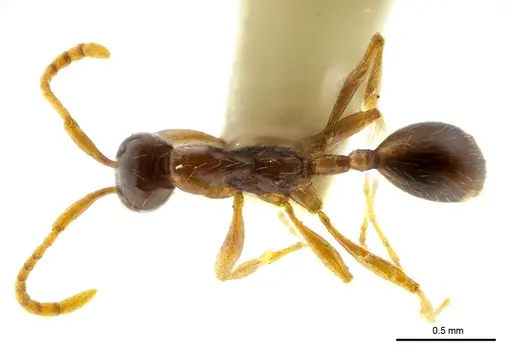
THNHM-I-02613
Ver no AntWeb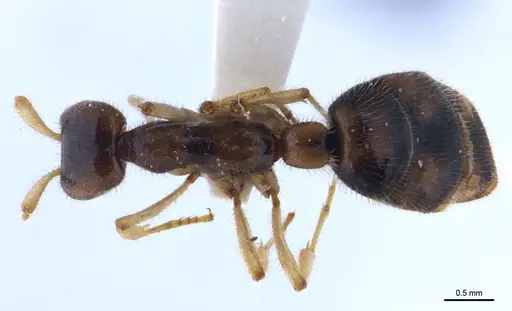
Literatura
A carregar mapa de distribuição...A carregar produtos...