
Zasphinctus caledonicus
- Nome científico
- Zasphinctus caledonicus
- Subfamília
- Dorylinae
- Autor
- Wilson, 1957
- Distribuição
- Encontrada em 1 países
Introdução
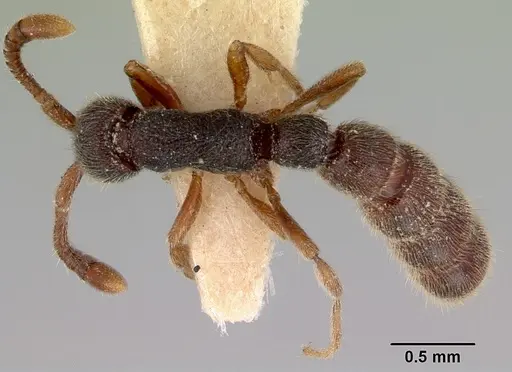
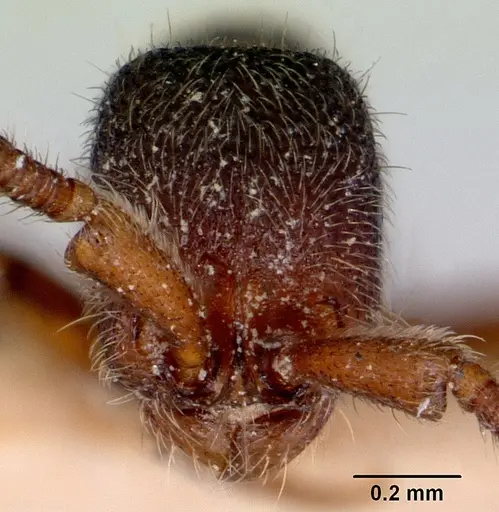
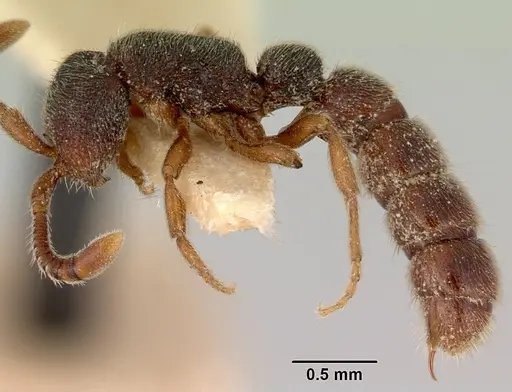
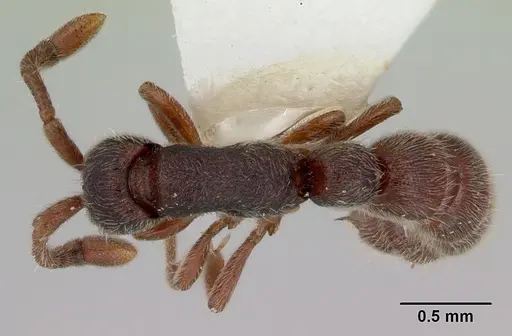
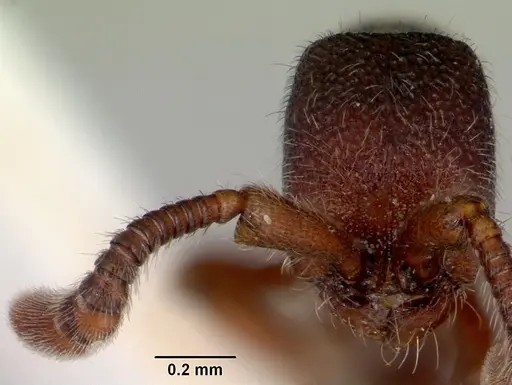
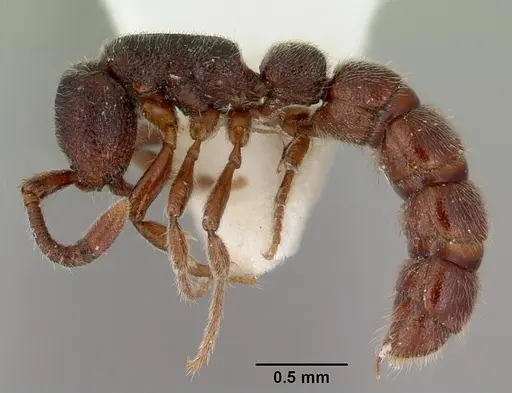
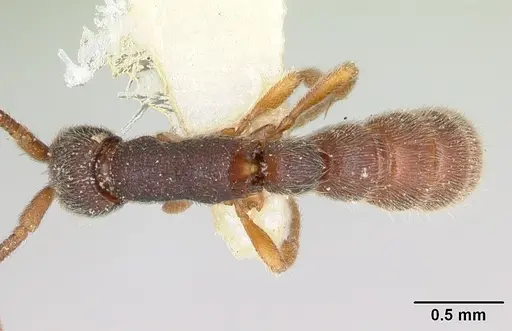
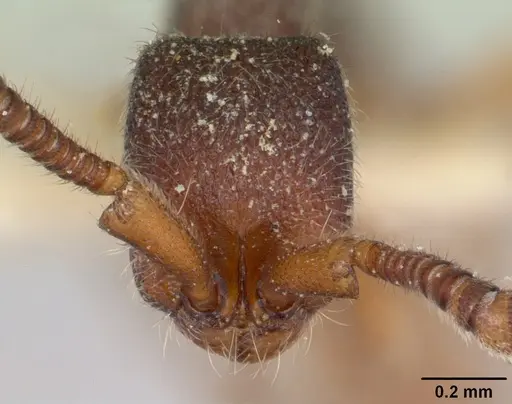
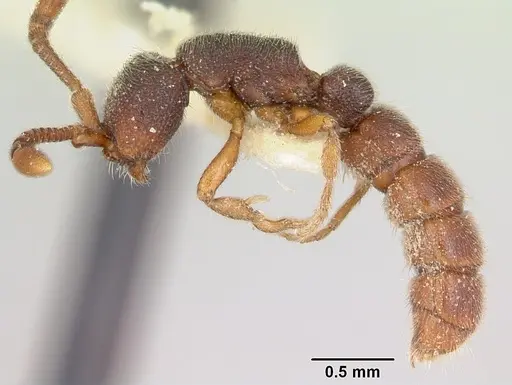
Zasphinctus caledonicus is a rare, tiny predatory ant found only on the island of New Caledonia. Workers are small (size data unavailable) and have a long, flexible body that lets them wrap around their brood. Unlike most ants, queens are ergatoid: wingless and worker-like, lacking compound eyes and ocelli. Colonies can reach impressive sizes of over 1000 workers. These ants are specialized hunters that raid other ant colonies (myrmecophagous), using organized attacks. Their behavior shares similarities with army ants, including synchronized brood development and a nomadic lifestyle.
Quick Summary
- Difficulty: Expert
- Origin & Habitat: New Caledonia. Found in small patches of broadleaf evergreen forest around 300 m elevation, under rocks embedded in soil. The original colonies were discovered in a disturbed cattle pasture near Ciu Falls. [1] [2]
- Colony Type: Ergatoid queen system, social structure not fully documented, but likely monogyne based on type material. Ergatoid queens are slightly larger than workers and serve as replacement reproductives. [1]
- Size & Growth:
- Queen: Size data unavailable (ergatoid queen is slightly larger than worker, but specific body length not documented). [1]
- Worker: Size data unavailable (workers are small). [1]
- Colony: Up to 1000+ workers (one documented colony had over 1000). [1]
- Growth: Moderate
- Development: Estimated 6-10 weeks at optimal temperature, based on related Dorylinae patterns. Brood development is highly synchronized. [1] (Brood development is synchronized across the colony, which means new workers emerge in batches rather than one by one. This is typical of army-ant behavior.)
- Antkeeping:
- Temperature: Warm and stable,24-28°C. As a tropical species, they need consistent warmth. Provide a gradient using a heating cable on one side of the nest.
- Humidity: High humidity. In nature they nest under rocks in moist forest soil. Keep the nest substrate consistently damp (like a squeezed sponge) but not waterlogged. Provide a water tube.
- Diapause: No. Tropical species from New Caledonia do not experience winter. Keep warm year‑round.
- Nesting: Soil cavities under rocks. In captivity, use a naturalistic setup with soil or a Y‑tong (AAC) nest with small, tight chambers. Avoid large open spaces, these ants like snug areas where they can form their characteristic brood clusters. [1] [3]
- Behavior: These ants are aggressive predators that raid other ant colonies. Despite their small size, they are fearless hunters. After a raid, they spend a lot of time grooming to remove toxic substances from prey. Workers and ergatoid queens wrap their flexible bodies around brood, forming dense round clusters. Escape risk is HIGH due to tiny size, use very fine mesh (0.5 mm or smaller) and seal all gaps. [1] [3]
- Common Issues: escape prevention is critical, they can squeeze through the smallest gaps., need a specialized diet of live ant prey, sugar water alone will not work., wild-caught colonies may carry parasites that can wipe out a captive set-up., high humidity can lead to mold if ventilation is poor., synchronized brood development means you may see long pauses between worker batches, this is normal.
Housing and Nest Setup
Zasphinctus caledonicus needs a nest that mimics its natural habitat: snug soil cavities under rocks. Use a Y‑tong (AAC) or plaster nest with small, low chambers, the ants are tiny and prefer tight spaces. Avoid tall or large chambers. Cover the nest with a dark sheet to reduce light. Provide a water tube for drinking. Escape prevention is essential: use fine mesh (0.5 mm) on all vent holes, seal lid edges with fluon, and check for gaps regularly. Keep the nest substrate moist but not waterlogged. [1] [3]
Feeding and Diet
This is a specialist ant‑eater (myrmecophagous). In the wild, it raids other ant colonies and carries off adults and brood. In captivity, you must provide live ant prey, wingless fruit flies, springtails, or small ant brood can work. Offer prey 2-3 times per week. Sugar water is not a staple, they may take it occasionally but don't rely on it. Fresh water must always be available. Remove uneaten prey within 24 hours to prevent mold. [1] [3]
Temperature and Seasonal Care
As a tropical species from New Caledonia, Zasphinctus caledonicus requires warm, stable temperatures, aim for 24-28°C. Use a heating cable on one side of the nest to create a gradient so the ants can choose their preferred spot. Do not place the cable directly under the nest to avoid drying it out. They do not need hibernation, keep conditions warm year‑round. Watch for signs of cold stress, if workers become sluggish and cluster, raise the temperature. Avoid large fluctuations. [1]
Behavior and Colony Dynamics
Zasphinctus caledonicus shows fascinating army‑ant‑like behavior. Workers and ergatoid queens wrap their long, flexible bodies around the brood, forming dense clusters that fill nest chambers. The colony conducts organized raids on other ant nests, capturing adults and brood. After raids, they spend a lot of time grooming to remove toxic chemicals from the prey (like formic acid). Brood development is highly synchronized, all larvae spin cocoons around the same time, leading to waves of new workers. [1]
Growth and Development
Colony growth is moderate but happens in pulses due to synchronized brood development. At the start, you may see a long founding phase (6-10 weeks) before the first workers appear. After that, expect batches of workers at intervals rather than steady growth. Mature colonies can surpass 1000 workers. The first workers (nanitics) are smaller than later ones. Be patient, this species is slow to establish but can become an impressive colony over several years. [1]
Frequently Asked Questions
Can I keep Zasphinctus caledonicus in a test tube?
A test tube is not suitable. They need a naturalistic set‑up with snug chambers that match their underground nesting style. Test tubes are too open and don't allow them to wrap their bodies around brood. [1]
What do Zasphinctus caledonicus eat?
They are specialized ant‑hunters, you must provide live ant prey or similar small arthropods (wingless fruit flies, springtails). Sugar water is not a primary food source. Offer prey 2-3 times a week. [1] [3]
How long until first workers in Zasphinctus caledonicus?
Expect about 6-10 weeks from egg to first worker at 24-28°C. Because brood development is synchronized, you'll likely get several workers emerging at once. [1]
Are Zasphinctus caledonicus good for beginners?
No, this is an expert‑level species. They need a specialized diet of live prey, high escape prevention, warm and humid conditions, and they have unusual colony dynamics. Not recommended for beginners.
How big do Zasphinctus caledonicus colonies get?
Colonies can reach over 1000 workers. One wild colony contained more than 1000 workers. With proper care, captive colonies can achieve similar sizes. [1]
Do Zasphinctus caledonicus need hibernation?
No. As a tropical species, they do not require hibernation. Keep them warm (24-28°C) all year. They may slow down in cooler periods, but do not cool them for dormancy.
Why are my Zasphinctus caledonicus dying?
Common causes: escape (they are tiny), improper diet (need live ant prey), temperatures too low, or parasites from wild colonies. Check for gaps, offer appropriate prey, and maintain warmth and humidity.
Can I keep multiple queens together in Zasphinctus caledonicus?
This species likely has a single queen per colony (monogyne). There is no evidence that multiple foundresses can coexist. Stick to one‑queen set‑ups. [1]
When to move Zasphinctus caledonicus to a formicarium?
Wait until the colony has about 20 workers and is actively foraging. Moving too early can cause stress. The new nest should have appropriately sized chambers and high humidity.
Report an Issue
The current care sheet is based fully on literature. See inconsistencies, or something that's incorrect? Please , it will be resolved after review from an admin. Contributing to the blogs tab also helps providing information, to make us be able to further improve the caresheets. Thank you for your support!
References

Este guia de cuidados está sob a licença CC BY-SA 4.0 .
Posts da comunidade
Literatura
Carregando mapa de distribuição...Carregando produtos...