
Vombisidris nahet
- Nome científico
- Vombisidris nahet
- Tribo
- Crematogastrini
- Subfamília
- Myrmicinae
- Autor
- Bolton, 1991
- Distribuição
- Encontrada em 0 países
Introdução
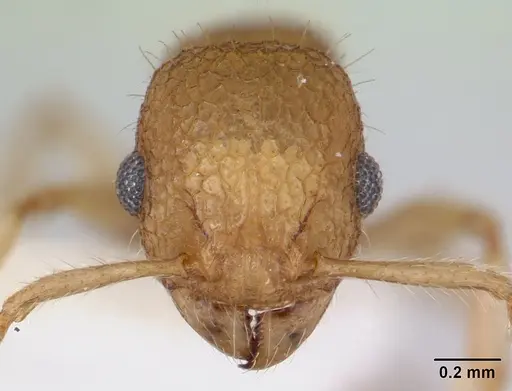
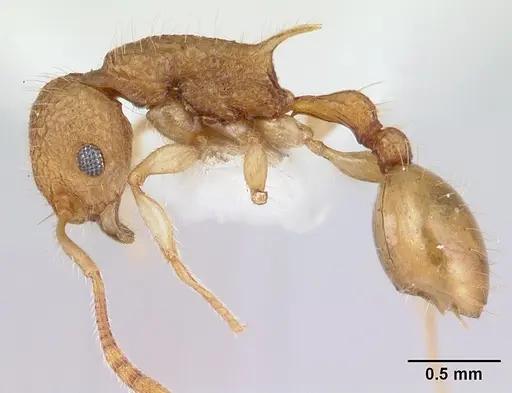
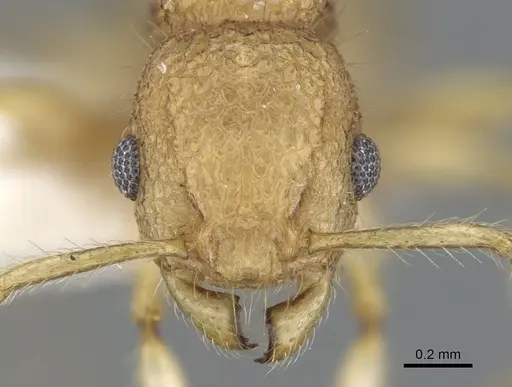
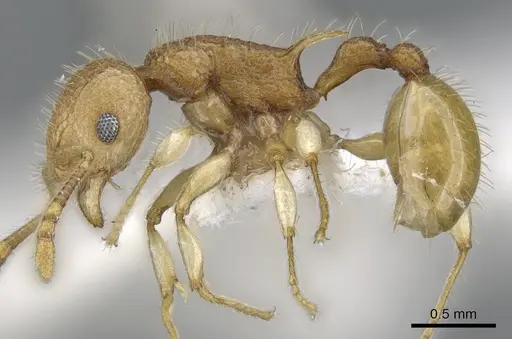
Vombisidris nahet is a small myrmicine ant species native to the Indonesian island of Sulawesi . Workers measure 3.8-4.1 mm in total length and have a distinctive yellow body with the gaster paler than the head and alitrunk . They feature very long, strongly arched propodeal spines that curve downward, and dense standing hairs on all dorsal surfaces . The eyes are large, with about 10 light-sensitive units (ommatidia) in the longest row . These ants were collected from vegetation at around 1000 m elevation in North Sulawesi, suggesting they are arboreal or at least climb plants frequently . This species remains poorly studied in captivity, with no documented information on colony structure, founding behavior, or specific care requirements. Based on related Vombisidris species, V. nahet is likely a nocturnal or crepuscular forager that nests in vegetation or hollow twigs in its natural habitat .
Quick Summary
- Difficulty: Unknown, Insufficient data for assessment
- Origin & Habitat: Sulawesi, Indonesia, collected from vegetation in lowland to mid-mountain forest at approximately 1000 m elevation [1]
- Colony Type: Unknown, colony structure has not been documented in scientific literature
- Size & Growth:
- Queen: Undescribed, queen caste has not been documented [1]
- Worker: 3.8-4.1 mm [1]
- Colony: Unknown, no colony size data available
- Growth: Unknown
- Development: Unconfirmed, no development data exists for this species (Development timeline is unconfirmed. Based on typical Myrmicinae patterns from similar tropical species, expect 4-8 weeks at warm temperatures, but this is purely an estimate.)
- Antkeeping:
- Temperature: Inferred: Keep at 24-28°C based on Sulawesi's tropical climate [1]. Use a heat mat on one side if needed, and monitor colony activity.
- Humidity: Keep the nest substrate consistently moist but not waterlogged. Ensure adequate ventilation to prevent mold.
- Diapause: Unlikely, Sulawesi is tropical with minimal seasonal temperature variation. No diapause requirement is expected, but colonies may show reduced activity during cooler periods.
- Nesting: Inferred: Being collected from vegetation suggests an arboreal or semi-arboreal nesting preference [1]. Likely nests in hollow twigs, stems, or under bark in captivity. A naturalistic setup with small chambers or a Y‑tong (AAC) nest with narrow passages would be appropriate.
- Behavior: Unknown, specific behavioral observations are not documented. Based on related Vombisidris species, likely nocturnal or crepuscular foragers [2]. The small worker size (3.8-4.1 mm) suggests moderate escape risk, standard barrier precautions are advisable. As a member of the Crematogastrini tribe, they possess a modified spatulate stinger used to smear venom onto enemies, rather than piercing.
Appearance and Identification
Vombisidris nahet workers are small ants measuring 3.8-4.1 mm in total length [1]. They have a distinctive yellow coloration with the gaster noticeably paler than the head and alitrunk [1]. The most striking features are the very long, strongly arched propodeal spines that curve distinctly downward [1]. The eyes are large, with about 10 ommatidia in the longest row [1]. All dorsal surfaces of the body bear dense standing pilosity (long hairs) [1]. The head has a rugoreticulum (net‑like wrinkle pattern) on the upper surface, and the sides of the mesonotum appear obtusely angular when viewed from above [1]. These morphological traits help distinguish V. nahet from other Vombisidris species in the region [3].
Distribution and Habitat
This species is currently known only from the Indonesian island of Sulawesi, specifically the northern region (Sulawesi Utara) [1][4]. Type specimens were collected from elevations around 1000 m in the Dumoga Bone National Park and Mount Mogogonipa areas [1]. The ants were collected from vegetation, suggesting they are arboreal or at least frequently climb on plants rather than nesting primarily in soil [1]. Sulawesi's climate is tropical humid with year‑round warm temperatures and high rainfall, and V. nahet appears to inhabit the cooler mid‑elevation zones [1].
Temperature and Care
Since Vombisidris nahet comes from tropical Sulawesi [1], keep them at warm temperatures in the range of 24-28°C. The island maintains relatively stable warm conditions year‑round, so these ants likely do not require temperature drops or cooling periods. A heating cable on one side of the nest can help maintain warmth if your room temperature runs cooler. Monitor colony activity, if workers seem sluggish, gradually increase temperature, if they avoid the heated area, reduce heat. Unlike temperate species, no hibernation or diapause period is expected. Room temperature in most homes (20-24°C) may be slightly cool, consider using a small heat mat to achieve optimal conditions. The queen and brood should be kept consistently warm for proper development.
Nesting and Housing
Based on the collection data showing these ants were found in vegetation [1], they likely prefer arboreal or semi‑arboreal nesting sites. In captivity, consider setups that mimic their natural habitat, small naturalistic setups with twigs, cork, or bark pieces work well. A Y‑tong (AAC) nest with narrow chambers can also be appropriate, though adding some vertical climbing space or small twigs helps them feel more at home. Keep the nest substrate moderately moist but not waterlogged, these are forest‑dwelling ants that prefer stable humidity. Ensure adequate ventilation to prevent mold growth, which can quickly kill small colonies. The workers are small (under 5 mm), so standard escape prevention measures apply, though they are not as prone to escaping as extremely tiny species.
Feeding and Diet
The specific diet of Vombisidris nahet has not been documented. As a myrmicine ant, it likely has a varied diet including small insects and sugary liquids. Based on typical Myrmicinae behavior, they probably accept small live prey like fruit flies, pinhead crickets, and other tiny arthropods. Sugar sources such as honey water or sugar water are likely accepted. Start with a combination of protein prey and sugar water, and observe what the colony accepts. Remove uneaten prey after 24-48 hours to prevent mold. Feed small amounts regularly rather than large infrequent meals. Since this species is poorly known, be prepared to experiment with different food types.
Colony Structure and Reproduction
The colony structure of Vombisidris nahet remains completely undocumented. The queen caste has not been described [1], and nothing is known about whether colonies are single‑queen (monogyne) or multi‑queen (polygyne). Nuptial flight timing and behavior are unrecorded. If you obtain a founding queen, observe her behavior carefully, claustral founding (queen sealing herself in) is common in Myrmicinae, but semi‑claustral behavior (queen leaving to forage) cannot be ruled out. Given how little is known about this species, any colony establishment data you gather would be scientifically valuable.
Frequently Asked Questions
How do I care for Vombisidris nahet ants?
Care for Vombisidris nahet is not well documented since this is a rarely kept species. Based on their origin in tropical Sulawesi [1], keep them warm (24-28°C), provide moderate humidity (keep nest substrate moist but not waterlogged), and offer a nest that accommodates their small size. They were collected from vegetation, so a naturalistic setup with small twigs or a Y‑tong nest works well. Feed small protein prey and sugar water. This species is not recommended for beginners due to the lack of documented care information.
What do Vombisidris nahet ants eat?
The specific diet of Vombisidris nahet is unknown. Based on typical Myrmicinae behavior and related species, they likely accept small live insects (fruit flies, pinhead crickets, springtails) and sugar sources (honey water, sugar water). Start with a varied diet and observe what they accept. Remove uneaten food promptly to prevent mold.
What temperature do Vombisidris nahet ants need?
Keep Vombisidris nahet at 24-28°C, reflecting their tropical Sulawesi origin [1]. They likely do not tolerate cool temperatures well. Use a small heat mat if needed, placed on one side of the nest to create a gentle temperature gradient. Avoid temperatures below 20°C.
Do Vombisidris nahet ants need hibernation?
No hibernation is expected or recommended. Sulawesi has a tropical climate with minimal seasonal temperature variation, so these ants likely remain active year‑round. However, they may show reduced activity during cooler periods.
How big do Vombisidris nahet colonies get?
Colony size for Vombisidris nahet is unknown. Based on typical Vombisidris species and small worker size (3.8-4.1 mm [1]), colonies likely remain relatively small, possibly under 100-500 workers. More data is needed to confirm maximum colony size.
Can I keep multiple Vombisidris nahet queens together?
This is unknown. The colony structure of Vombisidris nahet has not been documented, we don't know if they are monogyne (single queen) or polygyne (multiple queens). Do not attempt combining unrelated queens without specific knowledge of their social structure.
How long does it take for Vombisidris nahet to raise first workers?
The development timeline is unconfirmed for this species. Based on typical Myrmicinae patterns for tropical species, expect 4-8 weeks from egg to worker at optimal warm temperatures (around 26°C). This is a rough estimate, actual timing may vary.
Are Vombisidris nahet ants good for beginners?
No, this species is not recommended for beginners. There is virtually no documented care information available, making proper husbandry very challenging. The lack of information on diet, colony structure, and specific requirements means keeping this species successfully is difficult. Choose more established species like Lasius, Camponotus, or Messor for beginner‑friendly options.
Do Vombisidris nahet ants sting?
As a member of the Crematogastrini tribe, Vombisidris nahet possesses a modified spatulate stinger used to smear venom onto enemies rather than piercing. Given their small size (under 5 mm), the chemistry is likely mild to humans. Handle gently and avoid provoking the colony.
What nest type is best for Vombisidris nahet?
Based on their collection from vegetation [1], a naturalistic setup with small twigs, cork, or bark pieces mimics their natural habitat. A Y‑tong (AAC) nest with narrow chambers also works. Keep the nest moderately moist and ensure good ventilation. Avoid large, open spaces, they prefer tight, enclosed chambers.
Where is Vombisidris nahet found?
Vombisidris nahet is known only from the Indonesian island of Sulawesi, specifically the northern region (Sulawesi Utara) [1][4]. They were collected at approximately 1000 m elevation in forest environments [1].
Is Vombisidris nahet available in the antkeeping hobby?
Vombisidris nahet is very rarely available in the antkeeping hobby. This species is known from limited specimens and has not been commonly collected or traded. Most antkeepers will not encounter this species for sale. Related Vombisidris species are also infrequently kept.
Report an Issue
The current care sheet is based fully on literature. See inconsistencies, or something that's incorrect? Please , it will be resolved after review from an admin. Contributing to the blogs tab also helps providing information, to make us be able to further improve the caresheets. Thank you for your support!
References

Este guia de cuidados está sob a licença CC BY-SA 4.0 .
Posts da comunidade
CASENT0178735
Ver no AntWeb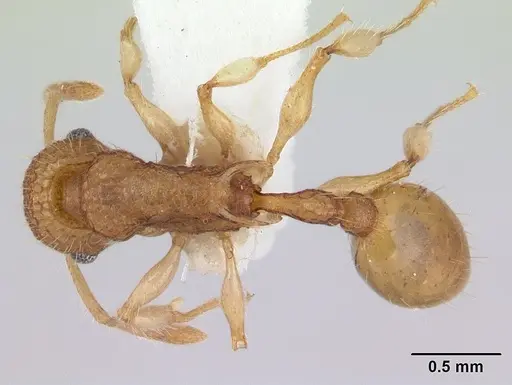
CASENT0901992
Ver no AntWeb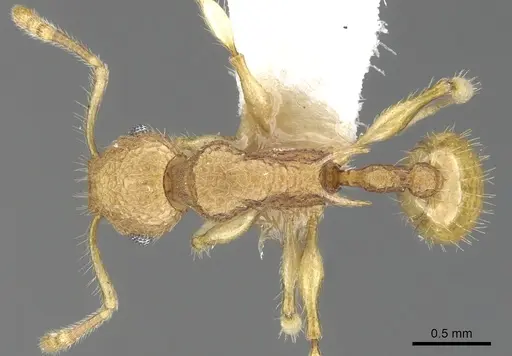
Literatura
Carregando mapa de distribuição...Carregando produtos...