
Vombisidris acherdos
- Nome científico
- Vombisidris acherdos
- Tribo
- Crematogastrini
- Subfamília
- Myrmicinae
- Autor
- Bolton, 1991
- Distribuição
- Encontrada em 1 países
Introdução
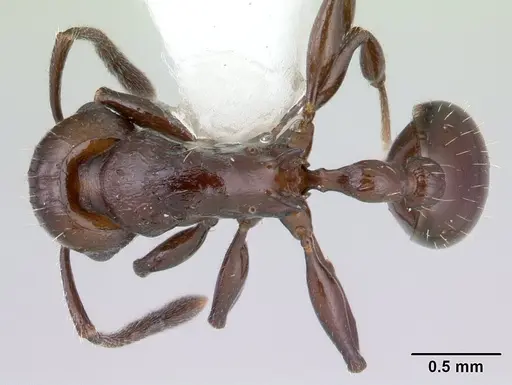
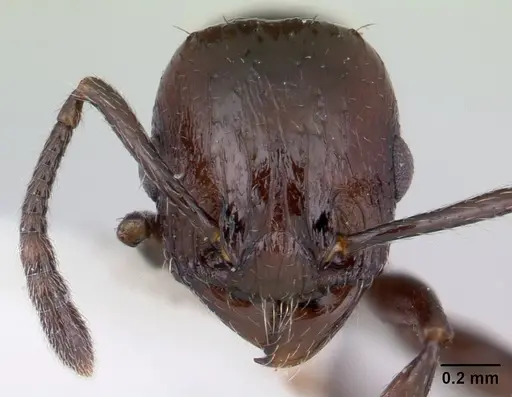
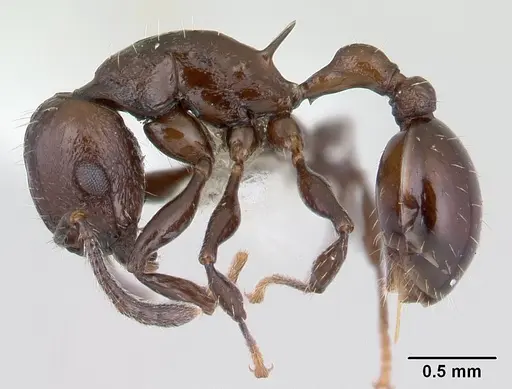
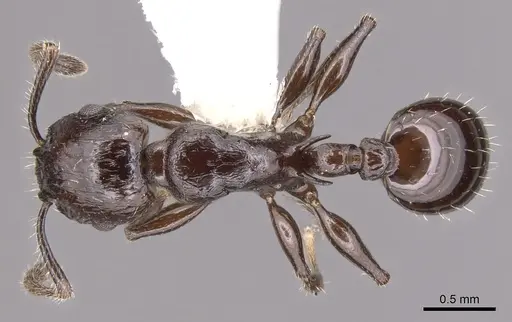
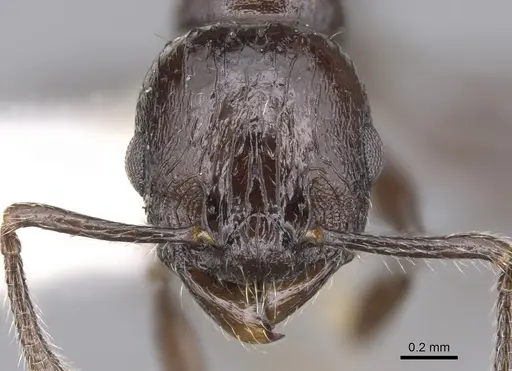
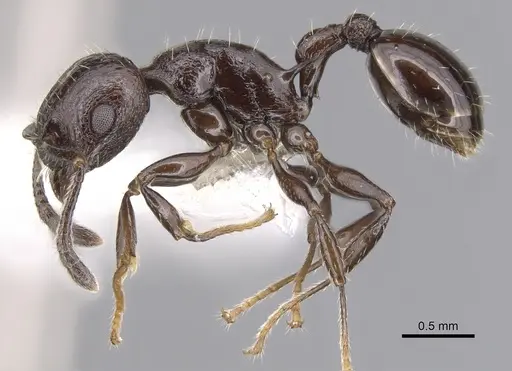
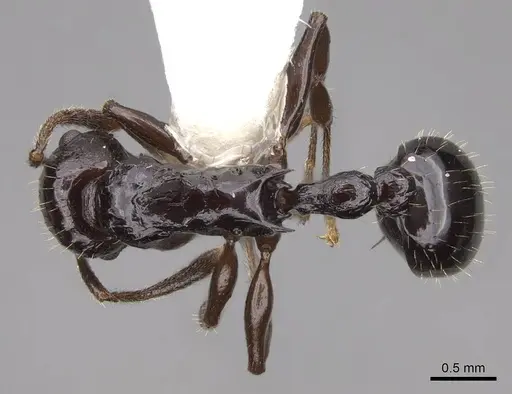
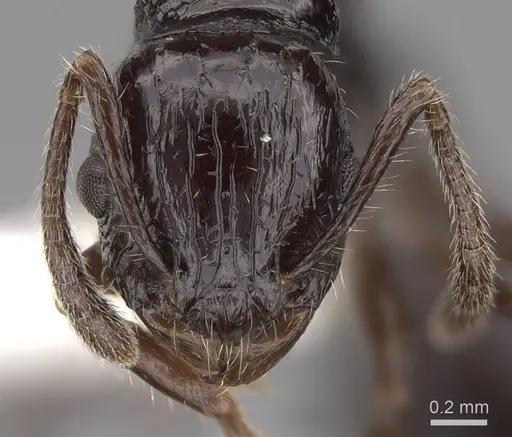
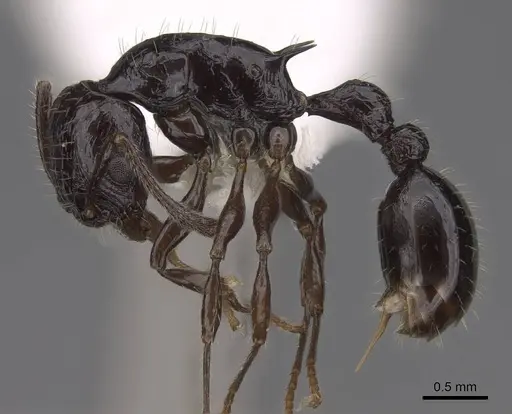
Vombisidris acherdos is a small, dark brown ant species native to the montane forests of Papua New Guinea. Workers measure about 4.2-4.4mm in total length, with large eyes that have 14 ommatidia in the longest row . The species was described from just two worker specimens collected in 1980 at 2000m elevation in the Kundiawa region, indicating it prefers cool, humid highland forest . It belongs to the bilongudi species group of Vombisidris, a genus distributed across the Australasian region with a concentration in New Guinea . This is one of the most poorly documented ant species in the world. Only two workers have ever been recorded, and no queens, males, or colony samples exist. Almost nothing is known about its biology, behavior, or captive care. Keepers interested in this species should expect entirely experimental husbandry with no established protocols.
Quick Summary
- Difficulty: Expert
- Origin & Habitat: Papua New Guinea, montane forest at 2000m elevation near Kundiawa [1]. The region has cool temperatures and high humidity typical of tropical highlands.
- Colony Type: Unknown, only two worker specimens have ever been collected, with no colony samples or queen documentation available. Colony structure cannot be determined from available data.
- Size & Growth:
- Queen: Undescribed, no queens have been collected or documented [1].
- Worker: ~4.2-4.4mm total length [1].
- Colony: Unknown, no colony data exists.
- Growth: Unknown, no development data exists for this species.
- Development: Unconfirmed, no breeding or development data exists. Estimates based on typical Myrmicinae (6-10 weeks at optimal temperature) are entirely speculative. (No direct data available. Development timeline is completely unknown.)
- Antkeeping:
- Temperature: Based on the highland collection location (2000m elevation), temperatures are likely cool. Start around 18-22°C as a best guess, but this is unconfirmed. Avoid overheating.
- Humidity: Montane forest habitat suggests high humidity needs. Keep nest substrate consistently moist but not waterlogged. Provide a humidity gradient so ants can self-select their preferred zone.
- Diapause: Unknown, no data on seasonal activity or diapause behavior exists for this species.
- Nesting: No natural nesting data exists, the type specimens were collected on low vegetation, not from a nest. Keepers may try naturalistic setups with soil or Y-tong/plaster nests that retain moisture, but all housing is experimental.
- Behavior: Behavior is completely unstudied. Large eyes may indicate visual hunting, but this is speculation. Escape risk is moderate given worker size around 4mm, standard barrier methods should work. No aggression data exists.
- Common Issues: complete lack of documented captive care means all husbandry is experimental, no known food preferences, acceptance of standard ant foods is uncertain, highland origin means temperature management is critical, overheating would likely be fatal, no colony samples available, wild collection is the only option and may be illegal or impractical, extremely rare in the hobby with no established care protocols
Species Background and Identification
Vombisidris acherdos was described by Barry Bolton in 1991 from just two worker specimens collected in Papua New Guinea. The type locality is 6km northeast of Kundiawa at 2000m elevation in montane forest [1]. This makes it a highland species, distinctly different from many tropical ants that prefer warmer, lowland conditions. Workers are uniform dark brown and measure 4.2-4.4mm total length. The species is distinguished by its incomplete subocular groove (running only from the mandibular insertion to the anterior margin of the eye) and its membership in the bilongudi species group [2][3]. The large eyes (14 ommatidia) suggest this genus may rely more on visual cues than some other Myrmicinae [1].
Habitat and Environmental Considerations
The type locality at 2000m elevation in the Papua New Guinea highlands provides important clues about this species' environmental needs. Highland montane forests are characterized by cooler temperatures, higher humidity, and more moderate conditions than lowland tropical areas. This species should NOT be treated as a typical tropical ant requiring warm temperatures. Instead, aim for cooler conditions, roughly 18-22°C, which is closer to what they would experience in their natural habitat. The humidity should be kept high, mimicking the damp montane forest floor. Avoid placing the colony in direct heat or dry environments [1].
Housing and Nesting
No documented captive nesting preferences exist for this species. The type specimens were collected on low vegetation, not from a nest, so even their natural nesting site is unknown [1]. A naturalistic setup with moist substrate or a humidity-retaining nest (Y-tong or plaster with water reservoir) would be appropriate starting points. The key is maintaining consistent humidity without allowing the nest to become waterlogged. Provide a gradient so the ants can move between more humid and slightly drier areas as needed. Given the complete lack of captive data, keepers should be prepared to experiment with multiple nest types and humidity levels while monitoring ant behavior.
Feeding and Nutrition
No documented feeding observations exist for Vombisidris acherdos. Based on typical Myrmicinae behavior, they likely consume a mix of small insects and sugary substances. However, with no confirmed data, keepers should approach feeding experimentally. Start with small live prey (fruit flies, pinhead crickets, mealworms) and sugar water or honey diluted with water. Observe acceptance carefully. Given their small size (around 4mm), prey items should be appropriately scaled. Do not assume they will accept standard ant foods, their highland habitat may have led to specialized dietary needs.
Challenges and Experimental Care
This is one of the most poorly documented ant species in the hobby. There are no established care protocols, no documented captive colonies, and essentially no scientific literature on its biology beyond the original description. Keepers attempting to maintain this species are pioneering entirely experimental husbandry. Key challenges include: determining appropriate temperature (likely cooler than typical), establishing food acceptance, maintaining proper humidity without causing mold issues, and potentially locating specimens for collection. Success with this species would represent a significant contribution to antkeeping knowledge. Document your observations carefully and consider sharing findings with the antkeeping community [1].
Frequently Asked Questions
How do I care for Vombisidris acherdos ants?
Care is entirely experimental since this species has never been documented in captivity. Based on their highland origin (2000m elevation in Papua New Guinea), keep them cooler than typical tropical ants, around 18-22°C with high humidity. Start with a naturalistic setup or Y-tong nest with good moisture retention. This is an expert-level species requiring significant experience with experimental antkeeping [1].
What do Vombisidris acherdos eat?
Food preferences are completely unknown, no feeding observations have ever been documented for this species. Based on typical Myrmicinae, they likely accept small insects and sugar sources, but this is speculative. Keepers should experiment with small live prey and diluted sugar water while monitoring for acceptance.
What temperature do Vombisidris acherdos need?
Based on their montane forest habitat at 2000m elevation, they prefer cooler conditions than typical tropical ants. Aim for 18-22°C rather than the warm temperatures many ant species require. Avoid overheating and provide a temperature gradient if possible [1].
How big do Vombisidris acherdos colonies get?
Colony size is completely unknown, no colony samples have ever been documented. Only two individual workers have ever been collected. No data exists for related species either. It is unknown if colonies are small or large [1].
Where is Vombisidris acherdos found?
This species is known only from Papua New Guinea, specifically from the Kundiawa region at approximately 2000m elevation in montane forest [1]. The species was described from two workers collected in 1980.
Is Vombisidris acherdos suitable for beginners?
No, this species is not suitable for beginners. It is extremely poorly documented with no established care protocols, no documented captive colonies, and essentially no biological data. Keeping this species successfully would require expert-level antkeeping experience and significant willingness to experiment. Beginners should start with better-documented species.
Do Vombisidris acherdos ants sting?
This species belongs to the Myrmicinae tribe Crematogastrini, which uses a venom-smearing defense rather than stinging. However, no specific defensive behavior has been observed for V. acherdos. Assume they may smear venom if threatened, but actual defense is unknown.
How long does it take for Vombisidris acherdos to develop from egg to worker?
Development timeline is completely unconfirmed, no breeding or development data exists for this species. Estimates based on related Myrmicinae suggest 6-10 weeks at optimal temperature, but this is entirely speculative. There is no documented egg-to-worker timeline.
Can I keep multiple Vombisidris acherdos queens together?
Colony structure is unknown, no queen specimens have ever been collected or documented. Whether they are single-queen (monogyne) or multi-queen (polygyne) species cannot be determined from available data. Do not attempt combining unrelated queens without any framework for understanding their social structure.
Is Vombisidris acherdos available in the antkeeping hobby?
This species is extremely rare in the antkeeping hobby, likely virtually unavailable. Only two worker specimens have ever been documented in scientific literature. Obtaining this species would require wild collection in Papua New Guinea, which may be legally restricted or practically difficult. Even if obtained, the complete lack of captive care knowledge makes successful maintenance extremely challenging [1].
Report an Issue
The current care sheet is based fully on literature. See inconsistencies, or something that's incorrect? Please , it will be resolved after review from an admin. Contributing to the blogs tab also helps providing information, to make us be able to further improve the caresheets. Thank you for your support!
References

Este guia de cuidados está sob a licença CC BY-SA 4.0 .
Posts da comunidade
Literatura
Carregando mapa de distribuição...Carregando produtos...