
Veromessor pseudolariversi
- Nome científico
- Veromessor pseudolariversi
- Tribo
- Stenammini
- Subfamília
- Myrmicinae
- Autor
- Johnson <i>et al.</i>, 2022
- Distribuição
- Encontrada em 1 países
Introdução
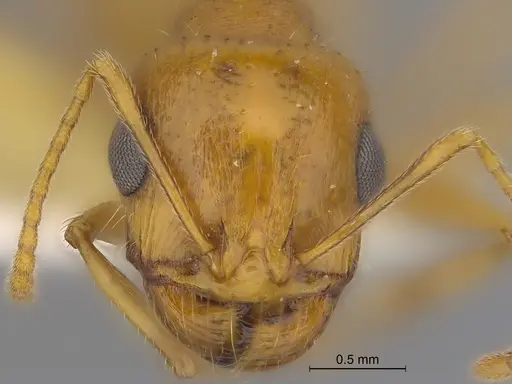
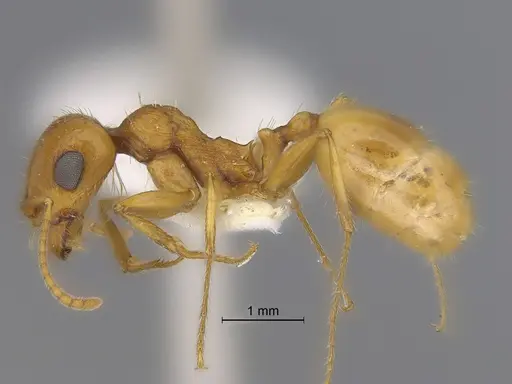
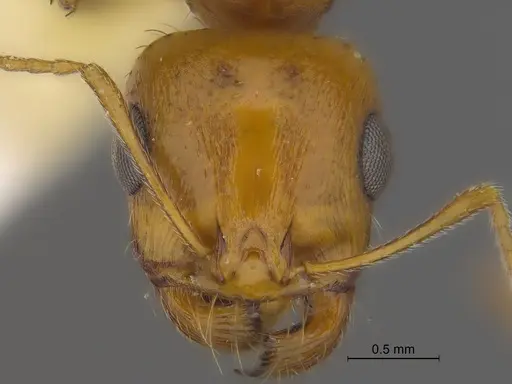
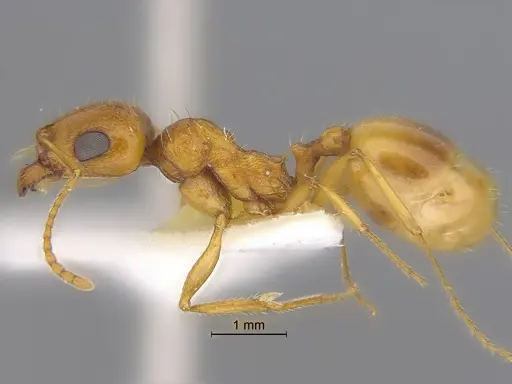
Veromessor pseudolariversi is a small seed-harvester ant from the deserts of the southwestern United States. Workers are light yellowish to yellowish-orange, sometimes with a slightly darker gaster. They have a distinctive psammophore - a row of J-shaped hairs on the underside of the head that helps move sand and debris. Workers are monomorphic, meaning all workers are the same size . This species was only described in 2022,a recent addition to ant taxonomy . These ants are solitary, nocturnal foragers that collect seeds at night . They build polydomous nests - multiple underground entrance holes connected by tunnels, sometimes with small crater-like tumuli around entrances . Colonies are relatively small, reaching up to about 1,000 workers at maximum . They occur in mid-elevation desert habitats of the Great Basin and Mojave regions .
Quick Summary
- Difficulty: Medium
- Origin & Habitat: Native to the southwestern United States (Nevada, California). Found at elevations of 1,145-1,305 meters in Great Basin shrub steppe, Mojave Desert, and Western short grasslands ecoregions [1][2].
- Colony Type: Presumably monogynous, colonies appear to have a single queen [1]. Colony size reaches up to about 1,000 workers [1].
- Size & Growth:
- Queen: Size data unavailable
- Worker: Size data unavailable
- Colony: Up to about 1,000 workers [1]
- Growth: Moderate, small colony size suggests slow to moderate growth
- Development: Unknown, no specific data for this species. If based on related Veromessor, may take 6-10 weeks at warm temperatures. (Development time is estimated since direct observations are lacking.)
- Antkeeping:
- Temperature: Desert species, tolerates warm conditions. Keep nest area at around 22-28°C with a slight gradient [2]. Avoid heat above 35°C. A heating cable on one side helps.
- Humidity: Low to moderate, desert adapted. Keep nest substrate mostly dry, with only slightly damp areas for brood. Avoid constant wetness.
- Diapause: Uncertain. Some observations suggest summer aestivation, but winter dormancy may also occur. Provide a cool rest period (10-15°C for 2-3 months) if activity drops in winter, but this is not confirmed [1].
- Nesting: Polydomous nesting is natural, multiple connected chambers. Use Y-tong or plaster nests with a sandy substrate for digging. The psammophore is adapted for moving sand [1].
- Behavior: Nocturnal solitary foragers, each worker searches for food alone [1][2]. Not aggressive but will defend the nest. They can climb smooth surfaces, so use escape prevention (baby powder + petroleum jelly). Their small pygidial gland means chemical defenses are weak, they prefer hiding over fighting [1].
- Common Issues: small colony size (max 1000 workers) means slow population growth, don't expect rapid expansion., nocturnal foraging limits daytime observation, use red light or observe in evening., sensitive to excess moisture, keep conditions dry to avoid mold or stress., limited captive care information due to recent description (2022)., polydomous nesting may require larger setups with multiple chambers.
Housing and Nest Setup
Veromessor pseudolariversi does well in Y-tong (AAC) or plaster nests, which help maintain drier conditions. Because they are polydomous in nature, providing multiple connected chambers mimics their natural setup [1]. Use a sandy substrate they can manipulate, their psammophore (J-shaped hairs on the head underside) is adapted for moving sand [1]
Keep the outworld dry and desert-like, with a shallow water dish and escape-proof walls (baby powder + petroleum jelly). They are not strong climbers but can grip rough surfaces. Provide a thin layer of sand over a moisture reservoir to allow slight humidity control. Avoid keeping the nest permanently wet [1][2].
Feeding and Diet
As seed harvesters, these ants primarily collect and store seeds [1]. Offer a variety of small seeds like millet, chia, or grass seeds. Cracking open seeds provides the nutritious insides. Protein is essential for brood development, provide small insects like fruit flies, small crickets, or mealworms once or twice per week. Remove uneaten prey within 24 hours to avoid mold. Sugar water, honey, or diluted syrup can also be offered as a carbohydrate source. Since they forage at night, place food in the evening and check the next morning. Their small colony size means small portions are sufficient [1].
Temperature and Seasonal Care
They come from desert habitats where temperatures are warm. Aim for 22-28°C in the nest area, with a gradient using a heating cable on one side [2]. Avoid temperatures above 35°C. Seasonal care is uncertain: some observations suggest summer aestivation, but winter dormancy may also occur [1]. If your colony becomes inactive in winter, you can try a cool rest period at 10-15°C for 2-3 months. Reduce feeding and keep the nest slightly drier during this time. Return to warm conditions in spring to stimulate activity and brood production.
Behavior and Observation
These ants are solitary foragers, each worker searches for food alone, unlike species that recruit nestmates [1]. They are strictly nocturnal, active at night and early morning. Use a red light for observation without disturbance. The psammophore is a key adaptation for digging in sandy soils [2]. Their pygidial gland is small, so chemical defenses are weak, they rely on hiding when threatened [1]. Mating flights have not been observed directly, but males collected in June and dealate queens found in late June-early July suggest flights occur in summer, probably pre-dawn [1].
Frequently Asked Questions
How long does it take for Veromessor pseudolariversi to produce first workers?
There is no confirmed data for this species. Based on related Veromessor, it may take 6-10 weeks from egg to worker at around 26°C, but this is an estimate [1].
Can I keep multiple Veromessor pseudolariversi queens together?
This species is presumed to be monogynous (single queen) [1]. Combining unrelated queens is not recommended as it would likely lead to aggression. Start with a single queen for a healthy colony.
Do Veromessor pseudolariversi ants sting?
They have a small pygidial gland and are not known to sting. They are non-aggressive and will flee rather than fight. Their primary defense is hiding [1].
What do Veromessor pseudolariversi eat?
They are seed harvesters. In captivity, offer small seeds (millet, chia, grass seeds), protein from small insects (fruit flies, small crickets) 1-2 times per week, and sugar water or honey for carbohydrates [1].
Are Veromessor pseudolariversi good for beginners?
This species is medium difficulty. Their nocturnal habits mean you won't see constant activity, and they require seasonal temperature changes. But their small colony size and simple care make them suitable for committed beginners who can provide proper conditions [1][2].
How big do Veromessor pseudolariversi colonies get?
Colonies reach up to about 1,000 workers. This is small compared to many ants, so growth is slow. Expect 1-2 years to reach several hundred workers under good conditions [1].
Do Veromessor pseudolariversi need hibernation?
It's uncertain. Some observations suggest summer aestivation, but winter dormancy may also occur. If your colony becomes inactive in winter, provide a cool rest at 10-15°C for 2-3 months, but this is not confirmed [1].
When are Veromessor pseudolariversi most active?
They are strictly nocturnal, active at night and early morning. In captivity, use a red light to observe evening activity [1][2].
What type of nest is best for Veromessor pseudolariversi?
Y-tong (AAC) or plaster nests work well. They prefer drier conditions, so avoid constantly moist nests. Provide multiple connected chambers to match their polydomous nature, and use a sandy substrate for digging [1].
Why is my Veromessor pseudolariversi colony not growing?
Slow growth is normal for this species. Check temperature (22-28°C), ensure enough protein, and avoid excess moisture. If conditions are good and the queen is alive, be patient [1].
Report an Issue
The current care sheet is based fully on literature. See inconsistencies, or something that's incorrect? Please , it will be resolved after review from an admin. Contributing to the blogs tab also helps providing information, to make us be able to further improve the caresheets. Thank you for your support!
References

Este guia de cuidados está sob a licença CC BY-SA 4.0 .
Posts da comunidade
CASENT0869806
Ver no AntWeb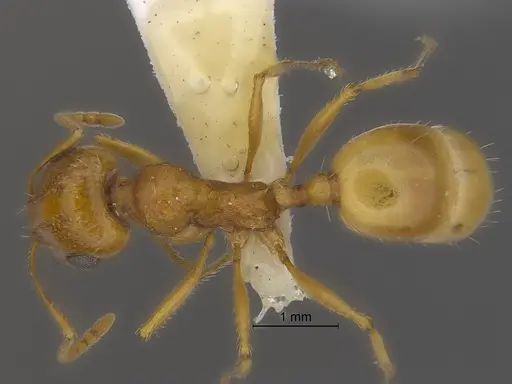
CASENT0869807
Ver no AntWeb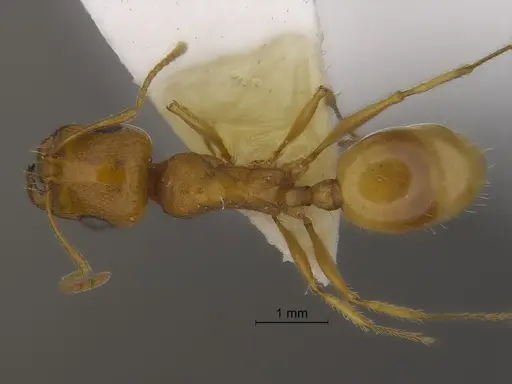
CASENT0869808
Ver no AntWeb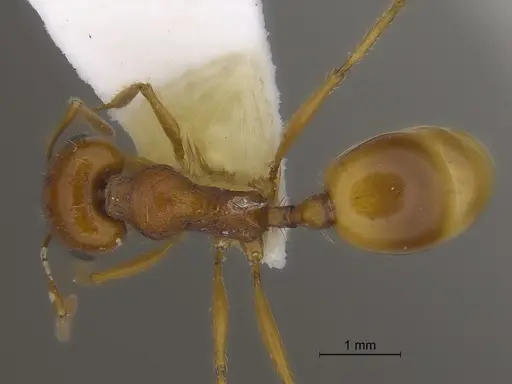
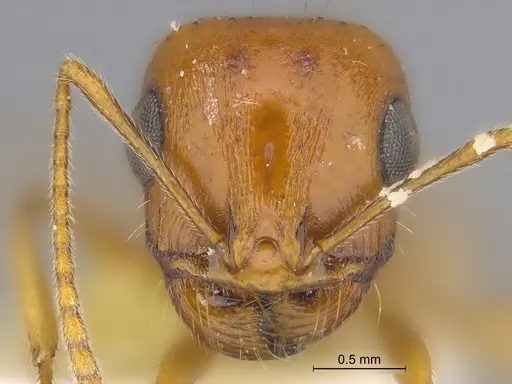
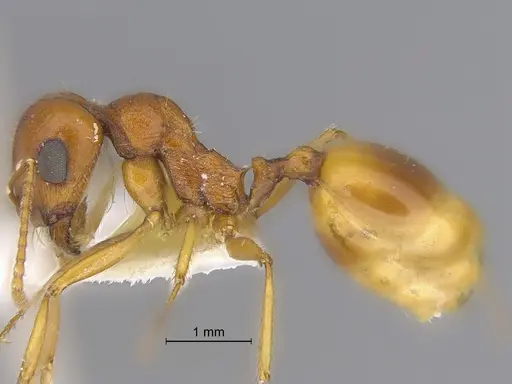
CASENT0869851
Ver no AntWeb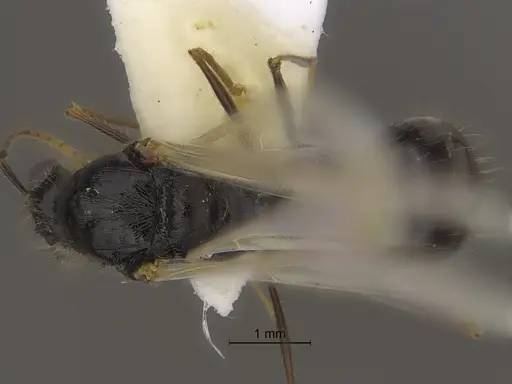
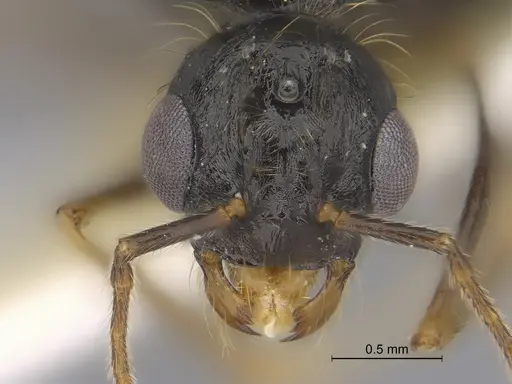
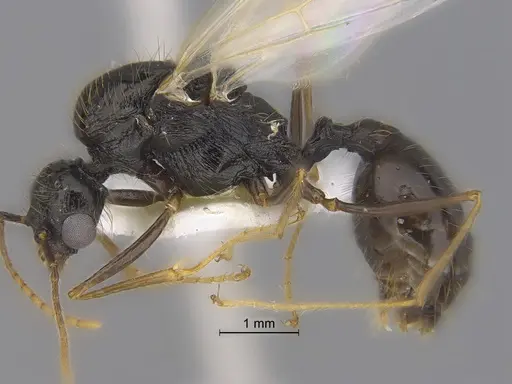
Literatura
Carregando mapa de distribuição...Carregando produtos...