
Tranopelta subterranea
- Nome científico
- Tranopelta subterranea
- Tribo
- Attini
- Subfamília
- Myrmicinae
- Autor
- Mann, 1916
- Distribuição
- Encontrada em 3 países
Introdução
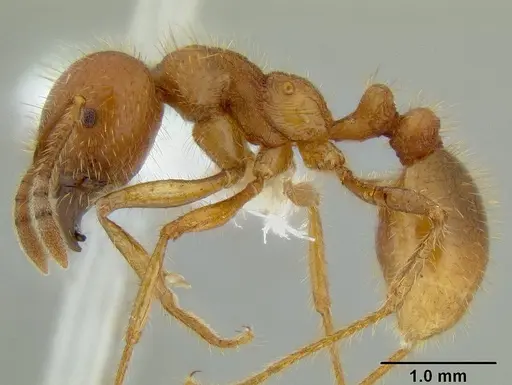
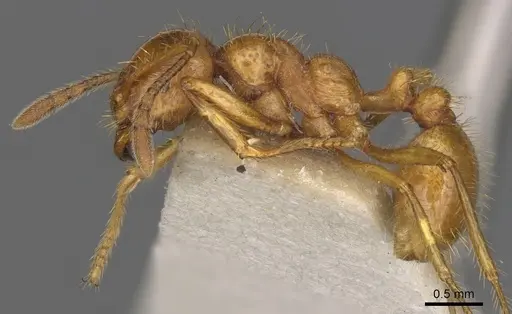
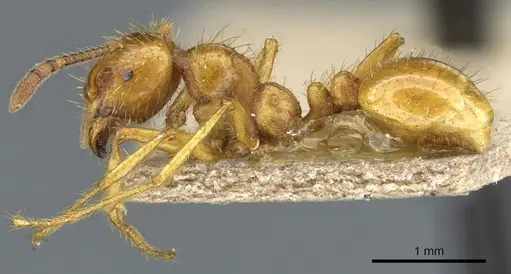
Tranopelta subterranea is a small to medium-sized myrmicine ant from the Neotropics, found across Bolivia, Brazil, Colombia, Ecuador, and Peru . Its name means 'underground dweller' . Workers are 4.38-5.64mm total length and are feebly polymorphic, meaning some colonies may have slightly larger major workers alongside regular ones . This species has the largest workers of the tribe Attini . You can identify them by their clearly convex promesonotum and propodeum in side view, separated by a broad metanotal groove . Workers are brownish yellow with erect hairs, while queens have dark brown heads, thoraxes, and gasters . This is a poorly studied ant - very little is known about its habits in the wild or in captivity.
Quick Summary
- Difficulty: Medium
- Origin & Habitat: Neotropical region including Bolivia, Brazil, Colombia, Ecuador, and Peru. Found in tropical forests, typically in soil and leaf litter [1][2][4][5].
- Colony Type: Colony structure is unconfirmed. This is one of only two species in the genus Tranopelta, the other being T. gilva [1].
- Size & Growth:
- Queen: ~11.10mm total length [1]
- Worker: 4.38-5.64mm total length [1]
- Colony: Unknown, no colony size data available
- Growth: Unknown, no development data available
- Development: Unknown, no direct measurements available. Based on typical Attini tribe patterns, expect 6-10 weeks at warm temperatures. (Development timeline has not been directly studied. The Attini tribe includes fungus-farming ants, but Tranopelta's specific relationship with fungi is unclear.)
- Antkeeping:
- Temperature: Aim for 24-28°C based on their Neotropical distribution. Provide a temperature gradient so ants can self-regulate.
- Humidity: Keep substrate moderately moist, think damp forest floor conditions. Allow areas to dry slightly between waterings.
- Diapause: Unknown, no data on overwintering requirements. Given their tropical origin, they likely do not require a true diapause but may reduce activity in cooler conditions.
- Nesting: Natural nesting occurs in soil and leaf litter. In captivity, a naturalistic setup with moist substrate or a Y-tong/plaster nest works well. They prefer enclosed spaces reflecting their subterranean nature.
- Behavior: Behavior is poorly documented. They are likely ground-nesting and may form small colonies. Escape risk is moderate, workers are 4-5mm and can fit through standard formicarium gaps, so use standard precautions. Temperament is unknown but Attini ants are generally not aggressive.
- Common Issues: limited availability, this species is rarely available in the antkeeping hobby., no established care protocols, keepers will be pioneering husbandry methods., colony size unknown, difficult to gauge appropriate colony housing., humidity management critical, being soil-dwellers, they need stable moisture., no documented breeding or nuptial flight information, founding colonies may be challenging.
Distribution and Natural Habitat
Tranopelta subterranea is found across the Neotropical region, with confirmed records from Bolivia, Brazil, Colombia, Ecuador, and Peru [1][2]. The type locality is Rio Madeira in the Brazilian state of Rondônia [1]. They have been recorded at various locations including the Colombian Amazon (Leticia, Parque Nacional Natural Amacayacu at 70m elevation) [2], Meta in Colombia [4], Madre de Dios in Peru [5], and Orellana Province in Ecuador [6]. As their name suggests, they are subterranean dwellers found in soil and leaf litter within tropical forests [1]. This is a rarely collected species, which explains why so little is known about its biology.
Identification and Morphology
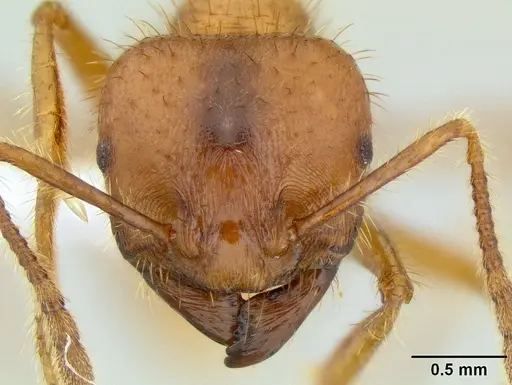
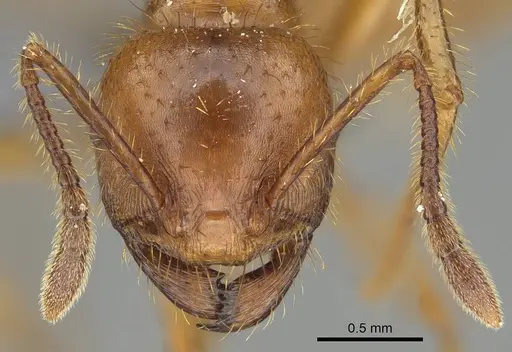
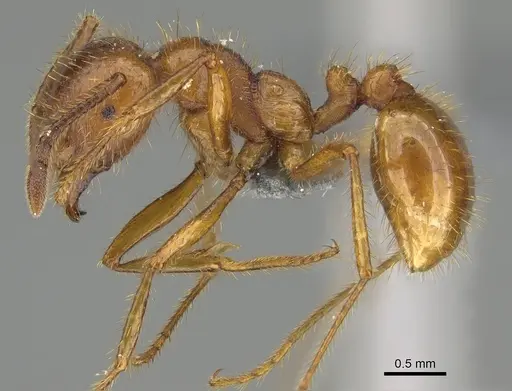
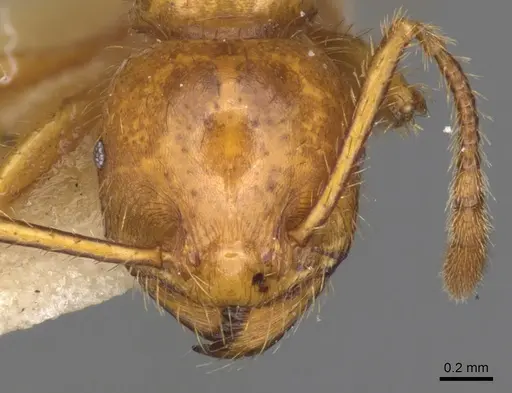
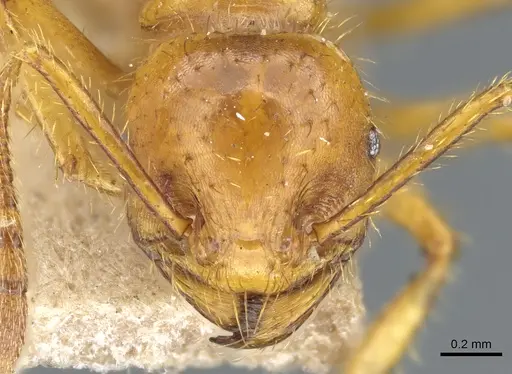
This species comprises the largest workers of the tribe Attini [1]. Workers are feebly polymorphic, some colonies may have slightly larger major workers, but the size difference is not dramatic. Worker total length ranges from 4.38-5.64mm [1]. The most distinctive identification feature is the clearly convex promesonotum and propodeum in lateral view, separated by a broad metanotal groove [2]. The antennae reach or slightly surpass the head border. Mandibles have five stout teeth, with the apical and subapical teeth larger in major workers [1]. Queens are substantially larger at about 11.10mm total length, with dark brown heads, thoraxes, and gasters, and lighter body coloration elsewhere [1].
Taxonomy and Relatives
Tranopelta subterranea belongs to the tribe Attini within the subfamily Myrmicinae [1]. The genus Tranopelta contains only two species: T. subterranea and T. gilva [1]. The species was originally described as Monomorium (Mitara) subterraneum by Mann in 1916 before being transferred to Tranopelta by Emery in 1919 [1]. It was briefly synonymized with T. huberi but later revived as a valid species [1]. Although placed in Attini (the fungus-farming ant tribe), Tranopelta's relationship with fungus cultivation is unclear, it may not follow the typical fungus-farming lifestyle [1].
Housing and Nesting
In captivity, provide a naturalistic setup with moist substrate, or use a Y-tong/plaster nest that maintains humidity well. Being subterranean dwellers, they prefer enclosed nest chambers over open spaces. The nest material should retain moisture without becoming waterlogged. A layer of leaf litter or debris on the outworld surface mimics their natural leaf litter habitat. Use standard escape prevention, while not among the smallest ants, they can still escape through gaps. Provide a water tube or hydration system that allows consistent moisture without flooding. The outworld can be decorated with leaf litter, small stones, and pieces of bark to create a naturalistic foraging area.
Feeding and Diet
The diet of Tranopelta subterranea is not well documented. As members of the Attini tribe, they may have omnivorous tendencies, potentially including small invertebrates, nectar, and honeydew. Offer a varied diet including sugar sources (honey water, sugar water) and protein sources (small insects like fruit flies, pinhead crickets, mealworms). Given their small size, prey items should be appropriately sized. Observe feeding preferences and adjust accordingly. Uneaten food should be removed to prevent mold. The subterranean nature of this species suggests they may be more active in lower light conditions and may prefer foraging in the substrate.
Temperature and Care
Maintain temperatures in the 24-28°C range based on their Neotropical distribution. Provide a temperature gradient so the colony can self-regulate. A heating cable on one side of the nest can create this gradient, place it on top of the nest rather than underneath to avoid excessive drying. Humidity should be moderate to high, keep the substrate consistently moist but not waterlogged. Allow some areas to dry slightly between waterings to prevent mold buildup. Ensure adequate ventilation while maintaining humidity. Avoid stagnant air which promotes mold, but also avoid excessive airflow that dries the nest. This species is not documented to require diapause given their tropical origin, but may show reduced activity in cooler conditions.
Frequently Asked Questions
How long does it take for Tranopelta subterranea to produce first workers?
The egg-to-worker timeline is unconfirmed for this species. Based on typical Attini tribe patterns, expect approximately 6-10 weeks at optimal warm temperatures (24-28°C). This is an estimate, actual development time may vary.
What do Tranopelta subterranea ants eat?
Their specific diet is not documented. Based on their Attini tribe placement, offer a varied diet including sugar sources (honey water, sugar water) and small protein items (fruit flies, small mealworms, pinhead crickets). Remove uneaten food promptly.
Are Tranopelta subterranea ants aggressive?
Aggression levels are not documented. Most Attini ants are not particularly aggressive. Standard antkeeping precautions apply, they are unlikely to sting but will defend their nest if threatened.
Do Tranopelta subterranea need hibernation?
Diapause requirements are unknown. Given their tropical Neotropical distribution, they likely do not require a true hibernation period. They may reduce activity in cooler conditions but should be kept warm year-round.
How big do Tranopelta subterranea colonies get?
Maximum colony size is unknown, this is one of the least studied ant species in the hobby. Based on related Attini species, colonies may reach several hundred workers, but this is an estimate.
Can I keep multiple Tranopelta subterranea queens together?
Colony structure (monogyne vs polygyne) is unconfirmed. Combining unrelated queens has not been documented. For safety, keep only one queen per colony until more information becomes available.
What is the best nest type for Tranopelta subterranea?
A naturalistic setup with moist substrate or a Y-tong/plaster nest works well. They prefer enclosed spaces reflecting their subterranean nature. The nest should maintain humidity without becoming waterlogged.
Where does Tranopelta subterranea live in the wild?
They are found across the Neotropics in Bolivia, Brazil, Colombia, Ecuador, and Peru. Their name means 'subterranean dweller', they live in soil and leaf litter in tropical forests [1][2].
How do I identify Tranopelta subterranea?
Look for workers 4.38-5.64mm with brownish yellow coloration. The key feature is the clearly convex promesonotum and propodeum in side view, separated by a broad metanotal groove. They have the largest workers of the Attini tribe [1][2].
Is Tranopelta subterranea a good beginner species?
This is not recommended for beginners. The species is rarely available, has no established care protocols, and almost no documented husbandry information exists. Keepers will essentially be pioneering their care. Start with better-documented species first.
Report an Issue
The current care sheet is based fully on literature. See inconsistencies, or something that's incorrect? Please , it will be resolved after review from an admin. Contributing to the blogs tab also helps providing information, to make us be able to further improve the caresheets. Thank you for your support!
References

Este guia de cuidados está sob a licença CC BY-SA 4.0 .
Posts da comunidade
CASENT0106207
Ver no AntWeb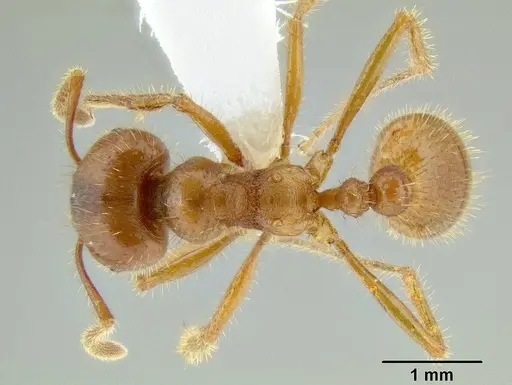
CASENT0375175
Ver no AntWeb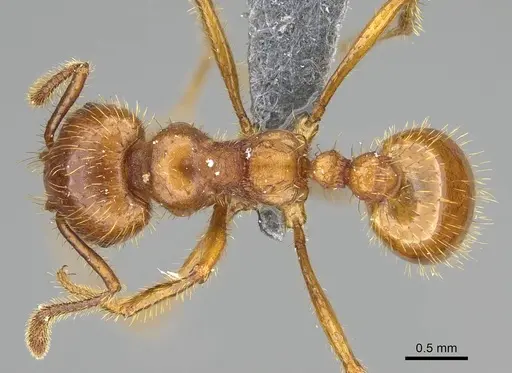
CASENT0900746
Ver no AntWeb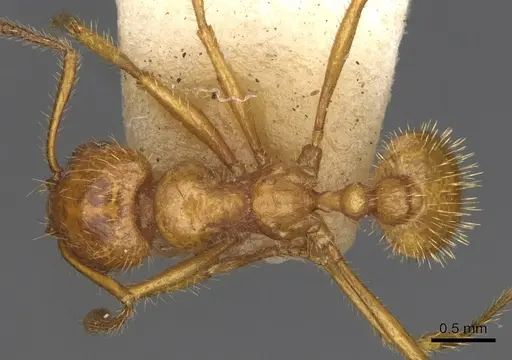
CASENT0904616
Ver no AntWeb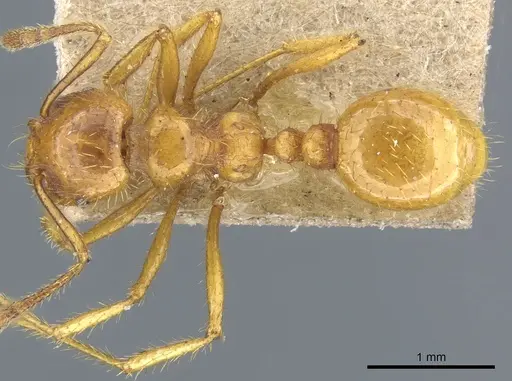
Literatura
Carregando mapa de distribuição...Carregando produtos...