
Tetramorium palaense
- Nome científico
- Tetramorium palaense
- Tribo
- Crematogastrini
- Subfamília
- Myrmicinae
- Autor
- Bolton, 1979
- Distribuição
- Encontrada em 2 países
Introdução
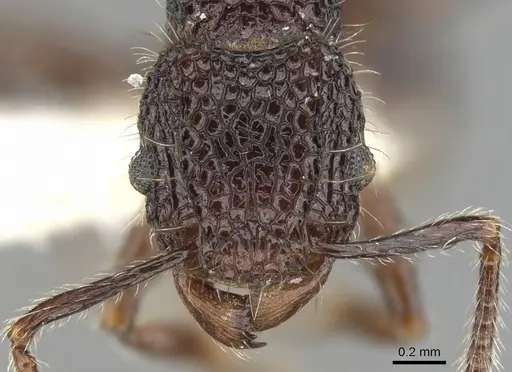
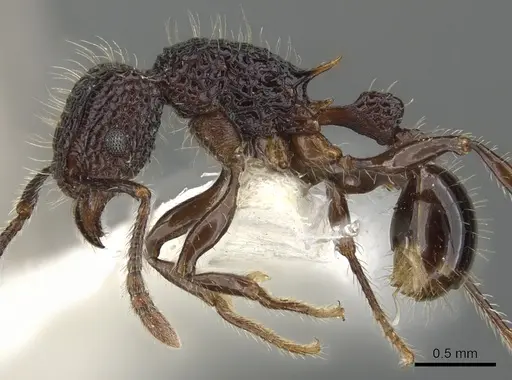
Tetramorium palaense is a small ground-dwelling ant species native to Southeast Asia. It's found across Borneo, Indonesia, Malaysia, and Thailand . Workers are tiny, measuring roughly 2-3mm (size data unavailable, inferred from genus). They have the typical compact Tetramorium body with a two-segmented waist and short antennae. Coloration is dark reddish-brown to brown, common among its relatives. This species nests in soil and under leaf litter on the forest floor . Research shows they strongly prefer ground-level habitats over trees and are active during the day . They're found in mixed deciduous forests in northern Thailand and lowland dipterocarp forests in Borneo .
Quick Summary
- Difficulty: Easy
- Origin & Habitat: Native to Southeast Asia, Borneo, Indonesia, Malaysia, and Thailand. Inhabits tropical and subtropical forests, especially mixed deciduous and dipterocarp forests. Nests in soil and under leaf litter [2][3][4].
- Colony Type: Unconfirmed, no data available on queen number. Based on typical Tetramorium patterns, likely single-queen colonies, but this is unverified for this species.
- Size & Growth:
- Queen: Size data unavailable, no measurements published.
- Worker: Size data unavailable, no direct measurements. Inferred from typical Tetramorium species to be approximately 2-3mm.
- Colony: Unknown, no data available.
- Growth: Unconfirmed
- Development: Unknown, no data available for this species. (Development is unstudied, tropical species typically develop faster at warm temperatures, but specifics are unknown.)
- Antkeeping:
- Temperature: No specific requirements documented. Based on tropical forest habitat, likely needs warm conditions around 24-28°C. Avoid temperatures below 20°C [2][3].
- Humidity: No specific requirements documented. Based on leaf litter nesting, keep substrate consistently moist but not waterlogged. Good ventilation is important [2].
- Diapause: Unlikely required, inferred from tropical origin. Year-round activity at room temperature is expected.
- Nesting: Prefers naturalistic setups with soil, leaf litter, or rotting wood. Test tubes work for founding. For larger colonies, use Y-tong or plaster nests with moist substrate. Avoid acrylic nests [4].
- Behavior: These are small, active, ground-dwelling ants that forage during the day [3]. They are not aggressive and typically retreat from threats. Their small size means they can escape through tiny gaps, use fine mesh (0.5mm or smaller) on all openings. They don't climb smooth surfaces well, which helps with containment once gaps are sealed.
- Common Issues: tiny size makes escapes likely without fine mesh barriers, high humidity requirements can lead to mold if ventilation is poor, wild-caught colonies may carry parasites or diseases, founding phase is prolonged and queen may not be visible for weeks, tropical species may not tolerate temperature drops below 20°C
Housing and Nest Setup
For founding colonies, a simple test tube setup is fine. Use a test tube with a water reservoir separated by a cotton ball. The queen may seal herself in, this is normal and you should not disturb her. When the colony grows beyond 30-50 workers, move them to a larger nest. Y-tong, plaster, or naturalistic soil nests work well. Mimic their natural habitat by providing a substrate of damp soil, leaf litter, and small pieces of rotting wood. Keep the nest humid but ventilated to prevent mold [2][3].
Feeding and Diet
Tetramorium palaense is omnivorous. In the wild they forage on the forest floor and are attracted to baits [3]. Offer a constant source of carbohydrates like sugar water, honey, or maple syrup. For protein, provide small insects such as fruit flies, pinhead crickets, or small mealworms. Feed protein 2-3 times per week, adjusting based on colony consumption. Remove uneaten prey after 24 hours to avoid mold. Their tiny size limits them to very small prey items [3].
Temperature and Humidity
No exact requirements are known. Based on their tropical forest habitat, maintain temperatures around 24-28°C [2]. Avoid drops below 20°C. Humidity should be high, keep the nesting substrate consistently damp but not waterlogged. Good airflow helps prevent mold. Use a hygrometer to monitor, aim for 70-80% relative humidity in the nest area [2].
Behavior and Activity
Tetramorium palaense is strongly ground-dwelling and prefers to forage on the forest floor rather than in trees [3]. They are diurnal, with most activity during daylight hours [3]. These are small, timid ants that avoid confrontation. However, if provoked, they use a modified stinger to smear venom onto enemies rather than pierce skin. This 'smear' defense is typical of their tribe and is mild to humans. Their small size means they can slip through tiny gaps, use fine mesh (0.5mm or smaller) on all ventilation and seal lid edges securely. They do not climb smooth surfaces, which aids containment once escape routes are blocked [3].
Colony Development
Colony development is unstudied for this species. Based on general Tetramorium biology, queens likely found colonies independently (claustral founding), sealing themselves into a chamber and using stored reserves to raise the first brood. First workers (nanitics) are typically smaller than mature workers. Colony growth will depend heavily on temperature and feeding. There are no specific timelines, growth rates are unknown. Provide consistent warmth and regular protein feeding to optimize development.
Frequently Asked Questions
How long does it take for Tetramorium palaense to raise first workers?
This is unknown, no specific data exists for this species. Based on typical Tetramorium, it may take 6-8 weeks at warm temperatures, but this is speculation. The queen may seal herself in for weeks during founding, do not disturb her.
Can I keep Tetramorium palaense in a test tube?
Yes, test tubes work well for small colonies. Use a tube with a water reservoir separated by a cotton ball. Keep it lightly moist but not wet. Once the colony reaches 30-50 workers, consider moving them to a Y-tong or naturalistic nest with moist soil [4].
Do Tetramorium palaense ants sting?
They have a modified stinger used for smearing venom, not piercing. This 'smear' defense is typical of their tribe. The venom is mild and rarely noticeable to humans. They are not aggressive and will retreat rather than attack.
What temperature do Tetramorium palaense ants need?
No precise data, but based on their tropical forest habitat, keep them at 24-28°C [2]. Avoid temperatures below 20°C, they are not cold-tolerant. Room temperature in this range works well.
Are Tetramorium palaense good for beginners?
Probably yes. They are small, not aggressive, and have simple needs. The main challenges are maintaining high humidity and preventing escapes due to their tiny size. No special hibernation is required. However, because colony development is unstudied, some trial and error may be involved.
How big do Tetramorium palaense colonies get?
Unknown, no data is available for this species. Related Tetramorium can reach several hundred workers, but this is pure speculation. Colony growth and size are unstudied.
Do Tetramorium palaense need hibernation?
No. Being a tropical species, they do not require a diapause period and can be kept active year-round at room temperature. If your room gets cooler in winter, activity may slow, but that's fine, do not artificially induce hibernation.
Why are my Tetramorium palaense escaping?
Their tiny size (2-3mm) lets them squeeze through very small gaps. Check all ventilation holes, lid seals, and tube connections. Use fine mesh (0.5mm or smaller) on any openings. Since they are ground-dwelling and poor climbers, focus on sealing gaps at the base. Smooth barriers like petroleum jelly on the rim can also help.
What do Tetramorium palaense eat?
They are omnivorous. Provide a constant source of sugar water, honey, or maple syrup. Offer protein 2-3 times per week, small insect parts like fruit flies, small mealworms, or pinhead crickets work well. Remove uneaten prey after 24 hours to prevent mold [3].
When should I move my Tetramorium palaense to a formicarium?
Move them when the test tube becomes crowded, usually around 30-50 workers. Use a Y-tong or naturalistic nest with moist soil and leaf litter. They naturally live in soil, so a substrate-based nest is ideal. Avoid acrylic nests [4].
Report an Issue
The current care sheet is based fully on literature. See inconsistencies, or something that's incorrect? Please , it will be resolved after review from an admin. Contributing to the blogs tab also helps providing information, to make us be able to further improve the caresheets. Thank you for your support!
References

Este guia de cuidados está sob a licença CC BY-SA 4.0 .
Posts da comunidade
CASENT0217974
Ver no AntWeb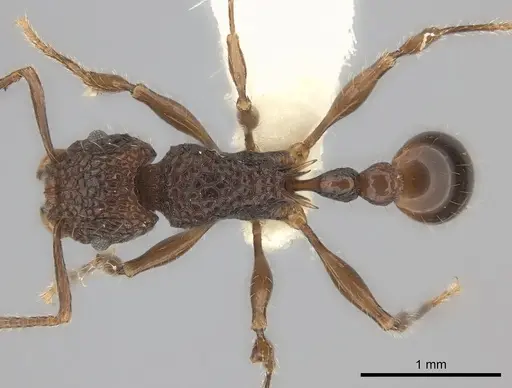
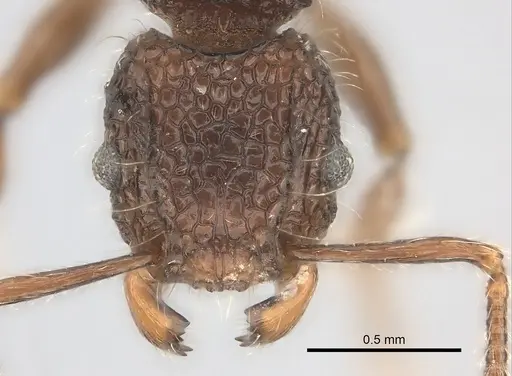
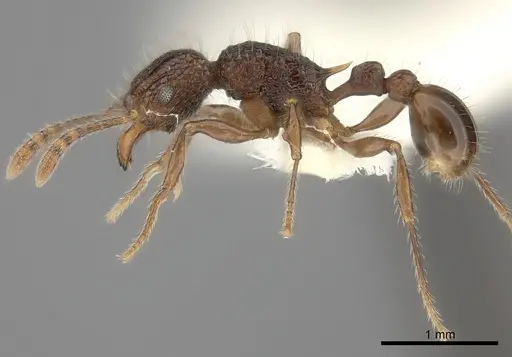
CASENT0901073
Ver no AntWeb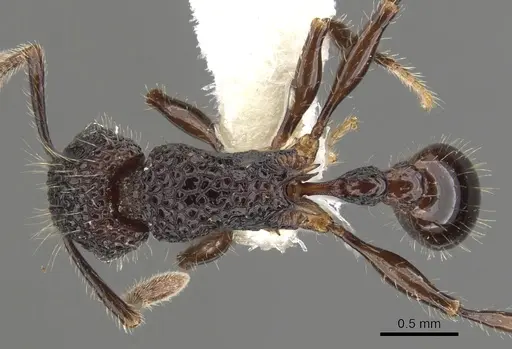
Literatura
Carregando mapa de distribuição...Carregando produtos...