
Tetramorium nigrum
- Nome científico
- Tetramorium nigrum
- Tribo
- Crematogastrini
- Subfamília
- Myrmicinae
- Autor
- Forel, 1907
- Distribuição
- Encontrada em 3 países
Introdução
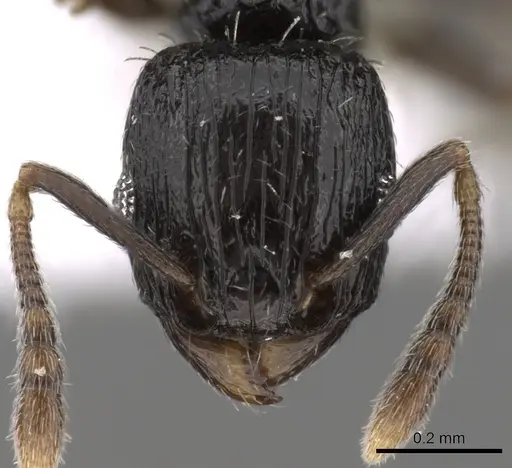
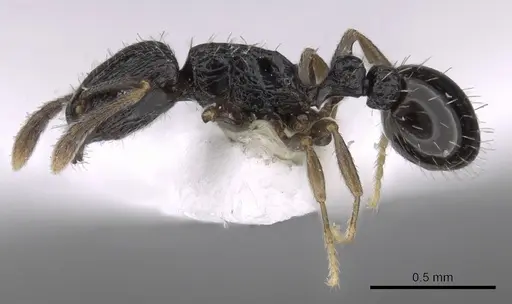
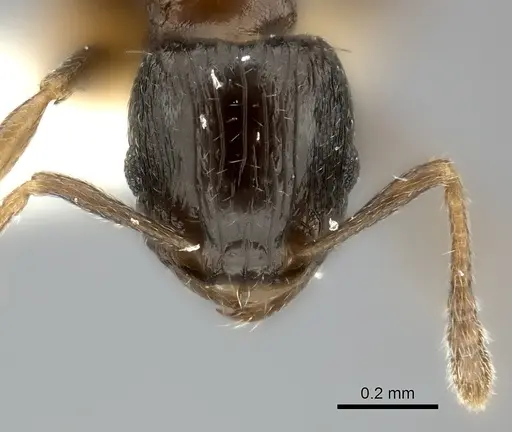
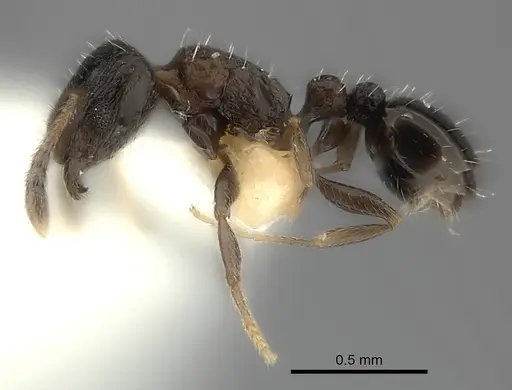
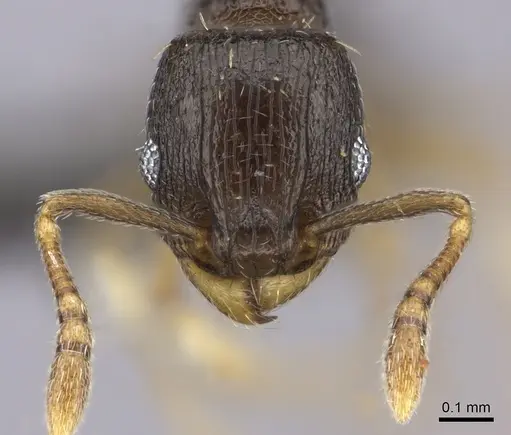
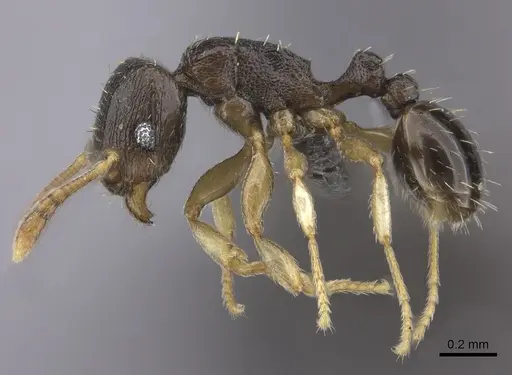
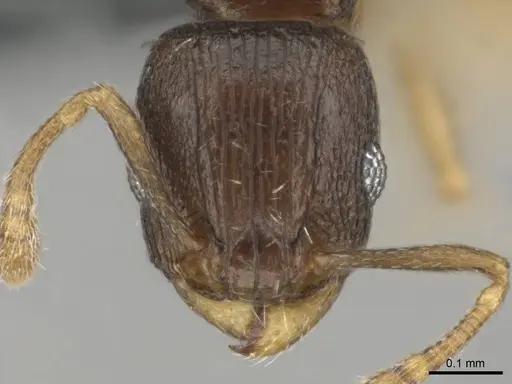
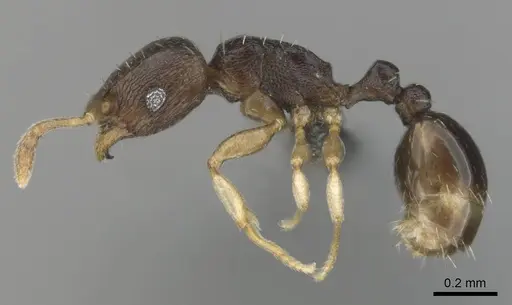
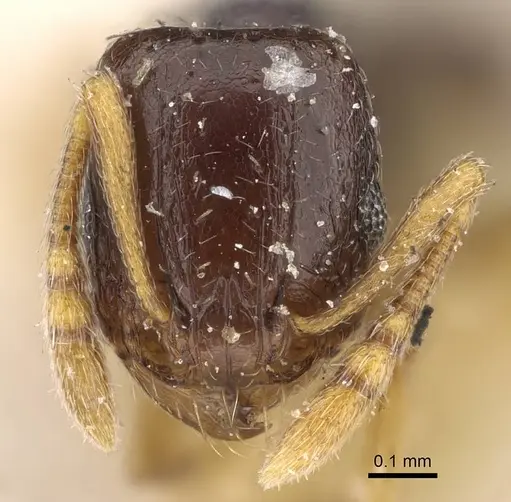
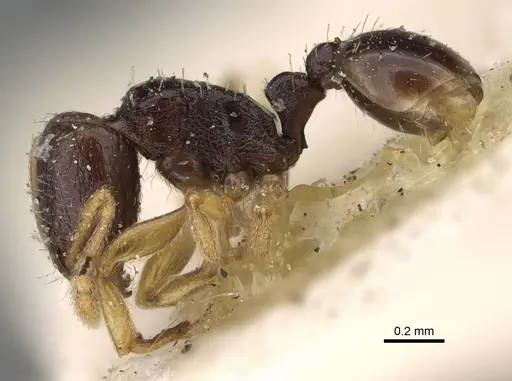
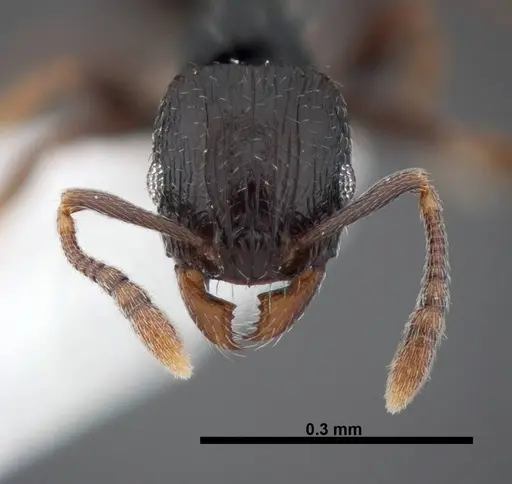
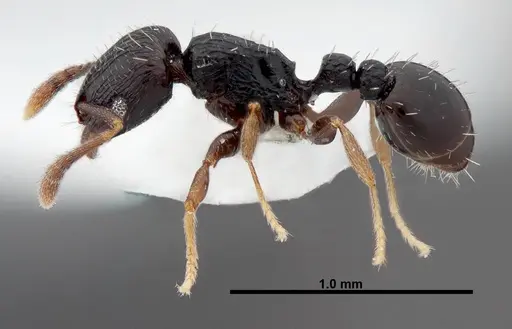
Tetramorium nigrum is a tiny African ant species measuring about 1.9mm in total length, making it one of the smaller ants you'll find . Workers are dark brown with yellow-brown legs and antennae, and they lack the propodeal teeth seen in many related species - instead they have only small tubercles or just an angle where the back meets the slope . This species belongs to the Tetramorium simillimum group, which includes some of the smallest pavement ants . These ants live across eastern and southern Africa, including Kenya, Tanzania, Rwanda, Sudan, South Africa, and the Democratic Republic of the Congo . They inhabit hardwood forests, bushveld, miombo woodland, and coastal shrub areas , and can be found in nearly all habitats in Kenya . Workers are often collected from rotten logs, leaf litter, pitfall traps, and honey baits . It has been recorded in a range of closed to semi-open habitats and even in urban green spaces in Côte d'Ivoire .
Quick Summary
- Difficulty: Easy
- Origin & Habitat: Eastern and southern Africa (Kenya, Tanzania, Rwanda, Sudan, South Africa, DRC, Croatia, Bosnia, Herzegovina, Greece). Found in hardwood forest, bushveld, miombo woodland, coastal shrub areas, secondary and swamp forests [1][6]. Nests in rotten logs, leaf litter, and soil [1]. Can occupy nearly all habitats in some areas [2].
- Colony Type: Unknown social structure, not studied directly, related species in the Tetramorium caespitum complex are typically monogyne, but this is unconfirmed.
- Size & Growth:
- Queen: Not studied, queen size data unavailable.
- Worker: ~1.9 mm total length [1]
- Colony: Unknown, related species reach several hundred workers, but not documented for this species.
- Growth: Moderate, inferred from genus patterns.
- Development: Not studied for this species, estimated 6-8 weeks at 22-26°C based on related Tetramorium. (Check with direct observation, timeline is an estimate.)
- Antkeeping:
- Temperature: Aim for 22-26°C. Related species in the T. caespitum complex prefer warmer conditions around 22°C [7][8]. Avoid sustained temperatures below 18°C or above 30°C.
- Humidity: Moderate, keep nest substrate moist but not waterlogged. They come from forest and woodland areas with moderate moisture [1]. A humidity gradient is recommended: one area damp, another dry for ant choice.
- Diapause: Likely no true diapause. Being an African species, they probably slow down in cold but don't require hibernation. Confirm by observing colony behavior in winter.
- Nesting: Prefers soil-based setups. Test tubes work for founding. Y-tong or plaster nests hold humidity well. Avoid fast-drying materials.
- Behavior: Active foragers, generalist predators [9]. Very small workers can escape through tiny gaps, fine mesh and tight seals are essential. They are not aggressive and rarely sting. Defense: They use a modified stinger to smear venom rather than pierce (subfamily: Myrmicinae, tribe: Crematogastrini). No specific study on their defense mechanism, but the default for the group applies.
- Common Issues: tiny size makes escapes a constant risk without fine mesh barriers., founding phase may be slow, patience is needed (queens can take weeks to lay)., wild-caught colonies may bring parasites, quarantine new colonies., overheating above 30°C can kill the colony, provide a cool zone., dry conditions cause founding failure, keep substrate consistently damp but not soaked.
Housing and Nest Setup
For a founding queen, a test tube with a water reservoir works well. Once the colony grows past 20 workers, move them to a small Y-tong (AAC) or plaster nest that retains moisture. Keep the nest humid but not wet. Because these ants are tiny, use very fine mesh (0.5mm or less) on ventilation holes. A moist substrate holds humidity, avoid fast-drying materials like pure sand. Naturalistic soil setups also work, but make sure drainage prevents flooding. [1]
Feeding and Diet
Workers are generalist predators [9]. They accept small live prey like fruit flies, pinhead crickets, and small mealworms. They also likely take honeydew, offer sugar water or diluted honey occasionally. Feed 2-3 times per week for established colonies. Founding queens don't need food until the first workers arrive. Remove uneaten prey after 24 hours to prevent mold.
Temperature Management
Keep the colony at 22-26°C. Related species are thermophilic and prefer around 22°C [7][8]. Room temperature is fine. Use a heating cable on one side to create a gradient. Never heat above 30°C or put the nest in direct sunlight. A slight night drop is natural.
Humidity Requirements
These ants come from forest and woodland habitats with moderate moisture [1]. Keep the nest substrate consistently damp but not waterlogged, it should feel moist to the touch. Mist the outworld occasionally or use a test tube reservoir. Avoid constant condensation, provide both damp and dry areas so ants can self-regulate. In natural setups, ensure drainage. Too dry kills founding queens, too wet grows mold.
Colony Development
A newly mated queen seals herself in and lays eggs within a few weeks. She lives off stored fat until the first workers emerge. This founding phase takes about 6-8 weeks at 22-26°C (estimated from related species). Nanitics are smaller and paler. After that, colony growth is moderate. The maximum colony size is unknown but likely several hundred workers based on related ants in the T. caespitum complex.
Behavior and Temperament
Workers are active foragers searching for small prey and honeydew. They are not aggressive and pose no real threat to keepers. Their sting is used for smearing venom rather than piercing (typical of Crematogastrini). Because they are so small, escape prevention is critical, use fine mesh and check all seals. They may bite if threatened but the bite is barely noticeable. Ergatoid replacement queens have not been reported for this species.
Frequently Asked Questions
How long does it take for Tetramorium nigrum to have first workers?
Expect first workers (nanitics) in about 6-8 weeks after the queen lays eggs, assuming 22-26°C. This is based on related Tetramorium species, T. nigrum hasn't been directly timed. Cooler temps slow development.
Can I keep Tetramorium nigrum in a test tube?
Yes, a test tube with a water reservoir and cotton plug works well for founding and small colonies. Once the colony reaches 30-50 workers, move to a small formicarium for more space. Use fine mesh on ventilation.
Do Tetramorium nigrum ants sting?
They have a modified stinger used for smearing venom, not piercing. They are not aggressive and rarely sting keepers. The venom may cause minor irritation but is not dangerous.
What do Tetramorium nigrum eat?
They are generalist predators [9] and accept small live prey (fruit flies, pinhead crickets, small mealworms). They also likely take honeydew, offer sugar water or honey sparingly. Feed 2-3 times a week once workers are present.
Are Tetramorium nigrum good for beginners?
They can be good for beginners because they are small, easy to house, and not aggressive. The main challenge is escape prevention due to their tiny size, and the slow founding phase. With proper setup, they are rewarding.
Do Tetramorium nigrum need hibernation?
Probably not. They are from Africa and likely do not require a diapause. They may slow down in cooler rooms but a full hibernation isn't needed. Keep them warm year-round.
How big do Tetramorium nigrum colonies get?
The exact colony size is unknown. Related species in the T. caespitum complex can reach several hundred workers. Expect a moderately sized colony, but numbers haven't been documented.
Why is my Tetramorium nigrum queen not laying eggs?
Stress, low humidity, or wrong temperature can delay egg-laying. Maintain 22-26°C and moist substrate. Give a newly caught queen 1-2 weeks to settle in a dark, quiet spot before worrying.
Can I keep multiple Tetramorium nigrum queens together?
Combining unrelated queens is not documented and not recommended. Most Tetramorium are monogyne. House each queen separately to avoid fighting.
What temperature is best for Tetramorium nigrum?
Aim for 22-26°C. Related species thrive around 22°C [7]. Room temperature works. Use a heating cable on one side if your home is cooler, but avoid overheating above 30°C.
Report an Issue
The current care sheet is based fully on literature. See inconsistencies, or something that's incorrect? Please , it will be resolved after review from an admin. Contributing to the blogs tab also helps providing information, to make us be able to further improve the caresheets. Thank you for your support!
References

Este guia de cuidados está sob a licença CC BY-SA 4.0 .
Posts da comunidade
CASENT0217208
Ver no AntWeb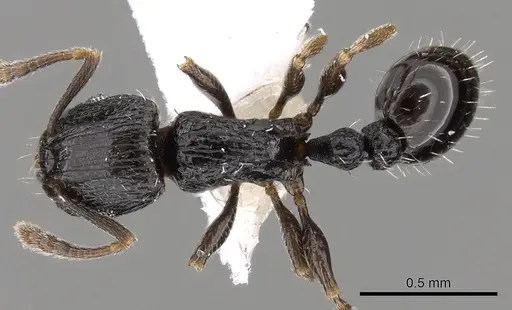
CASENT0217972
Ver no AntWeb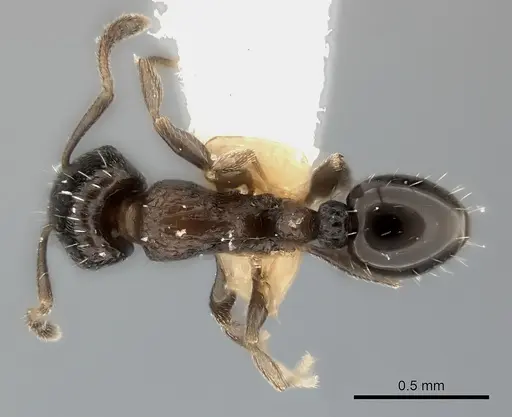
CASENT0235777
Ver no AntWeb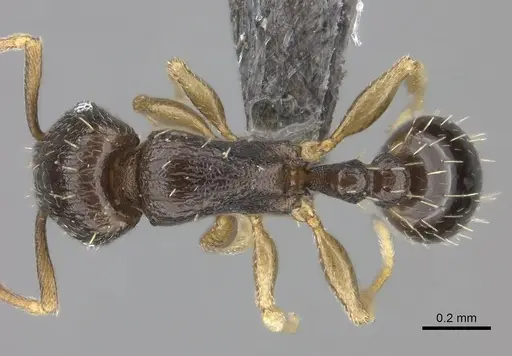
CASENT0250281
Ver no AntWeb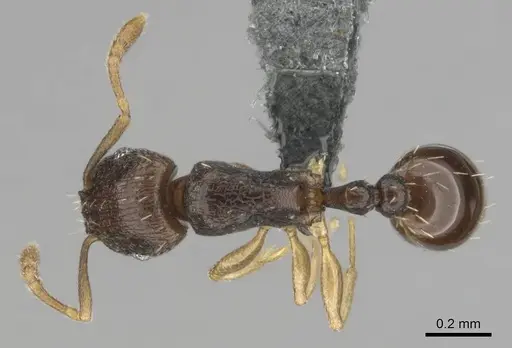

CASENT0280851
Ver no AntWeb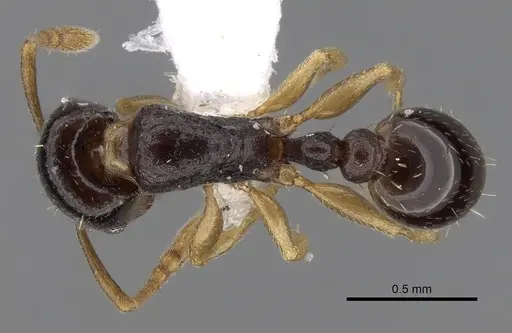
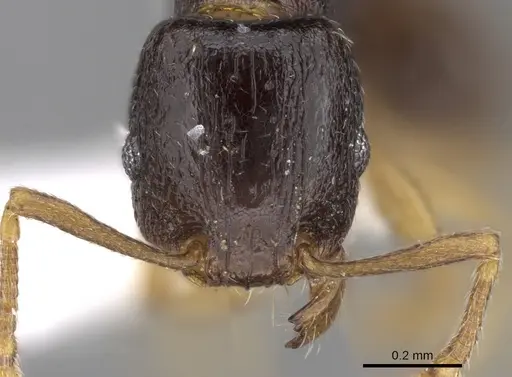
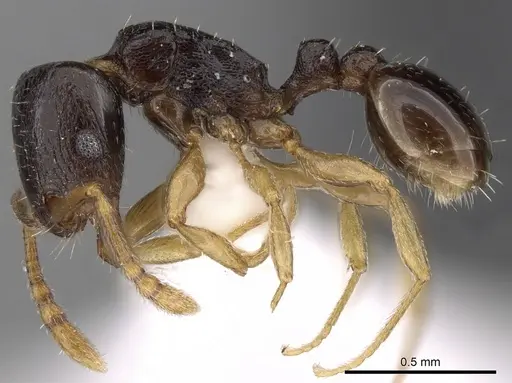
CASENT0915999
Ver no AntWeb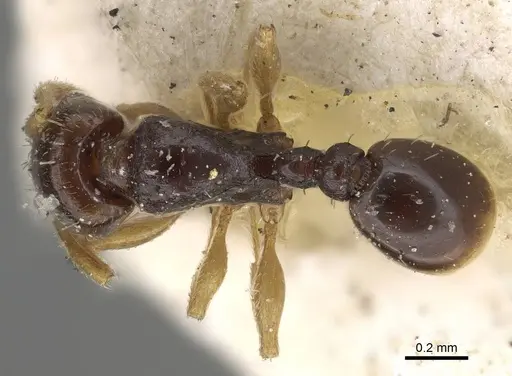
FMNHINS0000047311
Ver no AntWeb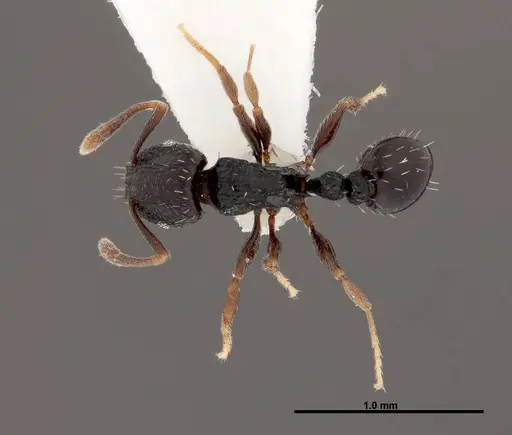
Literatura
Carregando mapa de distribuição...Carregando produtos...