
Tetramorium latreillei
- Nome científico
- Tetramorium latreillei
- Tribo
- Crematogastrini
- Subfamília
- Myrmicinae
- Autor
- Forel, 1895
- Distribuição
- Encontrada em 0 países
Introdução
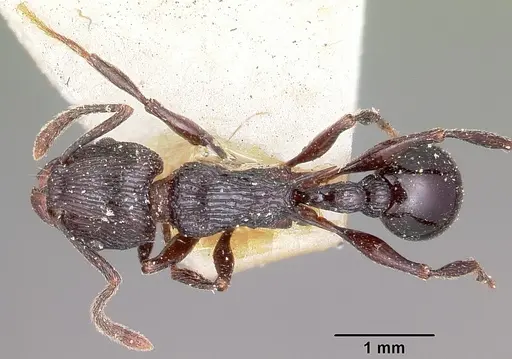
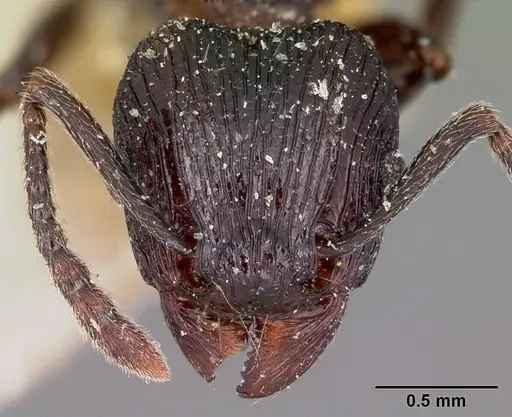
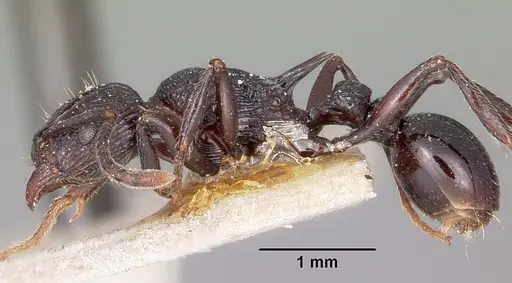
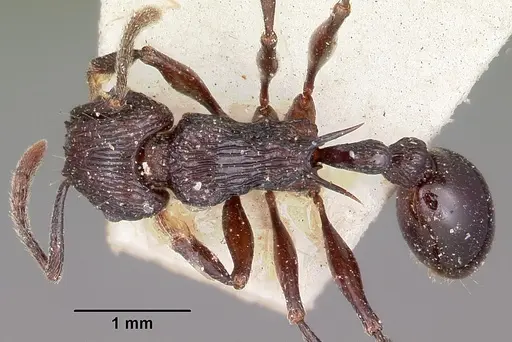
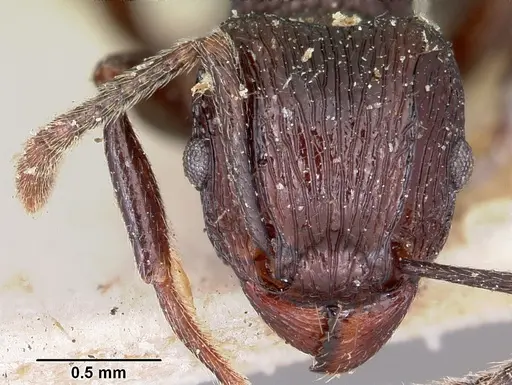
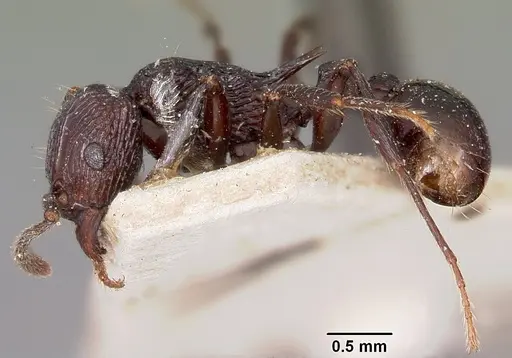
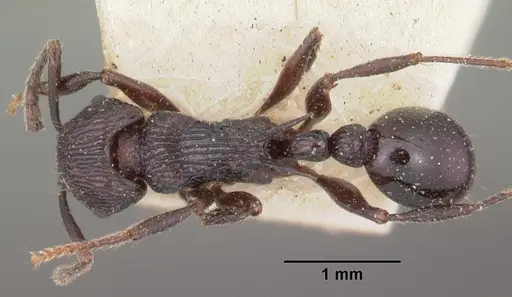
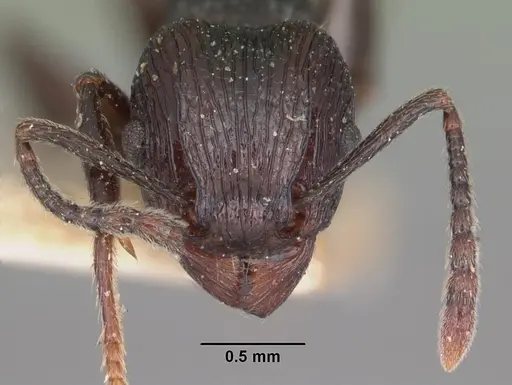
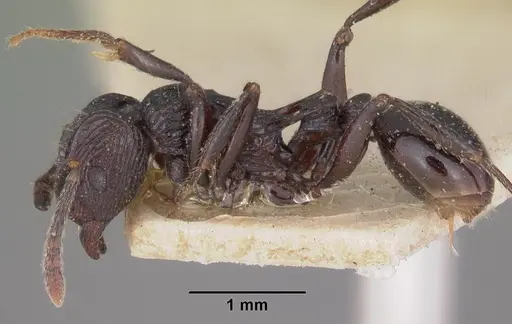
Tetramorium latreillei is a tiny, dark ant species endemic to Madagascar. Workers are very small, with a head length of about 1mm, making them one of the smaller Tetramorium species . They belong to the Tetramorium tortuosum species group, specifically the T. smaug species complex, where they stand out as the only species lacking standing hairs on the first gastral tergite - a useful identifying feature when comparing them to related species . Their body is a uniform very dark brown to black color, and they have massively developed propodeal spines that are extremely long with a very broad base . This species has an intriguing history in ant research - no modern specimens have been collected since the original type series over 120 years ago, despite extensive sampling efforts in Madagascar . The original collection location was simply noted as "eastern Imerina" in central-eastern Madagascar, and the exact locality remains unknown . This makes T. latreillei one of the more mysterious ant species in the hobby, and captive colonies are essentially nonexistent. Like other Myrmicinae, this species uses a smear defense: workers have a modified stinger to wipe venom onto enemies instead of piercing them.
Quick Summary
- Difficulty: Expert, this species is essentially unavailable and care data is completely missing. Not suitable for any keeper due to lack of knowledge and rarity.
- Origin & Habitat: Madagascar, specifically the eastern Imerina region in central-eastern Madagascar [1]. This is a tropical island with diverse habitats from rainforests to dry deciduous forests.
- Colony Type: Unconfirmed, no modern colony samples have been documented. Colony structure remains unknown.
- Size & Growth:
- Queen: size data unavailable, no queen specimens have been recorded.
- Worker: size data unavailable, only head measurements exist (about 1mm), but total body length is not recorded.
- Colony: Unknown, no colony size data exists for this species.
- Growth: Unknown, no data on colony growth.
- Development: Estimated 6-8 weeks based on genus-typical development, but no species-specific data exists. (This is a rough estimate, actual development may differ.)
- Antkeeping:
- Temperature: Based on Madagascar's tropical climate, aim for 22-26°C. Related Tetramorium species do well in this range.
- Humidity: Keep the nest substrate consistently moist but not waterlogged. Avoid standing water as these tiny ants can drown.
- Diapause: Unlikely, Madagascar has no true winter, so diapause is probably not required. Some seasonal slowdowns may occur during cooler dry seasons.
- Nesting: Based on related species, likely nests in soil, under stones, or in rotting wood. In captivity, a Y-tong (AAC) nest or test tube setup with moist substrate works well for small Myrmicinae.
- Behavior: Based on genus-level observations, Tetramorium ants are typically active foragers with moderate aggression when defending their nest. This species uses a smear defense, workers have a modified stinger to wipe venom onto enemies. Escape prevention is critical given their tiny size, use fine mesh barriers.
- Common Issues: no captive colonies exist in the hobby, this species is essentially unavailable., lack of biological data makes specific care recommendations uncertain, any care is experimental., tiny size requires excellent escape prevention with fine mesh barriers., very rare species with no established breeding populations in captivity, not recommended for anyone.
Species Identification and History
Tetramorium latreillei was originally described by Forel in 1895 from specimens collected in eastern Imerina, Madagascar [1]. What makes this species particularly interesting is that despite over 120 years of subsequent research and extensive ant inventory projects in Madagascar, no additional specimens have ever been collected [1]. This is highly unusual for any ant species and makes T. latreillei something of a mystery in myrmecology.
The species is a member of the Tetramorium tortuosum species group, specifically the T. smaug species complex [1]. Within this group, T. latreillei is easily recognizable because it is the only species that lacks standing hairs on the first gastral tergite, all other species in the complex have these hairs [1]. Workers are very small, with a head length of about 1mm, and have a uniform very dark brown to black body color with distinctive massively developed propodeal spines [1].
Natural Habitat and Distribution
This species is endemic to Madagascar, known only from the eastern Imerina region in central-eastern parts of the island [1]. The exact type locality is unknown, the original collection notes simply state "eastern Imerina" which may correspond to the Moramanga area or surrounding regions [1].
Madagascar's climate is tropical, with temperatures averaging 20-30°C year-round depending on elevation. The eastern region where Imerina is located receives significant rainfall and features humid forest environments. This suggests T. latreillei likely inhabits forest floor microhabitats where humidity remains relatively stable [2].
Given that no modern specimens exist in research collections, we cannot confirm whether this species is truly rare, locally distributed, or perhaps even extinct in the wild. The lack of specimens despite massive sampling efforts by the Malagasy ant inventory project is genuinely puzzling [1].
Inferred Care Requirements
Since no captive colonies exist and no biological data has been collected on this species, all care recommendations must be inferred from related Tetramorium species and genus-typical behavior. This means any care approach is experimental.
Temperature: Keep the nest area at 22-26°C, which aligns with Madagascar's tropical conditions. A heating cable on one side of the nest can create a gentle gradient if your room temperature is cooler.
Humidity: Keep the nest substrate moderately moist but not waterlogged. Avoid standing water as these tiny ants can drown.
Nesting: Given their tiny size, use a Y-tong (AAC) nest with narrow chambers or a properly set up test tube setup. The chambers should be appropriately scaled to their small size.
Feeding: Based on typical Tetramorium diet, offer small protein sources like fruit flies, small mealworms, or other tiny insects. Sugar water or honey can be offered occasionally.
Defense: Like other Myrmicinae, this species uses a smear defense, workers have a modified stinger to wipe venom onto enemies rather than stinging. This is not a threat to humans but may be effective against small prey.
Availability and Acquisition
Tetramorium latreillei is essentially unavailable in the antkeeping hobby. No captive breeding populations exist, and the species has not been collected in over 120 years of research [1]. This makes it one of the most difficult, if not impossible, Tetramorium species to obtain.
If you're interested in keeping Tetramorium species from Madagascar, consider more commonly available related species like Tetramorium kelleri or other members of the T. tortuosum group that are occasionally available. These species have established captive populations and we have much better care data for them.
For the dedicated antkeeper hoping to work with rare species, this highlights the importance of supporting conservation efforts in Madagascar and respecting export laws, this species may well be extinct in the wild, and no specimens should be collected if discovered.
Frequently Asked Questions
Is Tetramorium latreillei available for sale in the antkeeping hobby?
No. This species is essentially unavailable, no captive breeding populations exist, and no specimens have been collected in over 120 years despite extensive research in Madagascar [1]. If you encounter what claims to be T. latreillei for sale, be extremely skeptical.
How big do Tetramorium latreillei workers get?
No total body length measurements are available for this species. The only known measurement is head length, which is about 1mm. Based on this, workers are very small, among the smallest Tetramorium species [1].
What do Tetramorium latreillei ants look like?
They have a uniform very dark brown to black body color. The most distinctive feature is the complete absence of standing hairs on the first gastral tergite, this is unique among related species in the T. smaug complex [1]. They also have massively developed propodeal spines that are extremely long with a very broad base [1].
Where is Tetramorium latreillei found in the wild?
This species is endemic to Madagascar, specifically the eastern Imerina region in central-eastern Madagascar. The exact collection locality is unknown, the original specimens were simply noted as "eastern Imerina" when described in 1895 [1].
Do Tetramorium latreillei ants need hibernation?
Probably not. Madagascar has a tropical climate with no true winter, so this species likely does not require a diapause or hibernation period. Some seasonal slowdowns during cooler months may occur naturally.
What temperature do Tetramorium latreillei need?
Based on Madagascar's tropical climate, aim for 22-26°C in the nest area. This is an estimate based on related Tetramorium species, as no specific temperature data exists for this species.
Is Tetramorium latreillei aggressive?
Aggression levels are unconfirmed for this specific species, but Tetramorium genus members are typically moderately aggressive and territorial when defending their nests. Their defense mechanism is a smear sting, they wipe venom onto attackers rather than stinging. Their small size means they rely more on numbers than on intimidation displays.
How long does it take for Tetramorium latreillei to develop from egg to worker?
The exact development timeline is unknown, no biological data exists for this species. Based on typical Tetramorium development at warm temperatures, a rough estimate would be 6-8 weeks from egg to first worker.
Can I keep Tetramorium latreillei in a test tube setup?
Yes, a test tube setup would likely work well for this tiny species, similar to how other small Myrmicinae are kept. Ensure the water reservoir is appropriately sized and use escape prevention measures suitable for their tiny size.
Is Tetramorium latreillei a good species for beginners?
This species is not recommended for anyone, primarily because it is essentially unavailable in the hobby and the complete lack of species-specific biological data makes proper care impossible to determine. Beginners should start with more common, well-documented species.
Report an Issue
The current care sheet is based fully on literature. See inconsistencies, or something that's incorrect? Please , it will be resolved after review from an admin. Contributing to the blogs tab also helps providing information, to make us be able to further improve the caresheets. Thank you for your support!
References

Este guia de cuidados está sob a licença CC BY-SA 4.0 .
Posts da comunidade
Literatura
Carregando mapa de distribuição...Carregando produtos...