
Tetramorium edouardi
- Nome científico
- Tetramorium edouardi
- Tribo
- Crematogastrini
- Subfamília
- Myrmicinae
- Autor
- Forel, 1894
- Distribuição
- Encontrada em 5 países
Introdução
Tetramorium edouardi is a small ant from the Afrotropical region, found across Ethiopia, Kenya, Democratic Republic of Congo, Rwanda, Nigeria, and Ivory Coast . Workers measure 3.5-4.2mm total length and are dark brown to nearly black . They have long propodeal spines, a distinctly impressed metanotal groove, and abundant erect hairs covering the body . Beyond a preference for open areas, almost nothing is known about their biology . This species belongs to the Tetramorium weitzeckeri species group and remains poorly studied, making it an unusual and research-appropriate keeper species.
Quick Summary
- Difficulty: Medium
- Origin & Habitat: Afrotropical region, Ethiopia, Kenya, Democratic Republic of Congo, Rwanda, Nigeria, Ivory Coast. Prefers open areas [1]. Recorded in Rwanda’s Nyungwe rainforest and Akagera National Park [4][5].
- Colony Type: Unconfirmed, colony structure and queen number have not been studied. Most Tetramorium are monogyne (single queen), but this is not documented for Tetramorium edouardi.
- Size & Growth:
- Queen: Undescribed in scientific literature [1].
- Worker: 3.5-4.2mm total length [2].
- Colony: Unknown, no colony size data exists.
- Growth: Unknown, growth rate has not been documented.
- Development: Unknown, no data. Based on general Tetramorium patterns, an estimate is 6-10 weeks at optimal temperature (around 22-26°C). (This is an inference, actual development time may differ.)
- Antkeeping:
- Temperature: No specific studies exist. Keep at room temperature, aiming for 22-26°C. Avoid major fluctuations. A heating cable creating a temperature gradient is beneficial.
- Humidity: Provide moderate humidity. Keep the nest substrate consistently moist but not waterlogged. Include a moisture reservoir and a drier area so ants can regulate. Avoid spraying directly into the brood chamber.
- Diapause: Unknown, as an equatorial species, Tetramorium edouardi likely does not require a diapause period, but this is unconfirmed.
- Nesting: In nature, they probably nest in soil or under stones in open areas [1]. For captivity, a Y-tong (AAC) nest or plaster formicarium works well. Provide a moisture reservoir to maintain humidity. A test tube setup can work for founding colonies.
- Behavior: Temperament is not well documented, but most Tetramorium are moderately aggressive in nest defense. Workers are active foragers and will hunt small invertebrates and collect honeydew. Their large eyes suggest visual cues are important. Escape risk is moderate, workers are 3.5-4.2mm, so standard prevention (tight lids, fluon or barrier) is needed.
- Common Issues: humidity control is critical, too dry stresses the colony, too wet promotes mold., little documented care info means you may need to experiment to find optimal conditions., escape prevention is needed due to moderate worker size.
Appearance and Identification
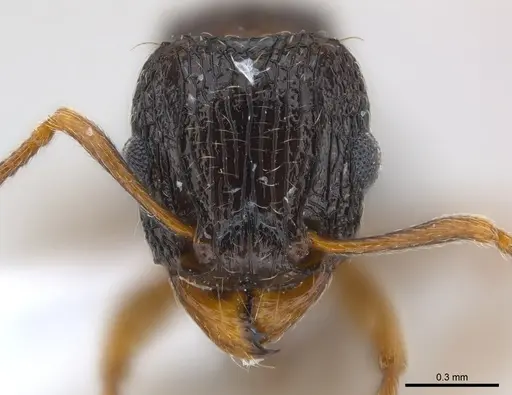
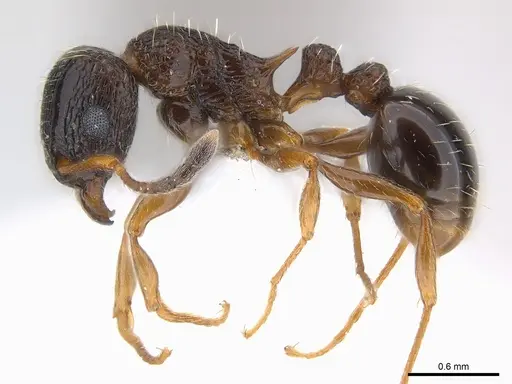
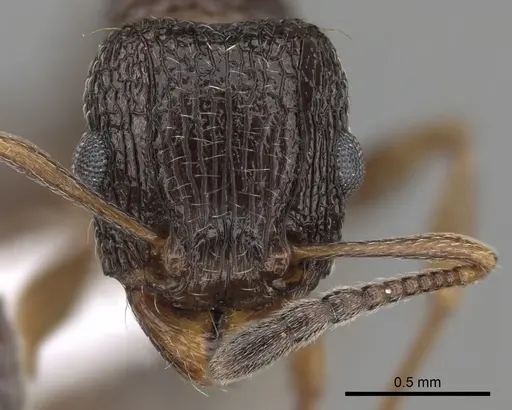
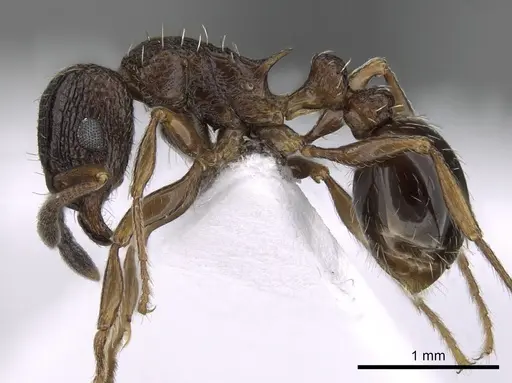
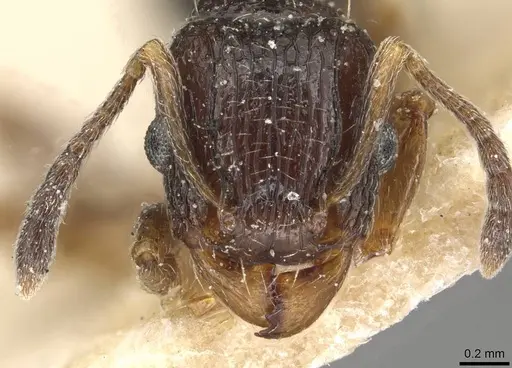
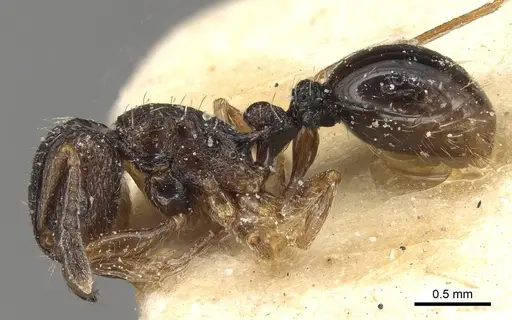
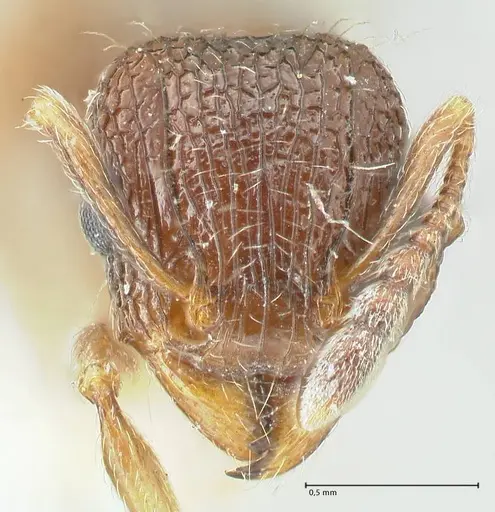
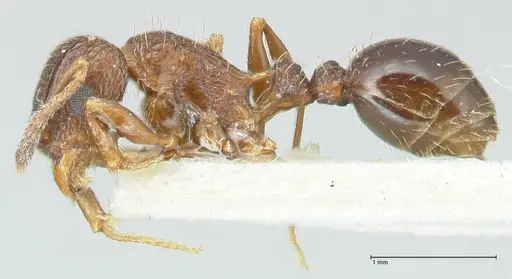
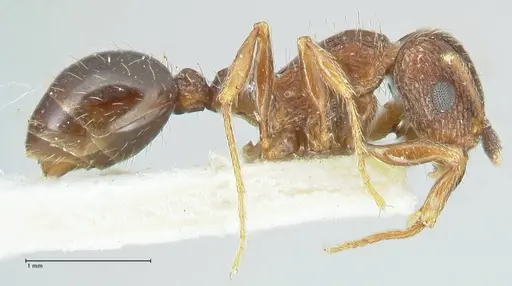
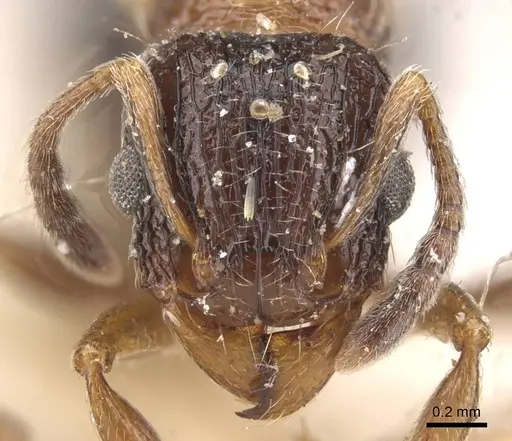
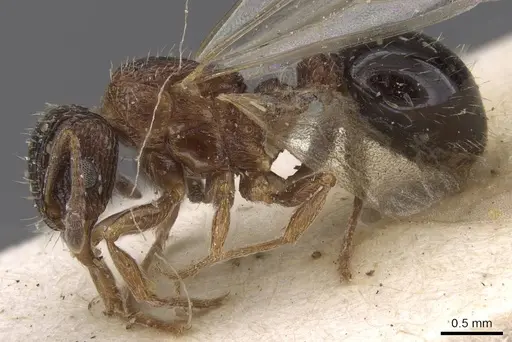
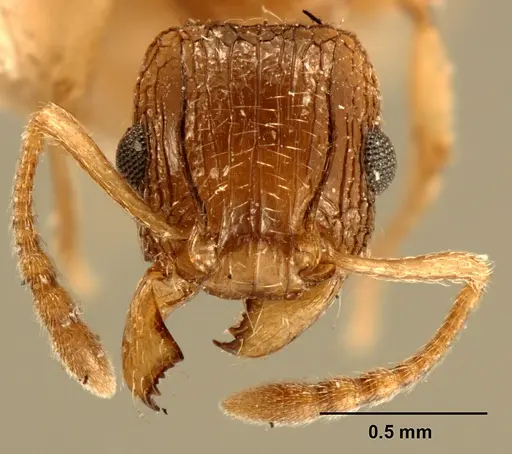
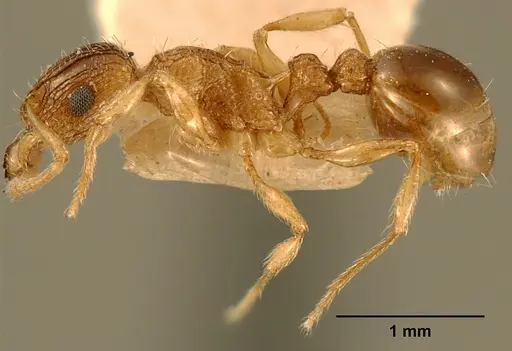
Tetramorium edouardi workers are small,3.5-4.2mm in total length [2]. The body is dark brown to nearly black, and the head is longer than wide [3]. They have relatively large eyes (11-15 facets in the longest row) and long spinose propodeal spines [3]. The metanotal groove is distinctly impressed in side view. All dorsal surfaces are covered with abundant long erect hairs [3]. Mandibles are usually smooth and shiny, but some specimens show partial ridging [3]. The antenna scapes are of moderate length and do not reach the back of the head [3]. This species can be told apart from similar Tetramorium by the combination of a small notch in the front edge of the clypeus, a strongly developed central clypeal ridge, and the clearly impressed metanotal groove [3].
Distribution and Habitat
Tetramorium edouardi has a wide range across the Afrotropical region. The type locality is Harar, Ethiopia [1]. It has been confirmed in Kenya (Rift Valley, Naivasha, Mpala), Democratic Republic of Congo (Lake Kivu area), Rwanda (Nyungwe rainforest, Akagera National Park), Nigeria, and Ivory Coast [6][7][4][5][8][1]. The species shows a preference for open areas but has also been collected in forested regions [1]. This broad equatorial distribution indicates adaptability to various local conditions.
Nest Preferences and Housing
In nature, Tetramorium edouardi likely nests in soil or under stones in open areas, which is typical for many Tetramorium species. For captive care, a Y-tong (AAC) nest or plaster formicarium is suitable. The chambers should be sized for workers 3.5-4.2mm long. Provide a moisture reservoir to maintain humidity, but also include drier zones so ants can self-regulate. A test tube setup works for founding colonies. Ensure good ventilation to prevent mold, but avoid excessive airflow that dries the nest out.
Feeding and Diet
The specific diet of Tetramorium edouardi has not been studied, but like most Myrmicinae, it is likely omnivorous. In nature, workers probably hunt small invertebrates and collect honeydew from aphids. For captive feeding, offer a variety of protein sources (small crickets, mealworms, fruit flies) and sugars (honey water, sugar water). Start with typical ant foods and watch what the colony accepts. Protein should be provided regularly when brood is present. Remove uneaten food after 24-48 hours to prevent mold. Because of their relatively large eyes, they may enjoy chasing live prey.
Temperature and Seasonal Care
No specific temperature requirements have been documented for Tetramorium edouardi. As a species from equatorial Africa, it is used to warm, stable temperatures year-round. Keep the nest at room temperature, ideally 22-26°C. Avoid sudden temperature shifts. A heating cable on one side can create a temperature gradient, letting ants choose their preferred spot. Whether they need winter diapause is unknown, given their equatorial distribution, they likely do not, but this has not been confirmed.
Behavior and Temperament
The behavior of Tetramorium edouardi is not well documented, but most Tetramorium are moderately aggressive in defending their nest. Workers will bite and use their stinger if threatened. Their relatively large eyes suggest they rely more on vision than many ants [3]. Workers likely forage individually and recruit nestmates to food sources. The abundant erect hairs may serve a sensory function. For antkeeping, expect typical Myrmicinae activity: territorial, vigorous nest defense, and clear foraging trails. Standard escape prevention (tight-fitting lids, fluon or baby powder near openings) is needed for their size.
Frequently Asked Questions
How long does it take for Tetramorium edouardi to produce first workers?
The development time is unknown, no scientific studies exist. Based on typical Tetramorium patterns, an estimate is 6-10 weeks from egg to first worker at 22-26°C. This is a rough guess, not confirmed data.
What do Tetramorium edouardi ants eat?
Their specific diet hasn’t been studied, but they are probably omnivorous like most Tetramorium. Offer protein (small crickets, mealworms, fruit flies) and sugar (honey water, sugar water). Try a few food types and see what your colony prefers.
Do Tetramorium edouardi ants sting?
Yes, as a member of the subfamily Myrmicinae and tribe Crematogastrini, they have a modified stinger used to smear venom rather than pierce flesh. They will use this defense if disturbed. The venom is generally not harmful to humans but may cause mild irritation.
Are Tetramorium edouardi good for beginners?
This species is rated Medium difficulty. While not the most challenging, there is little documented care information, so you may need to experiment. It’s not recommended as a first ant, but antkeepers with some experience should be able to keep them successfully.
What temperature should I keep Tetramorium edouardi at?
Keep them at room temperature, around 22-26°C. No specific thermal studies exist, but this range should support normal activity. Avoid major fluctuations.
Do Tetramorium edouardi need hibernation?
Unknown, no studies on overwintering. As an equatorial African species (Ethiopia, Kenya, Rwanda, etc.), they likely do not require a diapause period, but this is unconfirmed.
How big do Tetramorium edouardi colonies get?
The maximum colony size is unknown, no data exists. Most Tetramorium species form colonies of a few hundred to a few thousand workers.
Can I keep multiple Tetramorium edouardi queens together?
Colony structure is unconfirmed. Most Tetramorium are monogyne (single queen). Polygyny has not been documented for this species. Combining unrelated queens is not recommended without evidence they can coexist.
What type of nest is best for Tetramorium edouardi?
A Y-tong (AAC) nest or plaster formicarium works well. They prefer moderate humidity with a moisture reservoir. Ensure chambers are sized for their 3.5-4.2mm workers. A test tube for founding is fine.
Where is Tetramorium edouardi found?
They are found across the Afrotropical region: Ethiopia (type locality), Kenya, Democratic Republic of Congo, Rwanda, Nigeria, and Ivory Coast. They prefer open areas but have also been recorded in Rwanda’s Nyungwe rainforest [1][4].
Report an Issue
The current care sheet is based fully on literature. See inconsistencies, or something that's incorrect? Please , it will be resolved after review from an admin. Contributing to the blogs tab also helps providing information, to make us be able to further improve the caresheets. Thank you for your support!
References

Este guia de cuidados está sob a licença CC BY-SA 4.0 .
Posts da comunidade
CASENT0217067
Ver no AntWeb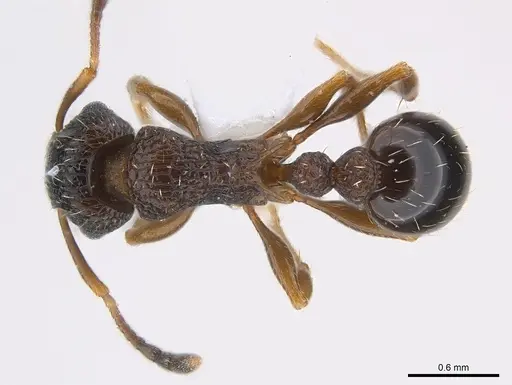
CASENT0217219
Ver no AntWeb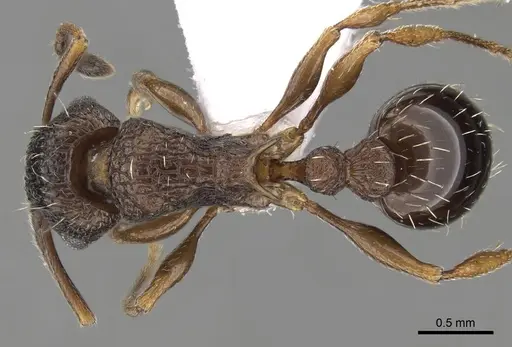
CASENT0915086
Ver no AntWeb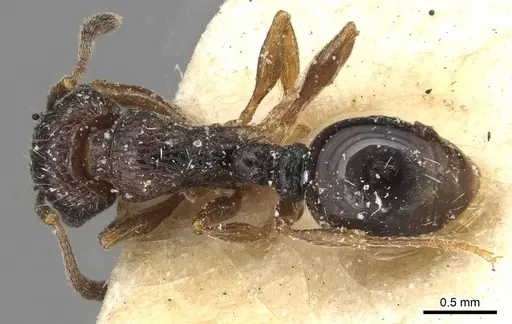
CASENT0923568
Ver no AntWeb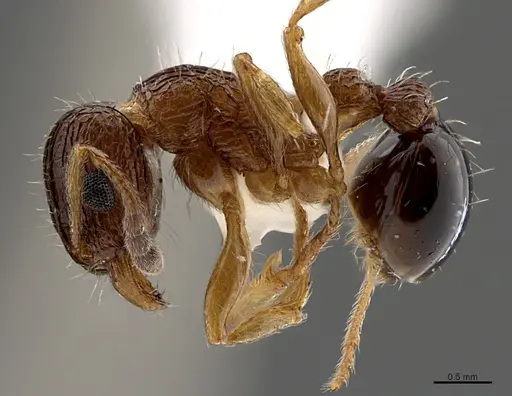
FOCOL2105
Ver no AntWeb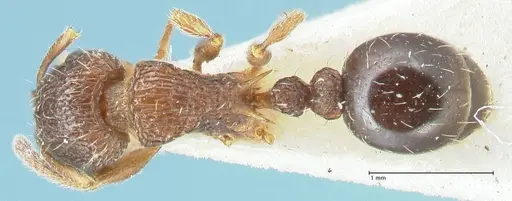
RMCAENT000017793
Ver no AntWeb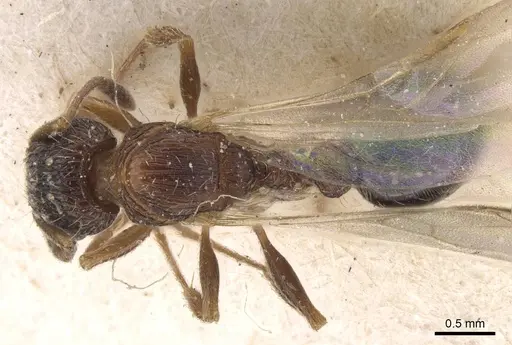
ZFMKHYM20096175
Ver no AntWeb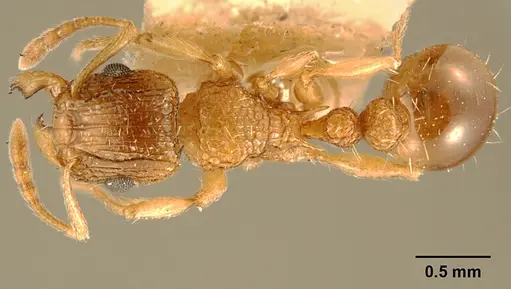
Literatura
Carregando mapa de distribuição...Carregando produtos...