
Tetramorium avaratra
- Nome científico
- Tetramorium avaratra
- Tribo
- Crematogastrini
- Subfamília
- Myrmicinae
- Autor
- Hita Garcia & Fisher, 2012
- Distribuição
- Encontrada em 2 países
Introdução
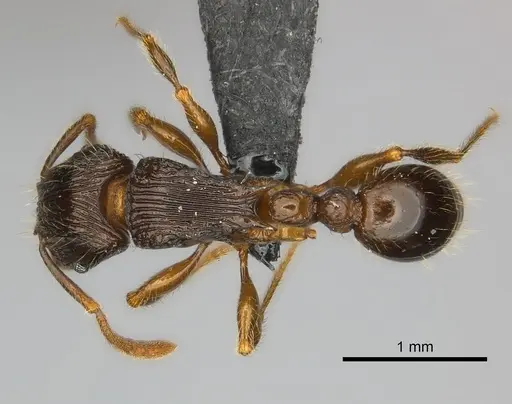
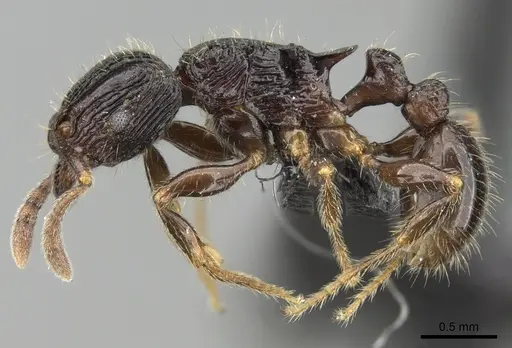
Tetramorium avaratra is a small, dark brown ant from northern Madagascar and the island of Nosy Be. Workers are about 3-4 mm long . They have long propodeal spines and a petiolar node that is wider than long, a key feature that sets them apart from close relatives like Tetramorium jedi . The body is uniformly brown to dark brown, with short eyes and very short antennal scapes . This species belongs to the Tetramorium tortuosum species group and is part of the T. jedi complex . What makes T. avaratra interesting is its flexible habitat - it lives in rainforests, tropical dry forests, and even tsingy (limestone) formations at low elevations (30-425 m) . It is ground‑active and collected mostly from leaf litter . Since this species was only described in 2012,very little is known about its captive care. Like other members of the Crematogastrini tribe, it defends itself by smearing venom rather than piercing, using a modified spatulate stinger.
Quick Summary
- Difficulty: Medium
- Origin & Habitat: Northern Madagascar (Ankarana, Analamerana, Bekaraoka, Andavakoera, Ampondrabe) and Nosy Be island. Found in rainforests, tropical dry forests, and tsingy limestone formations at elevations 30-425 m [1][2].
- Colony Type: Colony structure has not been directly studied. Based on typical Tetramorium patterns, likely single‑queen colonies. Ergatoid (wingless) replacement queens are unknown for this species.
- Size & Growth:
- Queen: No data available. Inferred from related Tetramorium species, queens are probably slightly larger than workers, estimate around 6-8 mm.
- Worker: Approximately 3-4 mm, inferred from the Tetramorium genus [1].
- Colony: Unknown, no colony size data available for this species.
- Growth: Unknown, no development timing data available for this species.
- Development: Unknown. Based on related Tetramorium from similar habitats, estimate 6-10 weeks at optimal temperatures. (This is an estimate. Actual timing may vary with temperature and food availability.)
- Antkeeping:
- Temperature: As a tropical lowland species from northern Madagascar, they likely need warm conditions. Recommended temperature: 24-28 °C. A heating cable on one side of the nest can create a gentle gradient.
- Humidity: Moderate to high humidity, they come from rainforest and tropical dry forest habitats. Keep the nest substrate consistently moist but not waterlogged, with some drier areas available [1][2].
- Diapause: Unknown. As a tropical species from low elevations, they probably do not require a true diapause. A slight temperature reduction during winter months may still be beneficial.
- Nesting: In nature they are ground‑active leaf litter ants. In captivity, a Y‑tong (AAC) nest or plaster nest works well. Provide a moist substrate that can hold humidity. A naturalistic setup with soil and leaf litter can also work.
- Behavior: Ground‑active species that forages in leaf litter [2]. Likely not particularly aggressive, typical of many Tetramorium. Workers are small but active. Escape prevention is key because of their small size. Defense mechanism: uses a modified spatulate stinger to smear venom, typical of the Crematogastrini tribe. They likely scavenge and hunt small invertebrates.
- Common Issues: limited availability, this species is rarely kept in the hobby, no species‑specific care information, keepers must adapt from related Tetramorium, humidity control is critical, too dry may kill the colony, too wet can cause mold, small worker size (3-4 mm) means escape prevention must be reliable, tropical species may be sensitive to temperature drops below 20 °C
Origin and Natural Habitat
Tetramorium avaratra is endemic to northern Madagascar and the nearby island of Nosy Be [1]. It shows surprising habitat flexibility, it has been collected from rainforests, tropical dry forests, and tsingy limestone karst formations [1]. The tsingy are dramatic, jagged limestone pinnacles that create unique microhabitats.
This species is restricted to low elevations between 30 and 425 m above sea level [1], making it a true lowland ant. The type locality is the Réserve Spéciale de l'Ankarana in northern Madagascar, a protected tropical dry forest [1].
In the wild, T. avaratra is ground‑active and is typically collected by sifting leaf litter [2]. This suggests they forage on the forest floor rather than climbing vegetation. Their wide habitat tolerance should make them somewhat adaptable to captive conditions.
Identification and Appearance
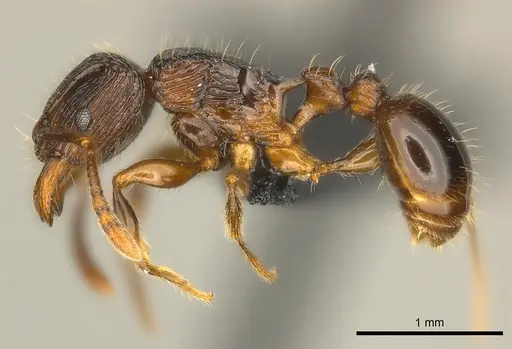
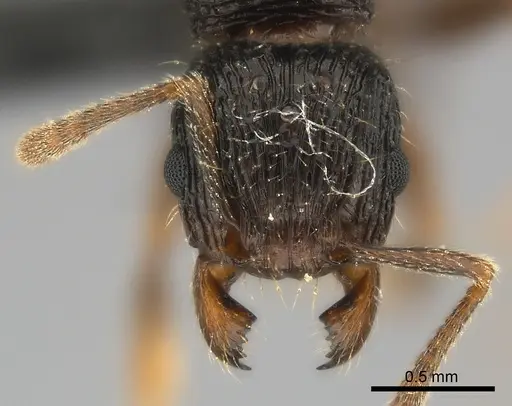
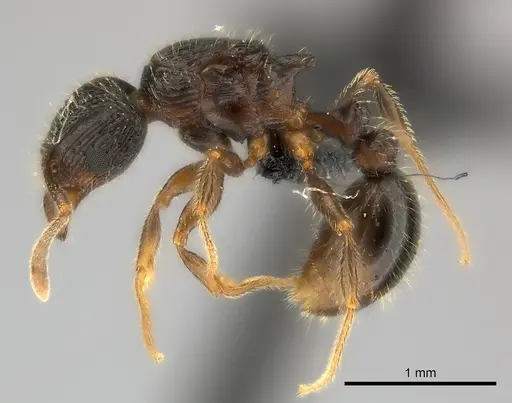
Workers are small, about 3-4 mm long. The body is uniformly brown to dark brown, with appendages often slightly lighter [1].
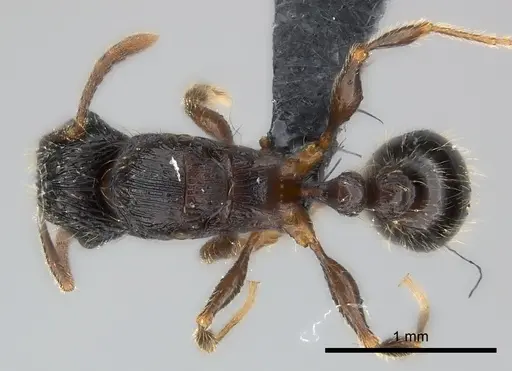
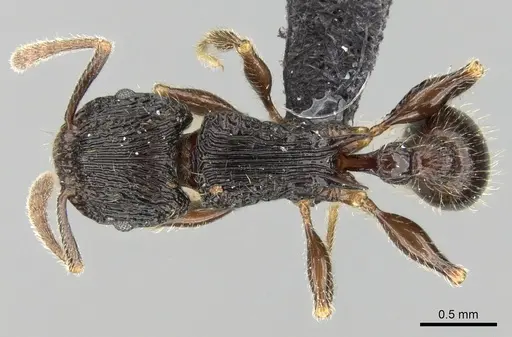
One of the most distinctive features is the petiolar node, in top view it is noticeably wider than long, which separates it from the closely related Tetramorium jedi (whose node is longer than wide) [1]. The propodeal spines are long but relatively short for the T. tortuosum group, specimens from Nosy Be have even longer spines [1][2].
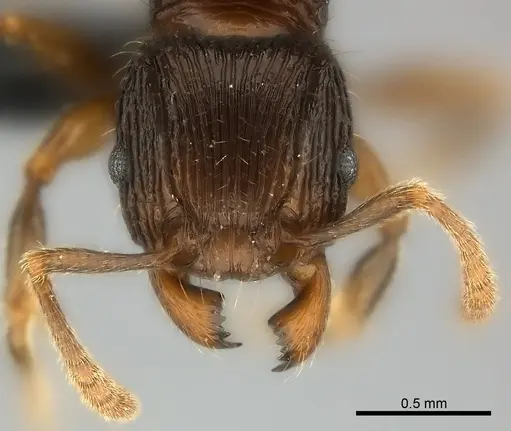
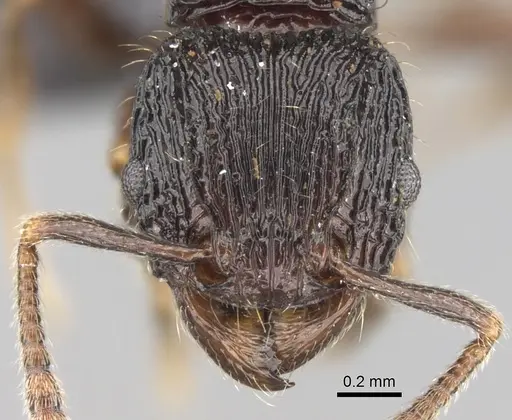
The eyes are relatively small, and the antennal scapes are very short, not reaching the back of the head [1]. The first segment of the gaster (front of the abdomen) has fine, shallow sculptures only on its lower third [1].
Temperature and Care
As a tropical lowland species from northern Madagascar, Tetramorium avaratra requires warm temperatures. Keep the nest area at roughly 24-28 °C. A heating cable on one side of the nest can create a temperature gradient so the ants can pick their preferred spot.
Sudden temperature swings should be avoided. Room temperature in most homes may be too cool, so supplemental heating is often needed, especially in winter. Always provide unheated areas so the ants can escape excessive heat.
Humidity and Nesting
Tetramorium avaratra lives in both rainforest and tropical dry forest, which suggests it can handle a range of moisture but prefers moderate to high humidity [1]. In captivity, keep the nest substrate consistently moist but not waterlogged. The substrate should feel damp to the touch.
Allow some areas to dry out slightly so the ants can choose their preferred microclimate, this mimics the natural variation in leaf litter on the forest floor.
For nesting, a Y‑tong (AAC) or plaster nest works well because these hold humidity while providing dark, secure chambers. A naturalistic setup with a soil substrate and leaf litter on top can also work and encourages natural foraging. Make sure the nest has good ventilation to prevent mold.
Feeding and Diet
In the wild, T. avaratra forages in leaf litter where it likely hunts small invertebrates and scavenges organic matter [2]. No specific prey has been documented, but related Tetramorium are generalist predators and scavengers.
In captivity, offer a varied diet: small live prey such as fruit flies, pinhead crickets, and tiny mealworms. They will also likely accept protein‑based commercial ant foods. Sugar sources like honey water can be offered occasionally, though many Tetramorium prefer protein.
Feed small amounts every few days and remove uneaten prey after 24-48 hours to prevent mold. Because the workers are small, prey items should be appropriately sized, no larger than the ants themselves.
Behavior and Temperament
Tetramorium avaratra is ground‑active and forages mainly in leaf litter [2]. Workers are small but active and tend to form foraging trails on the substrate. They are not known to be particularly aggressive, like most Tetramorium, they prefer to flee than fight when disturbed.
Their small size (about 3-4 mm) means escape prevention is vital, they can squeeze through very small gaps. Use tight‑fitting lids and consider fluon or similar barriers on the rims of the enclosure.
Defense mechanism: Like other members of the Crematogastrini tribe, T. avaratra has a modified, flattened spatulate stinger used to wipe or smear venom onto enemies rather than piercing. This makes them less of a sting threat to keepers.
Colony activity is likely moderate, increasing with warmer temperatures and decreasing when conditions are cooler. Observing foraging patterns can help you judge whether their environment is right.
Frequently Asked Questions
How long does it take for Tetramorium avaratra to produce first workers?
The exact egg‑to‑worker time has not been studied. From related Tetramorium species in similar habitats, estimate about 6-10 weeks at 24-28 °C. Actual timing will vary with temperature and food.
What temperature do Tetramorium avaratra ants need?
They need warm conditions, roughly 24-28 °C, because they come from lowland tropical Madagascar. A heating cable on one side of the nest gives them a temperature gradient so they can regulate themselves.
Are Tetramorium avaratra ants good for beginners?
This species is rated medium difficulty. It is not extremely hard to keep, but there is very little specific care information available, and they need warm, humid conditions. Beginners may find it easier to start with a more common species that has well‑documented care guides.
How big do Tetramorium avaratra colonies get?
Colony size data does not exist for this species. Based on related Tetramorium, colonies likely reach several hundred workers over time, but the maximum is unknown.
Do Tetramorium avaratra ants sting?
Tetramorium ants have a functional stinger, but T. avaratra belongs to the Crematogastrini tribe, which uses a modified flattened stinger to smear venom rather than pierce. The sting would be very mild, more like a pinprick, and they are not aggressive.
What do Tetramorium avaratra ants eat?
They are ground‑active predators and scavengers. Feed small live prey such as fruit flies, pinhead crickets, or tiny mealworms. They may also accept commercial protein foods and occasional sugar sources like honey water.
Can I keep multiple Tetramorium avaratra queens together?
Colony structure (monogyne vs polygyne) has not been studied for this species. Combining unrelated queens is not recommended, as it could lead to aggression.
Do Tetramorium avaratra need hibernation?
As a tropical species from low‑elevation Madagascar, they almost certainly do not require a true diapause. A slight temperature reduction during winter (a few degrees cooler) may still be beneficial to mimic seasonal changes, but it is not necessary.
What size are Tetramorium avaratra workers?
Workers are about 3-4 mm long [1].
Where is Tetramorium avaratra found in the wild?
This species is endemic to northern Madagascar and Nosy Be island. It lives in rainforests, tropical dry forests, and tsingy limestone formations at elevations of 30-425 m [1][2].
How do I set up a nest for Tetramorium avaratra?
A Y‑tong (AAC) nest or plaster nest works well. Keep the substrate consistently moist but not waterlogged, and provide a gradient with some drier areas. A naturalistic setup with soil and leaf litter on top can also be successful.
Why are my Tetramorium avaratra dying?
Common causes: temperature too low (needs 24-28 °C), humidity too dry (needs consistent moisture), or escape (they are small and can squeeze through tiny gaps). Check all parameters and seal any possible exits.
Report an Issue
The current care sheet is based fully on literature. See inconsistencies, or something that's incorrect? Please , it will be resolved after review from an admin. Contributing to the blogs tab also helps providing information, to make us be able to further improve the caresheets. Thank you for your support!
References

Este guia de cuidados está sob a licença CC BY-SA 4.0 .
Posts da comunidade
Literatura
Carregando mapa de distribuição...Carregando produtos...